How Often Should You Have Your Sewer Line Inspected in Ohio?
There is no one-size-fits-all answer, but there is a right schedule for your home. It depends on your pipe's age, the trees in your yard, and whether you have had problems before.
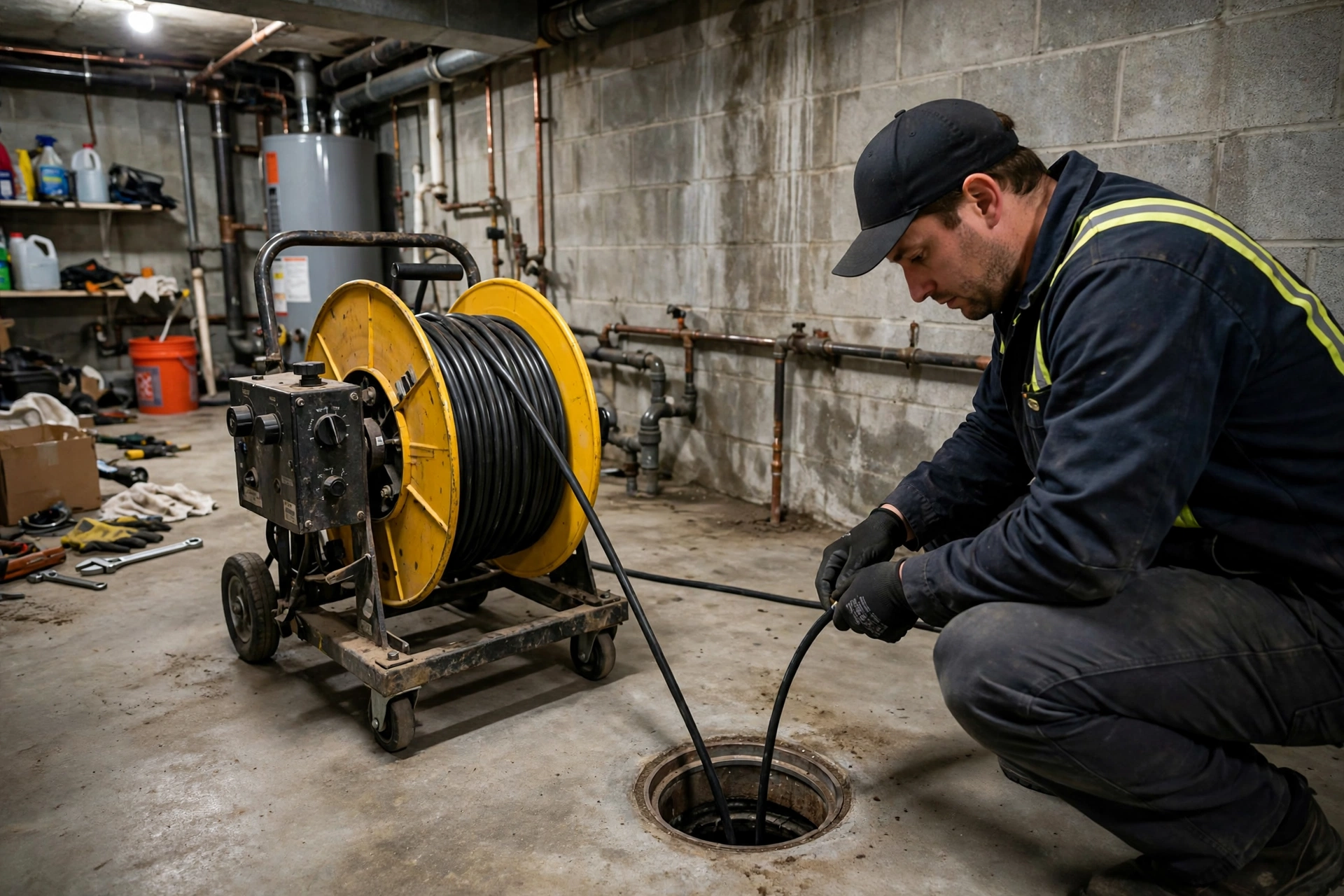
A sewer camera inspection is a waterproof camera head pushed through your line to record its condition. For most Ohio homes, the schedule depends on the pipe's age: every 2 years for pre-1960 clay tile, every 2 to 3 years for 1960 to 1980 cast iron or clay, every 3 to 5 years for 1980 to 2000 PVC or ABS, and every 5 years for 2000-and-newer PVC. Inspect every year if you have large trees near the line, a history of backups, or a line that has already been repaired. And inspect immediately, regardless of schedule, if you notice slow drains, gurgling toilets, or sewage odors.
That is the practical rule. The rest of this guide explains why it works, how to adjust it for your house, and what regular inspections actually buy you.
Why Doesn't the Standard Advice Fit Ohio Homes?
Because Ohio homes are older than average, and the advice was not written for them. National plumbing articles tend to say "inspect every few years" and leave it there. Much of the state's housing stock predates 1970, which means clay tile with root-prone joints, cast iron approaching the end of its cited lifespan, and Orangeburg that is past it. Most Ohio homes have basements, which puts the lateral deeper (often 8 to 10 requirementt) and makes any repair more involved. The soil is heavy clay that shifts with wet and dry seasons, and freeze-thaw cycles move the ground every winter. None of that means your line is doomed; it means a fixed schedule should lean toward the careful side for older pipe.
The two variables that matter most are pipe age and trees. An older line with a big maple over it is a completely different maintenance case than a 2005 PVC line with no trees nearby. Set your schedule accordingly.
What Is the Inspection Schedule by Pipe Age?
Start with this table, then adjust for your trees and history:
Home / pipe era
Likely material
Suggested interval
Pre-1960
Clay tile
Every 2 years
1960–1980
Cast iron, clay, early plastic
Every 2–3 years
1980–2000
PVC, ABS
Every 3–5 years
2000 and newer
PVC
Every 5 years
Move to annual inspections if any of these apply: mature trees (especially maples, oaks, willows, or sycamores) within 30 requirementt of the line; any history of backups or blockages; a previous tree root removal or spot repair, which tells you the line is vulnerable; or a combined sewer connection, common in older neighborhoods, where heavy rain can push the system hard.
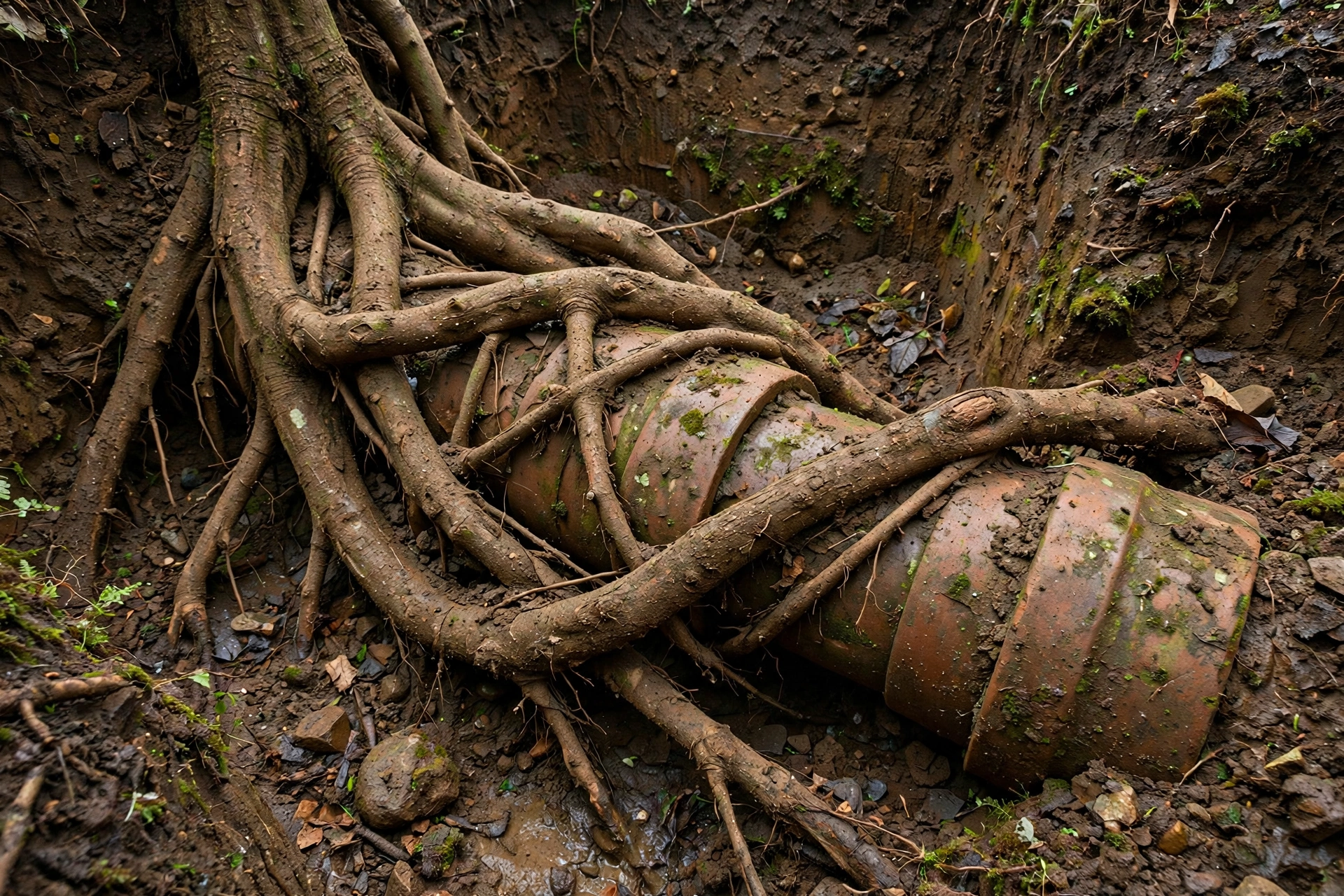
This is what routine inspections catch early: roots entering through clay tile joints, years before they cause a backup.
What Are the Signs I Need a Camera Now?
Schedules are for healthy lines. Call for an inspection right away if you notice any of these:
Multiple drains slowing at once. One slow sink is a local clog. Every drain in the house slowing means the main line is struggling.
Gurgling toilets or drains. Air trapped by a partial blockage escapes through your fixtures. It is the line's early warning system.
Sewage odors inside or outside. A cracked line or dried-out trap lets gases escape. Do not just live with it.
Unusually lush or soggy patches in the yard. A leaking line fertilizes the grass above it. If one stripe of lawn looks better than the rest, that is a clue, not a blessing.
Backups after heavy rain. In Ohio's older combined-sewer neighborhoods, this can indicate a line that is already compromised and cannot handle surges.
Any one of these means the schedule no longer applies. A camera inspection now is always simpler than an emergency call later.
Does a Maintenance Program Make This Easier?
Yes, for homes with known vulnerabilities. A sewer maintenance program puts the inspections and cleanings on a calendar so you do not have to remember: periodic camera checks plus hydro jetting when roots or buildup start returning. It makes the most sense for older clay tile lines under mature trees, homes with a history of backups, and rental properties where you cannot watch for early symptoms yourself. For a newer PVC line with no trees, a simple reminder to inspect every five years does the job.
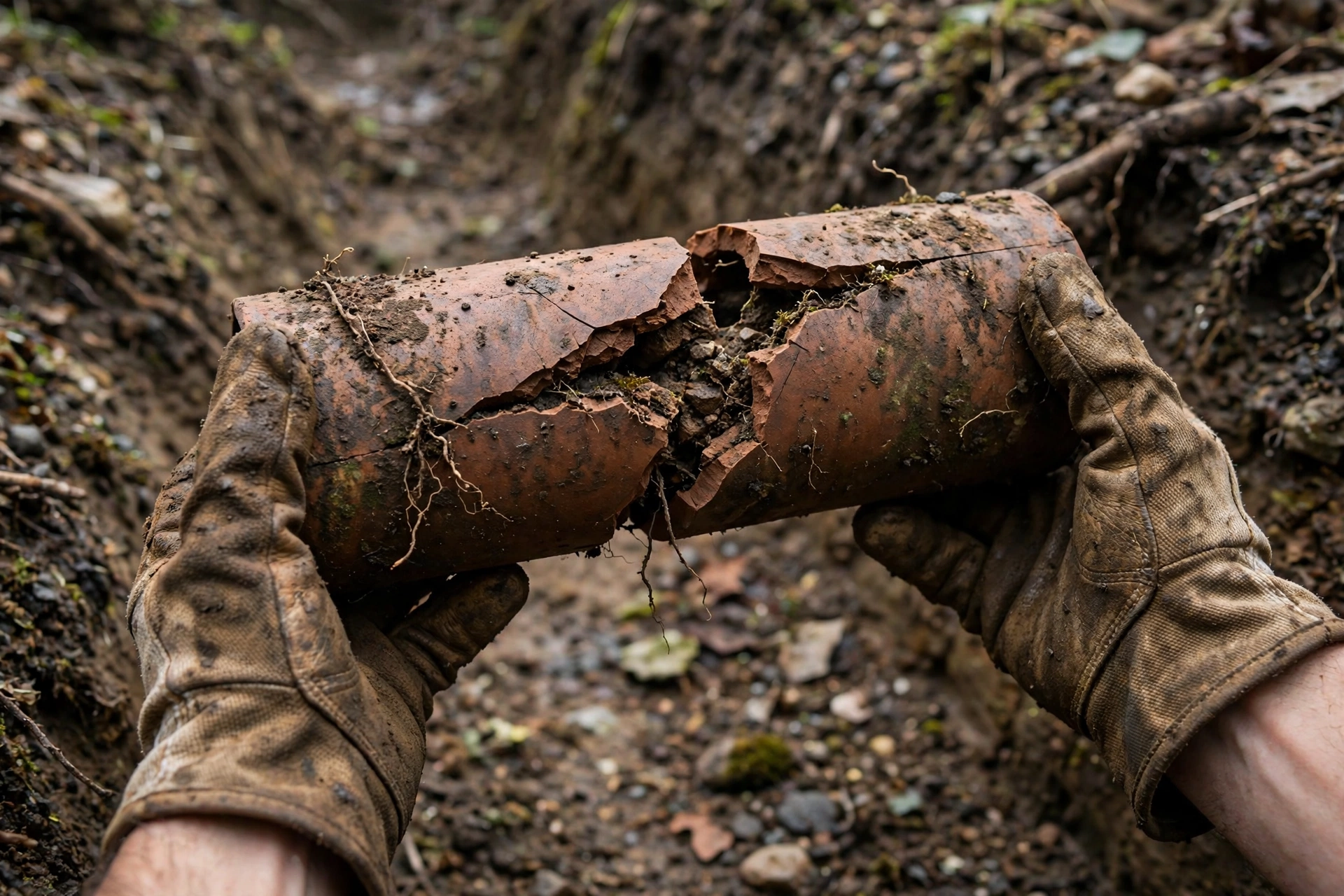
A crack like this does not fix itself. Found early, it is a lining candidate. Found late, it is a replacement.
What Does a Regular Inspection Actually Prevent?
Three major outcomes, mainly. First, it catches root intrusion while it is still a cleaning job instead of a replacement job. Roots that have been growing for one year come out with a jetter; roots that have been growing for five years can crack the pipe beyond saving. Second, it finds offset joints and bellies before they collapse. A bellied section caught early can sometimes be lined; a collapsed one has to be dug up or burst. Third, it gives you a baseline. When you have footage from two years ago and footage from today, a contractor can show you exactly what changed instead of guessing.
Homeowners in older cities like Toledo, Akron, and Dayton get the most value from this discipline, because the lines are older and the repair stakes are higher. But even newer suburban lines benefit: one inspection every five years on a PVC line is inmajor peace of mind.
Inspection Frequency FAQs
Compare it to the alternative. An inspection is a modest part of the process and shows you the exact condition of a pipe whose replacement can be many times that. Most Ohio homeowners only call when something is already wrong, which is the worst time to learn about your sewer line.
No. The camera is a small waterproof head on a flexible push cable. It travels through the pipe and records video; it does not cut, scrape, pressurize, or alter anything. It is the least invasive way to evaluate an underground pipe.
A typical residential inspection takes 30 to 60 minutes of camera time, plus setup. You get the video footage and a written report describing the pipe material, its condition, and any defects with their exact locations.
Yes, always, especially in Ohio where the housing stock is old. A pre-purchase sewer inspection inside your inspection contingency period can reveal root intrusion, cracks, or failing Orangeburg before you own the problem. We wrote a full guide on what a pre-purchase sewer inspection covers and what to do with the results.
Sometimes. Hydro jetting clears roots and restores flow, and if the pipe is structurally sound, clearing plus a regular maintenance schedule can buy years. But roots grow back through the same joints, so recurring root problems are a sign the joints are failing. A camera re-check a year after clearing shows whether the pipe is holding or deteriorating.
When Was Your Line Last Inspected?
If the answer is "never" or "I have no idea," a camera look now is the smartest money you can spend on your sewer line.