Combined Sewer Systems in Older Ohio Cities: What It Means for You
In the older neighborhoods of Cleveland, Akron, Toledo, and Cincinnati, one pipe carries both your sewage and the rain from your street. When it storms, that pipe fills up, and your basement can handle the plan. Here's what's going on underground.
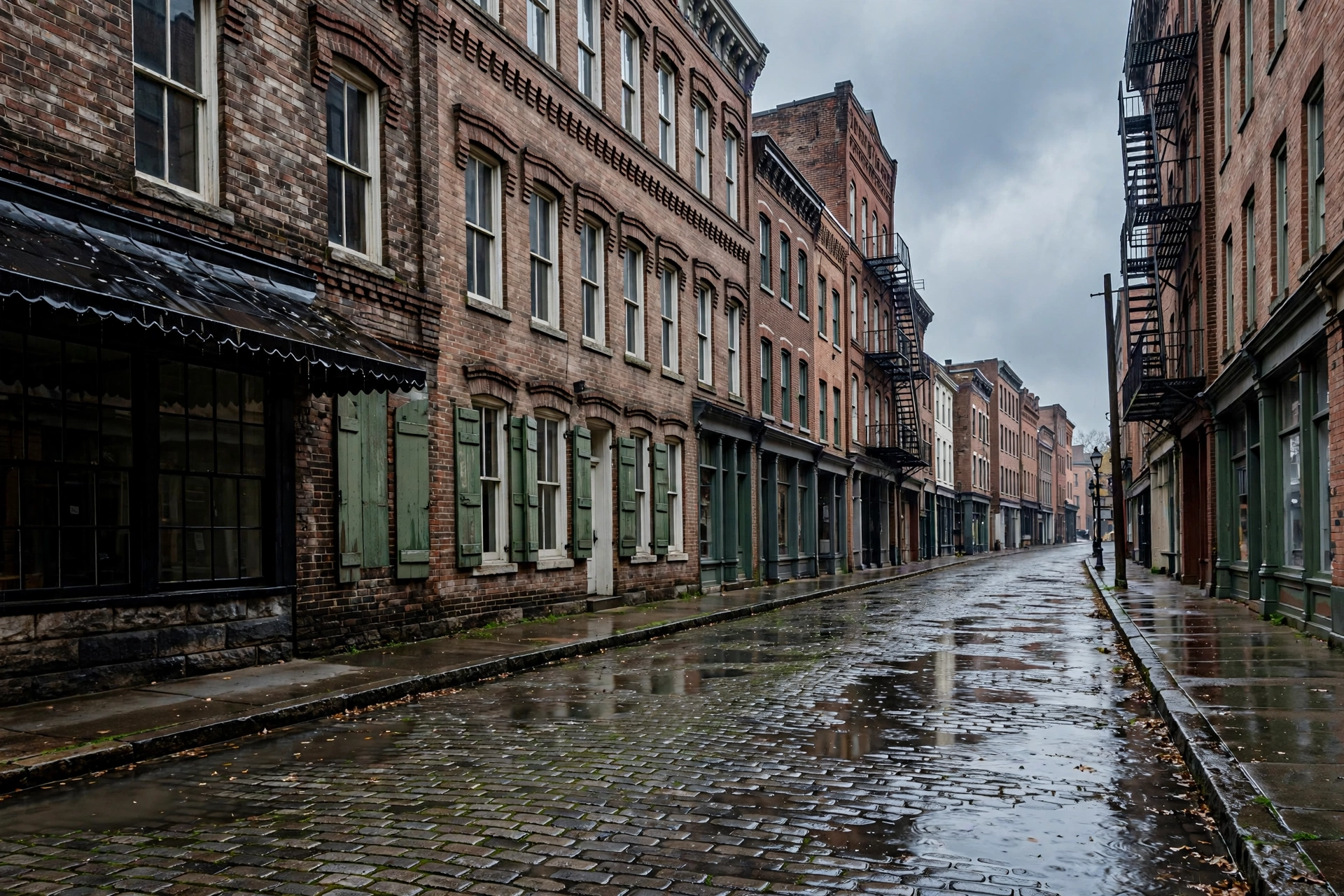
Neighborhoods like this were sewered a century ago, when one pipe for everything was standard engineering.
What Is a Combined Sewer System?
A combined sewer system is a single pipe network that carries both household sewage and stormwater. In dry weather, everything flows to the treatment plant. In heavy rain, the pipe fills beyond its capacity, and the excess, a mix of rainwater and diluted sewage, discharges through overflow points into rivers and lakes. These overflows are called combined sewer overflows, or CSOs.
This wasn't a mistake. It was standard engineering when most Ohio cities built their first sewers in the late 1800s and early 1900s. Building two pipes was considered an unnecessary expense, and nobody was thinking about what happens when a city of 500,000 flushes and it rains two inches at the same time. By the 1950s, separate storm and sanitary systems had become the standard for new construction, but the old combined pipes were already in the ground, and replacing them means digging up entire cities.
Which Ohio Cities Still Have Combined Sewers?
Parts of Cleveland, Akron, Toledo, Cincinnati, Youngstown, and other older cities still rely on combined sewers in their historic neighborhoods. The pattern is consistent: neighborhoods built before the 1950s are often combined, and newer suburbs are almost always separated.
Cleveland is the biggest example. The Northeast Ohio Regional Sewer District serves the Cleveland area and has been working for years on one of the largest sewer programs in the country, including massive underground storage tunnels designed to hold combined sewage during storms instead of letting it overflow into Lake Erie and the Cuyahoga River. These programs run under federal requirements tracked by the U.S. EPA. Akron has a similar long-term program with its own storage tunnel projects. These programs are real, major, and slow: they're measured in decades, not years.
But here's the part that matters for your house: the city's program protects the rivers. It does not protect your basement. Even as overflows to waterways shrink, a surcharged combined main can still push sewage backward into basements during a big storm.
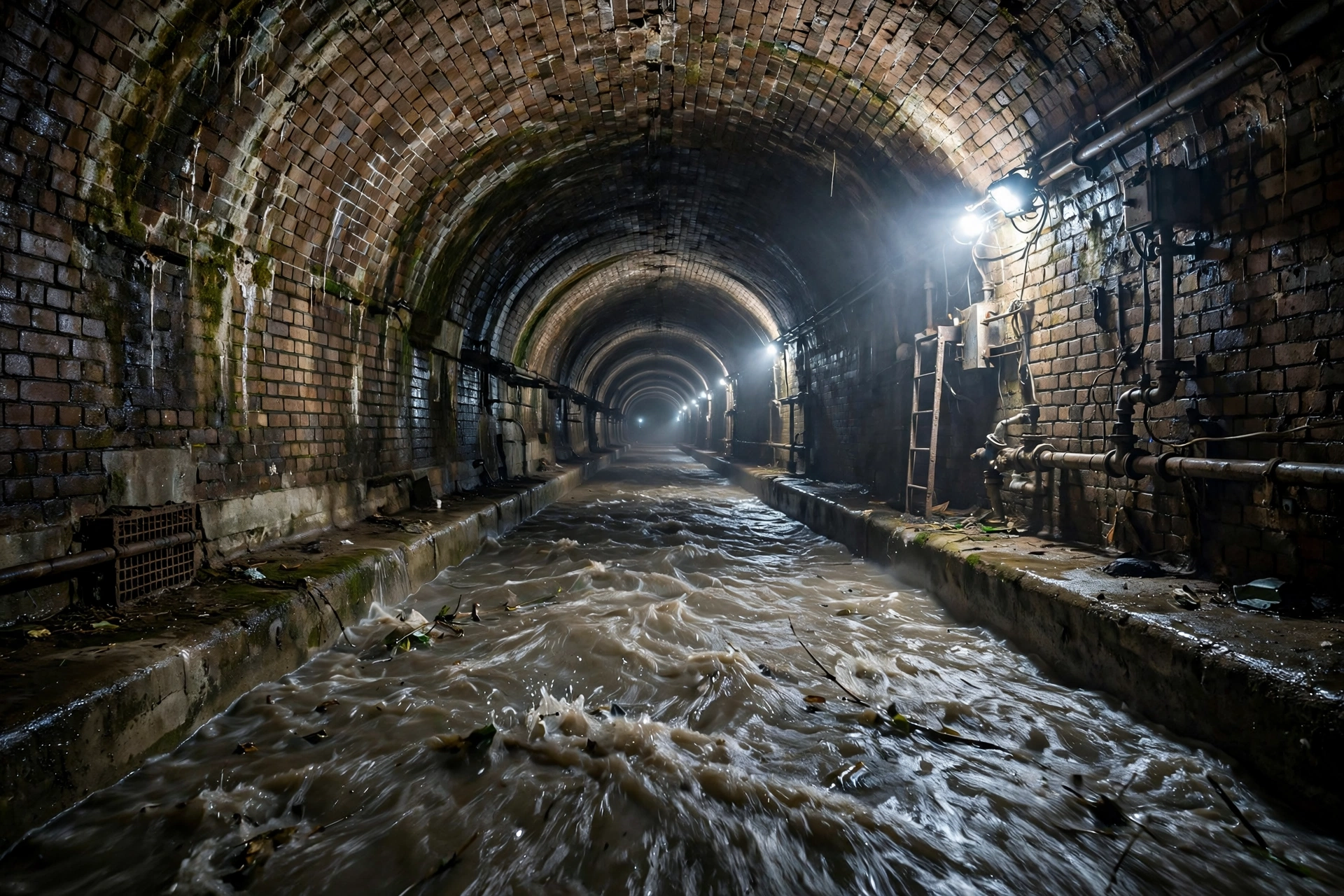
A combined sewer main at capacity during a storm. When the pipe is full, pressure has to go somewhere, and basements are the lowest outlet.
What Does a Combined Sewer Mean for Your Home?
A combined sewer means storm-triggered basement backups, overloaded footing drains, and stricter repair rules. Three practical consequences land directly on homeowners.
Storm-triggered basement backups. This is the big one. During heavy rain, the combined main fills and pressurizes. Sewage looks for the lowest opening to relieve that pressure, and in a neighborhood of homes with basements, that's a lot of floor drains. If your basement backs up only when it rains, a combined sewer surcharge is the prime suspect. Our basement backup guide walks through what to do when it happens.
Your footing drains may be requirementding the problem. In many older Ohio homes, the foundation drains around the basement connect directly to the sewer lateral. During rain, they dump huge volumes of groundwater into a pipe that's already carrying the storm. Disconnecting them to a sump pump, routed to a storm drain or daylight where local code allows, removes a major source of the surge.
Repair standards are stricter. Municipalities with combined sewer programs often have specific requirements for lateral work, permits, inspections, and sometimes backwater valves. Ohio EPA is the state agency that reviews these cities' long-term control plans. Any sewer repair in these neighborhoods should account for local rules, which vary by city and sewer district.
How Do You Know If Your Home Is on a Combined Sewer?
Start with the age of the neighborhood. If your home was built before the 1950s and sits in an older district of Cleveland, Cincinnati, Akron, or Toledo, there's a good chance. Your local sewer district or city utilities department can confirm, and many have maps or will answer over the phone.
The other clue is behavioral: basement backups that track exactly with heavy rain, especially when neighbors on your street have the same problem at the same time. A camera inspection of your own lateral will also tell you a lot. If your lateral is clear and intact but the backup still happens in storms, the surcharge is coming from the combined main.
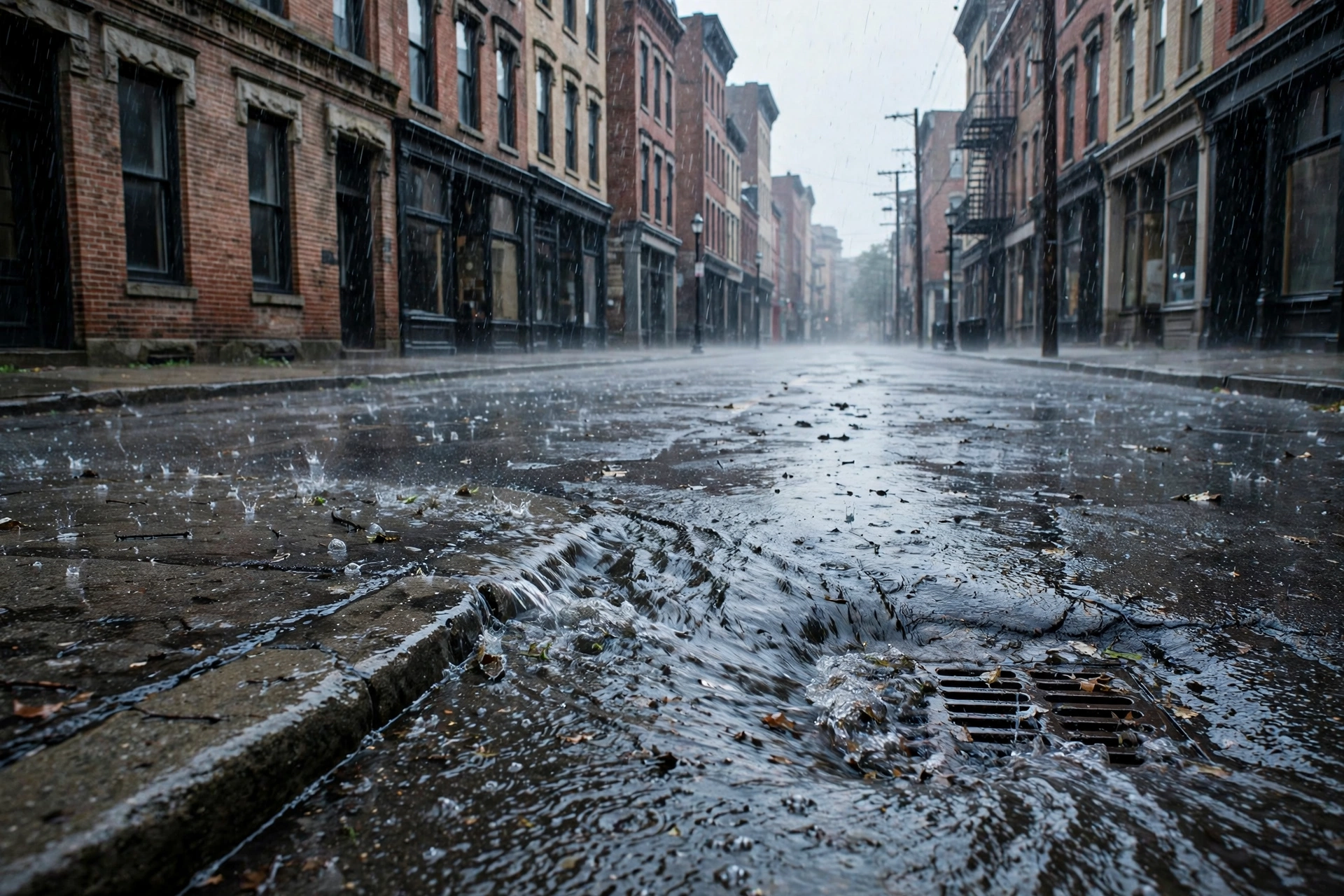
One inch of rain on a city block produces an enormous volume of water. In a combined system, all of it shares your sewer pipe.
What Can You Do to Protect Your Home?
Yes. A backwater valve, a clear and sound lateral, separated foundation drains, and a sewer backup endorsement protect most homes. You can't rebuild the city's sewer system, but these steps make your home nearly immune to what it does.
- Install a backwater valve. This is the single most effective protection. The valve sits on your lateral, lets your wastewater flow out, and snaps shut when the city main tries to push sewage back in. Read more about backwater valve installation.
- Keep your lateral clear and sound. Roots and grease reduce your line's capacity right when you need it most. Regular cleaning plus repairing cracked sections keeps your side of the system at full strength.
- Separate foundation drains from the lateral. Where code allows, route them to a sump pump instead. This one change has ended rain-triggered backups in countless Ohio homes.
- Check your insurance. A sewer backup endorsement is inmajor and standard insurers offer it. Combined-sewer neighborhoods are exactly where it earns its keep. Our guide covers the insurance endorsements worth having.
If your protection plan involves any digging, a valve pit, a lateral repair, or a rerouted discharge, call 811 before anyone breaks ground.
If your home is in one of these older districts, talk to a contractor who actually works in them. Emergency backup service in a combined-sewer neighborhood starts with different assumptions than in a suburb with separated pipes.
Combined Sewer FAQs
A combined sewer system carries household sewage and stormwater in a single pipe. In dry weather, everything flows to the treatment plant. In heavy rain, the pipe fills beyond capacity and the excess, a mix of rainwater and diluted sewage, discharges through overflow points into rivers and lakes. Most Ohio systems built before the 1950s were designed this way; newer areas have separate storm and sanitary pipes.
Parts of Cleveland, Akron, Toledo, Cincinnati, Youngstown, and other older cities still have combined sewers in their historic neighborhoods. These are usually the neighborhoods built before the 1950s, when separate storm and sanitary sewers became the standard. Newer suburbs almost always have separated systems.
Age of the neighborhood is the biggest clue: homes built before the 1950s in older city districts are often on combined sewers. Your local sewer district or city public utilities department can confirm, many have online maps or will tell you over the phone. Another clue is basement backups that happen only during heavy rain.
Yes. A backwater valve on your lateral blocks surcharged sewage from entering your basement during storms. Keeping your own lateral in good shape, roots cleared, joints intact, means it can handle more flow without backing up. Disconnecting foundation drains from the lateral reduces the rainwater volume hitting your pipe. You can't fix the city's combined main, but you can protect your side of it.
Yes, under federal requirements. Cleveland's regional sewer district and cities like Akron have been working for years on long-term control plans, building huge underground storage tunnels, separating sewers, and adding green infrastructure to capture stormwater. These are multi-decade, large-scale programs, so improvement is real but slow, and your home's protection can't wait for the tunnels.
On a Combined Sewer? Protect Your Basement Before the Next Storm.
We'll inspect your lateral, check your backup risk, and lay out real options, from a backwater valve to a full lateral fix.
Call (614) 350-5706