Basement Sewer Backups: Why Ohio Homes Are at Risk
Almost every Ohio home has a basement, and almost every basement floor drain is a potential entry point. Here's why backups hit Ohio homes so often, what to do when it happens to you, and how to make sure it happens only once.
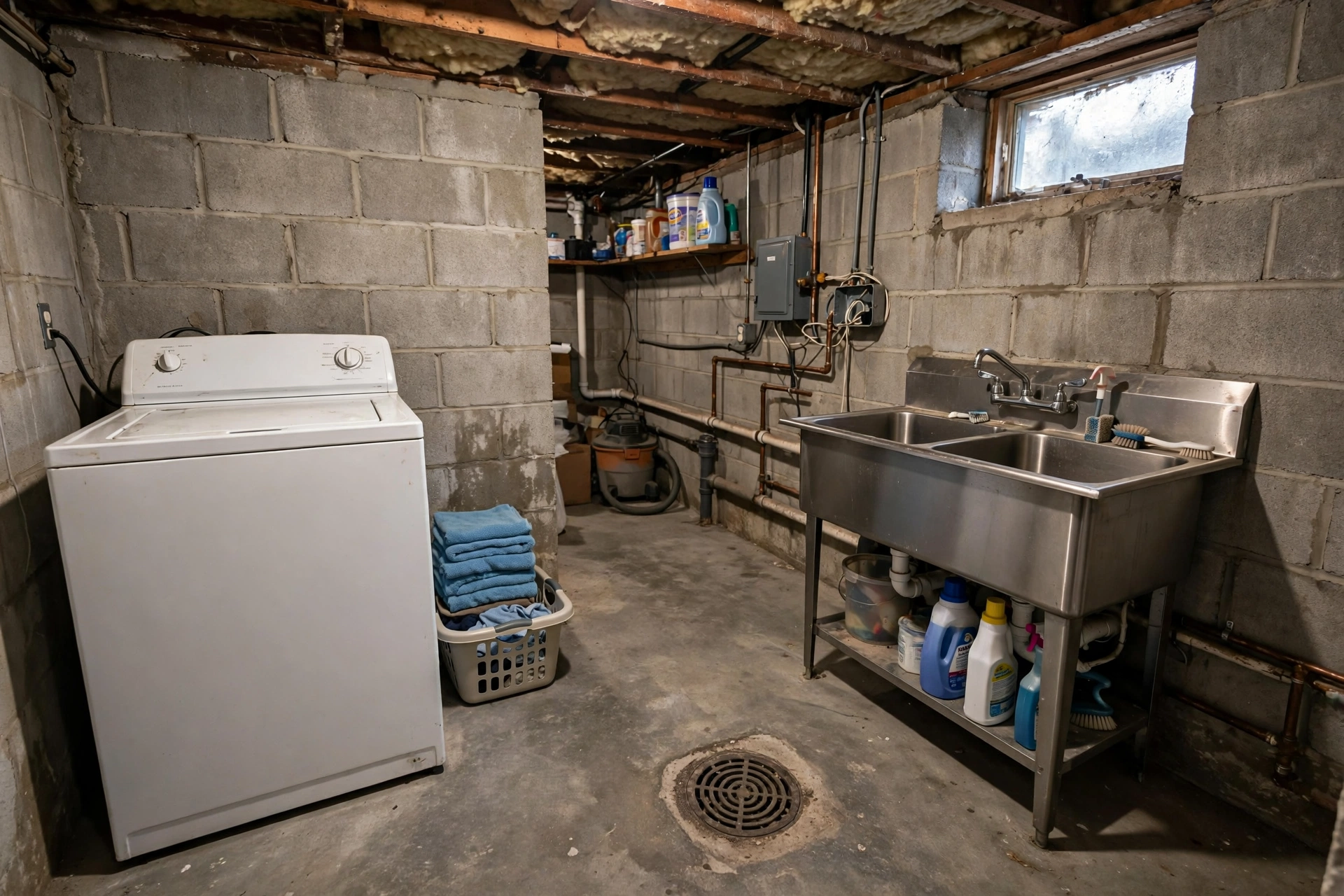
That floor drain is the lowest opening in your plumbing. When the sewer line can't drain, this is where sewage shows up first.
Why Are Ohio Basements So Prone to Sewer Backups?
A sewer backup is wastewater flowing back into the home instead of out to the city main. Four things about Ohio homes and infrastructure combine to make it one of the most common sewer problems in the state.
Nearly every home has a basement. In much of the country, houses sit on slabs. In Ohio, full basements are the norm, which puts the lowest plumbing fixtures 8 to 10 requirementt below grade. Sewage flowing backward from a blocked or surcharged line seeks the lowest opening, and in Ohio that's usually a basement floor drain, laundry tub, or shower.
Old neighborhoods have combined sewers. In parts of Cleveland, Akron, Toledo, and Cincinnati, stormwater and sanitary sewage share a single pipe. During heavy rain, those pipes fill to capacity and pressurize, and the pressure pushes sewage backward into any basement that sits below the street level. If your backup happens during or right after a downpour, this is a leading suspect.
Clay soil holds water against the line. Ohio's dense clay doesn't drain well, so groundwater lingers around the lateral after rain. Cracked joints and open pipe connections let that groundwater pour into the sewer line, adding volume the line wasn't sized to carry. Your lateral ends up carrying far more water than your household produces.
The housing stock is old. Tens of thousands of Ohio homes still have their original clay tile or Orangeburg laterals from the 1940s through the 1960s. Those pipes have root-filled joints, sags, and cracks that restrict flow, so even normal household use can push a marginal line over the edge.
What Causes Basement Sewer Backups in Ohio?
| Cause | How it leads to a backup |
|---|---|
| Basements below grade | Sewage flowing backward seeks the lowest opening, which in Ohio is usually a basement floor drain, laundry tub, or shower. |
| Combined sewers | Stormwater and sewage share one pipe; during heavy rain it fills and pressurizes, pushing sewage back into basements below street level. |
| Clay soil holding water | Groundwater pours into the lateral through cracked joints, adding volume the line wasn't sized to carry. |
| Old clay tile or Orangeburg laterals | Root-filled joints, sags, and cracks restrict flow, so even normal household use can push a marginal line over the edge. |
What Should You Do the Moment a Backup Happens?
A backup is stressful and gross. Doing the right things in the first hour saves you money and health risk.
- Stop using all water. Every flush, shower, and running faucet adds volume to the backup. Tell everyone in the house.
- Stay out of the sewage. Keep people and pets away; if water reaches outlets, appliances, or the breaker panel, stay out of the room.
- Check whether neighbors are affected. If several homes back up during rain, the city main may be surcharging. Call your sewer district.
- Document everything. Photograph the damage and the water level before cleanup starts. Your insurer will want this.
- Call a sewer contractor. After the backup subsides, a camera inspection shows whether the cause was in your lateral or the city main.
Is It Your Lateral or the City Main?
This distinction matters, because it decides who handles for the fix. You own the lateral from your house to the connection point at the street or property line. The city or sewer district owns the main.
Signs it's your lateral: the backup happens without rain, it's limited to your home, drains were slowing for weeks beforehand, or the camera shows roots, a collapse, or a belly in your line.
Signs it's the main: multiple neighbors back up at the same time, it happens only during heavy rain, and your lateral looks fine on camera. Even then, cleanup and prevention inside your home stay your responsibility.
Emergency sewer backup service starts with finding which side the problem is on, so you don't handle to fix the wrong pipe.
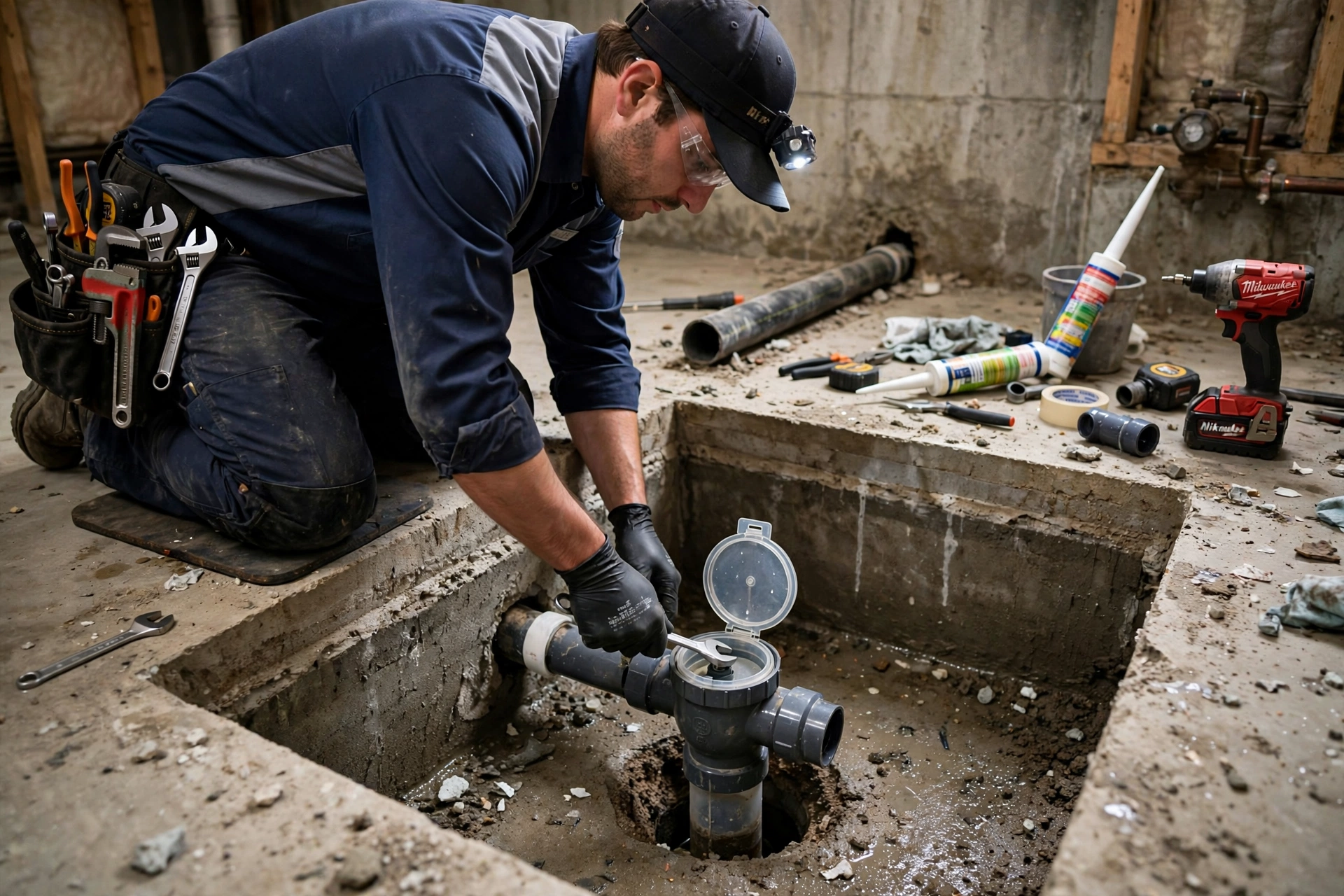
A backwater valve lets wastewater flow out and blocks it from coming back in. For homes below street level, it's the single best backup protection.
How Do You Keep It From Happening Again?
Prevention is a layered approach, starting with the highest-impact step.
- Install a backwater valve. This one-way valve on your lateral lets sewage flow out and slams shut when flow reverses. If your basement floor sits below the nearest manhole cover, you're a strong candidate. Some Ohio municipalities require backwater valves in certain situations, so check local code. Read more about backwater valve installation.
- Get the line inspected and cleared. Roots and grease are the two most common backup causes in a home's own lateral. A camera inspection followed by hydro jetting or root cutting clears the line, and it tells you whether the pipe itself needs repair.
- Separate footing drains from the lateral. In older homes, foundation drains sometimes tie into the sewer lateral, dumping huge volumes of groundwater into it during rain. Disconnecting them (to a sump pump and daylight or storm drain, where code allows) can end rain-triggered backups.
- Repair failing pipe. If the camera shows a collapsed section or a line full of roots, no valve or cleaning schedule fixes that permanently. Trenchless repair replaces the failing section without tearing up the yard.
Homes in older Cleveland neighborhoods and Cincinnati's riverfront districts see this combination most: combined sewers outside, old laterals inside, and basements below the street. If that describes your home, prevention isn't optional.
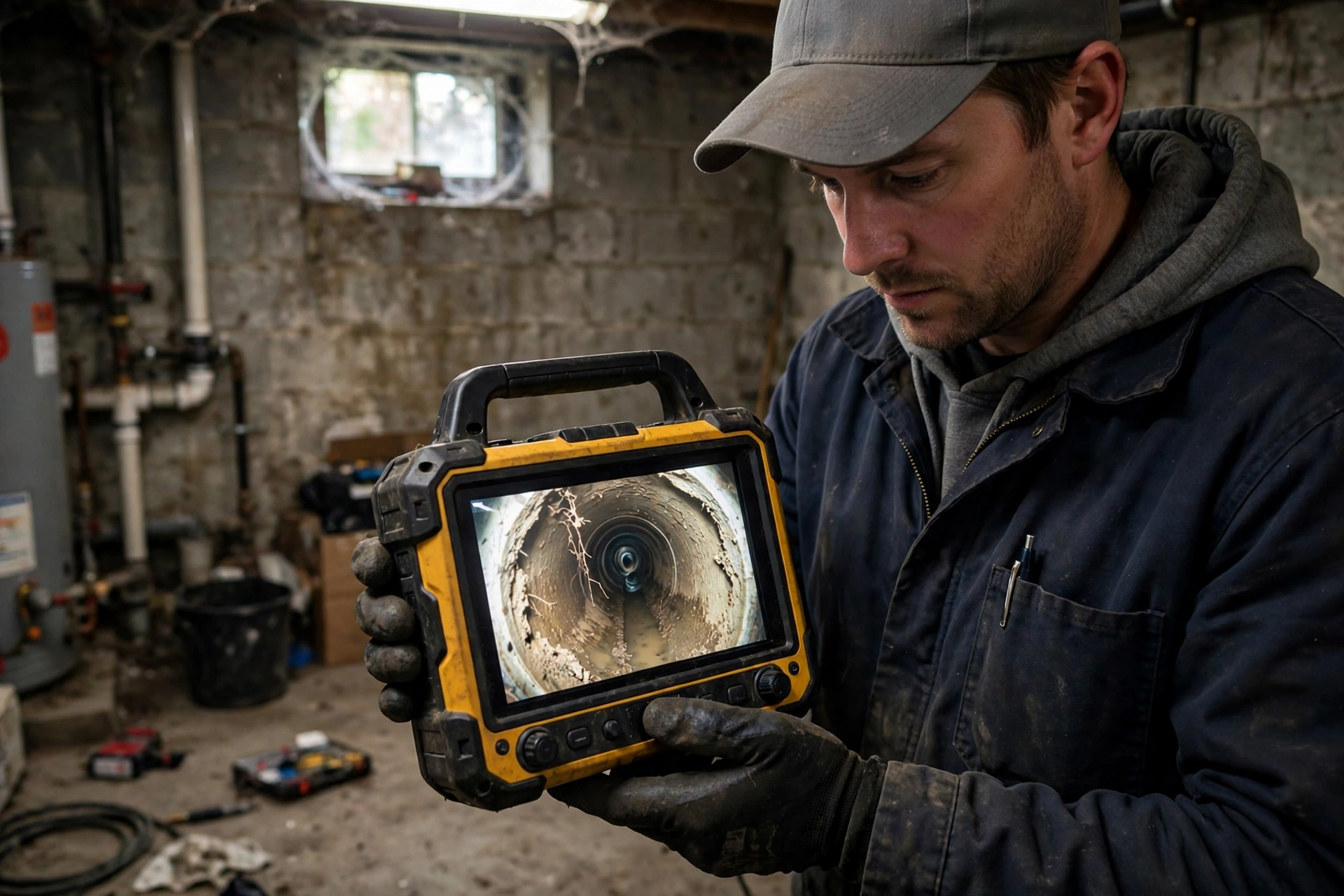
After a backup, the camera tells you which pipe failed. Don't handle repairs until you've seen the problem yourself.
What Does Backup Cleanup and Prevention Involve?
Cleanup work depend on how far the sewage spread and what it touched, but the prevention side is straightforward to plan for. A backwater valve installation typically runs in the low thousands as an illustrative range, while a full lateral replacement is a bigger project. Our Ohio sewer guide breaks down the repair side with honest ranges so you can weigh repair against prevention.
One more money point: check your insurance before you need it. A sewer backup endorsement is inmajor compared to one cleanup, and you can't add it after the water's already on the floor.
Basement Backup FAQs
Rainwater enters your sewer line through cracked joints, open cleanouts, or footing drains tied into the lateral, and it can overwhelm the line's capacity. In older Ohio neighborhoods with combined sewers, stormwater and sewage share one pipe, so a heavy downpour can surcharge the whole system and push sewage back into basements. If backups track with rainfall, the trigger is water getting in somewhere it shouldn't.
Stop using all water immediately, every flush and running tap adds to the backup. Keep people and pets away from the sewage, and don't stand in the water if it reaches electrical outlets or appliances. Call your sewer district or a sewer contractor. A camera inspection after the backup clears will identify whether the cause was a blockage in your lateral or surcharge from the city main.
A backwater valve is a one-way valve installed on your sewer lateral that lets wastewater flow out but snaps shut when flow tries to reverse, blocking sewage from the street from entering your basement. If your basement floor is below the nearest manhole cover, which is true in many Ohio neighborhoods with combined sewers, you're a candidate. Some municipalities require them in new or renovated work.
Usually it depends on where the blockage is. You own the lateral from your house to the connection at the street or property line, the city owns the main. If the backup comes from a root-filled or collapsed lateral on your side, it's yours to fix. If the city main surcharged during a storm and pushed sewage back, that's on their system, but the cleanup and prevention in your home are still your responsibility.
Standard homeowners policies typically exclude sewer backups, but many Ohio insurers sell a sewer backup or water backup endorsement for a modest annual premium. It usually covers cleanup and damage to belongings, not the repair of the sewer line itself. Service line coverage is a separate endorsement that helps with lateral repairs. Check your policy before a backup happens, because you can't add coverage mid-crisis.
Where Can You Learn More?
- Ohio EPA: the state's environmental agency, with guidance on water quality and home wastewater issues.
- U.S. EPA: federal resources on septic systems and household wastewater.
- Call 811: the free national service that marks buried utilities before you dig.
Backed Up Once? Let's Make Sure It Doesn't Happen Again.
We'll find the cause, show you the footage, and lay out your options, from a backwater valve to a full lateral replacement.
Call (614) 350-5706