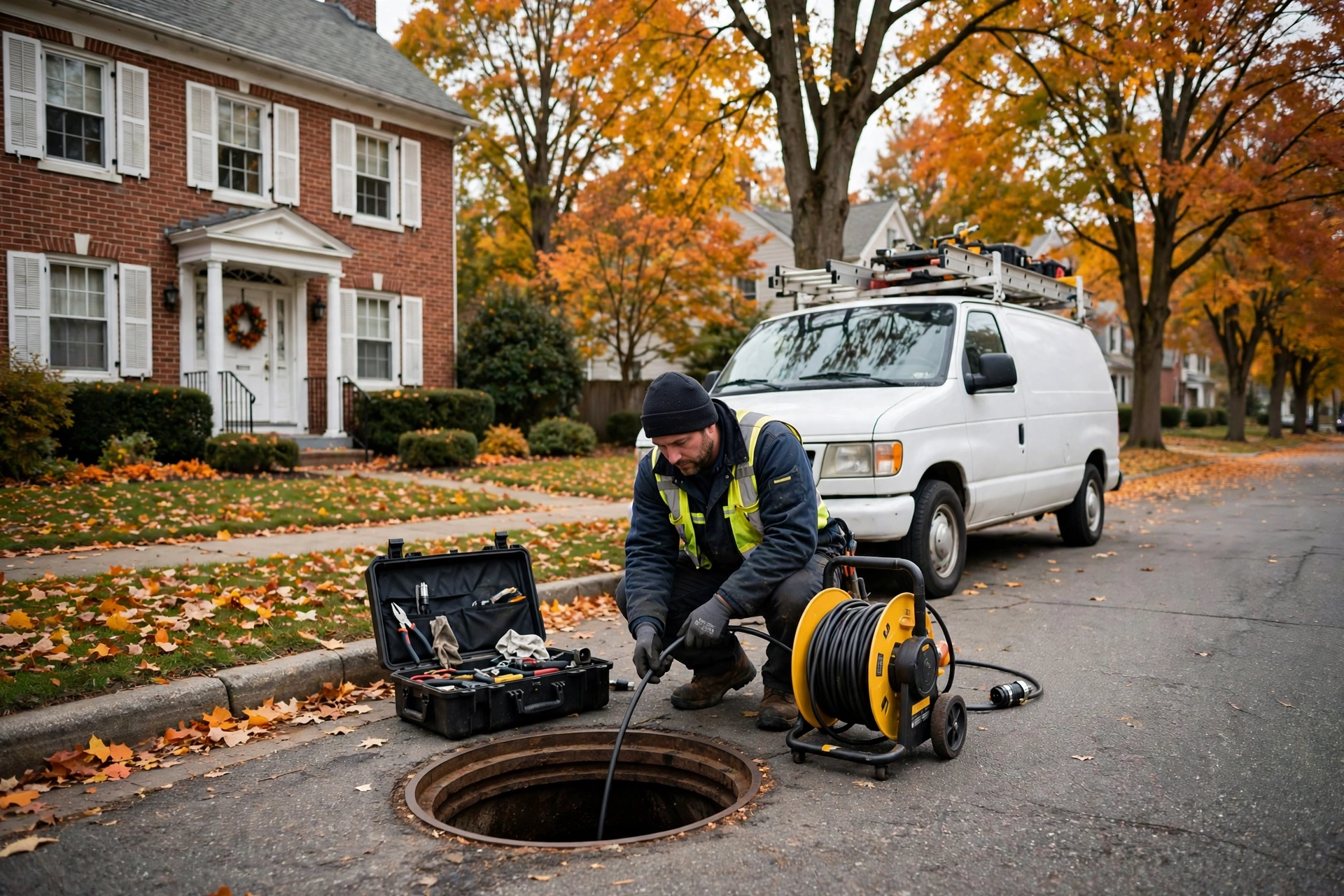
South Euclid, Ohio
Why Do South Euclid's Hillside Grades Stress Sewer Lines?
Much of South Euclid slopes toward the Euclid Creek valley, and slopes move. That slow downhill creep is the number-one enemy of rigid clay pipe.
Here's the mechanism. Rainwater saturates the soil on a grade, and saturated soil is heavy. Over the years, that heavy soil creeps downhill, fractions of an inch at a time. Your sewer lateral is a rigid line of clay tile segments running through that moving soil. The pipe can't flex with the creep, so joints separate, sections offset, and eventually the line shears. The camera shows offsets as sharp steps where pipe segments no longer line up.
The classic symptom is a backup that recurs in the same spot after heavy rain, in a home on or below a grade. Streets near the Euclid Creek Reservation see this most. Trenchless sewer repair is often the answer: lining bridges minor offsets, and bursting replaces sheared lines with flexible HDPE that tolerates ground movement far better than clay ever did.
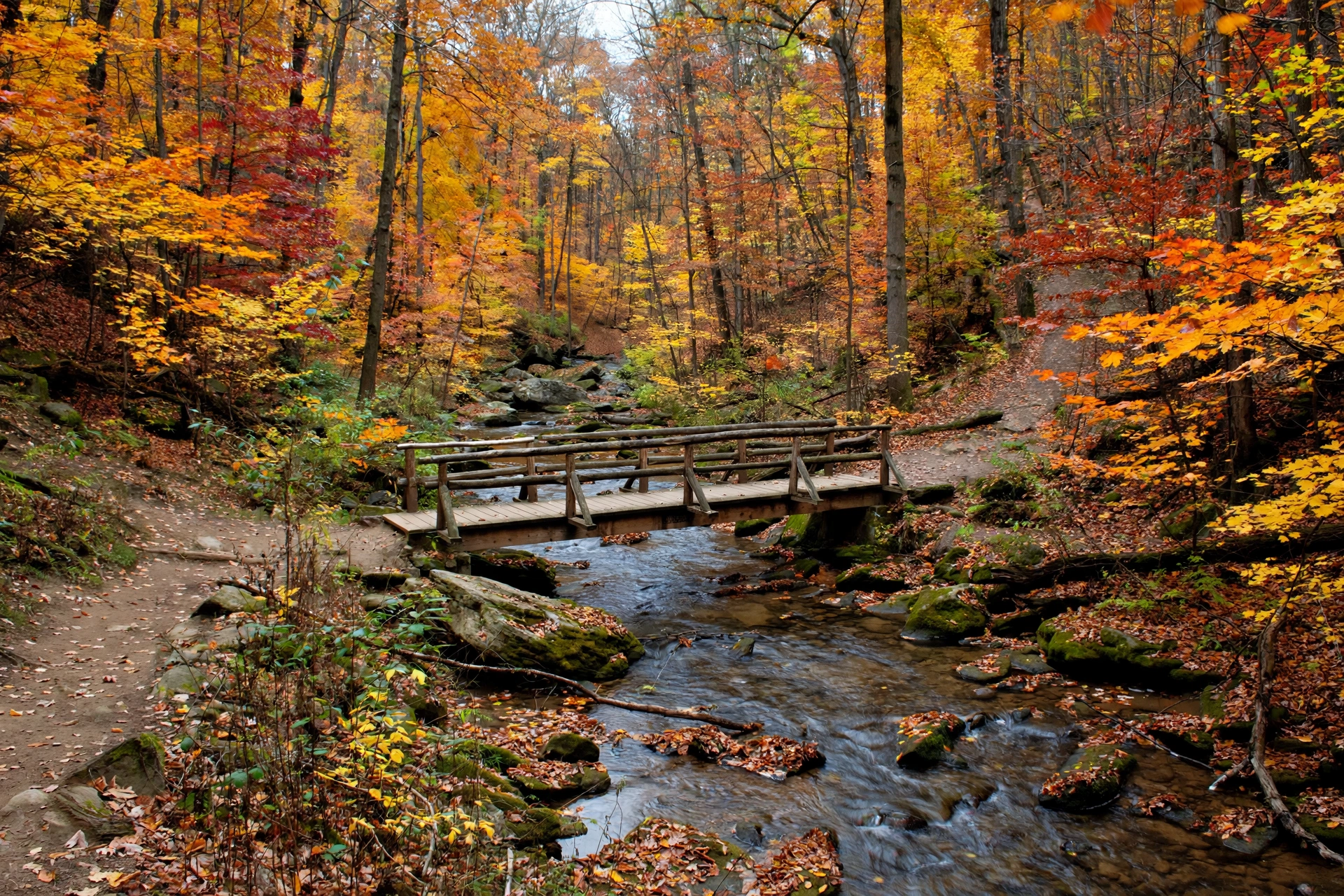
The Euclid Creek valley: beautiful parkland above, shifting saturated soil around the sewer lines below.
How Does the Euclid Creek Valley Affect Your Lateral?
The valley does double damage. First, the grades, as described above. Second, the moisture. The creek valley holds water in the surrounding soil, keeping laterals in saturated ground for much of the year. Saturated soil shifts more than dry soil, stressing every joint, and it requirementds groundwater into every crack through infiltration, overloading lines that were already marginal.
Homes closest to the reservation, and homes on the steeper streets grading down toward it, see the most valley-related failures. If your South Euclid drains slow down every spring, the combination of snowmelt-saturated soil and root growth is the usual suspect. A fall camera inspection catches the damage while it's still a lining job instead of a replacement.
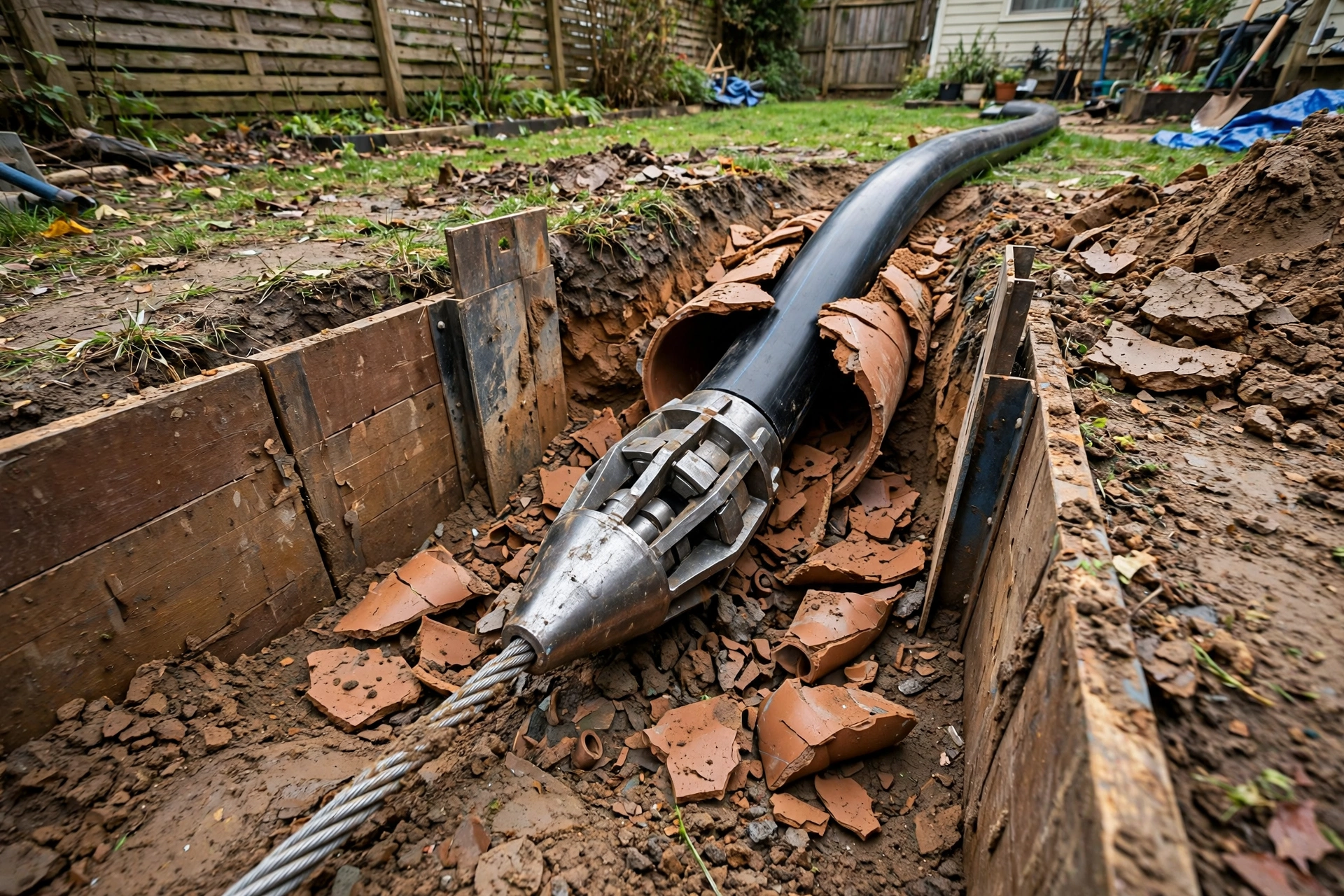
Pipe bursting replaces offset clay tile with jointless HDPE through small entry and exit pits.
What Kind of Pipes Do South Euclid's College-Town Homes Have?
South Euclid's housing tells the city's growth story in pipe materials. The neighborhoods around Notre Dame College and toward the Cleveland Heights border hold 1920s and 30s brick colonials and Tudors on original clay tile. The post-war streets toward Mayfield Road and Green Road mix in 1940s and 50s homes with cast iron transitioning to clay. John Carroll University sits just over the border in University Heights, and the surrounding rental streets see heavy use on old lines.
Across every era, the constant is the tree canopy. South Euclid's mature maples and oaks are relentless about finding clay tile joints, and once roots are inside, snaking only buys time. Ohio Sewer Masters handles the full fix across South Euclid, from the college neighborhoods to the valley streets: camera first, honest diagnosis, upfront plan.
Who Handles Sewers in South Euclid?
You own the lateral from your house to the public main, including everything under your yard, driveway, and sidewalk. The Northeast Ohio Regional Sewer District (NEORSD) manages the regional sewer system and treatment. Cleveland Water handles drinking water, not sewers.
Cleveland Water's supply runs about 7 grains per gallon, moderately hard. Inside South Euclid's aging clay and cast iron laterals, that mineral content leaves scale that layers onto rough joints and tuberculation, narrowing flow faster than age alone. Hydro jetting clears the scale, but lining or replacement removes the rough surface it clings to.
The City of South Euclid requires permits for lateral work with inspection before backfill. We pull the permits and schedule the inspection as part of every job, it's included in the written plan, not a separate surprise.
How Does South Euclid's Water Quality Affect Your Sewer Line?
South Euclid receives Cleveland Water at about 7 grains per gallon, moderately hard. Inside the college-town homes' aging clay and cast iron laterals, that mineral content leaves scale that layers onto rough joints, narrowing flow faster than age alone. Hydro jetting clears the scale, and lining or replacement removes the rough surface it clings to.
How Should South Euclid Homeowners Maintain Their Sewer Lines Through the Seasons?
Get a camera inspection in spring, clear and seal root entry points in fall, and protect exposed cleanouts before winter. Spring rains and snowmelt drive groundwater into cracked joints on South Euclid's grades, so watch for slow drains after storms, that's infiltration overloading your lateral. Fall is when tree roots grow most aggressively, which makes autumn the best window to jet roots out and line the joints they came through. In winter, insulate shallow cleanout risers, keep them marked so plows don't shear them off, and never pour grease down the drain, it hardens fast in cold pipe.