Euclid, Ohio
Why Does the Lake Make Euclid Sewer Lines Fail Faster?
It's not bad luck, it's Lake Erie. Euclid's shoreline location creates the exact conditions that break buried pipe, and it does it faster than inland.
Euclid runs for miles along Lake Erie, and the ground near the shore stays saturated most of the year. The water table sits high, especially along the Lakeshore Boulevard corridor and near Euclid Creek, which means sewer laterals spend their lives in wet soil. Wet soil is heavy soil, and heavy soil shifts, presses on pipe joints, and washes into every small opening.
Then winter arrives. Euclid sits squarely in the lake-effect belt, so temperatures swing above and below freezing for months. Each cycle pushes water into hairline cracks and mortar joints, freezes it, and wedges the crack wider. Dozens of cycles per winter, year after year, and clay tile joints from the 1950s eventually give out. The failures cluster in late winter, right when the ground starts thawing from the top while deeper soil stays frozen.
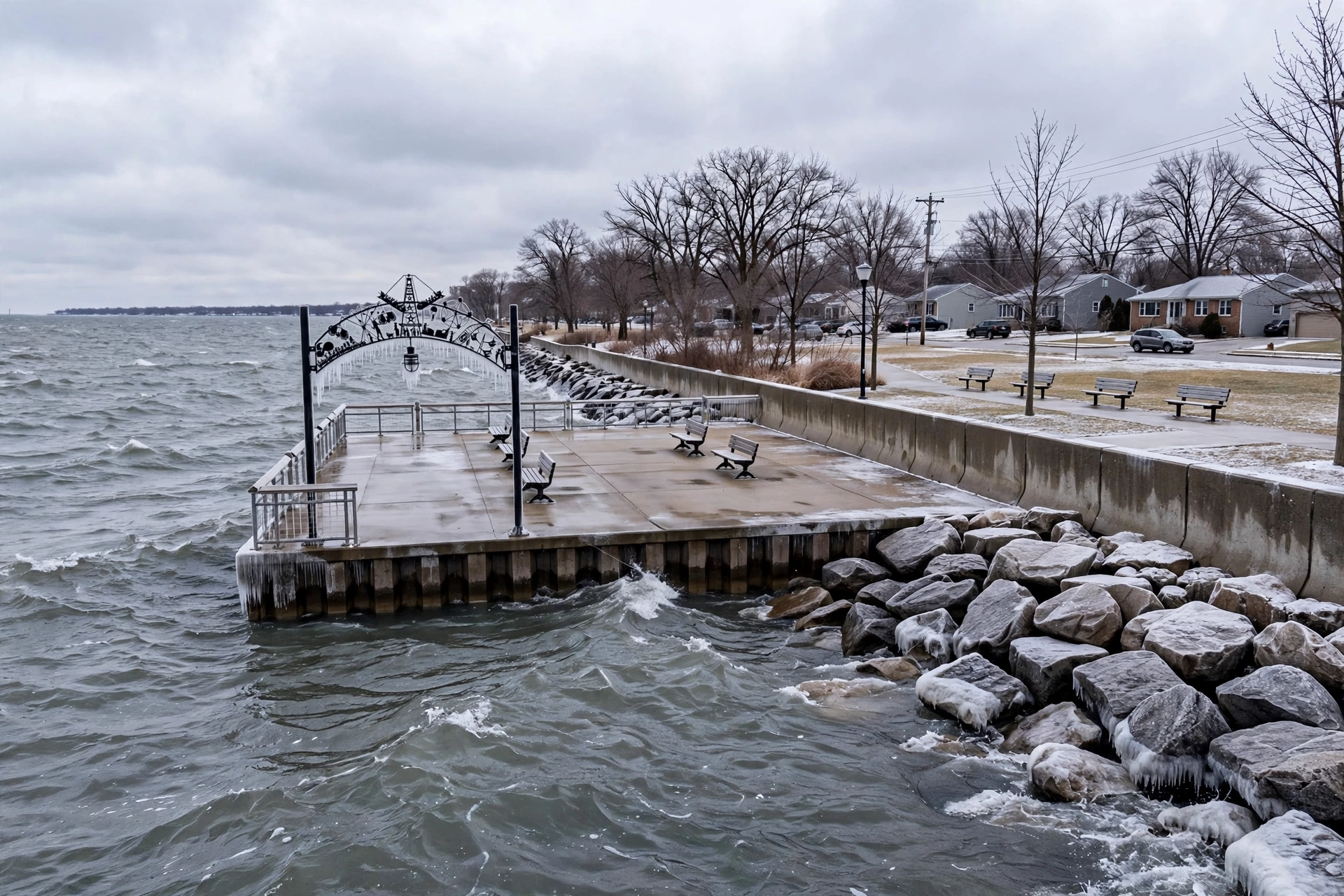
Euclid's Lake Erie shoreline: beautiful in summer, brutal on buried sewer lines every winter.
What's Under Euclid's Post-War Homes?
Most of Euclid's housing went up between 1940 and 1970, brick ranches and Cape Cods in neighborhoods like Indian Hills and along the lakefront streets. The typical lateral from that era is cast iron where it leaves the house, transitioning to vitrified clay tile with mortar joints out by the street. After 60 to 80 years, the cast iron is rusting from the inside out while the clay joints are crumbling and letting in roots from the street maples.
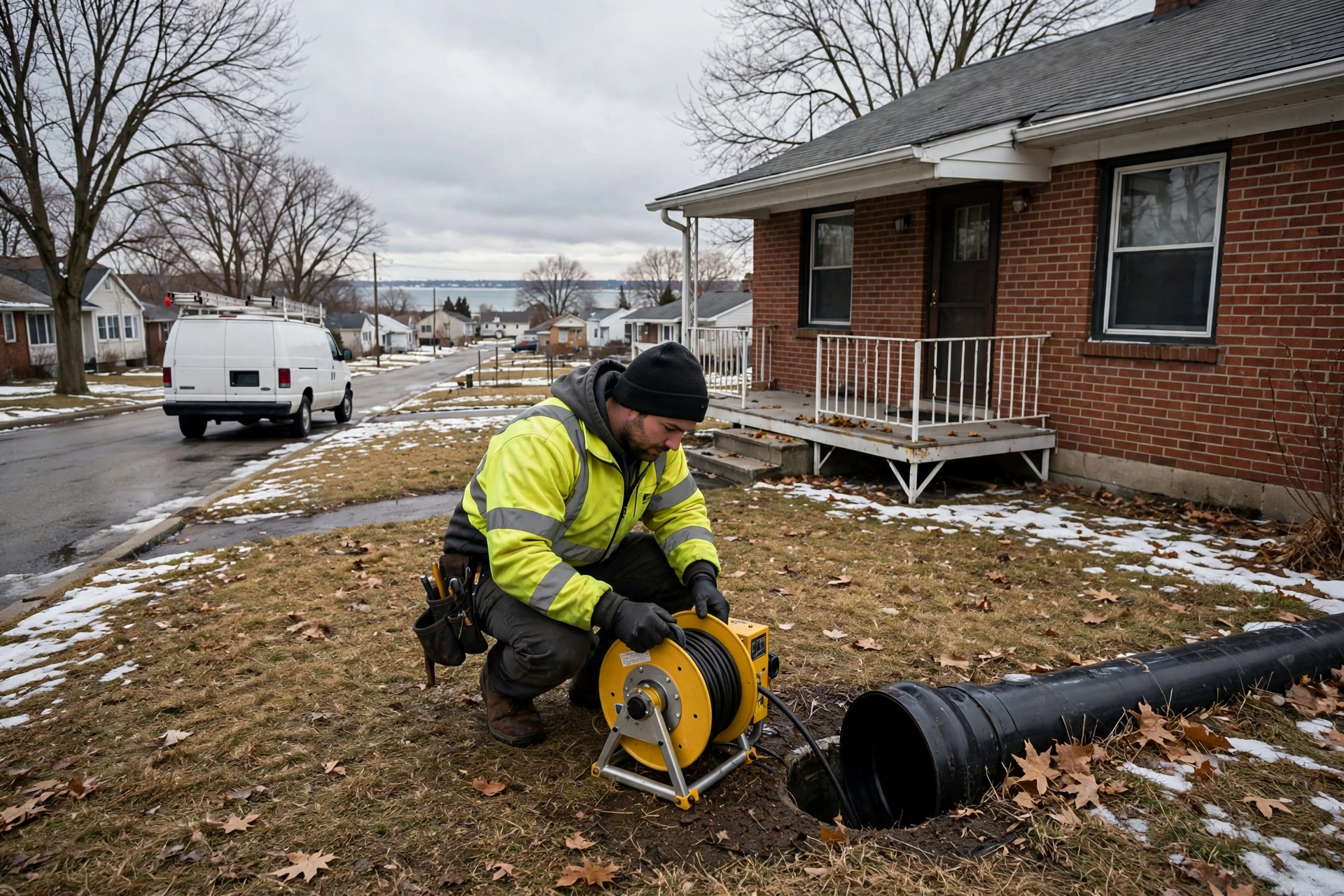
The camera tells the real story in about an hour. We see this combination constantly in Euclid: a cast iron section that's paper-thin at the bottom, then clay tile with offset joints and root masses. Lines in this condition are often excellent candidates for trenchless sewer repair. Lining seals the joints and locks roots out, bursting replaces the whole run with HDPE, and your driveway stays intact either way.
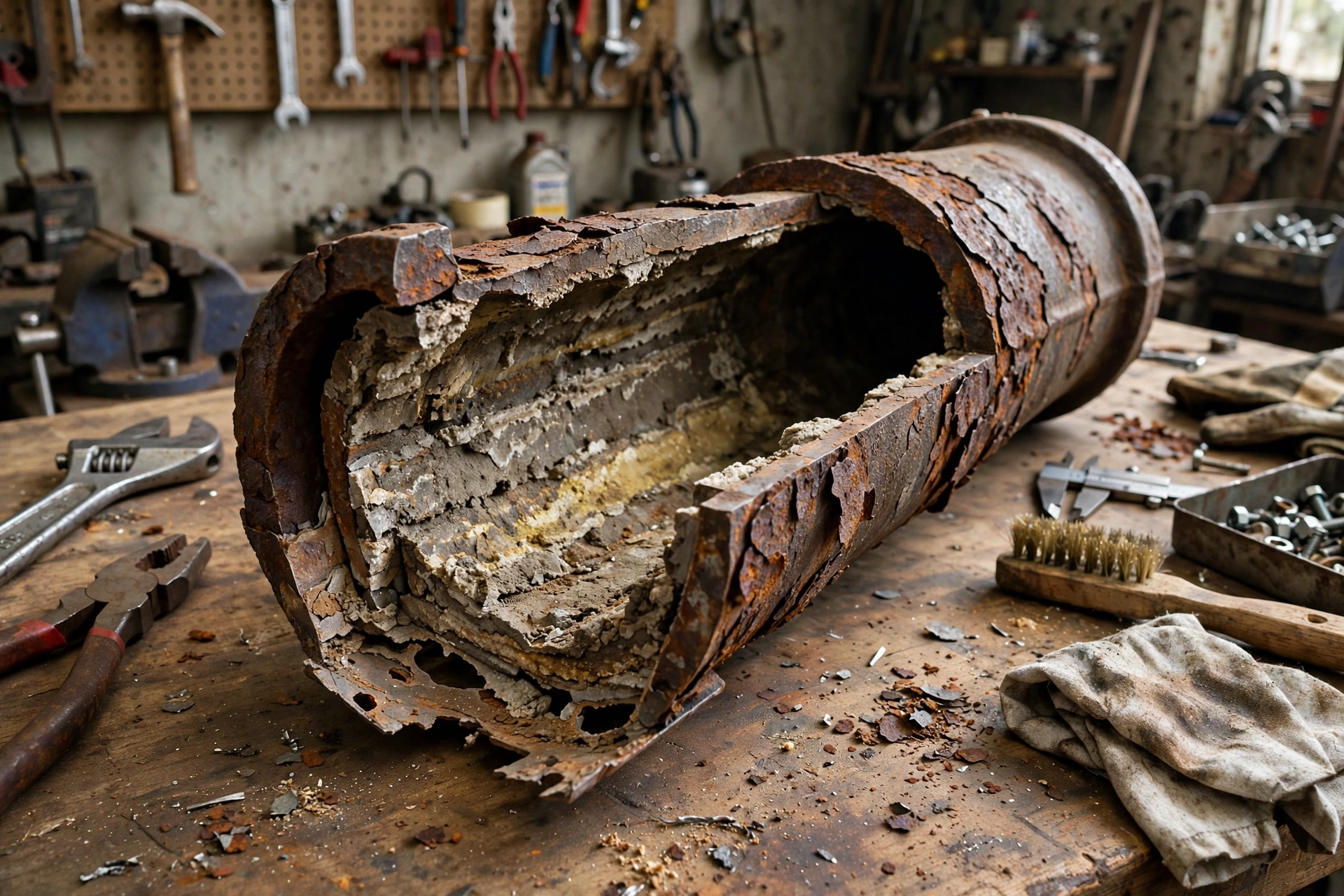
Cast iron rusts from the inside out. This is what 70 years looks like from the camera's point of view.
Where Do Euclid's Sewer Problems Cluster?
Three zones produce most of our Euclid calls. First, the lakefront streets, where the high water table keeps soil saturated and accelerates joint failure. Second, the Euclid Creek valley, where grades and wet soils around the reservation stress older lines. Third, the older sections along Lakeshore Boulevard and downtown Euclid, where the housing and the pipe are the oldest.
Wherever you are in Euclid, the process is the same one Ohio Sewer Masters uses statewide: camera first, honest diagnosis, upfront plan. Off I-90 or down by Sims Park, the prescription doesn't change, only the pipe does.
Who Owns What on a Euclid Sewer Line?
You own the lateral from your house to the public main, usually at the street. That includes the section under your yard, driveway, and sidewalk. Unlike most Cleveland suburbs, Euclid runs its own system: the City of Euclid operates its own wastewater treatment plant on Lakeshore Boulevard and maintains the city's public sanitary sewers, which also serve portions of South Euclid, Richmond Heights, Willoughby Hills, Wickliffe, and Willowick. Cleveland Water handles drinking water, not sewers.
Cleveland Water's supply runs about 7 grains per gallon, moderately hard. Inside Euclid's aging cast iron laterals, that mineral content leaves scale that layers onto rust and tuberculation, narrowing the flow channel faster than rust alone. Hydro jetting clears the scale, but lining or replacement removes the rough surface it clings to.
If sewage backs up in your home alone, the lateral is the prime suspect, and that's our work. If multiple homes on your street back up at once, call the City of Euclid, it's likely a main-line problem on the city's own system, not NEORSD. Sewer work in Euclid needs a city permit with inspection before backfill, and we pull the permits and schedule the inspection as part of every job.
How Does Euclid's Water Quality Affect Your Sewer Line?
Euclid's water arrives through Cleveland Water at about 7 grains per gallon, moderately hard by the utility's own measure. Inside Euclid's aging cast iron laterals, that mineral content leaves scale that layers onto rust, narrowing the flow channel faster than rust alone. Hydro jetting clears it, and lining or replacement removes the rough surface it clings to.
How Should Euclid Homeowners Maintain Their Sewer Lines Through the Seasons?
Get a camera inspection in spring, clear and seal root entry points in fall, and protect exposed cleanouts before winter. Spring rains and snowmelt drive groundwater into cracked joints, so watch for slow drains after storms, that's infiltration overloading your line. Fall is when tree roots grow most aggressively, which makes autumn the best window to jet roots out and line the joints they came through. In winter, insulate shallow cleanout risers, keep them marked so plows don't shear them off, and never pour grease down the drain, it hardens fast in cold pipe.