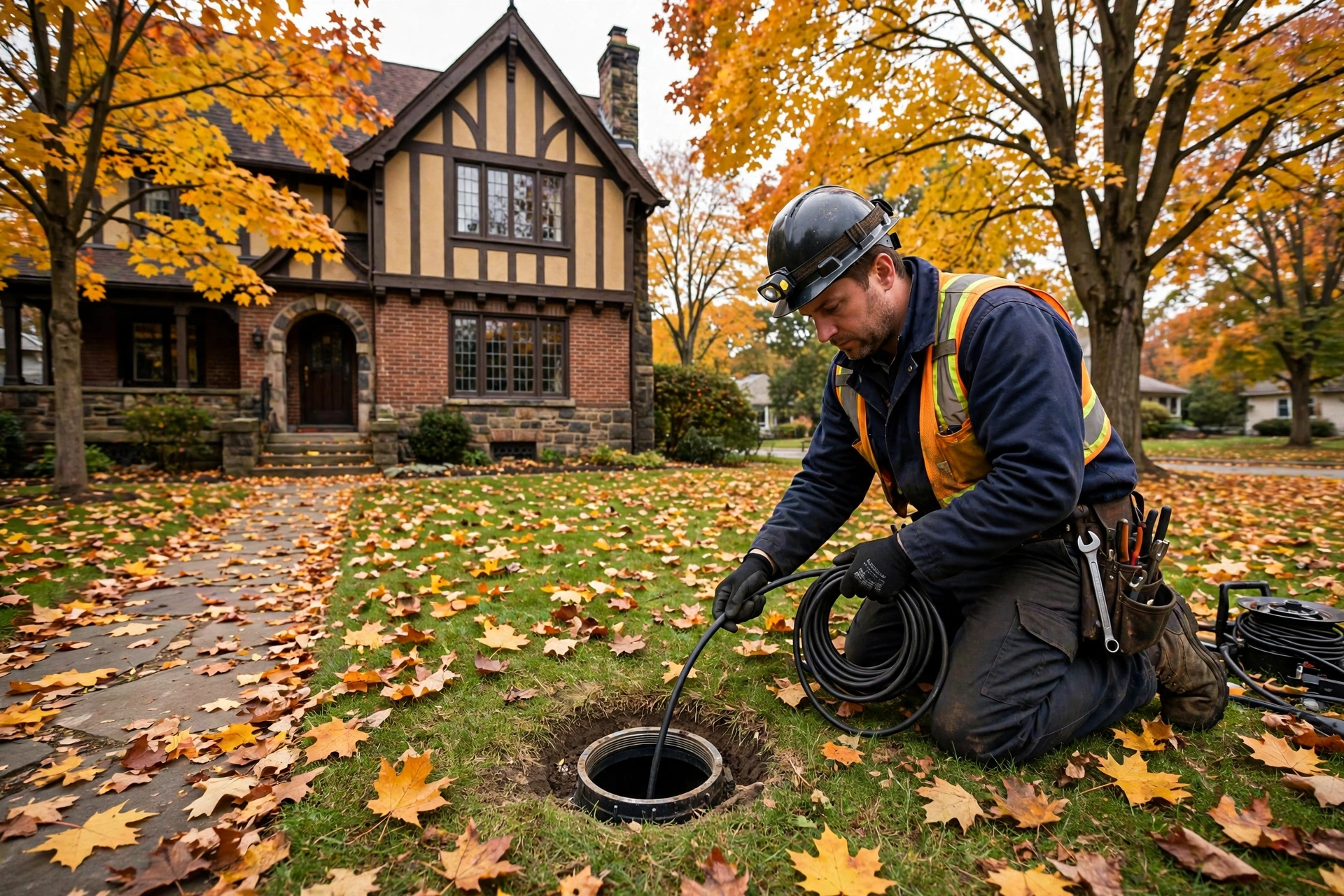
Cleveland Heights, Ohio
Why Do Cleveland Heights' 1920s Sewer Lines Keep Failing?
Cleveland Heights built most of its housing between 1910 and 1940, and the sewer lines are exactly that old. A century of clay tile, tree roots, and shifting soil adds up.
Walk Coventry Village, Cedar-Fairmount, or the streets off Cedar-Lee and you're looking at Tudors, colonials, and Craftsman homes from the 1910s through the 1930s. Under nearly all of them runs the same thing: vitrified clay tile with mortar-sealed joints, laid when the streets were new. After 90 to 110 years, the mortar joints have crumbled, the clay sections have shifted in the soil, and the mature street trees have spent decades pushing root hairs into every damp joint they can find.
The pattern is predictable. A homeowner notices the basement floor drain burping during heavy rain, or the downstairs toilet gurgling when the washing machine drains. The camera goes in and finds the classic Cleveland Heights picture: offset clay joints packed with root masses, sometimes with soil washing in behind them. Catch it at this stage and trenchless sewer repair usually saves the line. Wait until sections collapse and the job gets bigger.

Coventry Village sits above some of the oldest clay tile laterals in the Cleveland suburbs.
How Do Pipe Profiles Change From Coventry to Cedar-Lee?
The housing era changes the pipe story by neighborhood. Around Coventry Village and Cedar-Fairmount, the homes are the oldest, with original clay tile laterals and stone foundations. The Cedar-Lee district and the streets toward Severance Town Center run slightly newer, 1920s to 1940s, but with the same clay tile and the same relentless tree canopy. Up toward the border with University Heights, post-war infill brings cast iron into the mix.
Grades matter here too. Much of Cleveland Heights slopes down toward Doan Brook and University Circle, and sewer lines on a slope fight a slow battle: soil creeps downhill over the decades, rigid clay joints separate, and sections offset. Homes on the steeper streets see more offset joints than homes on flat ground, and the camera shows it clearly as sharp steps where pipe segments no longer line up.
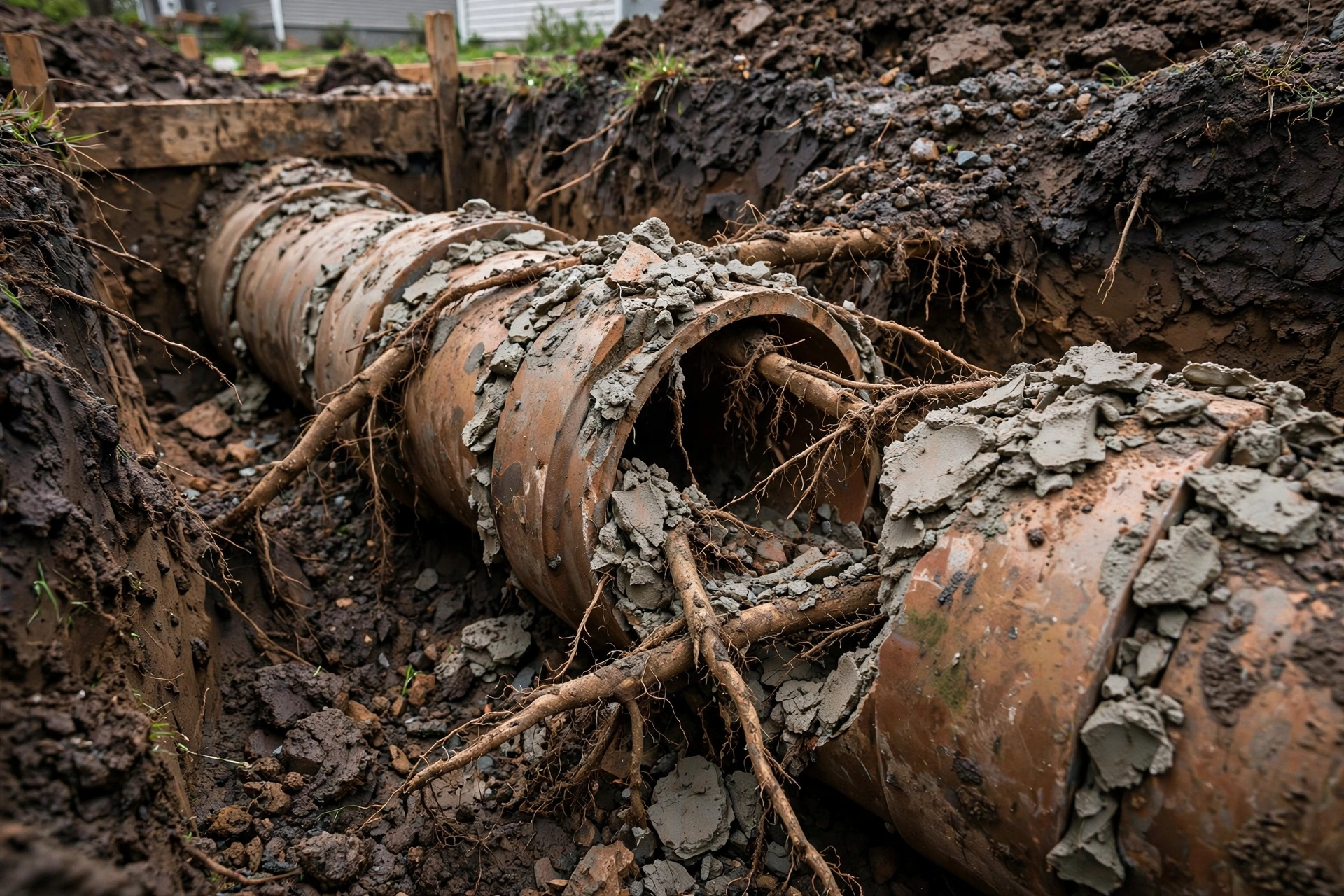
A century of crumbled mortar joints plus Cleveland Heights' tree canopy: this is what we find most often.
Why Does Cleveland Heights' Tree Canopy Threaten Sewer Lines?
Cleveland Heights residents love their trees, and so do their sewer problems. The city's mature maples, oaks, and elms send root systems far wider than their canopies, and every root tip is hunting for moisture. A clay tile joint weeping even slightly is a beacon. Fine root hairs enter, thicken year after year, and eventually wedge the joint apart and fill the pipe with a fibrous mass.
Here's the part homeowners miss: snaking clears the roots but leaves every entry point wide open, so they grow back thicker. The permanent fix removes the entry points. Lining seals every joint with a continuous new pipe inside the old one. Bursting replaces the line entirely with jointless HDPE that roots can't penetrate. Either way, the trees stay and the roots stay out. Ohio Sewer Masters handles the full diagnosis and fix across Cleveland Heights, from Coventry to the University Circle border.
Who Owns What on a Cleveland Heights Sewer Line?
You own the lateral from your house to the public main, usually at the street, including everything under your yard and sidewalk. The Northeast Ohio Regional Sewer District (NEORSD) manages the regional sewer system and treatment. Cleveland Water handles drinking water, not sewers.
Cleveland Water's supply runs about 7 grains per gallon, moderately hard. Inside century-old clay laterals, that mineral content leaves scale that layers onto rough joints and tuberculation, narrowing flow faster than age alone. Hydro jetting clears the scale, but lining or replacement removes the rough surface it clings to.
Solo backup means lateral, street-wide backup means main, and that's the fastest way to know who to call. The City of Cleveland Heights requires permits for lateral work with inspection before backfill, and we pull the permits and schedule inspections as part of every job.
How Does Cleveland Heights' Water Quality Affect Your Sewer Line?
Cleveland Heights runs on Cleveland Water at about 7 grains per gallon, moderately hard Lake Erie water. Inside the city's century-old clay laterals, that mineral content leaves scale that layers onto rough joints, narrowing flow faster than age alone. Hydro jetting clears the scale, and lining or replacement removes the rough surface it clings to.
How Should Cleveland Heights Homeowners Maintain Their Sewer Lines Through the Seasons?
Get a camera inspection in spring, clear and seal root entry points in fall, and protect exposed cleanouts before winter. Spring rains drive groundwater into cracked joints, so watch for slow drains after storms, that's infiltration overloading your lateral. Fall is when tree roots grow most aggressively, which makes autumn the best window to jet roots out and line the joints they came through. In winter, insulate shallow cleanout risers, keep them marked so plows don't shear them off, and never pour grease down the drain, it hardens fast in cold pipe.