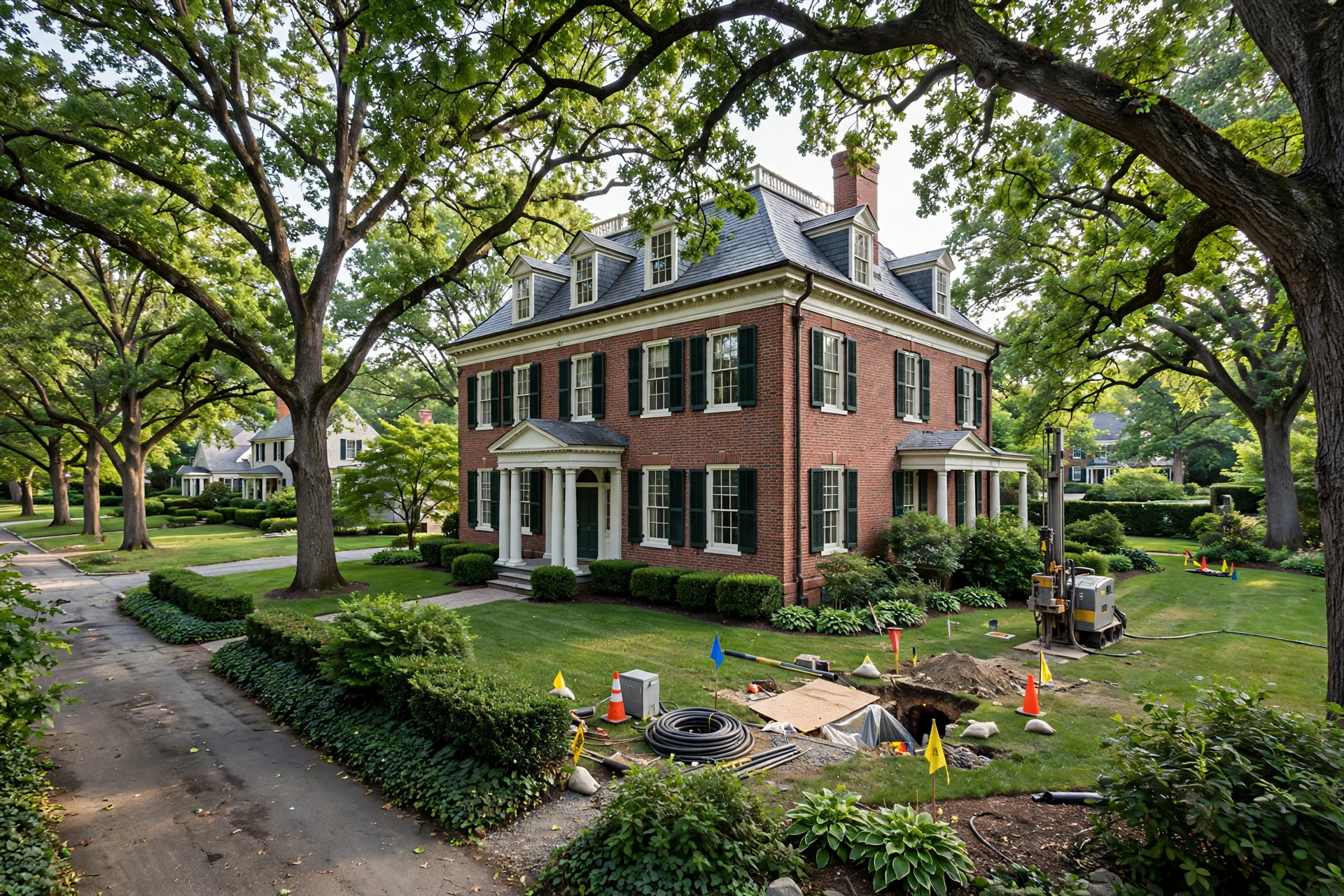
Shaker Heights, Ohio
Why Are Shaker Heights' Historic Sewer Lines So Vulnerable?
The Van Sweringen brothers planned Shaker Heights as a garden suburb in the 1910s and 1920s. The homes are historic, the trees are magnificent, and the sewer lines are original.
Under the colonials, Tudors, and French Normandy homes of Shaker Heights runs vitrified clay tile with mortar-sealed joints, laid a century ago. The pipe itself, the clay, can last. The joints can't. Mortar crumbles, sections shift in the soil, and every joint becomes an invitation to the neighborhood's mature oaks and maples. Root hairs enter as threads and leave, years later, as a woody mass wedging the joint apart.
The cruel irony: the landscaping that makes Shaker Heights valuable is what threatens the pipes. Homeowners understandably dread the idea of a backhoe crossing a 40-year-old garden. That's why trenchless sewer repair was practically made for this city. Lining seals every joint through small access points. Bursting replaces the line with jointless HDPE. The garden never knows we were there.

The Van Aken District anchors the south side of Shaker Heights, where 1920s clay laterals are now a century old.
How Do We Protect Historic Landscaping During Sewer Repair?
Traditional open-trench replacement across a Shaker Heights yard can mean removing mature plantings, tearing up brick walkways, and regrading a lawn that took decades to perfect. Trenchless methods exist to avoid exactly that. A lining job typically needs only small access pits. A bursting job needs an entry and an exit pit. The work happens underground while the yard stays intact.
There's a second reason trenchless fits Shaker Heights: the rapid transit lines. The Green and Blue Lines run through the city, and some laterals cross near the tracks and the landscaped rights-of-way along them. Minimal-dig methods keep the work contained and the neighborhood undisturbed. We evaluate every Shaker Heights job for trenchless first and only recommend digging when the pipe's condition demands it.
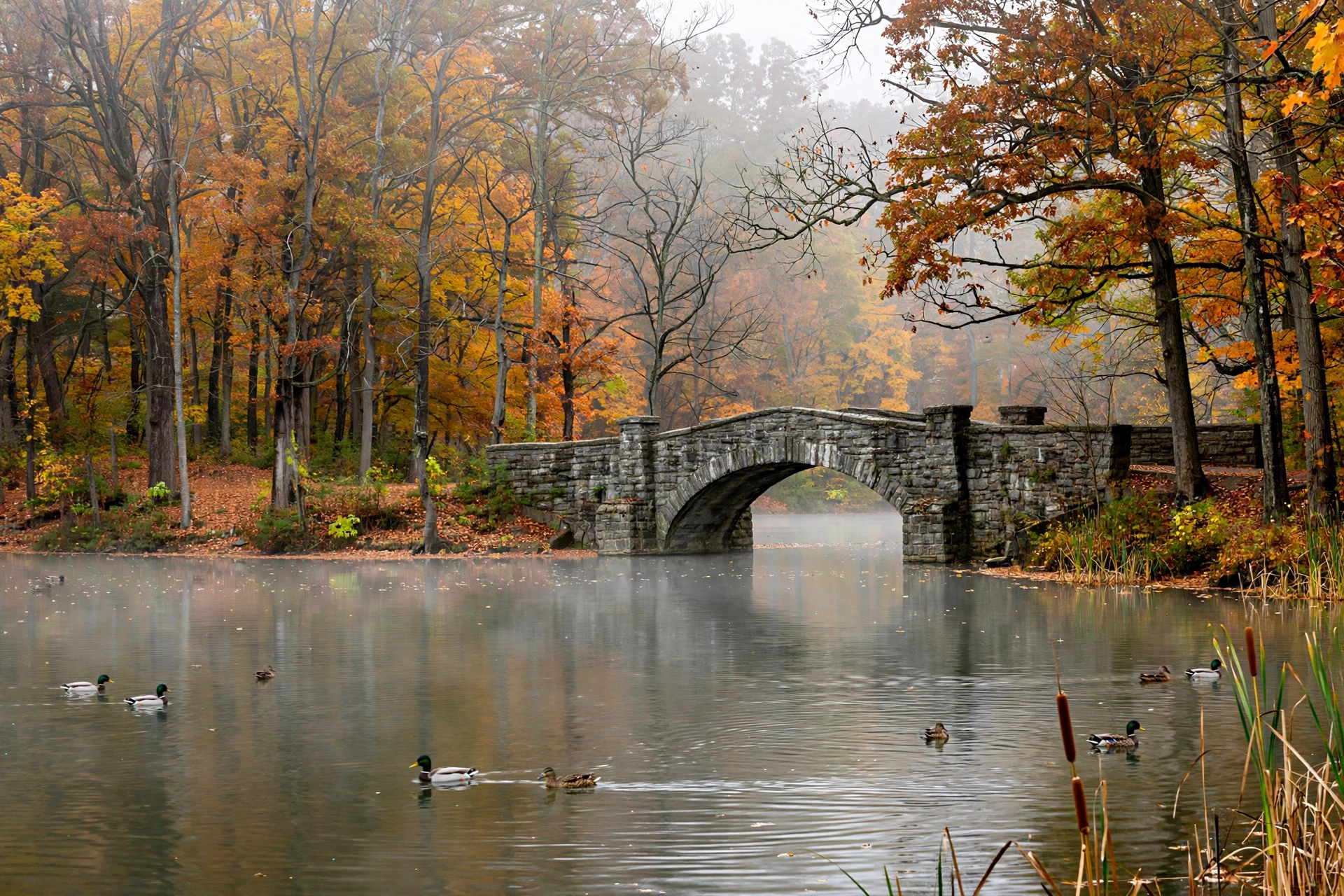
Doan Brook requirementds Shaker Lakes, and the grades around the lakes keep soil moving under nearby laterals.
How Do Pipe Profiles Change From Van Aken to the Lakes?
The pipe story shifts slightly by area. The streets around the Van Aken District and the southern sections hold 1920s clay tile at the century mark. The neighborhoods bordering Shaker Lakes and Doan Brook sit on grades where soil creeps slowly downhill, separating rigid clay joints over the decades. The northern sections toward Cleveland Heights mix in slightly newer stock but keep the same mature canopy and the same root pressure.
Near the lakes, groundwater adds a second stressor. Doan Brook's valley holds moisture in the surrounding soil, and saturated soil shifts more than dry soil. If your Shaker Heights drains slow down every spring, the combination of root growth and seasonal groundwater is the usual suspect. Ohio Sewer Masters cameras the line, shows you the footage, and gives you one upfront plan, anywhere in the city.
Who Handles Sewers in Shaker Heights?
You own the lateral from your house to the public main, including everything under your yard, driveway, and sidewalk. The Northeast Ohio Regional Sewer District (NEORSD) manages the regional system, and Shaker Heights wastewater flows to the Southerly treatment plant. Cleveland Water handles drinking water, not sewers.
Cleveland Water's supply runs about 7 grains per gallon, moderately hard. Inside Shaker Heights' century-old clay laterals, that mineral content leaves scale that layers onto rough joints, narrowing flow faster than age alone. Hydro jetting clears the scale, but lining or replacement removes the rough surface it clings to.
The City of Shaker Heights requires permits for lateral work with inspection before backfill, and the city's historic character means we coordinate carefully around landscaping and streetscape. Per the city's required-approvals list, sewer repair and replacement needs a building permit, and the work must be done by a contractor registered in Shaker Heights. We handle all of it as part of the job.
How Does Shaker Heights' Water Quality Affect Your Sewer Line?
Shaker Heights runs on Cleveland Water at about 7 grains per gallon, moderately hard Lake Erie water. Inside the city's century-old clay laterals, that mineral content leaves scale that layers onto rough joints, narrowing flow faster than age alone. Hydro jetting clears the scale, and lining removes the rough surface it clings to without disturbing the landscaping.
How Should Shaker Heights Homeowners Maintain Their Sewer Lines Through the Seasons?
Get a camera inspection in spring, clear and seal root entry points in fall, and protect exposed cleanouts before winter. Spring rains drive groundwater into cracked joints, so watch for slow drains after storms, that's infiltration overloading your lateral. Fall is when tree roots grow most aggressively, which makes autumn the best window to jet roots out and line the joints they came through. In winter, insulate shallow cleanout risers, keep them marked so plows don't shear them off, and never pour grease down the drain, it hardens fast in cold pipe.