Maple Heights, Ohio
Why Are Maple Heights' Post-War Sewer Lines Failing Now?
Maple Heights grew up in the 1950s and 60s, and the cast iron laterals from that boom have a lifespan of about 60 to 80 years. The math is catching up all at once.
Cast iron is a cruel material because it fails invisibly. Rust and scale build up on the inside wall, narrowing the flow channel year by year, while the bottom of the pipe rusts thin. From the outside, and from inside the house, everything looks normal. The first symptom is usually a drain that slows down, gets snaked, works for a while, then slows down again. Each snaking buys less time than the last.
That's the signature of a Maple Heights cast iron lateral at end of life. The camera confirms it in minutes: heavy internal tuberculation, thin spots, sometimes bellies where the line has settled in the soil. At this stage, another snaking is just renting time. The permanent fixes are lining, which gives the old pipe a smooth new interior, or bursting, which replaces it entirely with HDPE.

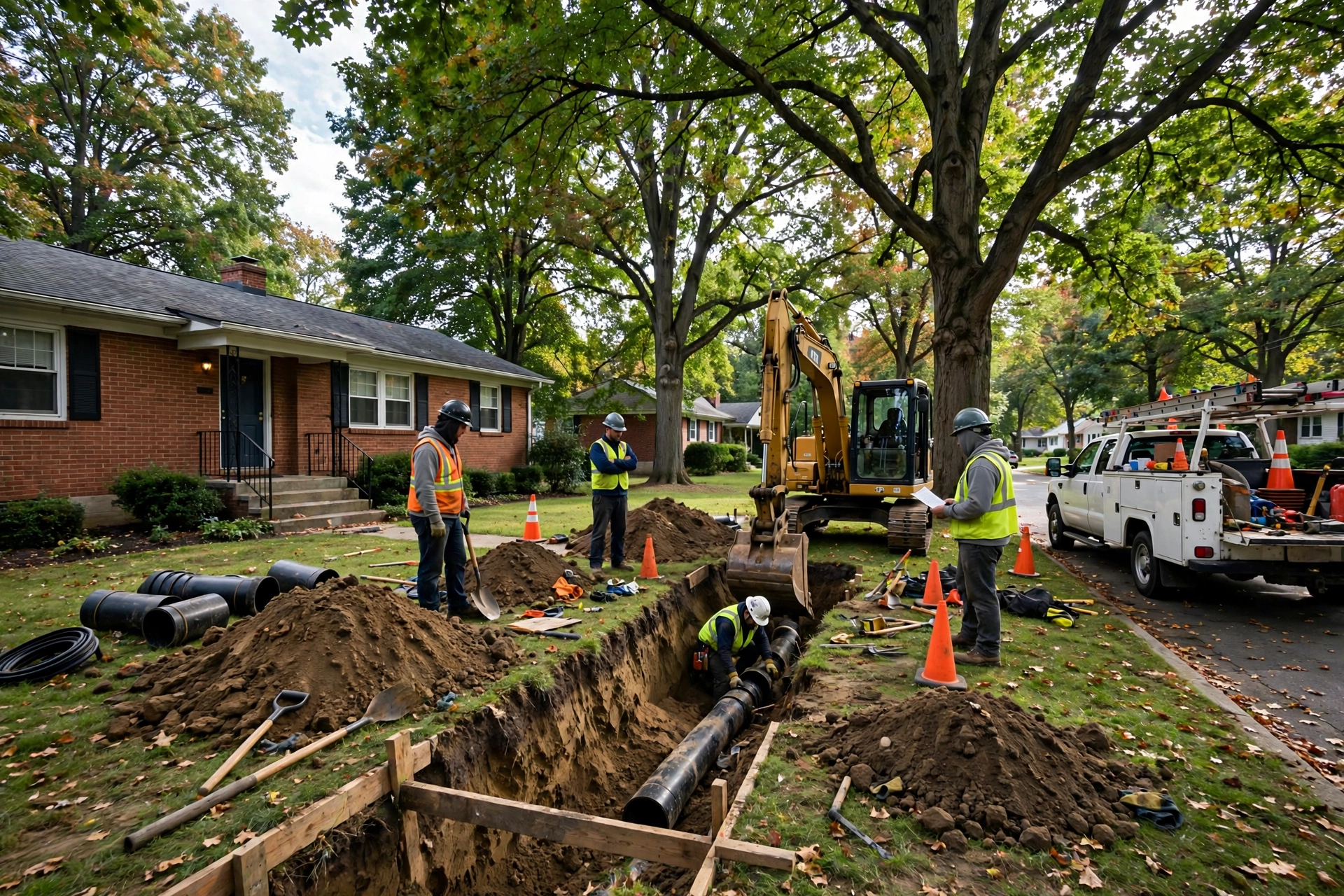
The Southgate USA corridor: mid-century Maple Heights above ground, mid-century pipe below it.
Where Do Maple Heights' Sewer Problems Cluster?
The residential streets off Broadway, Lee Road, and Dunham Road hold the densest concentration of 1950s and 60s bungalows and ranches, and that's where most of our Maple Heights calls come from. The housing is remarkably consistent in era, which means the pipe is remarkably consistent too: cast iron to the property line, clay tile beyond it.
The eastern neighborhoods toward Bedford sit near the Tinkers Creek valley, where soils stay wetter and the water table runs higher. Saturated soil shifts more than dry soil, stressing clay tile joints into offsets, and requirementds groundwater into every crack. If your Maple Heights basement is damp and the drains are slow, the valley's moisture is part of the story. Trenchless sewer repair handles both materials in one job: line the cast iron, burst the clay, or a combination matched to what the camera shows.
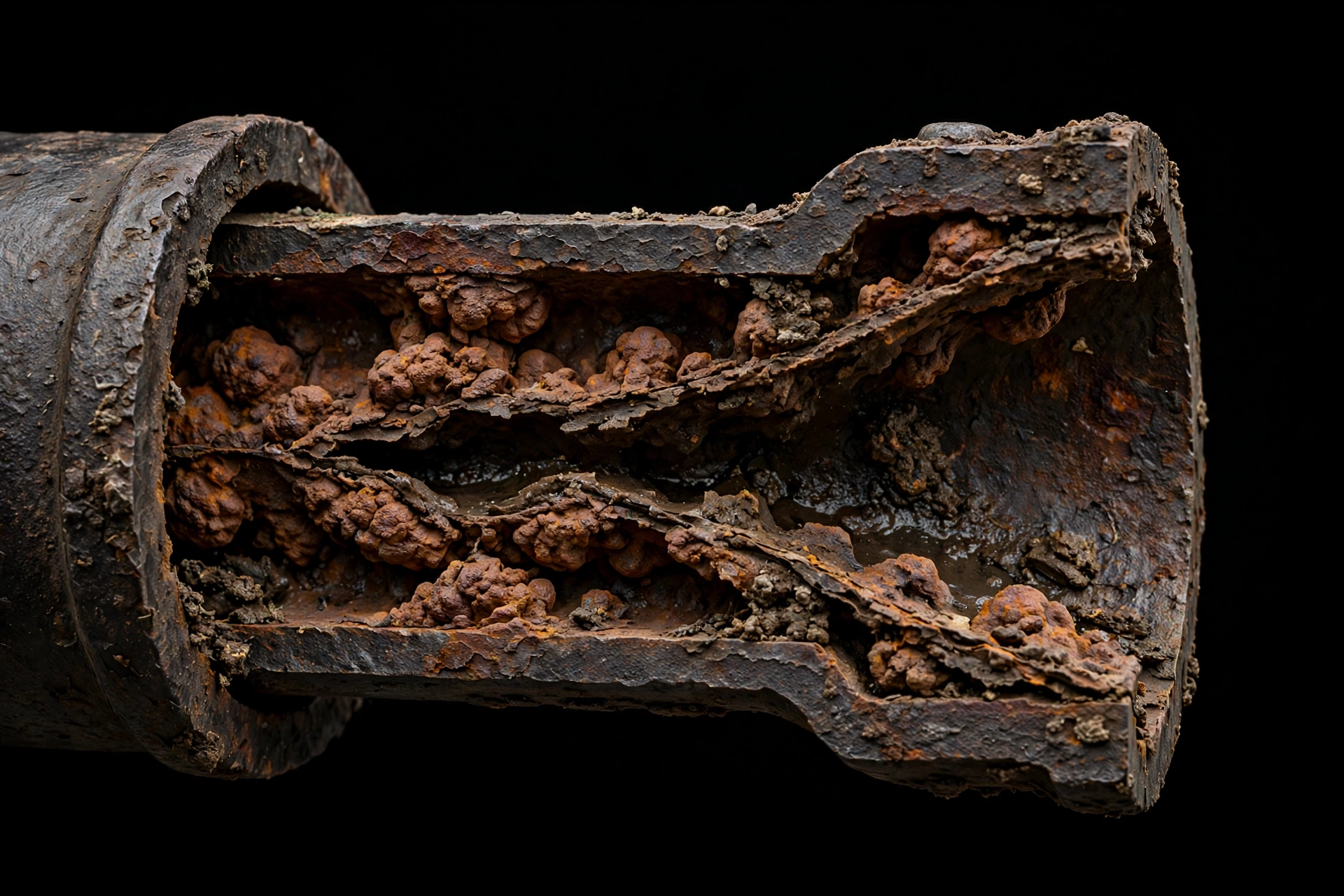
This is what 70-year-old cast iron looks like inside: scaled, narrowed, and thin at the bottom.
Why Does Cast Iron Fail Without Warning?
Here's what homeowners need to understand about cast iron: it doesn't crack like clay, it dissolves. The interior wall rusts and scales inward, and the flow channel that started at four inches can narrow to two. Toilets still flush, showers still drain, right up until the day they don't. There's rarely a dramatic break, just a line that gets a little worse every year until it can't keep up.
The camera is the only way to see it coming. We recommend Maple Heights homeowners with original cast iron get a camera inspection before the emergency, not after. If the pipe still holds its shape, lining is usually the most work-effective permanent fix. If it's too far gone, bursting replaces it with a jointless HDPE line rated for a century. Either way, Ohio Sewer Masters shows you the footage first and gives you one upfront plan.
Who Handles Sewers in Maple Heights?
You own the lateral from your house to the public main, including everything under your yard, driveway, and sidewalk. The Northeast Ohio Regional Sewer District (NEORSD) manages the regional system, and Maple Heights wastewater flows to the Southerly treatment plant. Cleveland Water handles drinking water, not sewers.
Cleveland Water's supply runs about 7 grains per gallon, moderately hard. Inside Maple Heights' aging cast iron laterals, that mineral content leaves scale that layers onto rust and tuberculation, narrowing the flow channel faster than rust alone. Hydro jetting clears the scale, but lining or replacement removes the rough surface it clings to.
Before sewer lateral work begins in Maple Heights, check with the city building department about permits and inspections. We handle the permit paperwork and inspection scheduling as part of every job.
How Does Maple Heights' Water Quality Affect Your Sewer Line?
Maple Heights receives Cleveland Water at about 7 grains per gallon, moderately hard Lake Erie water. Inside the suburb's aging cast iron laterals, that mineral content leaves scale that layers onto rust, narrowing the flow channel faster than rust alone. Hydro jetting clears the scale, and lining or replacement removes the rough surface it clings to.
How Should Maple Heights Homeowners Maintain Their Sewer Lines Through the Seasons?
Get a camera inspection in spring, clear and seal root entry points in fall, and protect exposed cleanouts before winter. Spring rains push groundwater into cracked joints, so watch for slow drains after storms, that's infiltration overloading your lateral. Fall is when tree roots grow most aggressively, which makes autumn the best window to jet roots out and line the joints they came through. In winter, insulate shallow cleanout risers, keep them marked so plows don't shear them off, and never pour grease down the drain, it hardens fast in cold pipe.