Broadview Heights, Ohio
Why Do Broadview Heights' Wooded Lots Threaten Sewer Lines?
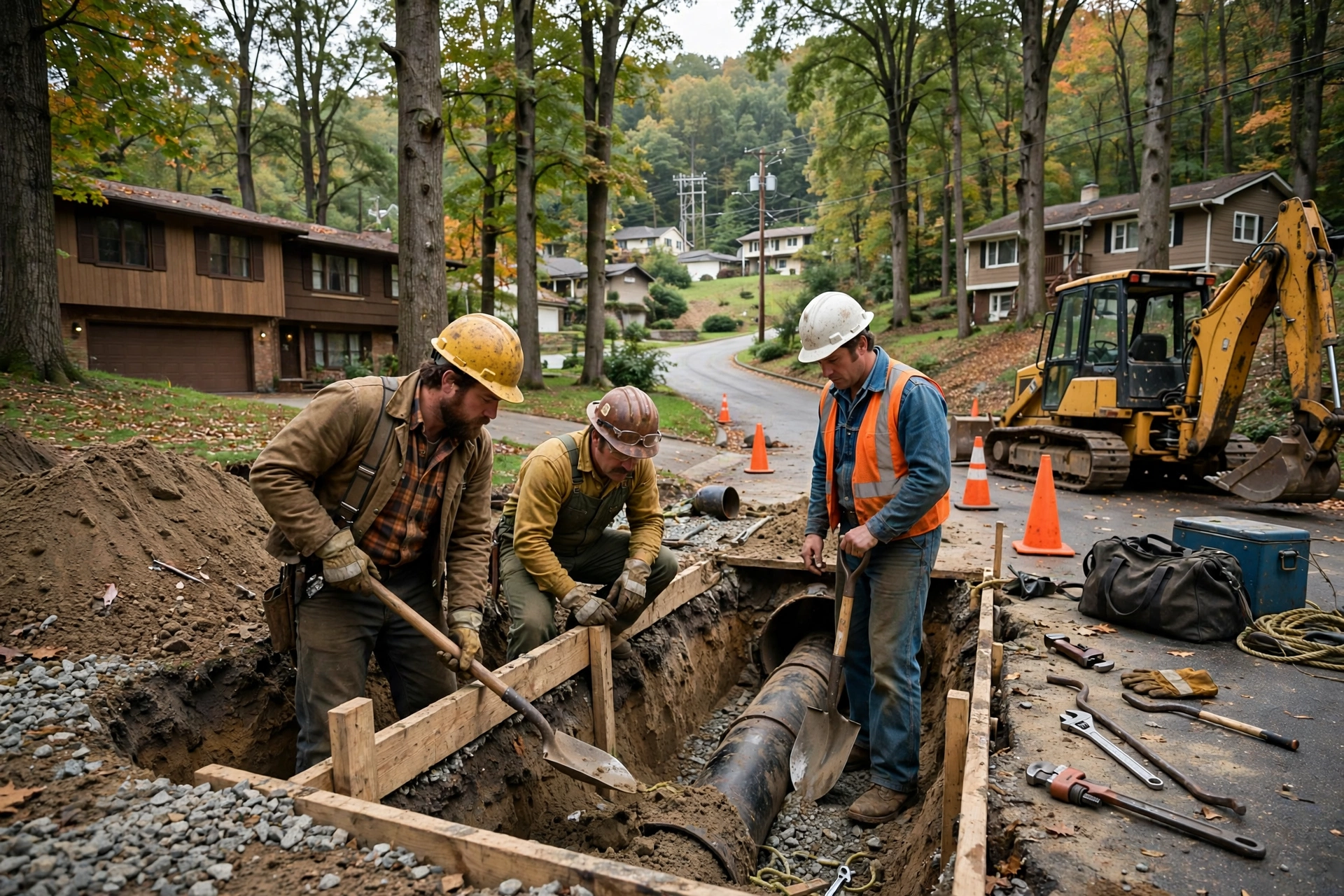
Broadview Heights kept its trees when the subdivisions went in, and those mature oaks, maples, and hickories are now the number-one threat to the city's aging laterals.
A tree's root system spreads far wider than its canopy, and every root tip hunts for moisture. The weeping mortar joints of 1960s and 70s clay tile laterals are beacons. Fine root hairs enter, thicken year after year, and eventually wedge joints apart and fill the pipe with a woody mass. On wooded lots, we find root intrusion in laterals that would otherwise have decades of life left.
Snaking clears the symptom and leaves every entry point open, so the roots come back thicker. The permanent fix removes the entry points: trenchless sewer repair by lining seals every joint with a continuous new pipe, and bursting replaces the line with jointless HDPE that roots can't penetrate. The trees stay. The roots stay out.
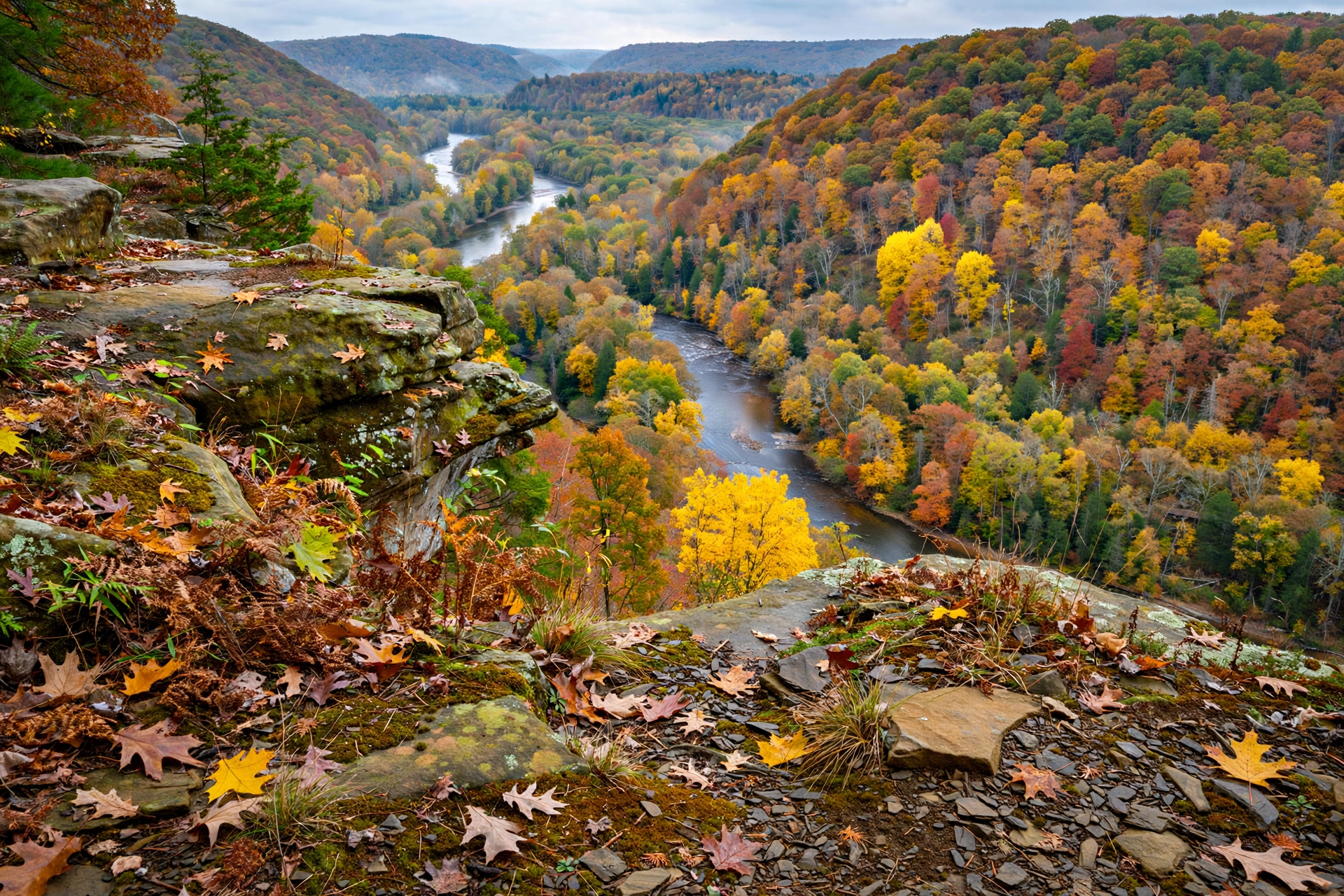
The Cuyahoga Valley falls away east of Broadview Heights, and the grades keep soil moving under nearby laterals.
How Do Valley Grades and Clay Soil Damage Sewer Lines?
Broadview Heights sits high ground that falls off toward the Cuyahoga River valley and the Brecksville Reservation, and slopes move. Rainwater saturates the soil, the heavy soil creeps downhill over the years, and rigid clay tile joints separate under the movement. The camera shows the result as sharp steps where pipe segments no longer line up, and the classic symptom is a backup that recurs in the same spot after heavy rain.
The soil itself adds stress. Glacial clay swells when wet and shrinks when dry, working every rigid joint a little looser each season. For offset lines on grades, pipe bursting is often the right answer: it replaces segmented clay with continuous, flexible HDPE that tolerates ground movement far better than the old pipe ever could.
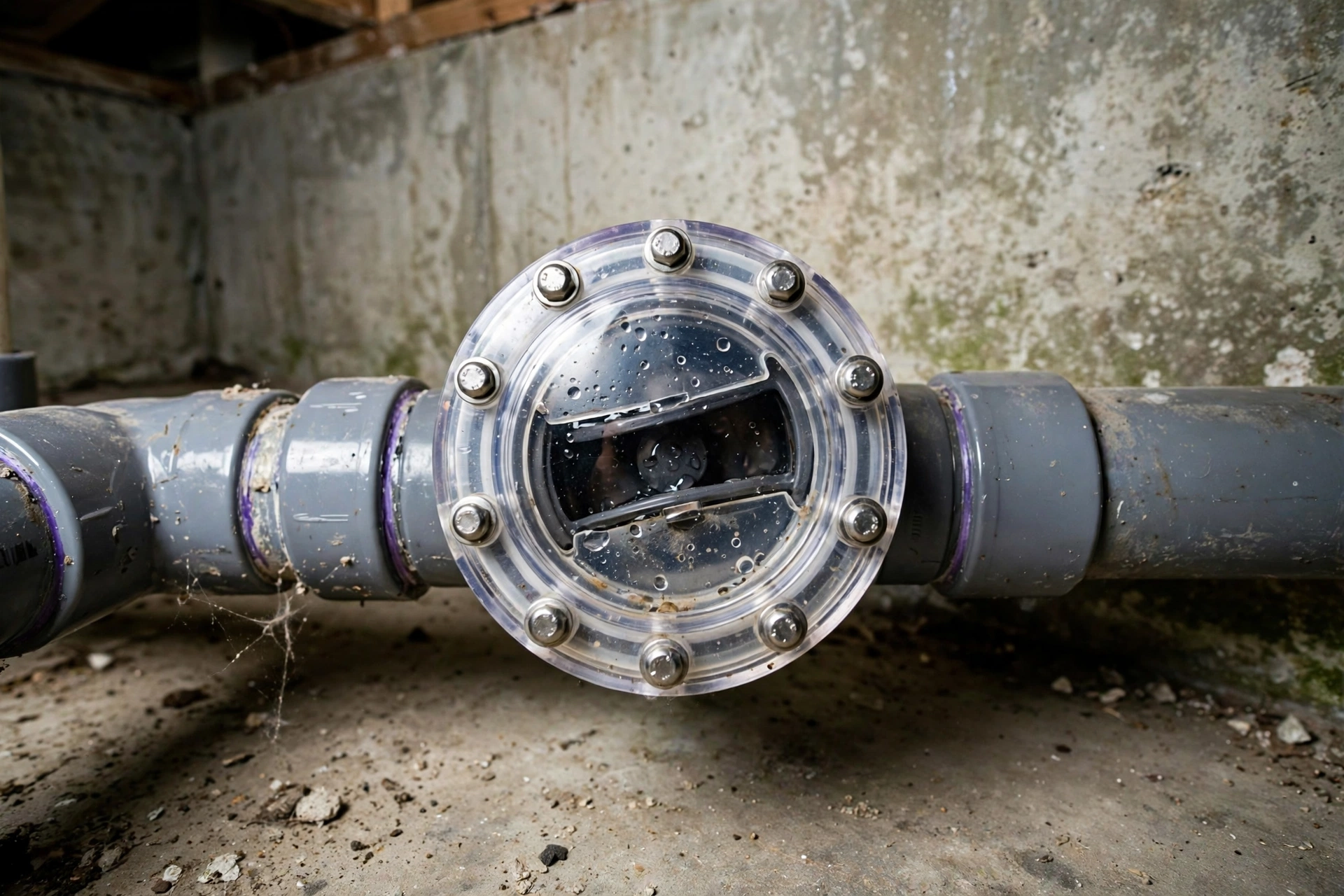
A backwater valve is a one-way gate on your lateral: sewage flows out, but backups can't flow back in.
How Did I-77 Corridor Growth Leave Aging Infrastructure?
I-77 runs through Broadview Heights, and the corridor drove the subdivisions of the 1960s through the 1980s, split-levels and colonials on generous wooded lots. Those laterals are now 40 to 60 years old: clay tile with crumbling mortar joints, some cast iron at the house, all of it under root pressure and slope stress. The commercial development along the corridor adds grease-loaded lines and high-volume flow to the mix.
For homes on the valley grades, there's one more protection worth knowing about: the backwater valve. It's a one-way gate on your lateral that lets sewage out but slams shut when flow tries to come back in, the single best defense against backups during heavy rain. Ohio Sewer Masters installs them across Broadview Heights, and for low-lying homes they're the highest-value upgrade available.
Who Handles Sewers in Broadview Heights?
You own the lateral from your house to the public main, including everything under your yard, driveway, and sidewalk. The Northeast Ohio Regional Sewer District (NEORSD) manages the regional system, and Broadview Heights wastewater flows to the Southerly treatment plant. Cleveland Water handles drinking water, not sewers.
Cleveland Water's supply runs about 7 grains per gallon, moderately hard. Inside Broadview Heights' aging clay and cast iron laterals, that mineral content leaves scale that layers onto rough joints and tuberculation, narrowing flow faster than age alone. Hydro jetting clears the scale, but lining or replacement removes the rough surface it clings to.
The City of Broadview Heights requires permits for lateral work with inspection before backfill. We pull the permits and schedule the inspections as part of every job, it's included in the written plan.
How Does Broadview Heights' Water Quality Affect Your Sewer Line?
Broadview Heights buys its water from Cleveland Water, which reports about 7 grains per gallon of hardness from Lake Erie. That moderate mineral content still leaves scale that layers onto rough joints and tuberculation in the suburb's aging clay and cast iron laterals, narrowing flow faster than age alone. Hydro jetting clears the scale, and lining removes the rough surface it clings to.
How Should Broadview Heights Homeowners Maintain Their Sewer Lines Through the Seasons?
Get a camera inspection in spring, clear and seal root entry points in fall, and protect exposed cleanouts before winter. Spring rains push groundwater into cracked joints, so watch for slow drains after storms, that's infiltration overloading your lateral. Fall is when tree roots grow most aggressively, which makes autumn the best window to jet roots out and line the joints they came through. In winter, insulate shallow cleanout risers, keep them marked so plows don't shear them off, and never pour grease down the drain, it hardens fast in cold pipe.