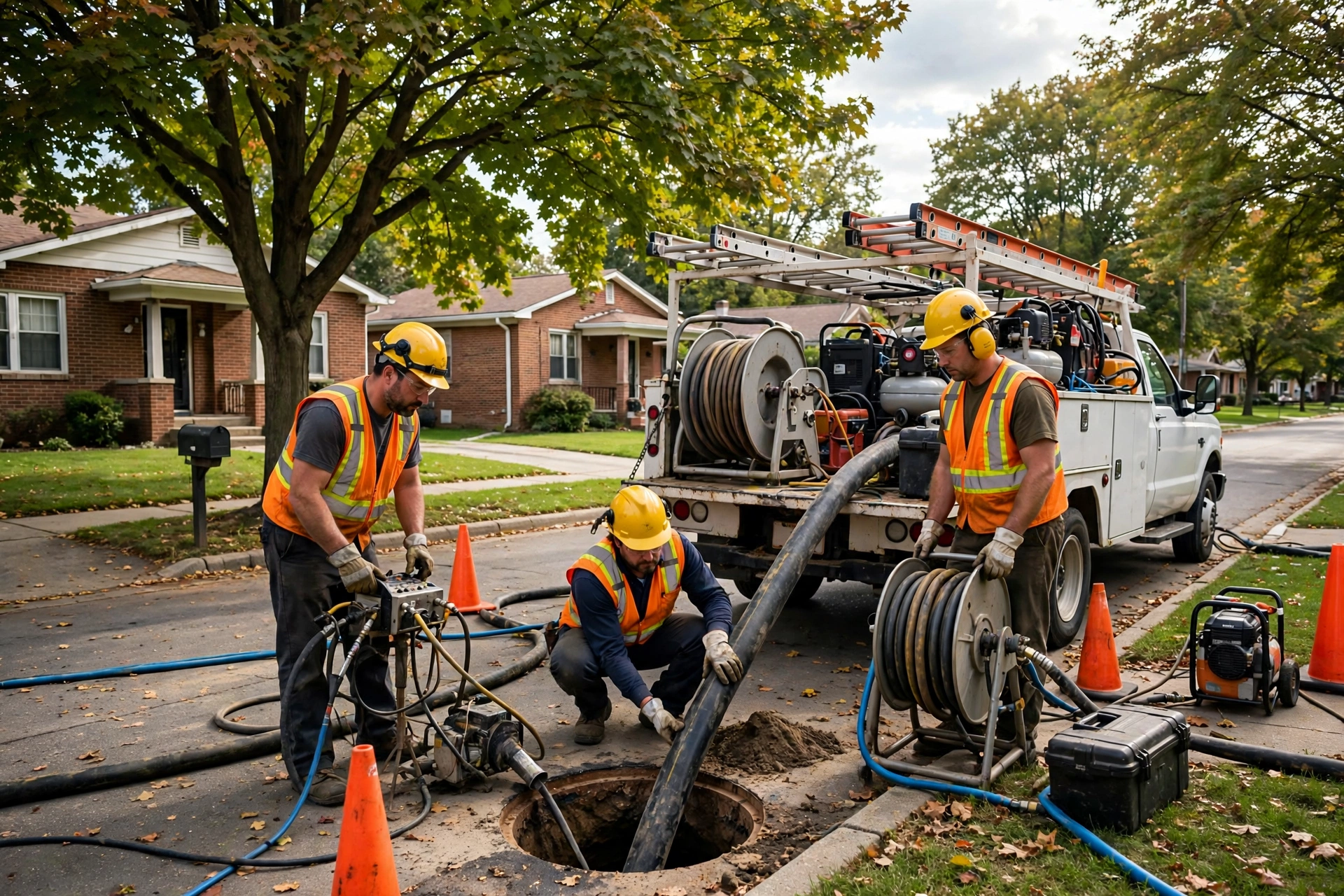
Garfield Heights, Ohio
Why Are Garfield Heights' Post-War Sewer Lines Failing Now?
Garfield Heights built most of its homes in the 1940s through the 1960s. Those pipes are now 60 to 80 years old, which is exactly when cast iron gives up.
The typical Garfield Heights lateral is cast iron where it leaves the house, transitioning to clay tile out toward the street. Cast iron fails from the inside: rust and scale build up on the interior wall, the flow channel narrows, and the bottom of the pipe rusts paper-thin while the outside still looks fine. Homeowners get no warning until the line restricts enough to back up, or the bottom drops out entirely.
The camera is the only honest way to see it. We run cameras through Garfield Heights laterals every week, and the footage is unmistakable: heavy internal scaling, thin spots, and bellies where the line has settled. When the pipe still holds its shape, trenchless sewer repair is usually the answer. Lining gives the old cast iron a smooth new interior; bursting replaces the whole run with HDPE. Both beat digging up the driveway.
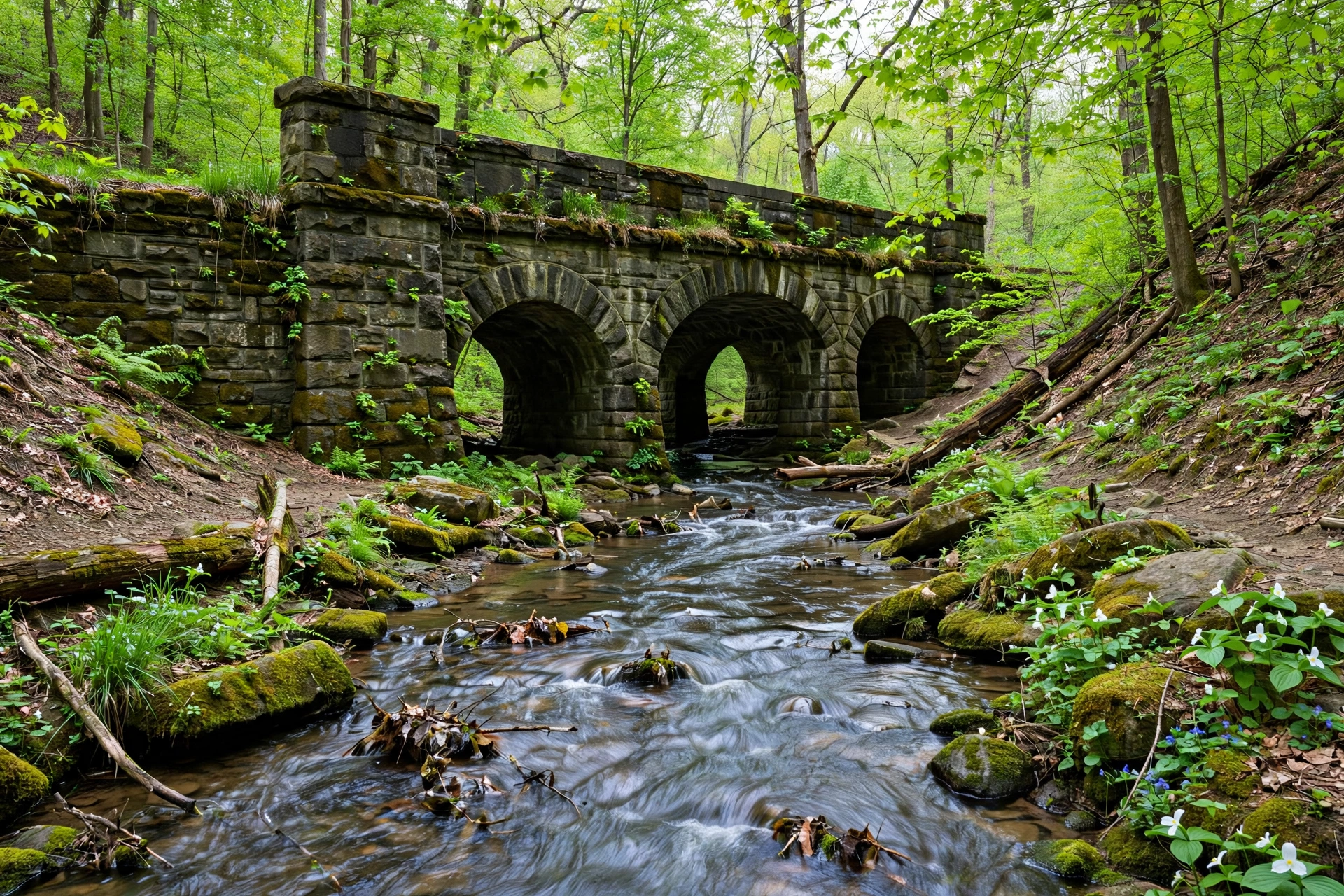
Mill Creek runs through Garfield Park Reservation, and its valley keeps groundwater high across much of Garfield Heights.
Where Do Garfield Heights' Sewer Problems Cluster?
Two corridors generate most of our Garfield Heights calls. The Turney Road commercial strip and the surrounding residential streets hold the city's oldest housing stock, with original laterals from the post-war boom. The neighborhoods near Garfield Park Reservation sit in the Mill Creek valley, where the water table runs high and soils stay saturated.
Saturated soil is the accelerant. It shifts more than dry soil, stressing clay tile joints into offsets, and it requirementds groundwater into every crack through infiltration. Homes near the valley also see more basement moisture, and the first place a failing lateral shows itself is usually the basement floor drain. If your drains slow down after every heavy rain, the valley's water table is part of the story.
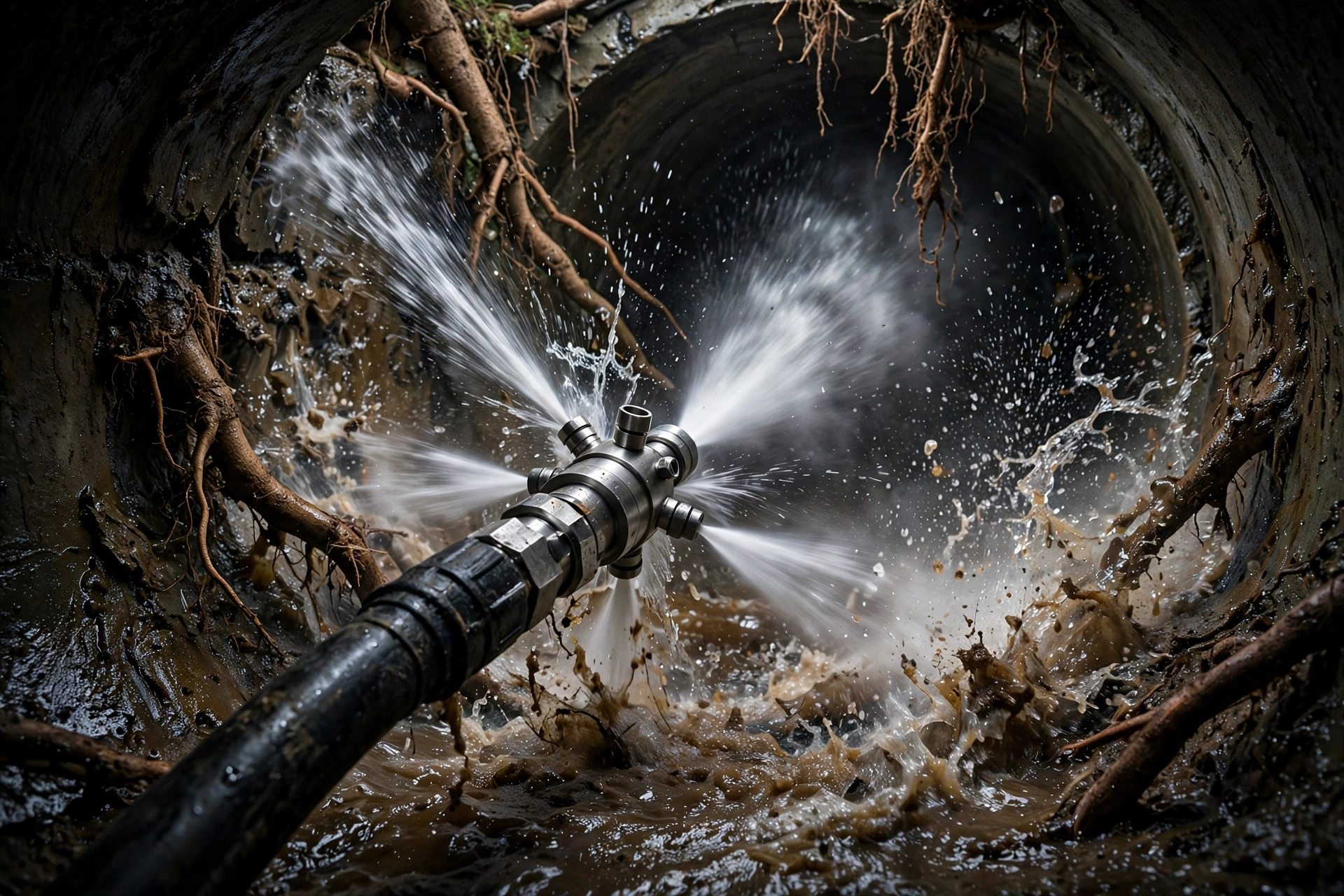
Hydro jetting clears grease, sludge, and root masses, but only a camera can tell you if the pipe itself is sound.
How Does Mill Creek Affect Your Basement?
Here's the mechanism valley homeowners need to understand. When Mill Creek runs high after storms, the surrounding water table rises with it. That groundwater presses into every cracked joint and separated connection in your lateral. A line that drains fine in August can surcharge in April, not because the pipe changed, but because the water around it did.
The fix has two parts. First, make the lateral sound: camera-inspect it, then line, burst, or replace what's broken so groundwater can't get in. Second, protect the house: a backwater valve on the lateral lets sewage out but slams shut when flow tries to come back in, which is the single best defense for valley homes. Ohio Sewer Masters installs them, and for homes near Mill Creek, it's the highest-value protection you can buy.
Who Handles Sewers in Garfield Heights?
You own the lateral from your house to the public main, including the section under your yard, driveway, and sidewalk. The Northeast Ohio Regional Sewer District (NEORSD) manages the regional system, and Garfield Heights wastewater flows to NEORSD's Southerly treatment plant. Cleveland Water handles drinking water, not sewers.
Cleveland Water's supply runs about 7 grains per gallon, moderately hard. Inside Garfield Heights' aging cast iron laterals, that mineral content leaves scale that layers onto rust and tuberculation, narrowing the flow channel faster than rust alone. Hydro jetting clears the scale, but lining or replacement removes the rough surface it clings to.
Sewer work in Garfield Heights requires a city permit with inspection before backfill. The city's residential permit application lists sewer work as a project type, and we pull the permits and schedule the inspection as part of every job, it's baked into the written plan, not an add-on.
How Does Garfield Heights' Water Quality Affect Your Sewer Line?
Garfield Heights gets Cleveland Water at about 7 grains per gallon, a moderate Lake Erie hardness. Inside the suburb's aging cast iron laterals, that mineral content leaves scale that layers onto rust, narrowing the flow channel faster than rust alone. Hydro jetting clears the scale, and lining or replacement removes the rough surface it clings to.
How Should Garfield Heights Homeowners Maintain Their Sewer Lines Through the Seasons?
Get a camera inspection in spring, clear and seal root entry points in fall, and protect exposed cleanouts before winter. Spring rains push groundwater into cracked joints, so watch for slow drains after storms, that's infiltration overloading your lateral. Fall is when tree roots grow most aggressively, which makes autumn the best window to jet roots out and line the joints they came through. In winter, insulate shallow cleanout risers, keep them marked so plows don't shear them off, and never pour grease down the drain, it hardens fast in cold pipe.