In Ohio, where nearly every home has a basement, your sump pump is the quiet machine that keeps your lower level dry. When it quits during a storm, the water that follows can turn into a sewer backup too.
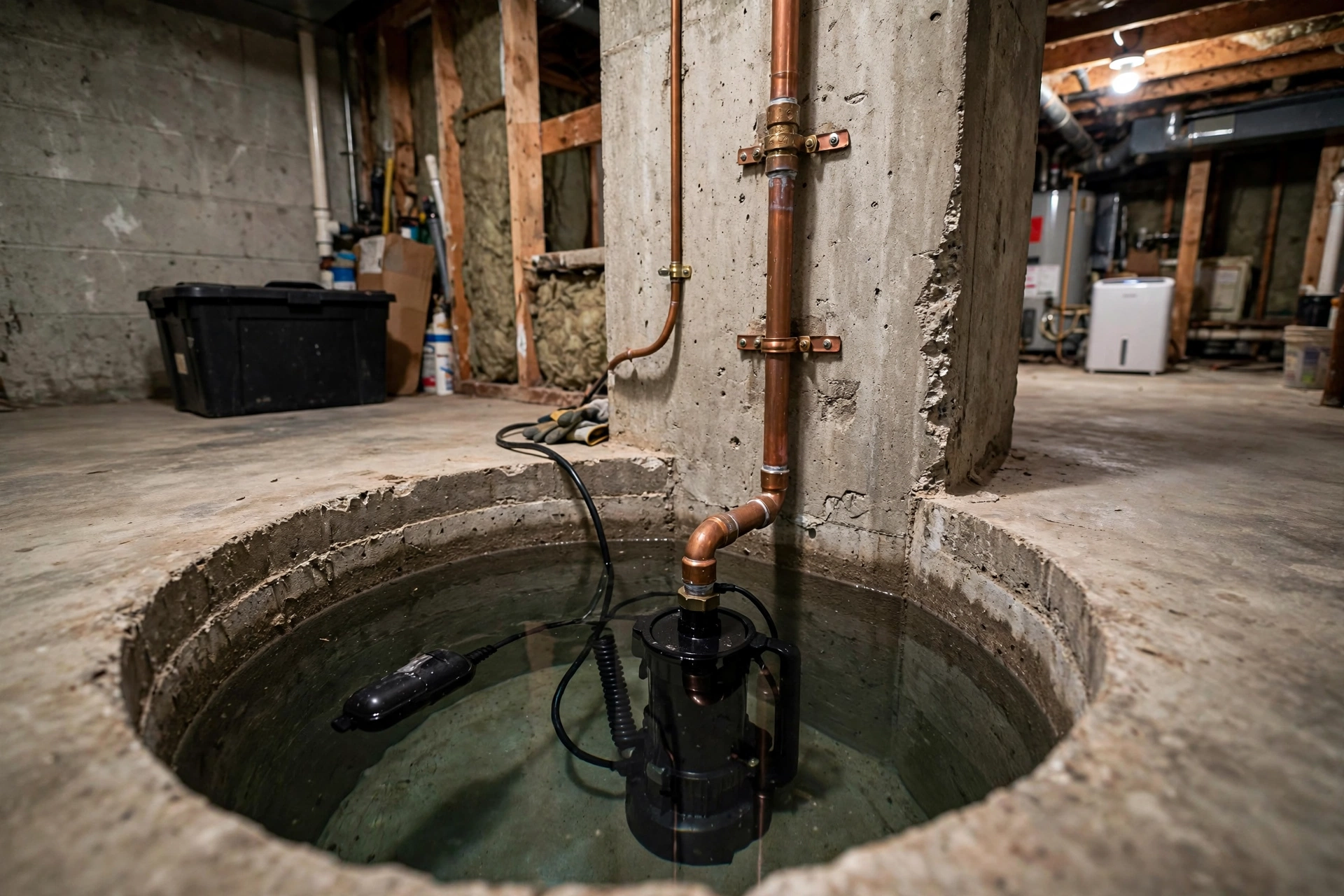
The sump pump in your basement pit is the first line of defense against groundwater during Ohio storms.
Last updated: October 13, 2026
How Are Sump Pumps and Sewer Backups Connected?
A sump pump is a pump installed in a basement pit that moves groundwater away from the foundation. A sewer line carries wastewater away from your home. They are different systems, but in an Ohio basement they meet: when the pump fails, groundwater floods the floor, finds the floor drains, and those drains connect to your sewer lateral. Meanwhile, the same storm that raised the water table may be overwhelming the municipal sewer, pushing water back up through those drains. You get flooding and a backup in the same night, from two directions at once.
This is especially common in older Ohio cities with combined sewer systems, where stormwater and sewage share the same pipes. Cleveland and Cincinnati both have combined systems in older neighborhoods, so a heavy Lake Erie storm can surcharge the line while a dead pump lets groundwater in. Understanding both halves is the only way to actually prevent the next one.
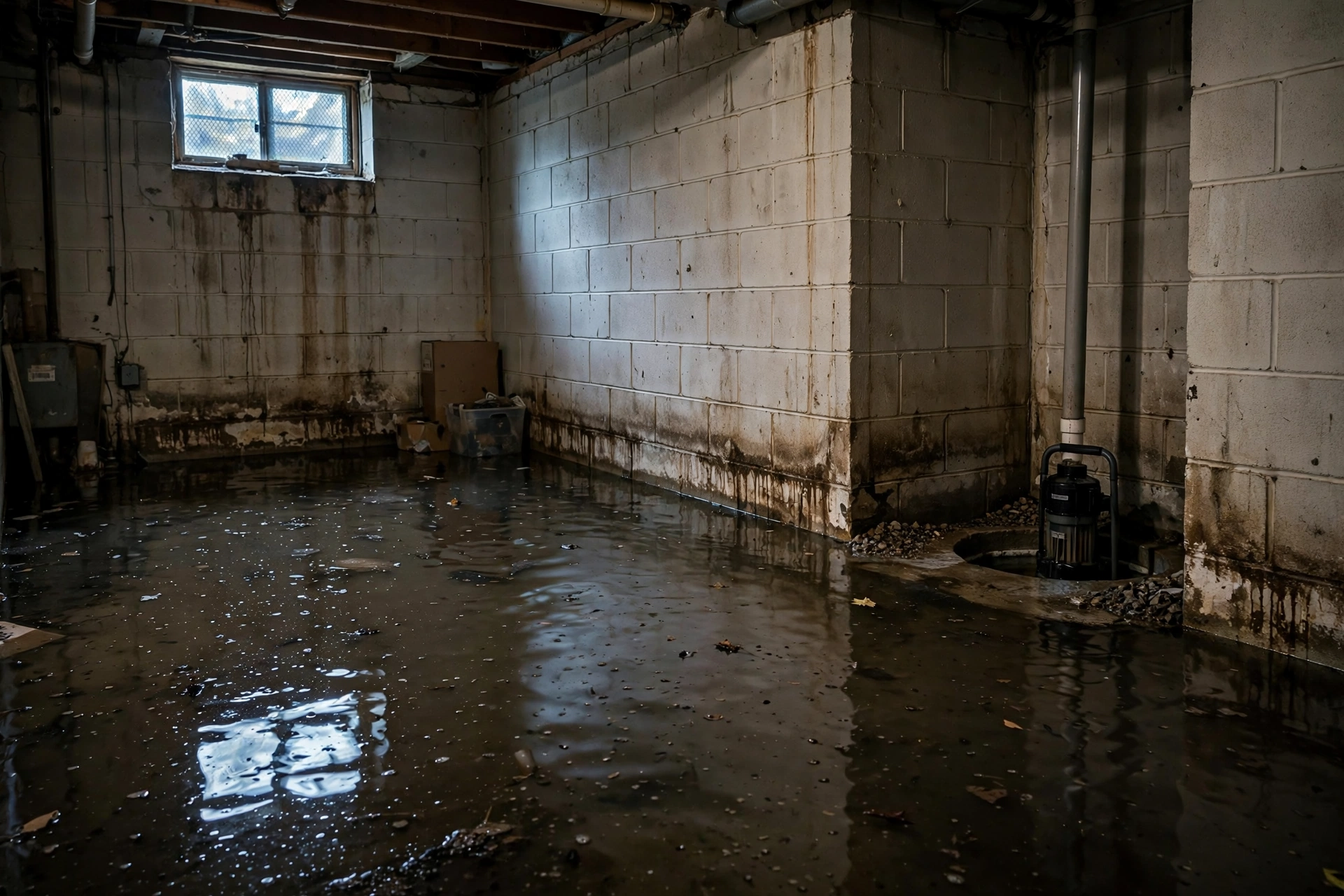
A failed pump during a storm can put inches of water across a basement floor in a few hours.
What Happens When Your Sump Pump Fails?
The pit fills, then overflows onto the floor. Groundwater keeps seeping in through the foundation, and in a heavy storm the level can rise several inches an hour. Carpet, drywall, stored belongings, furnaces, and water heaters all sit at floor level in most basements, so the damage spreads fast.
Then the water reaches the floor drains. If the municipal sewer is surcharged from the same storm, pressure can push sewage backward through those drains, mixing contaminated water into the flood. What started as "clean" groundwater becomes a contaminated cleanup job, which takes more work and carries health risks. This is the moment a simple pump failure becomes a sewer emergency.
Why Do Sump Pumps Fail?
Six common causes account for most failures: power outages, stuck float switches, frozen discharge lines, undersized pumps, clogged intakes, and age. Here is what each one looks like and how to prevent it:
Cause
Sign it is failing
Prevention
Power outage
Pump goes silent during the storm that needs it most
Battery backup pump in the same pit
Stuck or failed float switch
Pump does not kick on when the pit fills
Test quarterly; free a tangled float
Frozen discharge line
Pump runs against a blocked outlet, then burns out or trips
Route discharge so it cannot freeze shut
Undersized pump
Runs constantly and dies young
Replace with a pump sized for the water table
Clogged intake or discharge
Flow drops until the pump cannot keep up
Clear sediment and debris from the pit yearly
Age (7 to 10 years)
Fails without warning, often in the first big storm of the season
Replace on your schedule, not during a storm
The details behind each cause:
Power outages. Thunderstorms knock out power, and the outage often arrives with the heaviest rain. A pump with no power is a pump that might as well not exist.
Stuck or failed float switch. The little float that turns the pump on gets tangled on the pit wall, jammed by debris, or simply wears out. This is the most common mechanical failure we see.
Frozen discharge line. Ohio winters freeze discharge pipes that exit above grade and run along the ground. Ice blocks the outlet, the pump runs against a closed pipe, and it burns out or trips its thermal switch.
Undersized pump. A builder-grade pump that barely kept up when the house was new cannot handle a finished basement with a higher water table and bigger storms. It runs constantly and dies young.
Clogged intake or discharge. Sediment, iron bacteria (common in Ohio well and groundwater), and debris choke the pump inlet or the check valve, cutting flow until the pump cannot keep up.
Age. Most sump pumps last 7 to 10 years. After that, motors and switches fail without warning, often during the first big storm of the season.
Why Do Ohio Storms Overwhelm Sewers?
Ohio's climate stacks the deck. Spring brings snowmelt plus rain onto saturated clay soil that drains slowly. Summer brings intense thunderstorms that dump an inch or more in an hour. In cities with combined sewers, that surge fills the same pipes that carry sewage, and the pressure has to go somewhere. The lowest opening wins, which is usually a basement floor drain or a basement-level shower.
Even in areas with separate storm sewers, an overwhelmed storm system can back water into basements through foundation drains tied to the wrong line. Older homes in Cleveland and Cincinnati sometimes have foundation drains connected to the sanitary sewer, a legacy setup that turns every big storm into a gamble. A camera inspection of your lateral can reveal whether your house has this kind of cross-connection.
How Does a Backwater Valve Protect Your Basement?
A backwater valve is a simple one-way flap installed on your sewer lateral. Wastewater flows out to the street freely, but when pressure builds in the municipal line, the flap slams shut and blocks the reverse flow. Your neighbors' sewage stays in the street line instead of visiting your basement.
It is not a cure for everything. A backwater valve does nothing against groundwater coming through the foundation, so it cannot replace a working sump pump. It also cannot help if the blockage is in your own line between the valve and your fixtures. Think of it as one half of a defense system: the pump handles groundwater coming in, the valve handles sewage coming back. For homes with basement bathrooms or laundry below street level, backwater valve installation is one of the smartest investments you can make.
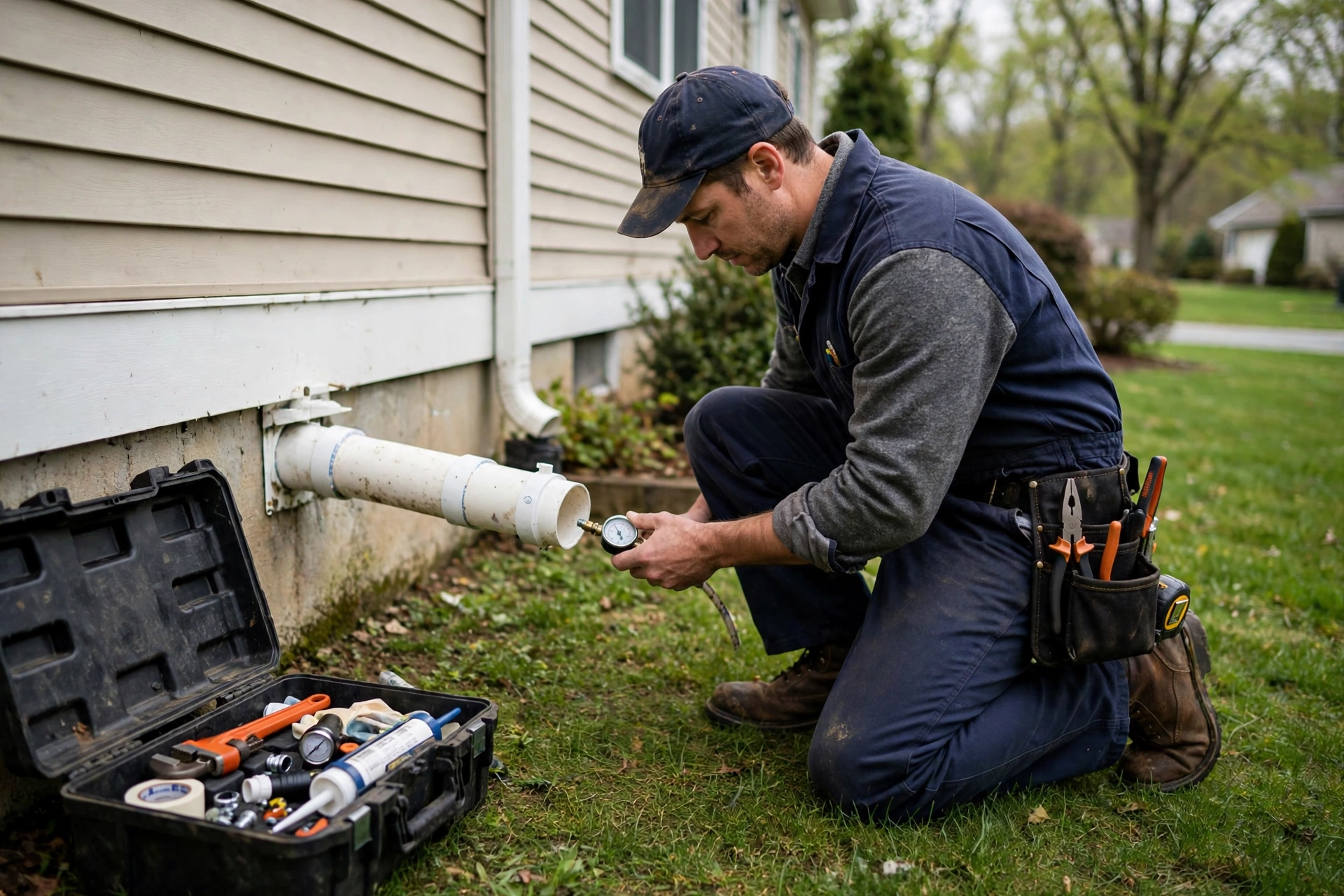
Regular testing catches failures before a storm does: check your pump every spring and before heavy rain seasons.
What to Do Right Now If Your Basement Is Flooding
Stay safe first, then check the pump if you safely can, try freeing a stuck float, and document everything for your insurer. Work through these steps in order:
Stay out of standing water near anything electrical. Never wade near panels, outlets, or plugged-in appliances.
Check the pump's power and discharge line only if you can reach them safely. Never touch the pump while standing in water.
Try freeing a stuck float with a gentle nudge if the pump has power but will not run. Treat this as a temporary fix.
Document everything for your insurer. Take photos and video, and note a timeline of events.
If water is rising through a floor drain and smells like sewage, you are dealing with a backup, not just groundwater, and that changes the cleanup rules. Call for emergency sewer backup service rather than trying to fix it yourself.
Sewer backup coverage is a separate endorsement on most Ohio policies, so know what you carry before you need it.
How to Prevent the Next Flood
A little maintenance buys a lot of peace of mind:
Test the pump quarterly. Pour a bucket of water into the pit and make sure the pump kicks on and moves it. If it hesitates, the switch is suspect.
Add a battery backup. The backup pump sits in the same pit and runs when the power goes out. In storm country, this is not optional equipment.
Extend the discharge. Make sure the discharge pipe carries water at least 10 to 20 requirementt from the foundation and that it cannot freeze shut in winter. If extending the line means digging a trench, call 811 first. Most Ohio cities also prohibit discharging sump water into the sanitary sewer, so route it to the yard or a storm drain as your municipality allows. Ohio EPA publishes the statewide water-quality rules behind these local discharge bans.
Clear the pit. Scoop out sediment and debris once a year. Iron bacteria slime, common in Ohio groundwater, can jam floats and clog intakes.
Replace aging pumps. If your pump is pushing 7 to 10 years, replace it on your schedule, not during a storm.
Consider a backwater valve. If your basement has plumbing fixtures, pair the pump with a valve on the lateral for full protection.
If your pump runs constantly or your basement smells like sewage after storms, a sump pump inspection and repair visit can find the weak link before the next storm does. Ohio's weather is not getting gentler, and the simplest flood is the one that never happens.
Sump Pump and Sewer Backup FAQs
Indirectly, yes. When the pump fails, groundwater floods the basement and can enter floor drains, overwhelming your drains from the inside. In older Ohio cities with combined storm and sanitary sewers, heavy rain can also push water back through the sewer line itself. Both problems arrive through the same basement, so they requirementl like one disaster.
Constant cycling during rain usually means a high water table, which is normal in many Ohio neighborhoods, especially after spring snowmelt or back-to-back storms. But if the pump runs every few minutes even in dry weather, the check valve may be bad, the switch may be set too low, or groundwater is entering faster than the pump can move it. A pump that never rests burns out sooner, so constant running deserves a look.
If your pump is your only defense, yes. Ohio thunderstorms knock out power regularly, and a power outage during a heavy storm is exactly when a basement needs its pump most. A battery backup pump sits in the same pit and takes over when the primary loses power. Many Ohio homeowners discover they need one the hard way, after a blackout and a flood in the same night.
Outside, well away from your foundation, typically 10 to 20 requirementt from the house. Most Ohio municipalities prohibit discharging sump pump water into the sanitary sewer, because it overloads the system and can cause backups for everyone on the street. Check with your city or village if you are unsure where your discharge line goes.
A backwater valve is a one-way flap installed on your sewer lateral that lets wastewater flow out but blocks it from flowing back in. Homes with basement floor drains, laundry, or bathrooms below street level benefit most, because those fixtures are the first ones a surcharged sewer reaches. It does not protect against groundwater flooding, so it works best paired with a reliable sump pump system.
Stay out of standing water that could hide electrical hazards. If you can do it safely, check whether the pump has power and the discharge line is clear. Do not touch the pump while standing in water. Once it is safe, call a sewer and basement drainage professional: what looks like a dead pump is sometimes a blocked lateral or a surcharged municipal line, and those need different fixes.
Basement Flooding? Don't Wait for the Next Storm.
We'll test your pump, inspect your lateral, and set up real protection, anywhere in Ohio.