That rotten-egg smell drifting up from the basement has a specific cause. Most of the time it is a five-minute fix. Sometimes it is a real plumbing problem. Here is how to tell the difference.
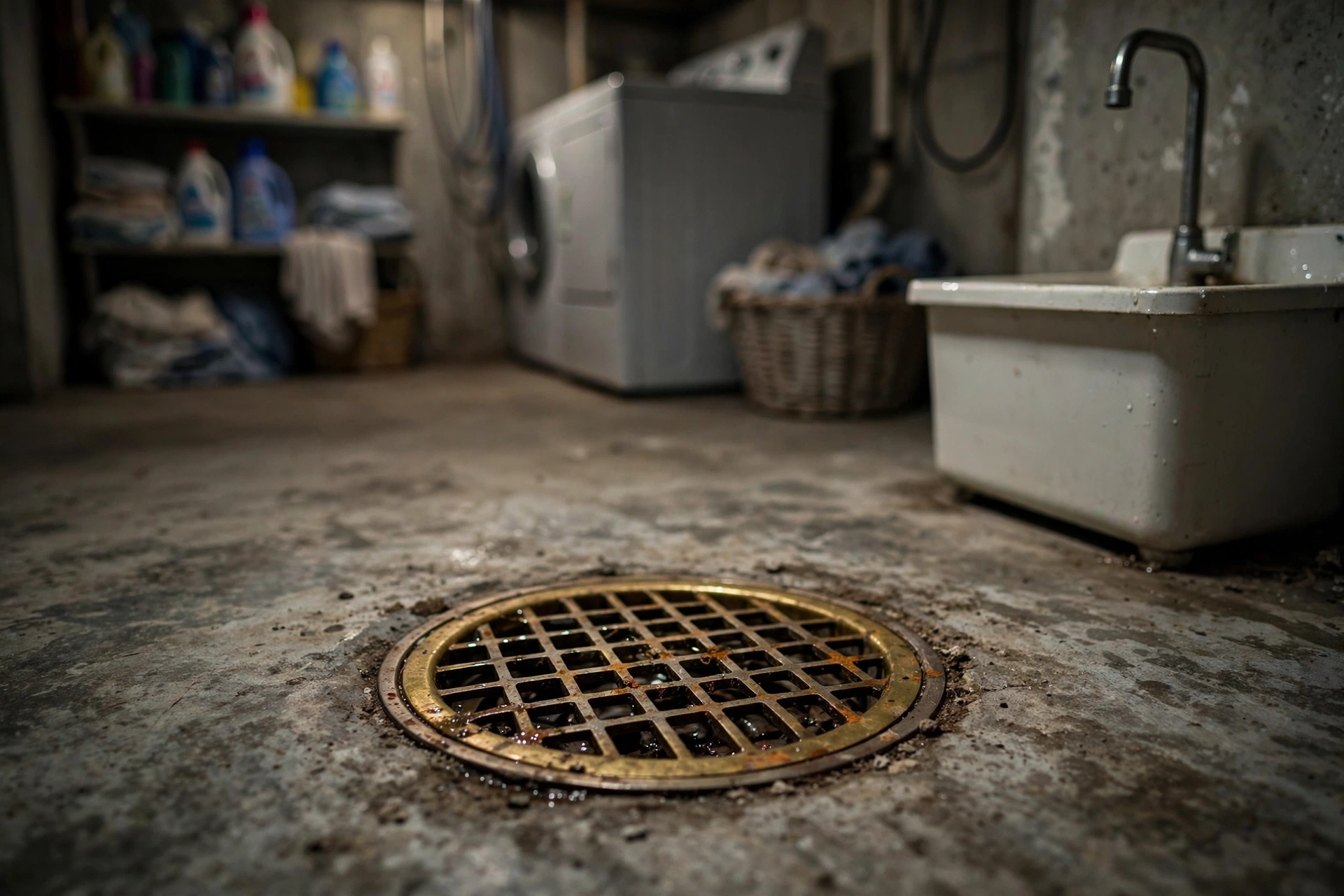
This little drain is the usual suspect. Its water seal evaporates in dry indoor air, and then sewer gas walks right in.
Last updated: October 13, 2026
What Is the Most Common Cause of Basement Sewer Odor?
Sewer gas is a mix of gases, including hydrogen sulfide and methane, produced by decomposing waste in your sewer line. The culprit in the majority of basement odor cases is a dry P-trap. Every drain in your house has a U-shaped bend that holds a plug of water, and that water is the only thing standing between your living space and the sewer. Basement floor drains, utility sinks, and old shower stalls that never get used will lose that water to evaporation over a few dry weeks. Once the trap goes dry, sewer gas has a clear path into the room.
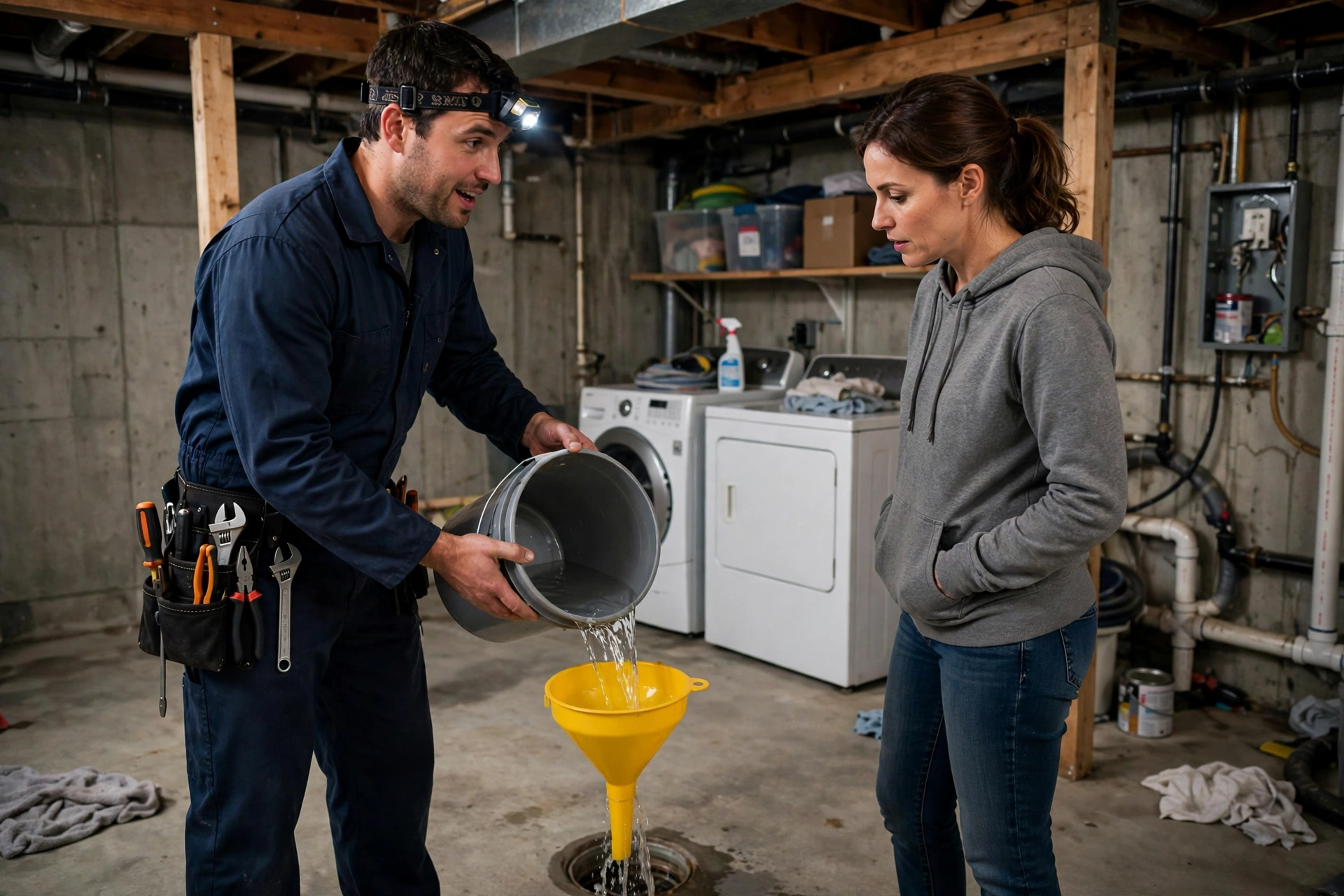
The fix takes five minutes and a bucket. Pour a gallon or two of water into every basement floor drain and any fixture that has not been used recently. Add a tablespoon of mineral oil afterward: the oil floats on the water and slows future evaporation. Walk away and check back in an hour. If the smell is gone, you found it. To keep it from returning, run water into each basement drain once a month, or ask a plumber about a trap primer, a small device that automatically tops off the trap from a water line.
Refilling a dry trap is the five-minute fix. If the smell comes back in a few weeks, the trap is drying out again.
Could It Be a Venting Problem?
If the traps are full and the smell persists, look upward, not downward. Your plumbing has vent pipes that run through the walls and out the roof. Vents let sewer gas escape above your house instead of into it, and they keep air pressure balanced so flushing does not siphon water out of nearby traps. A vent stack that is cracked, corroded through, or disconnected inside a wall or attic can leak gas into the house for years, and the smell often shows up in the room directly below the break.
Blocked vents cause a different symptom: drains that gurgle and traps that keep going dry even in fixtures you use daily. Leaves, bird nests, and ice can cap a roof vent, and when the vent cannot breathe, each flush pulls air through the nearest trap instead. If you notice gurgling toilets or a bathtub drain that bubbles when the washing machine runs, the vent system is struggling. Roof vents can be cleared from above, but internal vent repairs belong to a professional, since they mean opening walls.
When Does Basement Sewer Odor Mean a Broken Pipe?
Sometimes the smell is telling you the pipe itself has failed. A cracked, separated, or corroded section of the sewer lateral under the basement floor can leak sewer gas continuously, and this kind of odor does not respond to refilling traps. The clues that point to pipe damage: the smell is constant rather than intermittent, it is strongest in one spot near the floor, and it comes with company, gurgling drains, slow-flushing toilets, or damp patches on the basement floor.
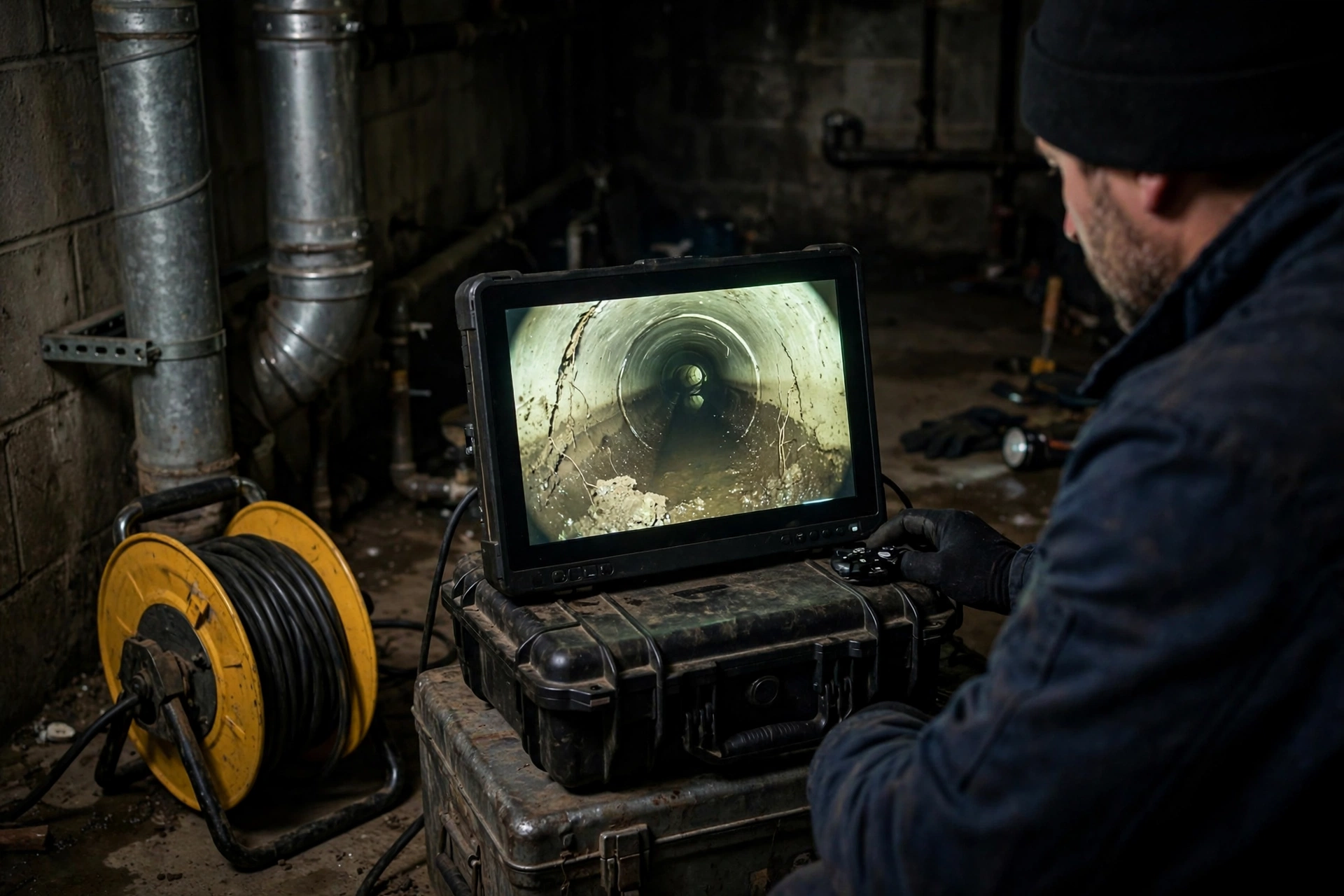
Ohio's older housing stock makes this scenario common. Cast-iron laterals in pre-1970 homes corrode from the inside out, and clay tile laterals in Cleveland and Cincinnati neighborhoods can separate at the joints after decades of soil movement. A sewer odor detection visit, often using a harmless smoke test that makes gas leaks visible, pinpoints where the odor enters. From there, a sewer camera inspection shows the exact condition of the pipe and whether the fix is a spot repair or a full trenchless repair.
When odor points to the pipe itself, a camera inspection shows exactly where the line has cracked or separated.
What Else Can Smell Like Sewer in a Basement?
Before calling anyone, rule out the non-sewer suspects. A dead rodent in a wall void or floor cavity produces a smell many people describe as sewer-like. Drywall dust, musty mold in a damp basement corner, and even a forgotten mop bucket can mimic that rotten-egg note. Sewer gas has a distinct hydrogen-sulfide character and tends to be strongest near drains and the lowest fixtures, so use your nose as a locator: if the smell concentrates around the floor drain, it is almost certainly plumbing.
Sump pits deserve a mention too. If your pit holds standing water and the cover is missing or loose, the pit can release a musty, sulfurous smell, especially in homes where the sump connects to older drain tile. A sealed pit cover with a proper vent goes a long way. If you are unsure what you are smelling, err on the side of having it checked: persistent sewer gas in an enclosed basement is not something to just live with.
What Could Be Causing Your Basement Odor?
Odor source
Likely cause
Fix
Floor drain or unused fixture
Dry P-trap: the water seal evaporated
Pour a gallon or two of water into the drain; add a tablespoon of mineral oil; run water monthly or install a trap primer
Vent system
Cracked, corroded, or disconnected vent stack; or a roof vent blocked by leaves, nests, or ice
Clear the roof vent; internal vent repairs need a professional
Sewer lateral under the floor
Cracked or separated pipe leaking gas continuously
Smoke test to pinpoint it, then camera inspection; spot repair or trenchless repair
Sump pit
Standing water with a missing or loose cover
Sealed pit cover with a proper vent
How Do You Track Down the Odor Source?
Work through these steps in order, from the most common cause to the least:
Refill every trap. Pour a gallon or two of water into every basement floor drain and unused fixture.
Slow the evaporation. Add a tablespoon of mineral oil to each trap so the water seal lasts longer.
Wait an hour and re-check. If the smell is gone, the dry trap was your problem.
Handle a repeat offender. If the smell returns in a few weeks, run water into drains monthly or ask a plumber about a trap primer.
Check the vents. If the smell persists, look at the roof vent for leaves, nests, or ice, and listen for gurgling drains.
Call for a real diagnosis. If the smell is constant and strongest near one spot, schedule a smoke test and camera inspection.
Basement Sewer Odor FAQs
In most cases, the water in a P-trap has evaporated. Every drain has a U-shaped trap that holds water to block sewer gas, and in an unused basement floor drain or utility sink that water can dry out in a few dry weeks. Once the trap is dry, sewer gas flows straight into the room. Pouring a gallon of water into the drain refills the trap and usually ends the smell within an hour.
In small amounts, sewer gas is mostly a nuisance: rotten-egg odor and headaches in a poorly ventilated space. In large concentrations, hydrogen sulfide can be harmful, and methane can accumulate in an enclosed basement. If the smell is strong, sudden, or getting worse, ventilate the area, leave the basement, and have the source found and fixed rather than just masking it.
Because the trap keeps drying out. A floor drain that never gets used will lose its water seal every few weeks in dry indoor air. A longer-lasting fix is adding a tablespoon of mineral oil after refilling the trap: the oil floats on top and slows evaporation. If the drain never sees water at all, a plumber can install a trap primer that automatically tops it off.
Yes. Your plumbing vents, the pipes that run up through the roof, let sewer gas escape outside and keep traps from being siphoned dry. A cracked, corroded, or disconnected vent stack in a wall or attic can leak gas into the house, and a vent blocked by leaves or a bird nest can create pressure problems that pull water out of traps. Vent issues usually need a professional to locate.
When the smell is constant, strongest near one spot, and doesn't respond to refilling traps. A cracked or separated section of the sewer lateral under the basement floor can leak gas continuously, and it often comes with other clues: gurgling drains, slow flushing, or damp patches on the floor. A sewer camera inspection will show exactly what the pipe looks like and where it has failed.
Where Can You Learn More?
Ohio EPA: the state's environmental agency, with guidance on water quality and home wastewater issues.
U.S. EPA: federal resources on septic systems and household wastewater.
Call 811: the free national service that marks buried utilities before you dig.
Smell That Won't Go Away?
We'll find where the odor is getting in, with a smoke test or camera inspection, and fix the cause instead of masking it.