Should You Get a Sewer Inspection Before Buying an Ohio Home?
A home inspection covers the roof, the furnace, and the wiring, but not the pipe buried eight requirementt under your yard. Here is why a sewer scope belongs on every Ohio buyer's checklist.
Do You Really Need a Sewer Inspection Before Buying?
Yes, every time. A sewer camera inspection is the simplest insurance you will buy in a home purchase. It typically is a modest part of the process, takes under an hour, and it is the only way to see the one part of the house nobody can see from the surface: the sewer lateral running from the house to the street. A new sewer line can run into five figures, and it is the buyer's problem the day after closing. Spending a little now to know the condition is simply good math.
Most buyers skip it because nobody tells them it exists. Your real estate agent arranges the home inspection, the radon test, maybe the termite check, and the sewer line never comes up. But a pre-purchase sewer inspection is standard practice among experienced Ohio buyers, especially for homes built before 1980. If your agent has not suggested one, ask for it directly.
Why Does a Sewer Inspection Matter More in Ohio?
Ohio's housing stock is old, and old houses mean old pipes. Neighborhoods in Cleveland, Cincinnati, and Columbus are full of homes built between 1900 and 1970, sitting on clay tile, cast iron, or Orangeburg lines that are at or past the end of their expected life. Add Ohio's heavy clay soil, which shifts with every wet-dry cycle, freeze-thaw winters that move the ground around buried pipe, and mature maples and oaks with roots hunting for water, and you have conditions that wear sewer lines out faster than in many other states.
Older Ohio cities also have combined sewers in some neighborhoods, where stormwater and sewage share a pipe. During heavy rain those systems can back up into basements, and many Ohio homes have basements, which puts the lowest drain in the house right at the level where a backup shows up first. A camera inspection will not change any of that, but it tells you exactly what you are buying into before you sign. Ohio EPA publishes information on the state's wastewater systems at epa.ohio.gov.
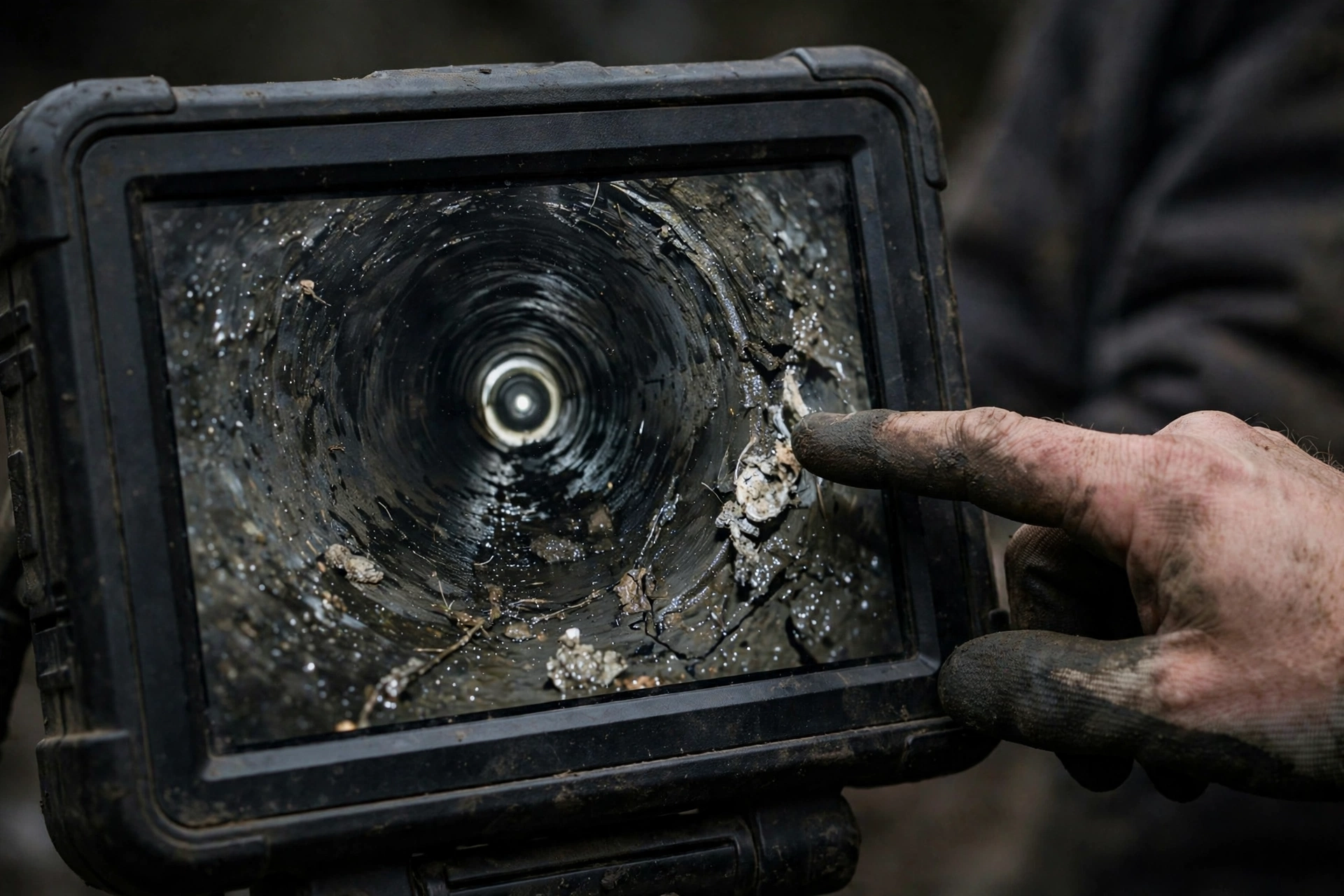
The camera shows exactly what is down there: roots, cracks, offsets, or a clean bill of health.
What Does a Pre-Purchase Sewer Inspection Actually Involve?
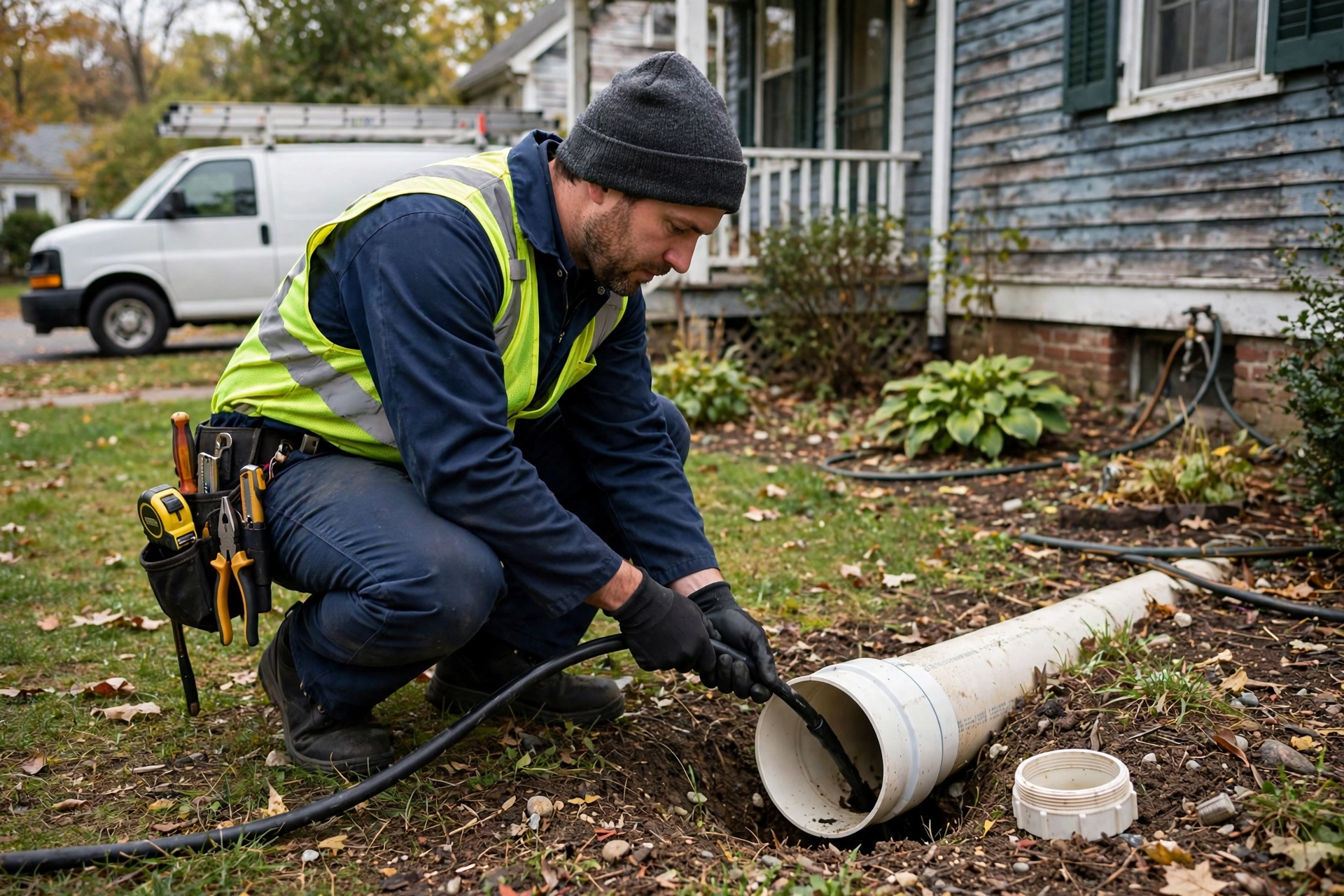
A sewer scope inspection is a camera run through the lateral from an access point to the city main, recorded on video. It takes about an hour, and it happens in five steps:
Locate an access point: an outdoor cleanout, a basement cleanout, or a pulled toilet.
Feed a waterproof camera on a flexible cable through the lateral to the city main or septic connection.
Watch the live picture on a monitor as the technician narrates each defect and marks its depth and location.
Review the footage yourself and ask the technician to point out anything unclear.
Receive the video file and a written report describing the pipe material, condition, and defects.
You do not need to be an expert to see roots filling a pipe or a joint shifted sideways. If a company will not share the video, hire someone else.
What Does a Sewer Inspection Involve?
A standalone sewer camera inspection in Ohio typically is a modest part of the process, with the plan changing if there is no cleanout and the technician has to pull a toilet or work from indoors. Think of it this way: the inspection work a small fraction of one percent of the home's plan, while a surprise sewer replacement can be a bigger undertaking than you expect. For the full picture on repair process, see our Ohio sewer line repair guide.
Who Handles for It, and When Should It Happen?
The buyer almost always orders the sewer inspection, just like the general home inspection. Schedule it inside your inspection contingency period, the window after your offer is accepted when you can still walk away or renegotiate. In a competitive market, book the sewer scope the same day your offer is accepted; good technicians get busy, and you do not want to run out the clock.
Tell your real estate agent you want it done. If the seller balks at granting access, that is information too. A seller with a healthy sewer line has no reason to refuse a one-hour camera visit.
The footage becomes your negotiating tool: clean pipe, credit request, or a deal you walk away from.
What Happens If the Camera Finds Problems?
Your options depend on what the camera shows. The footage turns an invisible risk into a concrete fact you can act on:
Minor root intrusion or scale: Usually a maintenance item, not a deal-breaker. Get a plan for hydro jetting and ask the seller for a credit, or plan it as your first project after closing.
Offset joints, bellies, or cracks: Real defects that will need trenchless repair sooner or later. Get a written repair plan and negotiate the plan down, or ask the seller to fix it before closing.
Collapsed pipe, heavy Orangeburg deformation, or a line full of roots: This is replacement territory, often a five-figure job. Many buyers walk away at this point, and nobody blames them. If you still want the house, the repair work comes off the plan, in writing.
Whatever the camera shows, get the repair planned by a sewer contractor, not guessed at by the home inspector. Then decide with real numbers in hand.
What About New Construction?
Yes, even then. New homes can have construction debris in the line, a section that settled before the trench was compacted, or a joint that was never seated right. A camera inspection on a new build is quick and simple, and catching a defect before the builder's warranty clock starts running is worth it. It is also the baseline footage you will compare against for the next twenty years.
Pre-Purchase Inspection FAQs
Ohio's residential property disclosure form asks sellers about known plumbing and sewer issues, but it only covers what they actually know. A seller who never had the line inspected can honestly check no, and a slow drain that the seller never thought about counts as not knowing. The disclosure is no substitute for your own camera inspection.
Most general home inspectors do not carry sewer camera equipment or specialize in underground pipe. Some offer a sewer scope as an add-on through a subcontractor, which is fine if the footage is included. Either way, you want the actual video and a written report from someone who reads pipe footage every day, not a checkbox that says sewer not inspected.
The camera run itself usually takes 30 to 60 minutes for a typical residential lateral, plus setup time. Getting on the schedule is the slower part: in a hot buying season, book the inspection the same day your offer is accepted so it lands inside your inspection contingency window.
Older Ohio homes often lack an outdoor cleanout. A technician can usually run the camera through an indoor access point, like a basement cleanout, or by temporarily pulling a toilet. It takes longer and work a bit more, but the absence of a cleanout is itself useful information: you will want one installed for future maintenance.
No. The camera is a small waterproof head on a flexible cable, pushed gently through the pipe. It does not cut, scrape, or pressure-wash anything. It is purely diagnostic, and the technician should hand you the video file or a link to it afterward.
Buying a Home? See the Sewer Line Before You Commit.
We scope lines for Ohio homebuyers every week: footage you can watch, a written report, and straight answers.