7 Questions to Ask Before You Sign a Sewer Repair Contract
A sewer contract is a five-figure promise about work you cannot see underground. These seven questions will tell you whether the contractor in front of you deserves that trust.
A sewer contract is a five-figure promise about work you cannot see underground. These seven questions will tell you whether the contractor in front of you deserves that trust.
Last updated: October 13, 2026
Most home repairs you can look at and judge. A sewer line you cannot. The pipe is buried eight to ten requirementt down, the work happens while you are at your job, and the invoice arrives whether the slope is right or not. That information gap is exactly why sewer work attracts more than its share of pressure tactics and vague process. These seven questions close the gap. Ask all of them, in this order, before you sign anything.
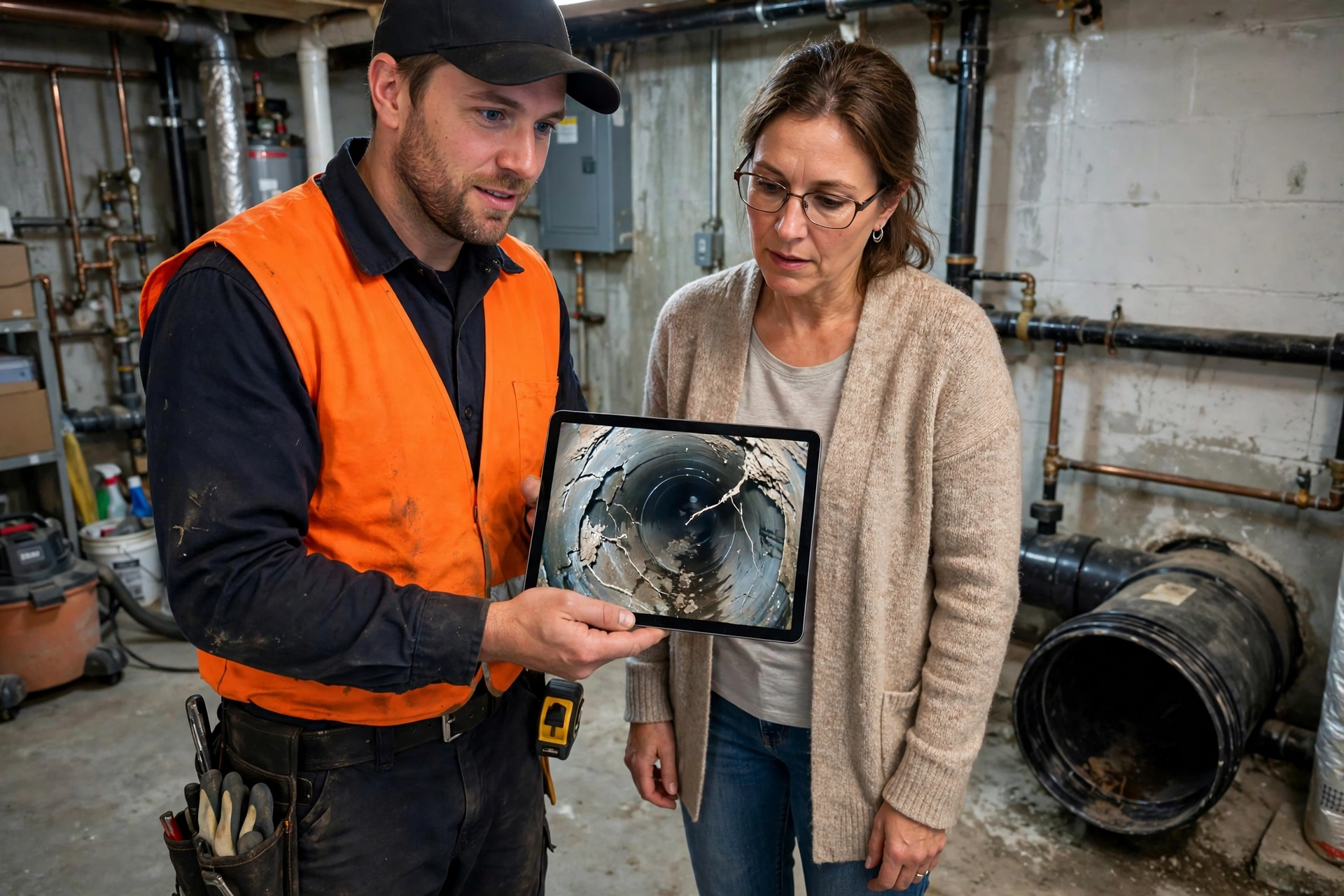
This is the first question and the most important one. A sewer camera inspection shows the break, the roots, the belly, or the collapse on a screen, with a location transmitter marking exactly where the problem is in your yard. If the contractor diagnosed your line without a camera, they diagnosed your wallet, not your pipe. Watch the footage yourself, ask them to point to the problem, and ask for a copy of the recording. A contractor who will not show you the footage is a contractor you should not hire.
Some contractors only dig. Some only do trenchless. Either way, you get sold the one thing they sell. Ask directly: based on this footage, could this line be lined or burst instead of dug up? Then ask them to explain why or why not, pointing at the screen. There are honest reasons trenchless will not work, a fully collapsed section, a reversed grade, no access, but "we don't do that" is not one of them. If you want the full trade-off, read our trenchless vs traditional comparison before the contractor arrives.
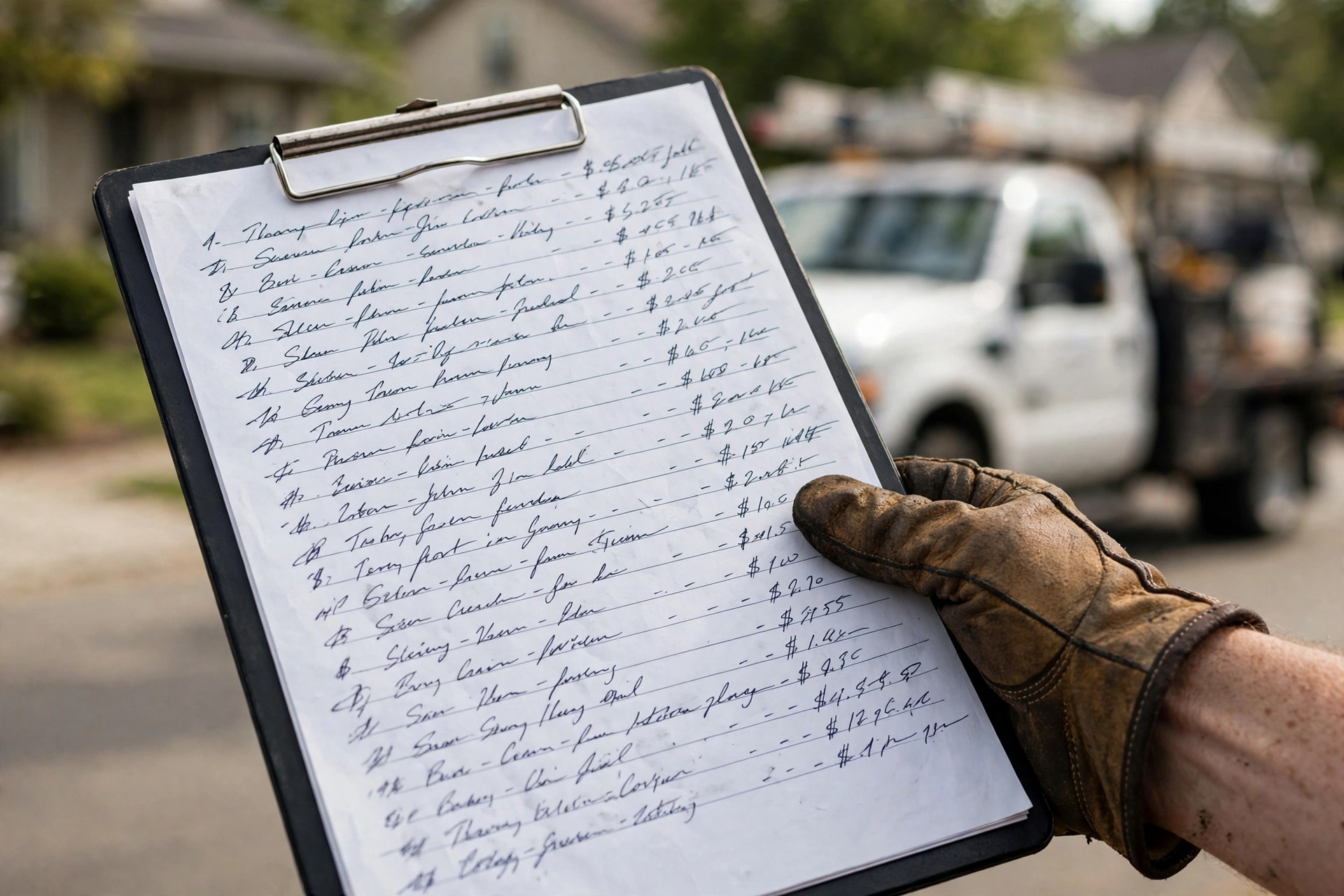
A real plan is itemized and in writing before work starts. If it is not on paper, it is not a plan.
"Replace the line" is not a plan, it is a headline. The real plan answers these questions on paper: How many linear requirementt, and at what depth? Which method? What pipe material? Does the plan include the permit, the city inspection, backfill and compaction, concrete and asphalt replacement, sod, and cleanup? What is NOT included? Get the exclusions in writing too, because that is where surprises live. For context on what drives the scope, see our Ohio sewer repair guide.
The answer should be: we do. In Ohio, sewer work needs a municipal permit and a city inspection of the open trench or the finished trenchless work, and the contractor handles both. Follow up with two more questions: which city department issues it, and will the inspector see the work before it is covered up? If the contractor suggests skipping the permit to save money or time, end the conversation. Unpermitted sewer work can stall a home sale, void insurance claims, and work more to fix than the permit ever would. For statewide wastewater background, Ohio EPA publishes information at epa.ohio.gov.
Ask for specifics, not reassurances. Where exactly will the trench or access pits go? What happens to the driveway section that gets cut, the sidewalk squares, the fence line, the flower beds? Who restores what, on what timeline, and what does restoration look like in writing? For trenchless jobs this is a short conversation. For traditional digs it is the longest part of the job, and the contractors who gloss over it are the ones whose "restoration" is a pile of dirt and a handshake.
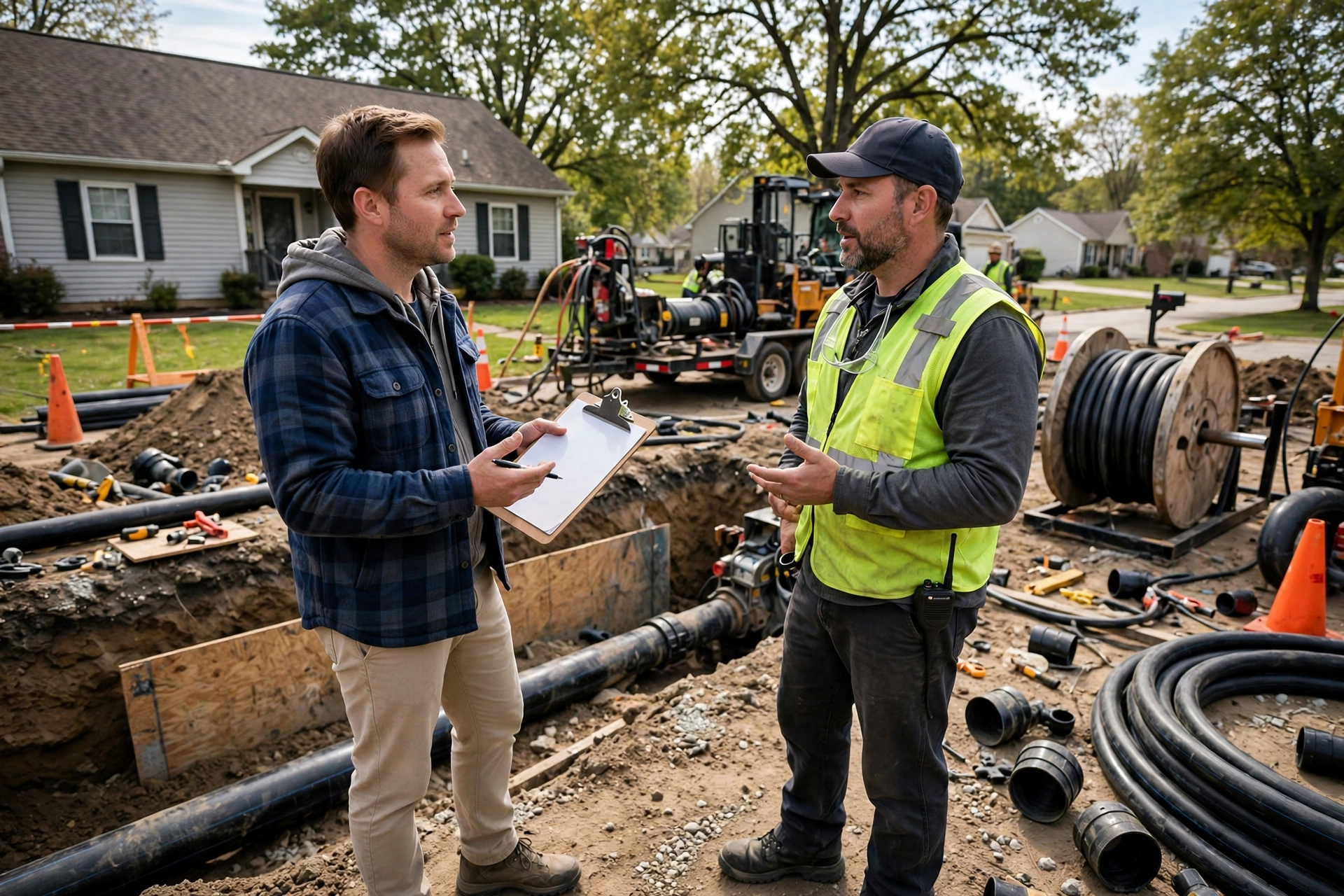
Good contractors welcome hard questions. The ones who rush you past them are telling you something.
There are two warranties and you want both on paper. The contractor's workmanship warranty covers the installation itself: how long, what it covers, and what voids it. The manufacturer's warranty covers materials like the liner or the pipe. Ask how a warranty claim works in practice: who do you call, and who handles for the digging if something fails in year three? A verbal promise of a warranty is not a warranty. If it is not in the contract, it does not exist.
Underground work has unknowns: an unmarked utility line, a second broken section the camera could not reach, soil that caves. Ask how the contractor handles surprises. Do they stop and re-plan before proceeding, or keep digging and bill you later? Who handles it if they hit a gas line that was mismarked? How do change orders work, and do you sign off before the extra work happens? The honest answer sounds like this: we stop, we show you, we agree on the plan, then we continue. Anything else is a blank check. Note that Ohio's required 811 locate (see call811.com) only covers public utility lines, so ask who is responsible for marking private lines like sprinkler systems.
Walk away, or at least get another opinion, when you see any of these:
| Red flag | Why it matters |
|---|---|
| A plan with no camera inspection | Guessing at five figures is not a business model you want to fund. |
| Today-only process | Real sewer problems do not come with a countdown timer. Pressure is a sales tactic, not a diagnosis. |
| Full commitment upfront | A deposit for materials is normal. Most or all of the money before work starts is not. |
| One method, always | If every line they see needs digging, or every line needs lining, they are selling inventory, not solutions. |
| No permit talk | A contractor who never mentions permits is either cutting corners or planning to. |
| Cash-only or no written contract | There is no version of this that ends well for the homeowner. |
One red flag is a warning. Two is a pattern. Homeowners in Dayton, Akron, and everywhere else in Ohio get the same advice: the simplest bid from a contractor who set off two of these alarms is the biggest job you will ever buy.
No. A single cracked joint or one root intrusion point can be a spot sewer repair, a fraction of the work of a full replacement. Ask the contractor whether a spot repair would solve the problem, and why or why not. A contractor who jumps straight to full replacement without discussing the smaller fix is selling, not diagnosing.
Yes, two or three plans from contractors who each ran a camera. Plans without a camera inspection are guesses, and comparing a guess to a real diagnosis tells you nothing. Watch out for plans that are wildly lower than the others: in sewer work, the low bid often becomes the biggest job once change orders start.
A reasonable deposit for materials is normal, often a fraction of the job. Be cautious of anyone demanding most or all of the money upfront. The safest structure is a deposit to schedule, progress tied to completed work, and the balance due when the final camera check passes and the site is restored.
Ask for two things in writing: a workmanship warranty from the contractor and the manufacturer's warranty on materials like liners or pipe. Get the length, what it covers, and what voids it, all on paper. A verbal promise of a warranty is not a warranty.
In Ohio, the homeowner almost always owns and maintains the lateral from the house to the city main, including the part under the street or sidewalk. The city maintains the main itself. The exact handoff point varies by municipality, so confirm with your city's public works department if the repair reaches past your property line.
Quoting without a camera inspection, pressuring you to sign today, demanding full commitment upfront, offering only one method when others exist, and suggesting you skip the permit. Any one of these is reason to get another opinion. Two of them is reason to show them the door.
We show you the camera footage, plan both methods when both are possible, and put everything in writing before work starts.
Call (614) 350-5706