Trenchless vs Traditional Sewer Repair: An Honest Comparison
Two ways to fix a broken sewer line, and they are not equal. Here is how trenchless lining and bursting compare to traditional digging on work, timeline, yard damage, and longevity, with Ohio specifics.
What Is the Difference Between Trenchless and Traditional Sewer Repair?
Trenchless sewer repair is repair done through small access points instead of an open trench. Traditional sewer repair digs an open trench along the full length of your sewer line, removes the old pipe, and lays new pipe in the ground. Trenchless fixes the pipe either by pulling a brand-new pipe through the old one (pipe bursting) or by curing a resin liner inside the old pipe (pipe lining, also called CIPP). Both methods end with a working line. The path to get there is completely different, and so is what your property looks like afterward.
How Does Trenchless Sewer Repair Work?
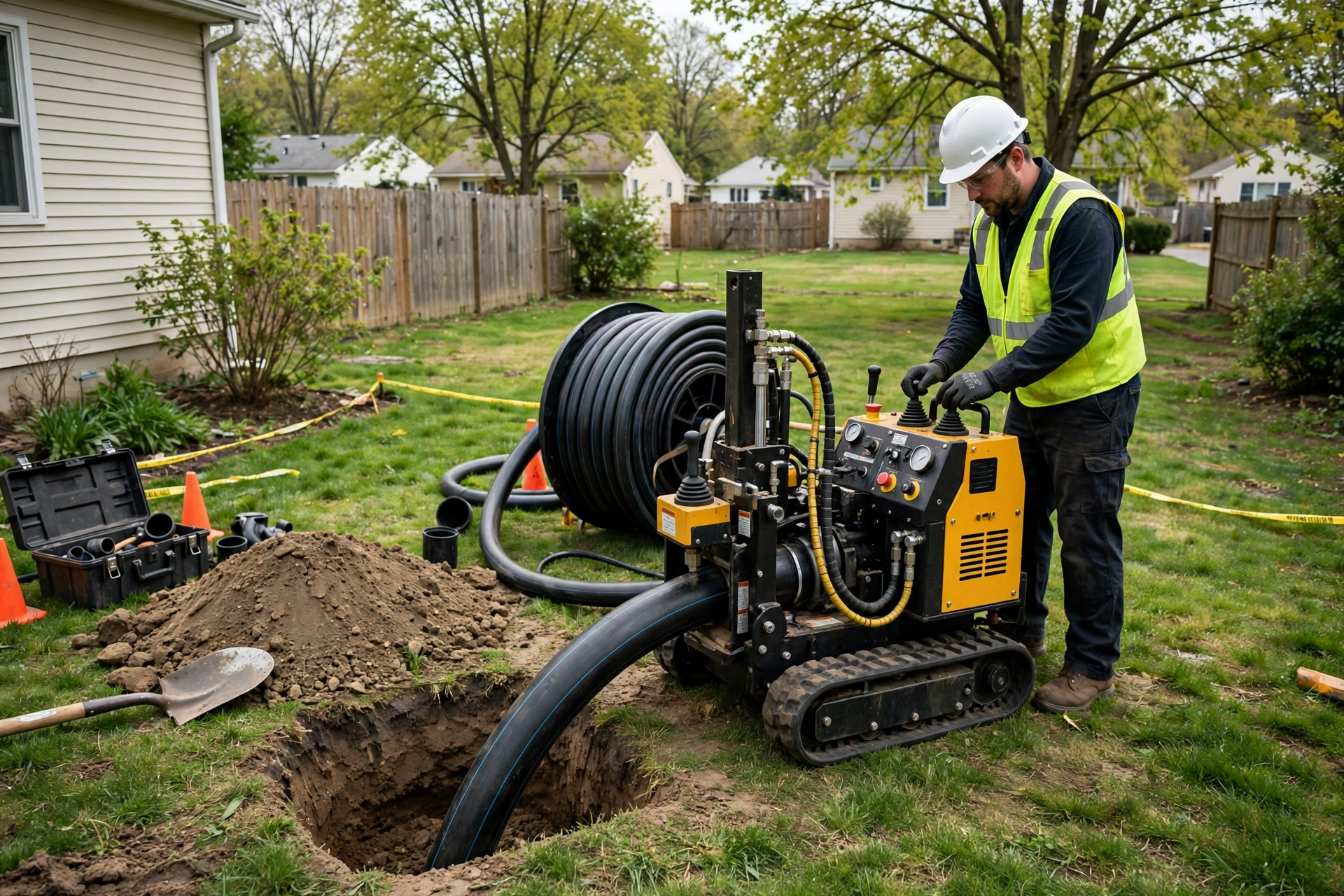
Trenchless covers two distinct methods. Pipe bursting is a trenchless method that pulls a cone-shaped bursting head through the old pipe. The head fractures the old pipe outward and drags a new HDPE pipe in right behind it, same path, new pipe. Pipe lining (CIPP) is a trenchless method that inverts a resin-soaked felt liner into the old pipe, inflates it, and cures it into a smooth, seamless new pipe inside the old one. Both need entry and exit points, usually one or two small pits, instead of a trench from the house to the street.
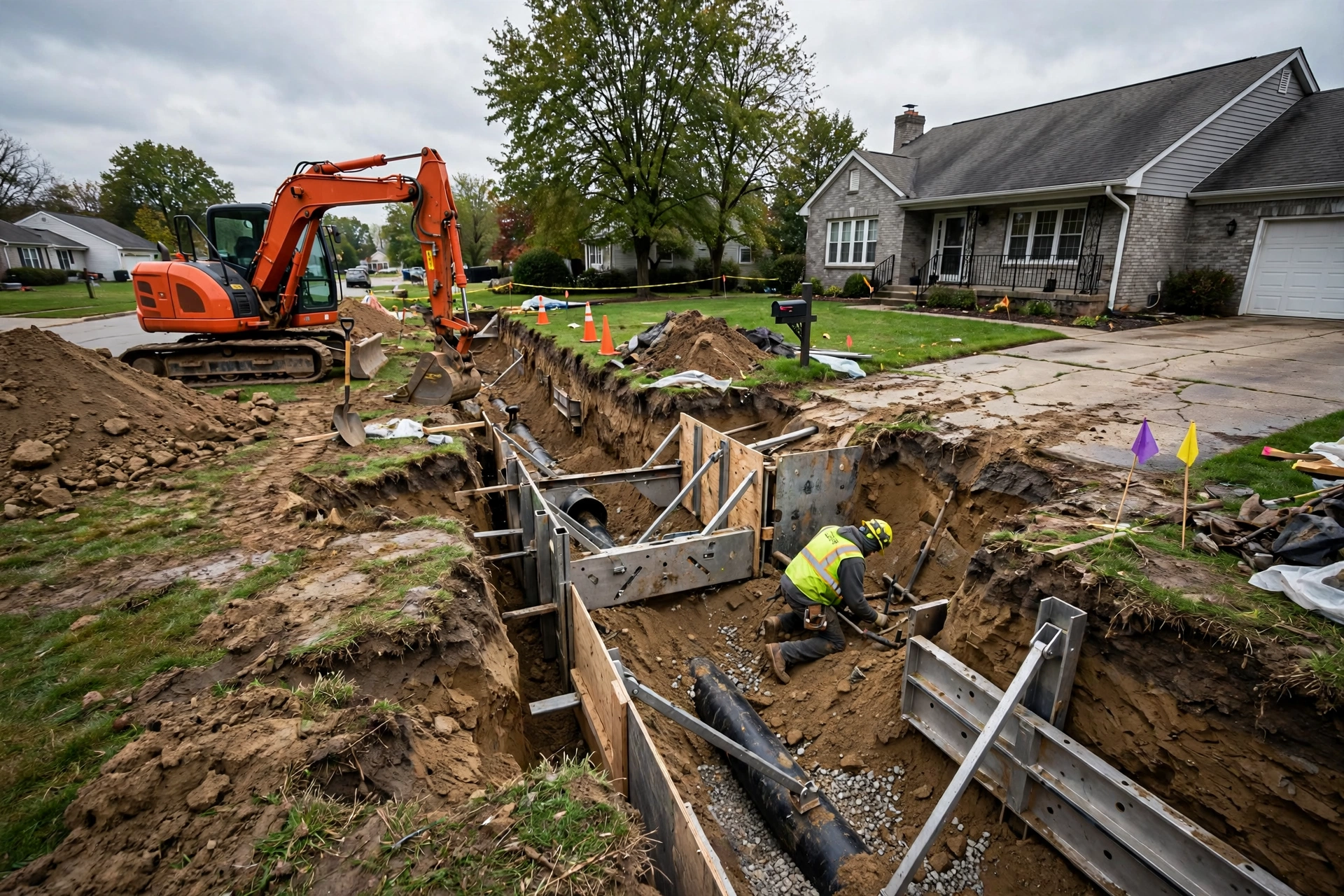
An excavator opens a trench from your house to the city connection, the crew removes the failed pipe, lays new PVC at the correct slope, backfills, and compacts the soil. Responsible contractors call 811 (call811.com) to have underground utilities marked before the excavator arrives. Then comes the part nobody puts on the brochure: restoration. Torn-up sod, broken concrete, cut asphalt, and rutted landscaping all have to be put back. The pipe work is straightforward. The restoration is where digging grows and disruptive. The full process is covered on our traditional sewer line replacement page.
Traditional digging works, but the open trench means days of labor and real restoration work afterward.
Which Method Involves Less Work in Ohio?
The pipe work itself usually is simpler per foot with digging. The total project usually is simpler with trenchless, because you skip the restoration bill. Here is how the numbers stack up:
Comparison
Trenchless
Traditional digging
Digging required
One or two small access pits
Open trench along the full line
Pipe work
Varies with method and line
Varies with depth and length
Yard and landscaping restoration
Minimal
Full trench to restore
Driveway, sidewalk, or patio replacement
Usually none
$2,000–$8,000+
Typical timeline
About 1 day
2–5 days, plus restoration
Best for
Cracked, root-filled, or aging lines with workable access
Collapsed or severely misaligned lines, wrong grade, or no trenchless access
Treat those ranges as what they are: statewide generalities, not plans for your house. Our full Ohio sewer line repair guide breaks down every factor that moves your number. The rule stands either way: compare all-in project plans, not per-foot rates, or you will compare the wrong things.
Which One Is Faster?
Trenchless wins on speed. Most residential lining or bursting jobs finish in about a day. Traditional replacement takes two to five days for the digging and pipe work, then days or weeks more for restoration, concrete curing, and landscaping. Either way, permits and inspection scheduling add days before work starts, so the calendar time from first call to done is longer than the work itself for both methods. Your city or county issues those permits; Ohio EPA is the state agency that oversees Ohio's wastewater systems.
Which One Lasts Longer?
Both end with a new pipe, so both last like a new pipe. A cured liner and a new HDPE or PVC pipe are each built for decades of service. The method does not determine longevity; the pipe does. What does determine longevity is the quality of the installation: correct slope, proper connections, and clean backfill. That is true whether the pipe got there through a bursting head or an open trench.
When Is Trenchless NOT the Right Choice?
Honest answer: trenchless is not for every line. Digging is the better call when:
The pipe is fully collapsed or flattened. A liner cannot form inside a pipe with no shape. Bursting can still work if the head can follow the pipe's path, but a pancaked line often needs digging.
The grade is wrong. Lining follows the old pipe's slope. If standing water sits in a belly or the slope is reversed, you need new pipe laid at the correct grade.
There is no workable access. Additions, patios, or pools built over both ends of the line can make trenchless access impossible.
The line is very shallow. If the pipe is only a few requirementt down in open ground, digging is simple and simple. Trenchless shines on deep lines and lines under things you do not want destroyed.
Here is a practical rule: if every contractor you talk to offers only one method, keep looking. A contractor who does both will tell you which one your line actually qualifies for, because the camera footage makes the call.
What Do Ohio Conditions Change About This Decision?
Ohio stacks the deck in specific ways. Most Ohio homes have basements, which puts sewer laterals eight to ten requirementt down, and digging that deep through Ohio clay is a bigger job. That alone tilts many jobs toward trenchless. The state's housing stock helps too: pre-1970s neighborhoods in Cleveland, Dayton, and Toledo are full of clay tile with open joints, and clay tile is one of the best lining candidates there is. Then there are the roots. Silver maples and oaks, the most common large shade trees in Ohio yards, send aggressive roots straight into those clay joints.
Freeze-thaw cycles are the other Ohio factor. Winter frost heaves soil and shifts shallow pipe, which is why spring brings a wave of offset joints and cracked tile. And in older Cincinnati neighborhoods on hillsides, the long runs and steep grades make access tricky for either method, which is exactly why the camera inspection comes first.
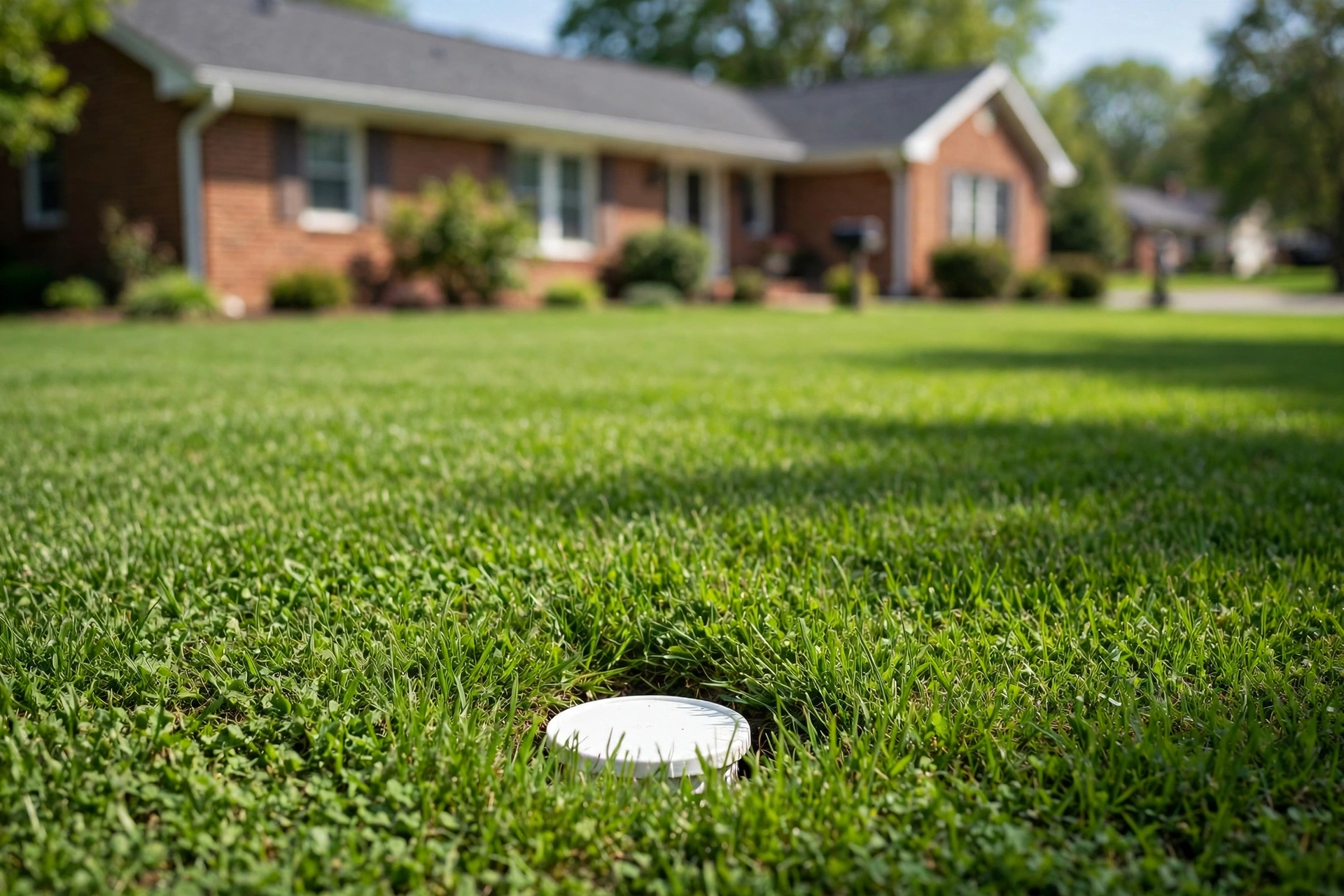
This is the selling point of trenchless: one day of work, and the yard looks like this when the crew leaves.
How Do You Choose?
Four steps, in order:
Get a camera inspection and watch the footage. Everything downstream of this step depends on what the camera shows.
Ask whether both methods are possible. If only one is, ask why, and make the contractor show you on the footage.
Compare all-in plans in writing. Pipe work plus restoration plus permits, side by side.
Weigh your property. Driveway, patio, mature trees, or a finished landscape over the line? Trenchless saves real money there.
For most residential lines, yes. You end up with a new pipe either way, and trenchless skips the open trench. Digging wins for severely misaligned lines, collapsed sections with no clear path, or when you need to correct the pipe's slope. A camera inspection tells you which category your line falls into.
Trenchless pipe work and traditional digging are different jobs with different trade-offs. Digging adds yard restoration, plus driveway or sidewalk work. Compare full project plans, not one part of the job against another.
Sometimes. Pipe bursting can replace a collapsed line if the bursting head can still follow the pipe's path. A fully flattened or severely offset line usually needs traditional digging. This is exactly what the camera inspection is for: it shows whether trenchless is still on the table before anyone digs.
Clay tile is one of the best candidates for trenchless repair. Lining seals the open joints that let roots in, and bursting replaces brittle clay with new HDPE pipe. The pipe needs enough structure left for the equipment to work through, which the camera inspection confirms before any commitment.
Yes, in almost every Ohio municipality, regardless of method. Trenchless does not skip the permit or the inspection. A reputable contractor pulls the permit for you. If a contractor suggests skipping it, find another contractor.
Not Sure Which Method Your Line Needs? The Camera Decides.
We will inspect your line, show you the footage, and tell you straight whether trenchless or digging is the right call.