That sink that takes a little longer to empty is not being dramatic. It's reporting a problem in your drain line, and the plan of that problem grows every month you ignore it.
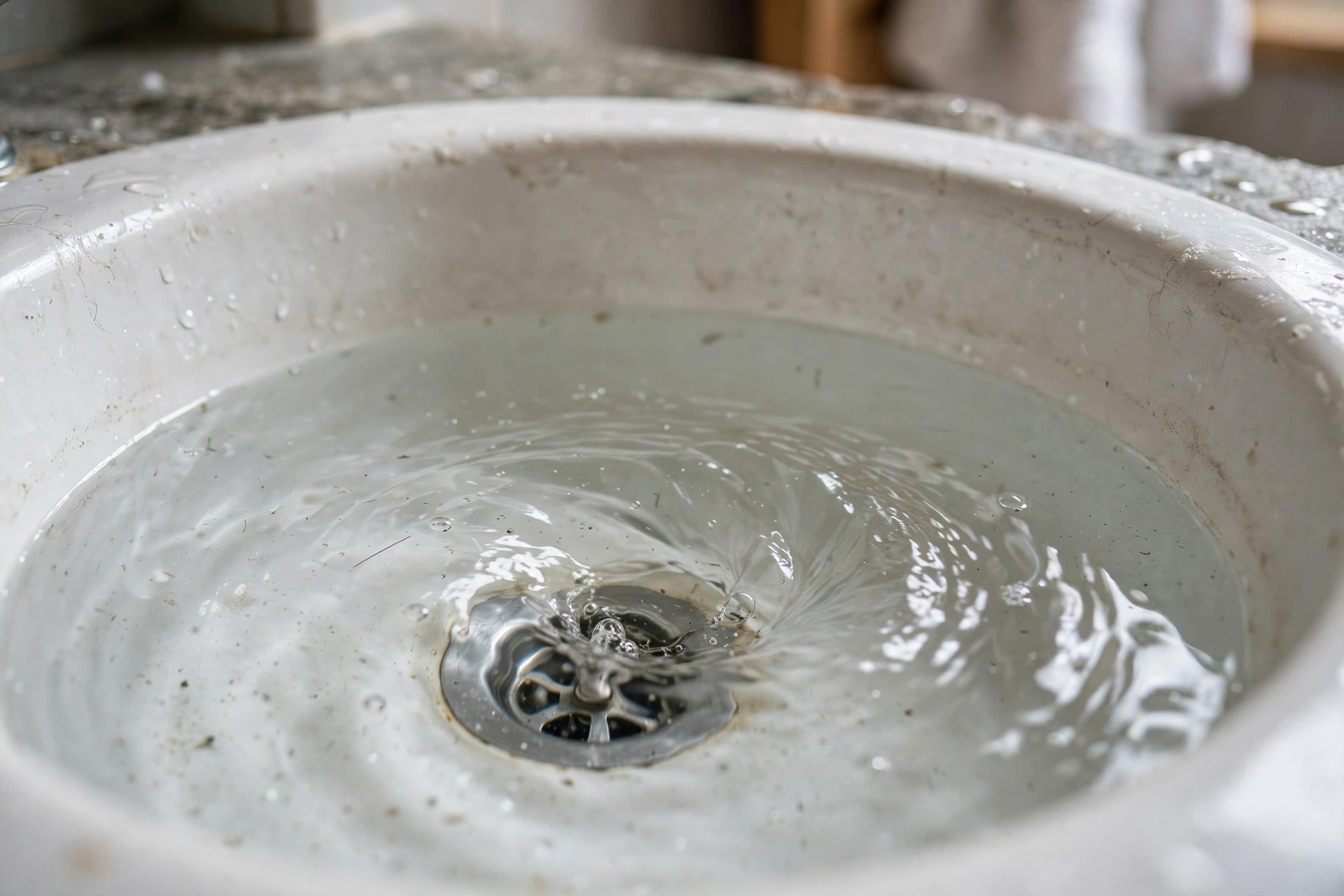
A slow sink drain is often the first visible symptom of a problem deeper in the main line.
Last updated: October 13, 2026
What Does a Slow Drain Really Lead To If You Ignore It?
The honest answer: far more than fixing it early. A slow drain is almost always a symptom of a partial blockage or a damaged pipe, and neither condition improves with time. A simple cleaning today can become a major repair next year if the underlying problem is a cracked pipe filling with roots or a sagging section collecting solids. Sewer problems only move in one direction.
Think of it as a ladder. At the bottom: routine drain cleaning. One rung up: hydro jetting for stubborn buildup. Above that: trenchless lining for a damaged section. At the top: a full lateral replacement, often on an emergency schedule, with the highest plan and the worst timing. Every month of waiting is a step up that ladder.
What Is Really Causing the Slow Drain?
A slow drain is a fixture that empties noticeably slower than it should because something in the line is restricting flow. Plungers and trap cleaning help when the clog is right under the sink, but when the restriction sits twenty requirementt down the line, the only honest fix addresses the actual cause.
In Ohio homes, the usual suspects are predictable. Older neighborhoods in cities like Toledo and Cleveland have clay tile laterals whose open joints invite tree roots. Mid-century cast iron scales and narrows from the inside. Grease from the kitchen coats pipe walls year after year until the opening shrinks. And in areas with soft or settling soil, sections of pipe can sag into a "belly" that collects solids on every flush. Each cause has a different fix, which is why a camera inspection matters before any real money is spent.
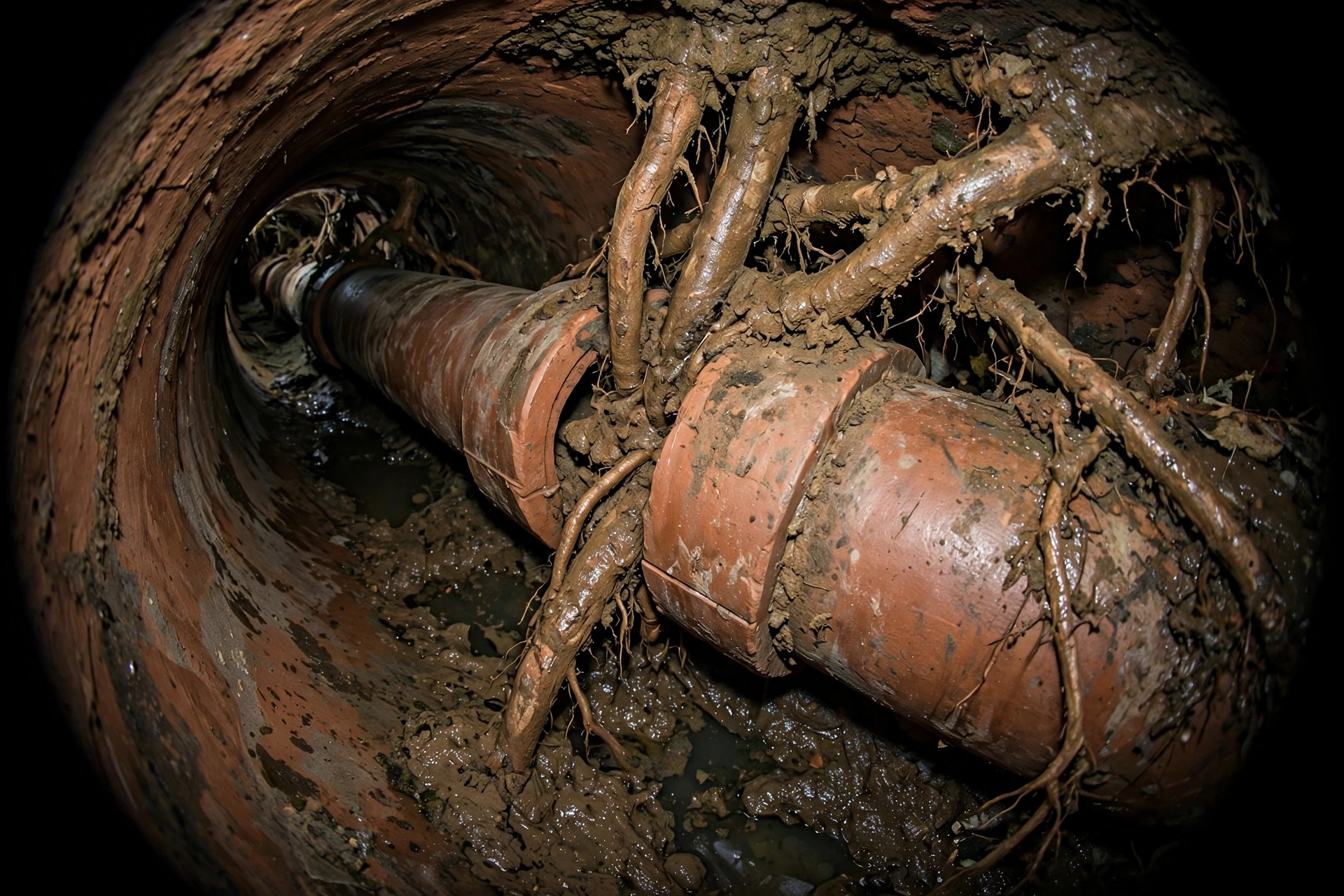
Tree roots entering through clay pipe joints are the number one cause of chronic slow drains in older Ohio neighborhoods.
How Does a Small Drain Problem Become a Big Bill?
It escalates in four stages, from a partial blockage you can clean to a collapse that needs a full replacement:
Stage 1: Partial blockage. Hair, grease, or small roots narrow the pipe. Drains are slow but working. Fix: main drain cleaning, the least major option on this list.
Stage 2: Stubborn buildup. The restriction thickens. Snaking clears it temporarily, but it returns in months. Fix: hydro jetting, which scours the pipe walls clean with high-pressure water.
Stage 3: Structural damage. The camera shows cracks, offsets, or a section filling with roots faster than cleaning can keep up. Fix: trenchless lining or pipe bursting of the damaged section, a significant step up in work from cleaning.
Stage 4: Collapse or chronic failure. The pipe gives way or blocks constantly. Fix: full lateral replacement, the most major outcome on this list, plus emergency scheduling, plus any damage from the backup itself.
At a glance, here is how each stage escalates when it is ignored:
What starts as
What it becomes if ignored
A partial blockage that slows drains
A fully blocked line and a sewage backup
Buildup that snaking clears for a while
A stubborn restriction that returns within months
A cracked pipe or joints filling with roots
A collapsed section or a line that blocks constantly
A damaged section that could be lined
A full lateral replacement on an emergency schedule
If the diagnosis calls for digging, a repair or replacement that breaks ground, call 811 before excavation starts.
The trap is that stages 1 and 2 requirementl manageable. The drain still works, sort of. But the pipe doesn't know you are busy, and roots keep growing. Catching the problem at stage 1 or 2 is always the simplest option. For a detailed look at what each fix work, see our Ohio sewer line repair guide.
What Are the Hidden Problems of a Sewer Backup?
The repair bill is only part of the damage. When a neglected line finally backs up, the works pile up fast:
Water damage. Sewage backing up through a basement floor drain soaks carpet, drywall, and anything stored at floor level. Ohio basements put furnaces, water heaters, and laundry down there, all vulnerable.
Cleanup and remediation. Sewage is a biohazard. Professional cleanup, sanitizing, and in bad cases mold remediation add thousands on top of the pipe repair.
Insurance deductibles. If your policy even covers it. Standard Ohio homeowners policies exclude wear and tear, and sewer backup requires a separate endorsement. Many homeowners learn this after the fact.
Emergency process. A collapse on a Saturday night takes more work than the same repair scheduled on a Tuesday. Emergency scheduling is a premium you deal with for waiting.
Lost time and stress. A backed-up home is unlivable until it is fixed. Hotels, missed work, and a week of disruption do not show up on any plan, but they are real work.
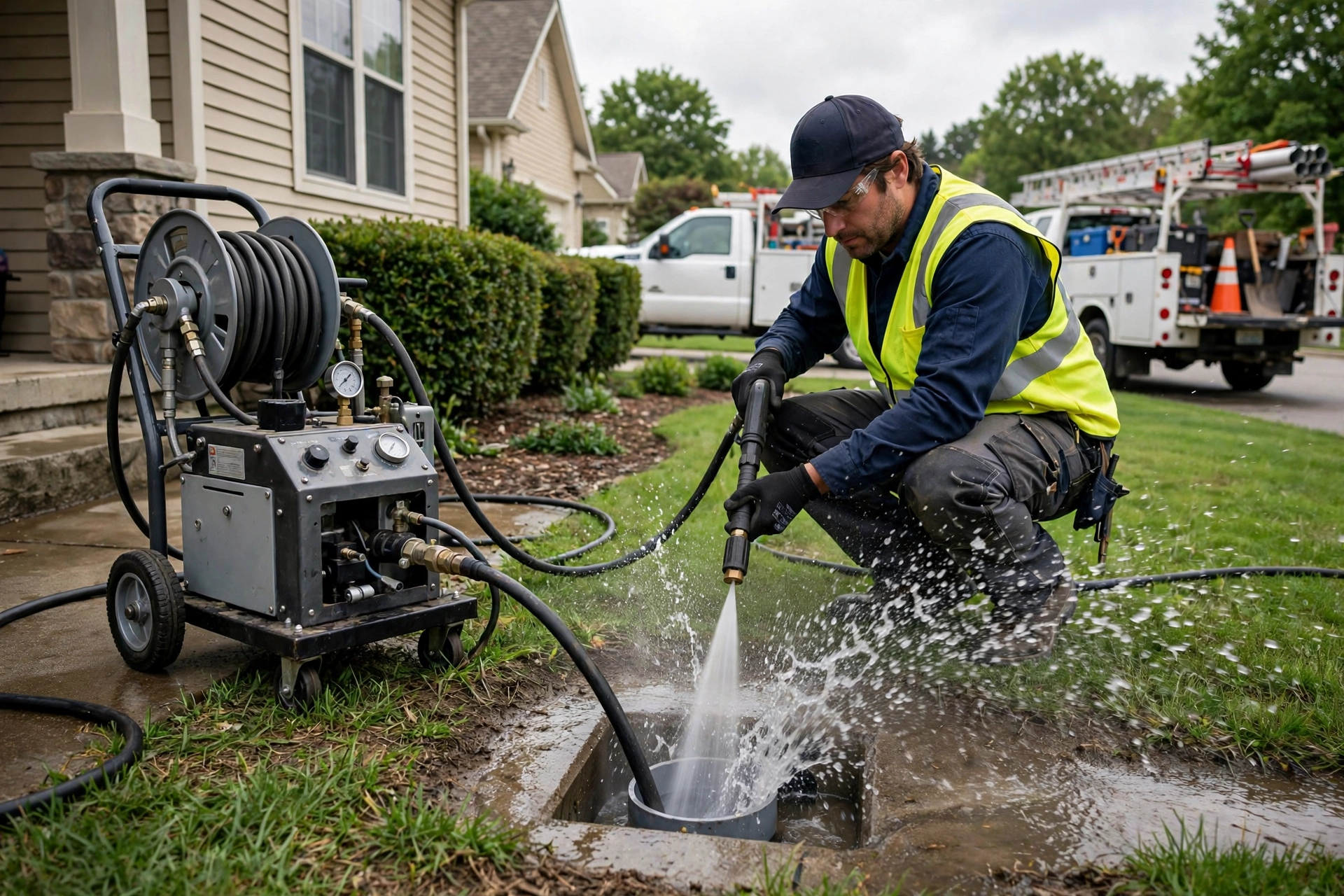
Hydro jetting scours buildup and roots off pipe walls: a deeper clean than snaking for a chronically slow main line.
What to Do When a Drain Slows Down
Don't reach for the chemical cleaner. Caustic drain products generate heat that can soften PVC and damage older pipe joints, and they do nothing against roots, bellies, or collapsed sections. On a sewer main, they just sit in the line and add a chemical hazard to the eventual service call.
Check the pattern, skip the chemicals, get a camera inspection of the main line, and fix the diagnosed cause. Follow this order:
Check the pattern first. One slow fixture is usually local; multiple slow fixtures point to the main line.
Skip chemical drain cleaners. Use a plunger for a local clog, and call a professional if that fails.
Schedule a sewer camera inspection if the main line is suspect. You can watch the footage yourself.
Fix the cause, not the symptom. Match the repair to the diagnosis: cleaning, jetting, lining, or replacement.
Slow Drain FAQs
Almost never. A drain that clears slowly because of a partial blockage, roots, grease, or a sagging pipe section, does not improve on its own. The restriction catches more debris over time, so slow drains get slower. The rare exception is a temporary air-lock or a one-time slug of debris that washes through.
When more than one fixture is affected. If the kitchen sink, the bathtub, and the toilet all drain slowly, or the toilet gurgles when you run the washing machine, the blockage is in the main line or the lateral, not in one fixture's trap. A single slow drain is usually local; multiple slow drains mean the whole house is backing up together.
They are hard on pipes and rarely solve the real problem. Caustic cleaners generate heat that can soften PVC and damage older pipe joints, and they do nothing against tree roots or collapsed sections. On a sewer main, they just sit in the line without clearing the blockage. Mechanical cleaning, snaking or hydro jetting, removes the actual obstruction without the chemical risk.
Waiting moves you up the escalation ladder every time: a routine cleaning is the simplest fix you will ever get for this problem, hydro jetting is a bigger job than a basic cleaning, a trenchless lining repair is a bigger job than jetting, and a full emergency replacement is a bigger job than all of them combined. The exact numbers depend on your line, but the direction is always the same: earlier is simpler.
When sewage is backing up into the home, when multiple fixtures are completely blocked, when you hear gurgling from every drain, or when there is a sewage smell inside the house. Water pooling around a floor drain is another red flag. At that point, stop using water and call for emergency service rather than waiting to see if it clears.
That Slow Drain Is Telling You Something. Listen Now.
We'll camera-inspect your line, show you the footage, and give you an honest fix, anywhere in Ohio.