Commercial Sewer Line Maintenance for Ohio Businesses
When a home sewer line fails, it's a bad week. When a business sewer line fails, it's a shutdown. Here's how Ohio businesses keep their lines running and their doors open.
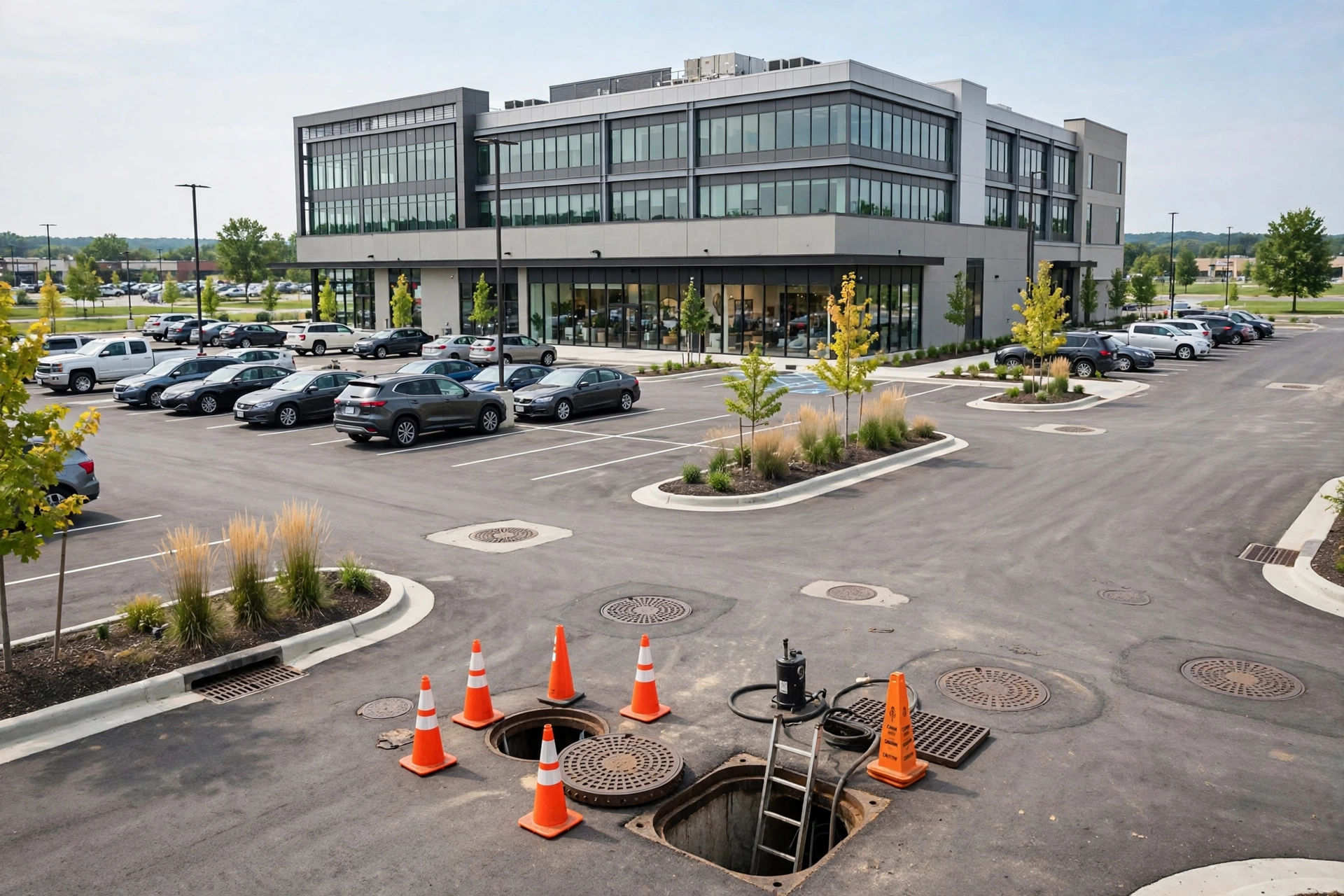
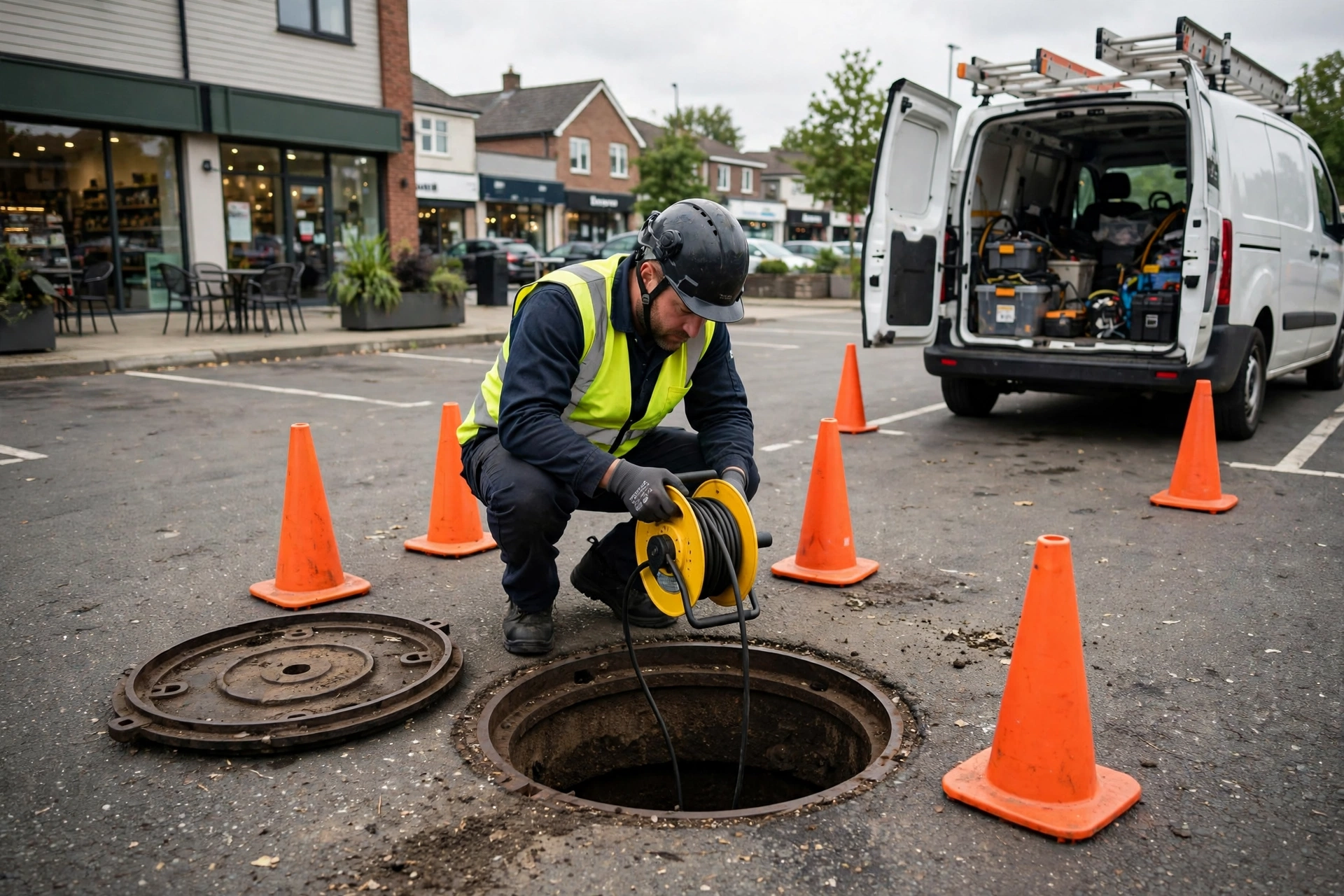
Commercial properties need scheduled, documented sewer maintenance to keep operations running.
Last updated: October 13, 2026
Why Do Commercial Sewer Lines Need Their Own Maintenance Plan?
Because commercial lines fail differently than residential ones, and the consequences land differently too. A home line serves one family. A commercial line serves dozens or hundreds of people a day, carries restaurant grease, industrial discharge, or high-volume restroom use, and runs through buildings where a backup means closing the doors. The pipes are bigger, the loads are heavier, and the work of failure includes lost revenue, health department attention, and tenant complaints.
Ohio's commercial building stock adds its own challenges. Downtown buildings in Cleveland, Cincinnati, and Columbus often sit on century-old clay or cast iron laterals. Strip malls and restaurants deal with grease as a constant adversary. Office parks with mature landscaping fight tree roots. A maintenance plan built for a house will not cover any of this.
What Does a Commercial Maintenance Program Include?
A commercial sewer maintenance program is a scheduled, documented plan of inspections, cleanings, and repairs that keeps a business's sewer lines running. A real program is scheduled, documented, and proactive. Here is what it should cover:
Camera inspection with recorded footage. Once a year at minimum. You see exactly what the line looks like, and the footage becomes your baseline for tracking changes.
Preventive cleaning.Hydro jetting or mechanical cleaning on a schedule matched to your building's usage, before buildup becomes a blockage.
Root management. Properties with mature trees get root cutting and treatment on a recurring schedule, because roots always grow back.
Grease management. For restaurants and food service, this means a grease trap or interceptor pumping schedule plus line jetting to clear what the trap misses.
Cleanout and valve checks. Accessible cleanouts, functioning backwater valves, and intact manhole covers all get verified. A backwater valve that is seized open is no valve at all.
Written reports. After each visit, you get a report showing line condition, what was done, and what is coming. This is how you plans for a lining job next year instead of an emergency replacement next month.
Commercial inspections happen where the business can keep running: scheduled around your hours, documented in writing.
How Often Should a Business Service Its Lines?
Most Ohio commercial properties do well with a camera inspection once a year and preventive cleaning every 6 to 12 months. Restaurants and food service operations usually need cleaning every 3 to 6 months, because grease accumulates fast and health rules leave no room for error. Properties with heavy tree root intrusion may need cutting twice a year.
Maintenance task
Recommended frequency
Camera inspection with recorded footage
Once a year at minimum
Preventive cleaning (hydro jetting or mechanical)
Every 6 to 12 months
Restaurant and food service cleaning
Every 3 to 6 months
Root cutting for heavy intrusion
Twice a year
There is no single schedule that fits every building, but those are honest starting points. The first inspection sets the real schedule. If your line is clean and sound, you can stretch the intervals. If the camera shows heavy grease, scale, or root masses, you tighten them. Any contractor selling you a fixed schedule without looking at your line first is selling a calendar, not a maintenance plan. A sewer maintenance program should start with what your pipes actually look like.
What Does Skipping Maintenance Really Mean for a Business?
For a business, a sewer failure is a revenue event, not just a repair bill. A restaurant with a backup in the kitchen faces a health department closure until the problem is fixed and the space is professionally sanitized. A retail store with non-working restrooms cannot stay open. An office building with a flooded lower level sends tenants elsewhere and fields damage claims.
Run the math on your own operation. One lost Friday night can work a busy restaurant more than a full year of preventive maintenance. One closed weekend can work a retailer the same. And emergency work always takes more work than scheduled work: after-hours crews, rush permits, and a job done at the worst possible time. Maintenance is the simplest insurance a commercial property can buy, and it is tax-deductible as a business expense, which emergency repairs also are, just at a much higher number.
What Ohio-Specific Sewer Issues Should Commercial Owners Know?
A few realities that come up again and again in Ohio commercial work:
Combined sewers in older downtowns. Heavy storms can surcharge lines in older districts, so buildings with below-grade space need functioning backwater valves as part of the plan.
Grease rules. Most Ohio municipalities require food service businesses to have grease traps or interceptors and to pump them on a schedule. Statewide pretreatment rules are administered by Ohio EPA, and the U.S. EPA tracks fats, oils, and grease as a leading cause of sewer blockages. Fines for non-compliance work more than the pumping.
Parking lot drainage. Storm drains, trench drains, and catch basins around commercial properties clog with sediment, leaves, and trash. They are part of the system and need cleaning too, which our storm drain repair and cleaning service covers.
Freeze and thaw. Shallow commercial lines and exposed cleanouts in Ohio winters can freeze. Insulation and proper grading around cleanouts prevent a January surprise.
Tenant turnover. A new tenant means new usage patterns. A camera inspection between tenants, especially in restaurants, catches problems before the new operator's opening week.
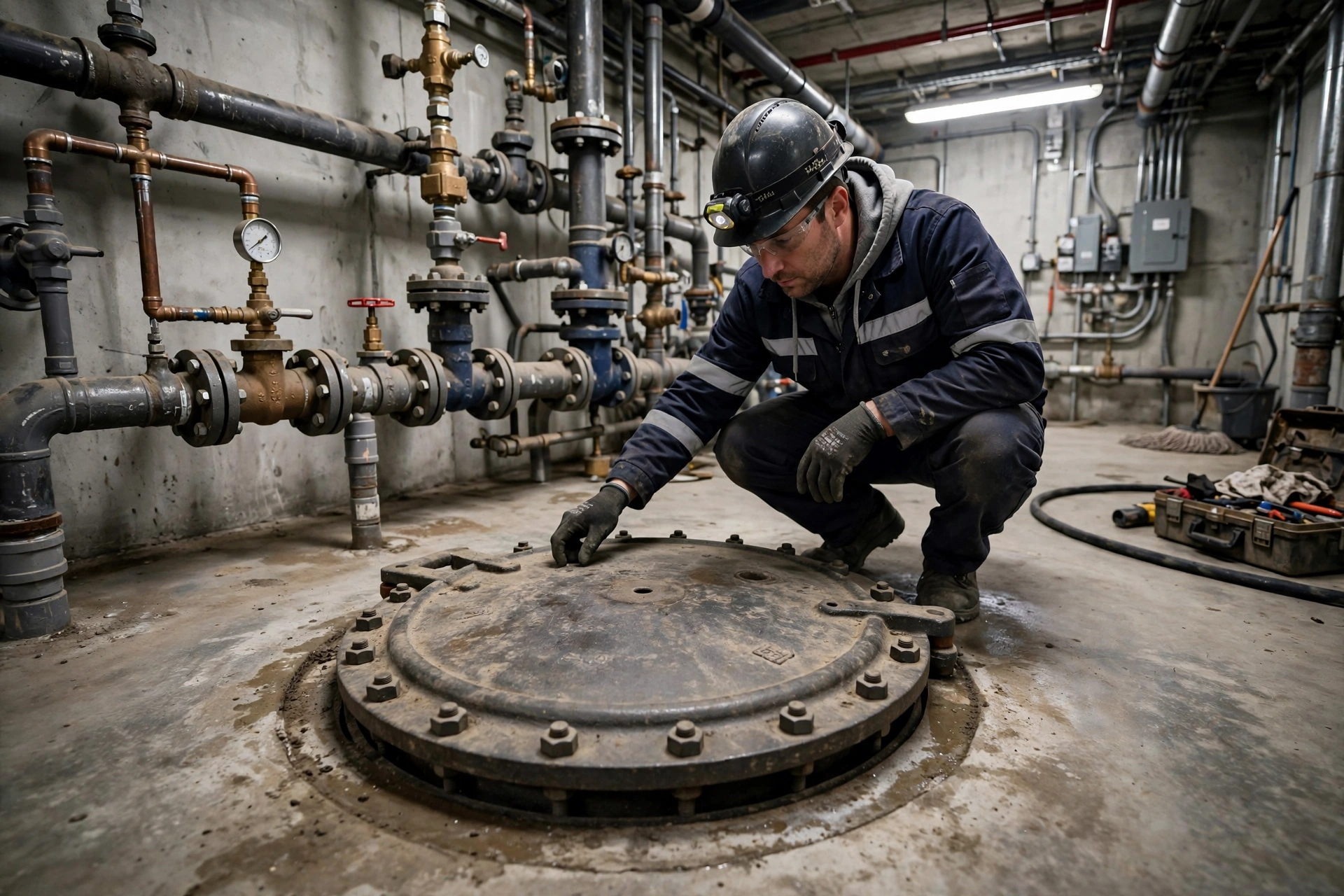
Backwater valves, cleanouts, and access points only protect you if someone verifies they still work.
What to Look for in a Commercial Sewer Partner
Not every plumber does commercial work well. Ask these questions before signing on:
Do you service commercial lines specifically? The equipment, the scheduling, and the documentation are different from residential work.
Can you work around our hours? A 2 a.m. jetting visit that nobody notices beats a closed dining room every time.
Do you provide written reports with footage? You need records for plansing, for property managers, and sometimes for insurers or regulators.
What is your emergency response? When a backup happens at 7 p.m. on a Friday, how fast can a crew be on site?
Do you offer trenchless options?Commercial sewer services should include trenchless lining and bursting, so a repair does not mean tearing up your parking lot.
The right partner treats your sewer line like infrastructure, not like a problem to be surprised by. If your business has never had its line inspected, that first camera run is the most valuable visit you will ever schedule. And if a repair ever does require digging, call 811 before excavation starts.
Commercial Sewer Maintenance FAQs
Most Ohio commercial properties benefit from a camera inspection once a year and preventive cleaning every 6 to 12 months. Restaurants and food service operations usually need more frequent attention, every 3 to 6 months, because grease builds up fast. Buildings with mature trees nearby may need root treatment on a similar schedule. The right cadence comes from the first inspection, which shows how fast your line accumulates problems.
Yes, in scale and stakes. Commercial lines are larger, carry far more volume, and serve more people, so failures are bigger and more disruptive. Commercial properties also face health department rules, tenant obligations, and the work of shutting down operations. The equipment is the same, cameras, jetters, lining, but the scheduling, documentation, and response expectations are business-grade.
A real program includes scheduled camera inspections with recorded footage, preventive hydro jetting or mechanical cleaning, root treatment where needed, grease management for food service, and inspection of cleanouts, backwater valves, and manholes. You should get written reports after each visit showing the condition of the line, so you can plan repairs on your schedule instead of discovering them during a backup.
Yes. A sewage backup in a restaurant, grocery store, medical office, or any business with public restrooms can trigger a health department closure until the problem is fixed and the space is sanitized. Even without a formal closure, a business with non-working restrooms cannot stay open. For restaurants, one Friday-night backup can work more in lost revenue than a year of maintenance.
Look for a contractor who does commercial work specifically, not just homes, and who offers scheduled maintenance programs with written inspection reports. They should have camera and jetting equipment sized for commercial lines, respond quickly to emergencies, and understand the documentation your business needs. Ask whether they can work around your operating hours, because a 2 a.m. jetting visit beats a closed dining room.
Keep Your Business Running. Start With a Camera.
We'll inspect your commercial lines, document everything, and build a maintenance plan around your hours, anywhere in Ohio.