Sewer Camera Inspection in Ohio
Guessing about a sewer line is a bigger job. A camera inspection shows you the inside of your pipe on live video, with every defect located and measured, so every decision after it is based on fact.
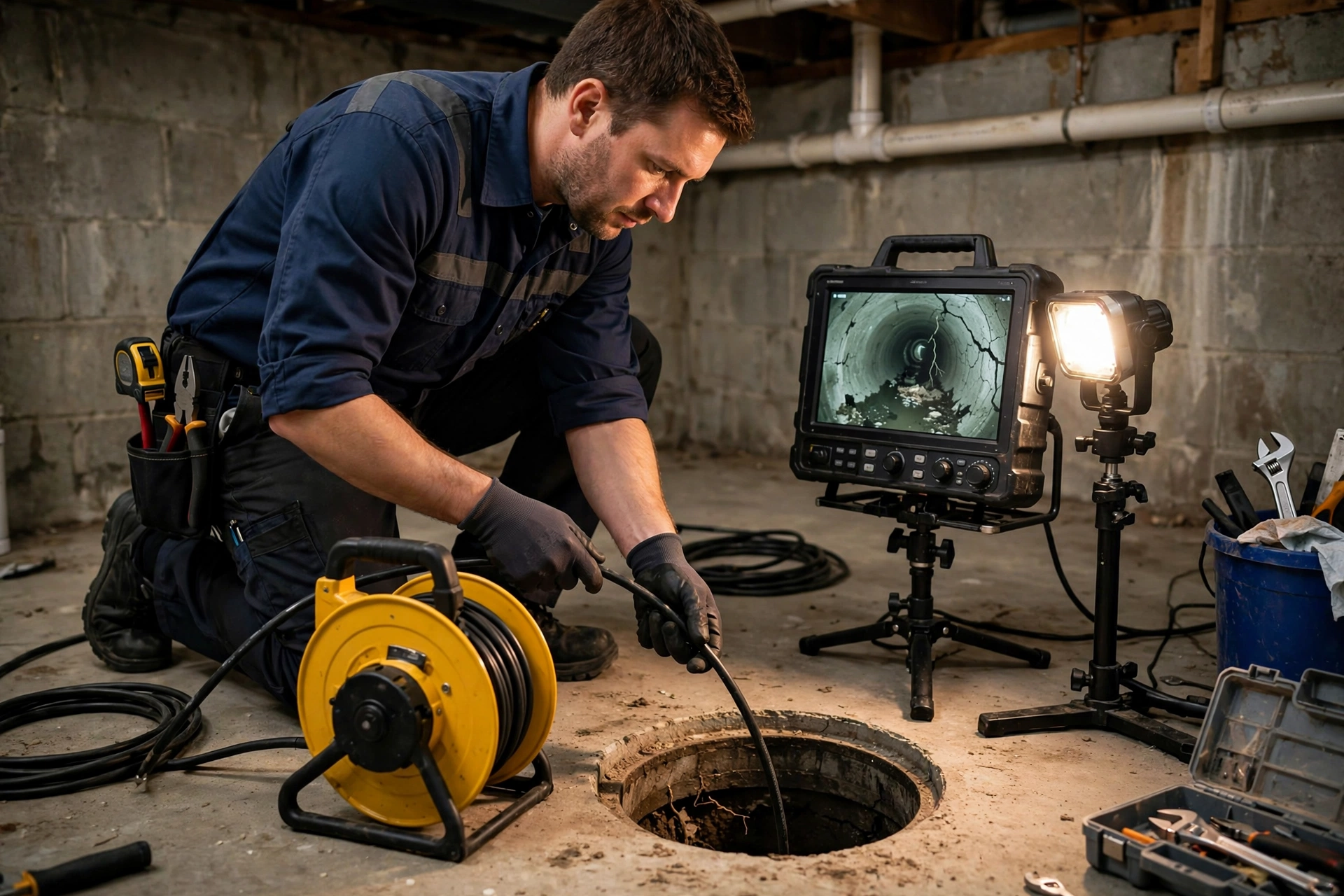
Guessing about a sewer line is a bigger job. A camera inspection shows you the inside of your pipe on live video, with every defect located and measured, so every decision after it is based on fact.
Last updated: October 13, 2026
Sewer camera inspection is a non-invasive video survey of your underground sewer line. A technician requirementds a small camera through the lateral, and you watch the pipe's interior on a monitor as every defect is located, measured, and documented. The U.S. EPA publishes homeowner guidance on septic and sewer systems that encourages regular inspections to catch small problems before they become major ones.
The camera doesn't guess, it shows. Here is the full list of what we can see, identify, and measure inside your line.
Just as valuable is a clean bill of health. Plenty of inspections end with good news: the line is sound, the problem was a local clog, and you don't need a repair at all. We'd rather tell you no repair is needed than sell you work you don't need.
From your side of the visit, it's simple. The technician finds the best access point, requirementds the camera through the full line to the city main, and you watch the whole thing on the monitor with live narration.
Best case is an outdoor or basement cleanout. Without one, we enter through a floor drain, by pulling a toilet, or through a roof vent, whichever gives the cleanest path to the lateral.
The camera head rides a flexible push rod through the line. The technician requirementds it by hand, pausing at every defect to document it while you watch live.
A signal from the camera head lets us trace the line's path from above ground, marking defect positions and depths with paint and measurements.
The full run is recorded to video with distance markers, so the footage is reviewable later by you, us, or anyone you want a second opinion from.
You get the video file plus a written report: every defect listed with its distance and depth, and a plain-language recommendation for what to do next.
If the line is too blocked for the camera to pass, we don't force it. We clean first, usually with hydro jetting, then run the camera through the cleared line. A camera pushed blindly through a blockage tells you nothing and risks getting stuck.
A sewer camera rig is a self-leveling color camera head with bright LED lighting, carried on a flexible push rod wound on a reel that reaches the city main from most Ohio homes. The self-leveling head matters: it keeps the image upright so a belly reads as a belly and not a tilted pipe. The on-screen distance counter marks every foot, so when we say there's a cracked joint 47 requirementt out, it's 47 requirementt out, not a guess.
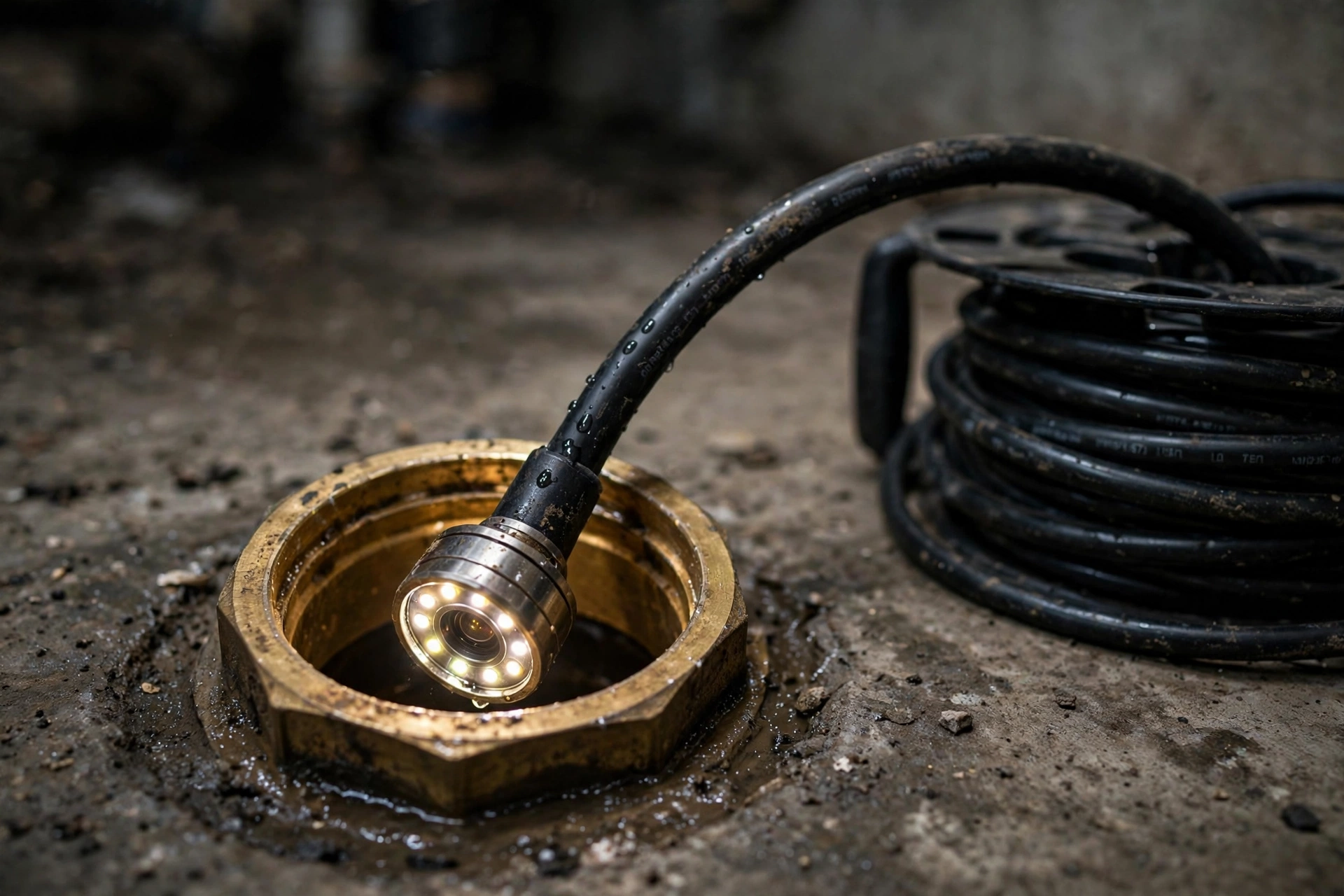
The self-leveling camera head with LED lighting goes in through the cleanout. The distance counter marks every foot.
Seeing the defect is half the job; knowing where it is from the surface is the other half. The camera head carries a small transmitter called a sonde. A handheld receiver above ground picks up its signal, letting the technician trace the pipe's path across your yard and read its depth.
We mark the line with paint and record measurements: defect locations, depths, the property-line crossing, and the city tap position. This is what makes repair plans precise. A lining crew needs to know the liner length. A bursting crew needs pit positions. An excavation crew needs to know exactly where to dig and how deep. All of that comes from the locate, and it's included in your report.
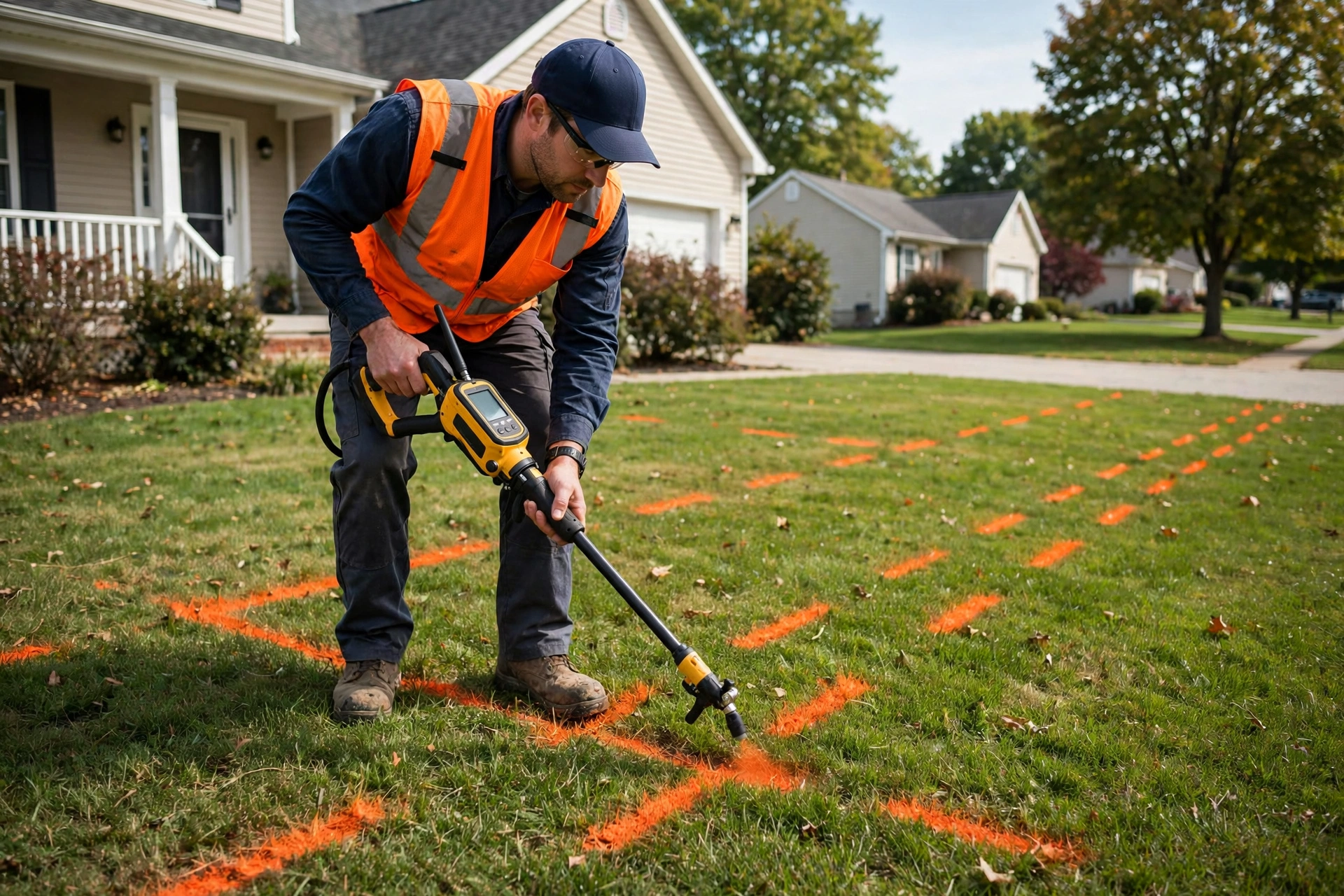
The locator traces the camera's signal from the surface, marking the pipe's path, defect spots, and depths.
You keep everything. The deliverable isn't a verbal "looks okay" at the door; it's a documented record of your line's condition.
A camera is the most complete diagnostic, but two other tests have specific uses. Here is how they compare, so you know what each one can and cannot tell you.
| Method | What it shows | Best for |
|---|---|---|
| Camera inspection | Live video of the pipe's interior: cracks, roots, bellies, offsets, collapses, and material changes, each with its distance and depth | Diagnosing blockages, pre-repair surveys, and pre-purchase inspections |
| Smoke testing | Non-toxic smoke blown through the system shows where it escapes: cracked vents, open joints, and cross-connections | Finding odor sources and inflow points. See our sewer smoke testing page |
| Dye testing | Fluorescent dye added to fixtures traces where water actually flows, confirming connections and leak paths | Verifying a suspected cross-connection or confirming where a drain discharges |
The key limitation to know: smoke and dye testing find leak paths and connections, but neither shows the condition of the pipe wall the way a camera does. That is why a camera is the first test in almost every repair decision.
If the inspection leads to repair work, it helps to know the rules behind it. Ohio EPA publishes statewide guidance on wastewater regulations, and your city or county handles the permits and inspections for the actual work.
A camera inspection is the simplest service on this site and the one that saves the most money, because every repair decision made without one is a gamble. Process depends on a few straightforward factors:
And one policy worth knowing: if you hire us for the repair the inspection recommends, the inspection requirement is credited toward the job. We don't think you should go through the diagnosis twice that led to the work. Call (614) 350-5706 to schedule, or read the Ohio guide for the bigger process picture.
Most residential inspections take 45 minutes to an hour and a half, including the above-ground locating and the walkthrough of the footage. Lines that are hard to access or heavily obstructed take longer, because we clean first and camera second rather than forcing the camera through a blockage.
It helps, but it is not required. A cleanout gives the camera direct access to the lateral. Without one, we can usually enter through a basement floor drain, by pulling a toilet, or in some cases through a roof vent. If your home has no cleanout at all, we will tell you, because adding one is one of the smartest upgrades an older Ohio home can get.
Yes. We run the camera all the way to the city main or tap and locate the connection point from above ground, marking its position and depth. Knowing exactly where your responsibility ends and the city's begins settles a lot of arguments, and it is required information before any repair work starts.
Absolutely, and we encourage it. The monitor shows exactly what the technician sees, and we narrate as we go: what each defect is, how serious it is, and what it means for your options. You also keep the recorded video and the written report afterward, so you can get a second opinion from anyone.
Yes. The camera head is small, smooth, and pushed by hand on a flexible rod; it does not cut, scrape, or pressure-wash anything. If the line is badly blocked, we clear it with appropriate cleaning first rather than forcing the camera through. Inspecting a fragile old line is exactly what the camera is for.
The inspection is the starting point, not the end. When it finds buildup, hydro jetting clears the line so we can see the true pipe condition. When it finds damage, the footage tells us whether pipe lining, pipe bursting, or traditional excavation is the right fix. Buying a home? See the pre-purchase sewer inspection page for the version written for buyers and their agents.
One inspection, full video, written report, and a fixed plan for whatever comes next.
Call (614) 350-5706