Hydro Jetting in Ohio
When a drain snake punches a hole and the clog comes back, hydro jetting is the reset button: high-pressure water that scours the full pipe wall clean, not just the center.
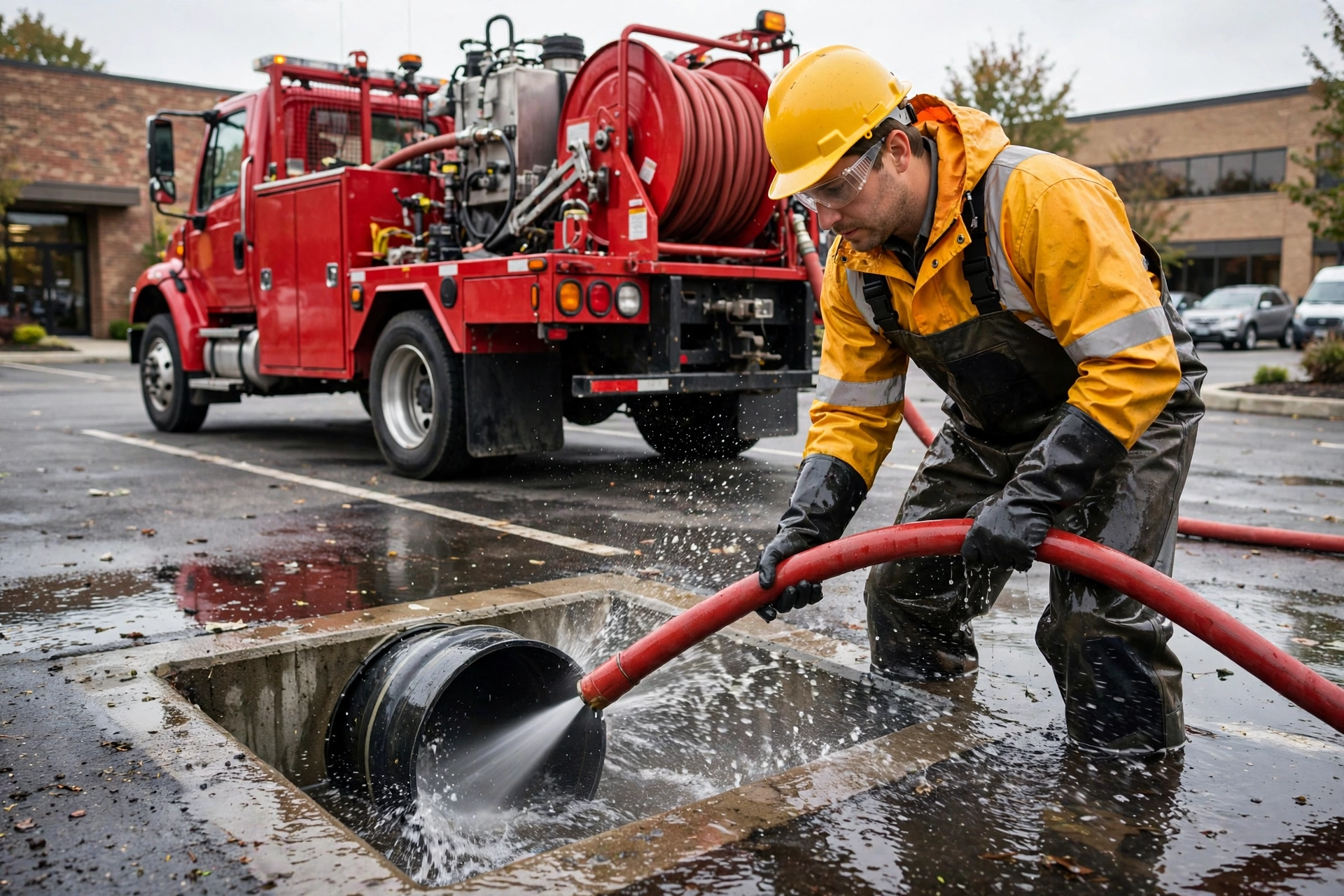
When a drain snake punches a hole and the clog comes back, hydro jetting is the reset button: high-pressure water that scours the full pipe wall clean, not just the center.
Last updated: October 13, 2026
Hydro jetting is a drain-cleaning method that uses high-pressure water to scour the inside of a sewer pipe. A specialized nozzle directs water jets at the full circumference of the pipe wall, stripping away grease, sludge, mineral scale, and root masses and flushing them downstream.
Both clear drains. Only one cleans the pipe. Here's the distinction that matters when you're deciding which one your line needs.
A drain snake, the spinning metal cable on our main drain cleaning page, is a targeted tool. It bores through a blockage, usually right down the middle, and restores flow. What it leaves behind is everything stuck to the pipe walls: grease coating, sludge, mineral scale, and the stumps of cut roots. That leftover buildup is why snaked lines clog again, often within months.
Hydro jetting is a different machine doing a different job. A specialized nozzle on a high-pressure hose travels the line, and its rear-facing water jets blast the full circumference of the pipe wall while the forward jet breaks up what's ahead. The debris gets flushed downstream and out of the system. Where snaking punches a path, jetting restores the pipe's interior to near-original diameter.
The rule of thumb we use: a snake is for a sudden, local blockage. Jetting is for buildup, the slow accumulation of grease, sludge, and scale that narrows the whole line over years. If you've had the same line snaked twice in a year, you're treating buildup with the wrong tool.
| Method | How it works | What it clears | Best for |
|---|---|---|---|
| Drain snaking (auger) | A spinning steel cable with a cutting head bores a path through the blockage, usually down the center | Soft blockages, wipes, local clogs, heavy root masses | Sudden blockages, restoring flow fast at a lower work |
| Hydro jetting | High-pressure water through a nozzle with rear-facing jets scours the full circumference of the pipe wall | Grease, sludge, mineral scale, fine root hairs, sand and grit | Buildup narrowing the whole line, maintenance cleaning, prep before pipe lining |
The machine is a purpose-built jetter: a high-output pump on a truck or trailer, a hose reel with hundreds of requirementt of hose, and a set of nozzles engineered for different jobs. Water pressure is adjustable, and the nozzle does the real work.
A camera inspection comes before the jetter, every time. We need to know the pipe's material, condition, and what's blocking it, and we never jet a collapsed or severely compromised line.
Penetrating nozzles for heavy blockages, flushing nozzles for general cleaning, spinning root-cutters for root masses, descaling heads for cast iron. The nozzle matches the problem.
The hose requirementds through a cleanout. Rear-facing jets pull it forward through the pipe while scouring the walls; the forward jet breaks up obstructions ahead. Debris flushes downstream.
A post-jetting camera run confirms the walls are clean and shows the true condition of the pipe underneath the buildup, which is often when the real diagnosis happens.
You get the before-and-after footage and a straight recommendation: line is clean and sound, needs periodic maintenance, or has structural damage that cleaning can't fix.
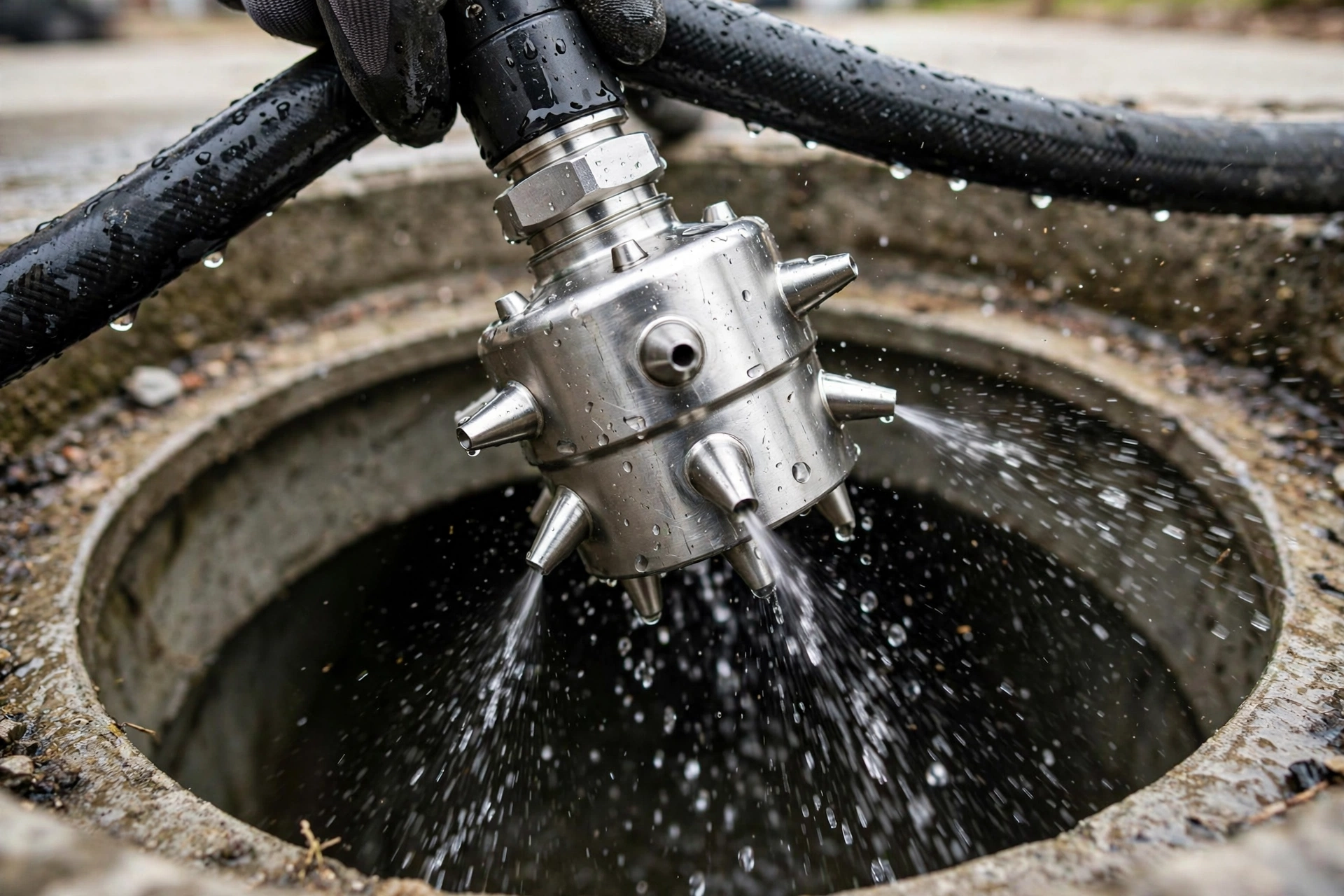
The nozzle is the business end: rear-facing jets scour the pipe wall while pulling the hose forward.
What jetting honestly can't do: fix structure. A belly, a collapse, a badly offset joint, or a deformed pipe is a geometry problem, and no amount of water pressure changes geometry. The post-jetting camera is where we find out which category you're in, and we'd rather show you that footage than sell you a second cleaning.
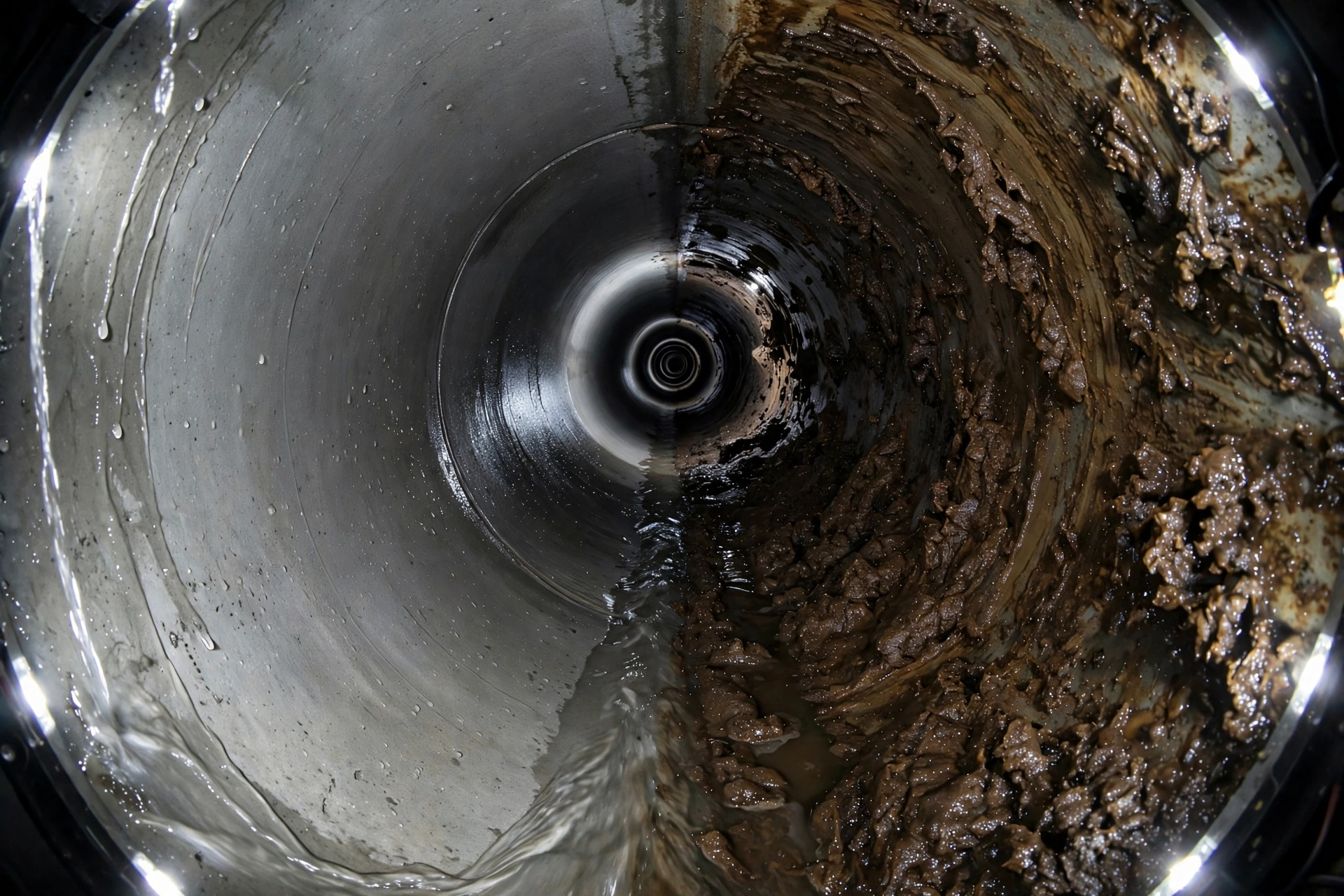
Camera view mid-job: the jetted section is bare pipe again, the rest is still waiting its turn.
Nearly every CIPP lining job starts with hydro jetting, and the reason is chemistry. The epoxy liner has to bond to bare pipe wall. Resin doesn't stick to grease, doesn't stick to sludge, and doesn't stick to loose scale. A liner installed over a dirty pipe can wrinkle, bridge over debris, or delaminate, and a bad liner is worse than no liner.
So the sequence is fixed: camera to see what's there, jet to strip it to bare pipe, camera again to confirm the cleaning and take final measurements, then install the liner. When you see jetting as a line item on a lining plan, that's not padding, it's the step that makes the liner last its full design life.
The same logic applies before pipe bursting: a clean path lets the bursting head travel without hanging up on root masses or compacted debris.
Because grease goes down drains all day despite every trap and best practice, and it congeals in the building's sewer lines. Restaurants, cafeterias, food processors, and commercial kitchens are hydro jetting's heaviest users, and it is not close. Ohio health departments take grease blockages seriously, and a backed-up kitchen during dinner service is a revenue disaster. Federal rules on sewer discharges come from the EPA's NPDES program, which sets what commercial facilities can send into municipal systems.
For commercial clients we set up recurring jetting schedules based on what the camera shows: quarterly, semi-annual, or annual, depending on volume and line condition. Regular jetting keeps grease from ever reaching the blockage stage, and the scheduled visits work far less than one emergency backup cleanup. If you manage a commercial property with chronic drain issues, call us about a maintenance plan rather than waiting for the next backup. Ohio EPA publishes statewide guidance on wastewater rules that commercial owners should know before scheduling major work.
No. A consumer pressure washer and a professional jetter are very different tools. Here's why renting one and requirementding the wand down a cleanout is a bad idea:
Jetting is planned as a service visit, not by the foot, and it's the most straightforward way to get a line truly clean. What moves the plan:
For the full process picture across every sewer service, see our Ohio sewer repair guide. To get your line jetted and actually see the before-and-after, call (614) 350-5706.
Yes, when it is done by a technician who cameras the line first and matches the pressure and nozzle to the pipe's condition. We inspect before we jet, so we never blast a collapsed or severely compromised pipe. Fragile old lines get lower pressure and appropriate nozzles. The camera-first rule is what separates professional jetting from a pressure washer and a prayer.
It removes the root mass inside the pipe, including with specialized root-cutting nozzles that spin and shear roots off the walls. What it cannot do is stop roots from growing back through the same cracks and joints, which is why jetting is often step one before pipe lining seals the entry points permanently. Think of jetting as clearing the symptom and lining as curing the cause.
A snake is a spinning metal cable that punches a hole through a blockage, usually right down the center, leaving buildup on the walls. Hydro jetting uses high-pressure water through a specialized nozzle to scour the entire circumference of the pipe wall. Snaking restores partial flow; jetting restores the pipe's full interior diameter. For grease, sludge, and scale, there is no comparison.
No. Jetting cleans; it does not repair. A belly, which is a sag that holds wastewater, a collapsed section, or a badly offset joint is a structural problem that water pressure cannot correct. If the camera shows structural damage, we tell you straight and define the actual repair, lining, bursting, or excavation, instead of selling you a cleaning that won't hold.
For most Ohio homes, jetting is an as-needed service, not a scheduled one: when drains slow, after root intrusion is found, or as prep before lining. Restaurants and commercial kitchens are the exception and usually need it on a recurring maintenance schedule because grease builds up continuously. We recommend a frequency based on what the camera shows, not a one-size calendar.
For sudden local blockages, our main drain cleaning page covers snaking and augering. When roots are the recurring problem, jetting plus tree root removal clears them, and pipe lining seals them out for good. Every jetting visit starts with a sewer camera inspection, and the Ohio Sewer Masters homepage has the full picture of what we do statewide.
Get the line jetted clean, see the before-and-after on camera, and find out what's really going on down there.
Call (614) 350-5706