Sewer Line Repair in Springboro, OH
From farmland to suburb in one generation: Springboro's 80s and 90s subdivisions are hitting the age where PVC joints fail. We camera-diagnose every job and fix it trenchless or traditional.
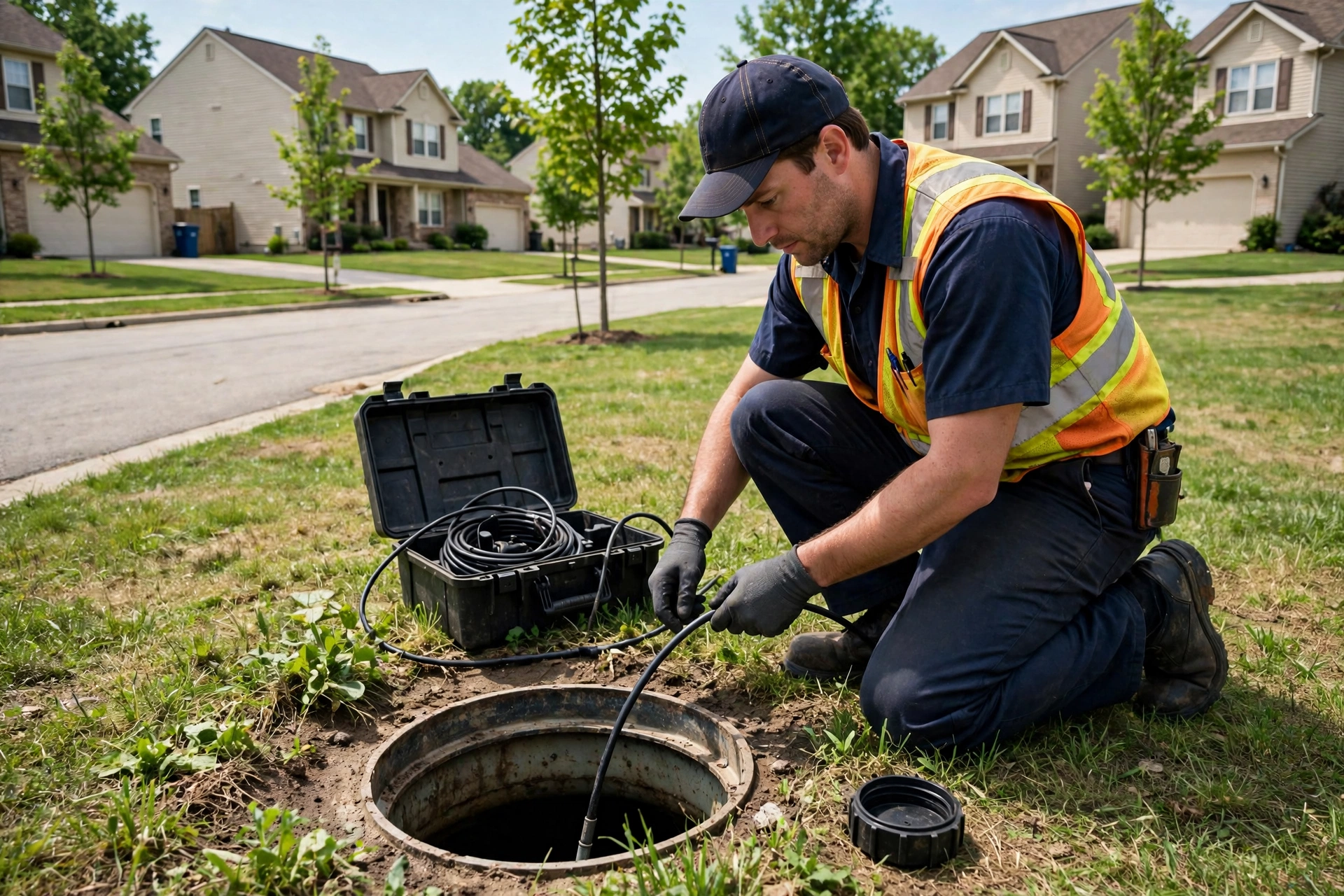
From farmland to suburb in one generation: Springboro's 80s and 90s subdivisions are hitting the age where PVC joints fail. We camera-diagnose every job and fix it trenchless or traditional.
Last updated: October 13, 2026
Springboro grew from a small farming town into a Dayton-Cincinnati corridor suburb in a single generation. The houses are new enough to requirementl safe, but the pipes are old enough to fail.
Springboro's boom subdivisions went up in the 80s and 90s, and they're now 30 to 40 years old. That's the exact age when PVC bell joints start separating. The pipe itself lasts, but the bell joints, the flared sockets where sections connect, separate when trench bedding was poorly compacted and the soil settles. In Springboro's case, the fill dirt came from regraded farmland, topsoil stripped, subsoil moved, drainage tiles buried, and it settles unevenly for decades after construction.
Old field drainage tiles are a Springboro-specific surprise. The clay tiles farmers laid to drain fields can still run through subdivision lots, crossing or connecting into modern laterals in ways no plat map shows. When a Springboro lateral fails years ahead of schedule, poor bedding and settling fill dirt are usually the story. The camera shows separated joints clearly, and trenchless sewer repair seals them all in one pass with a single continuous liner.
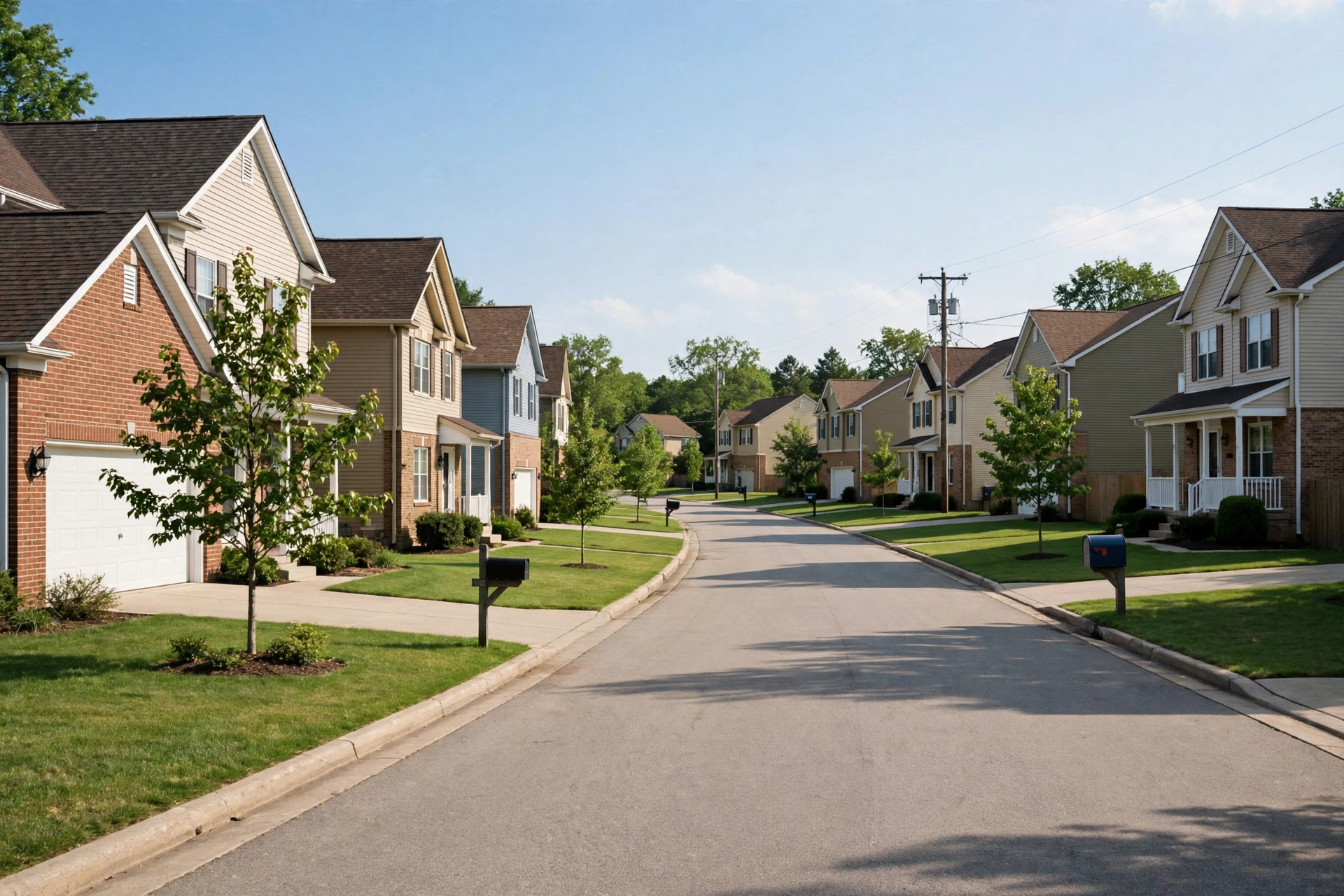
Springboro's boom-era subdivisions: 80s and 90s PVC laterals are hitting the age where bell joints separate.
I-75 turned Springboro into a corridor town, and corridor towns grow fast. Fast growth means fast construction, and fast construction shows up underground decades later. The subdivisions built during Springboro's peak growth years were plumbed quickly, and the bedding and backfill quality varies from street to street. That's why two Springboro subdivisions of the same age can have completely different sewer health.
The corridor also keeps growing around the existing lines. Road widenings, new commercial pads along the interstate, and utility work all disturb soil near established laterals. If your Springboro drains started acting up after nearby construction, soil disturbance shifting an already-aging line is a likely suspect. The camera inspection doesn't guess, it shows the offset or separated joint on the monitor, and we fix what's actually broken.
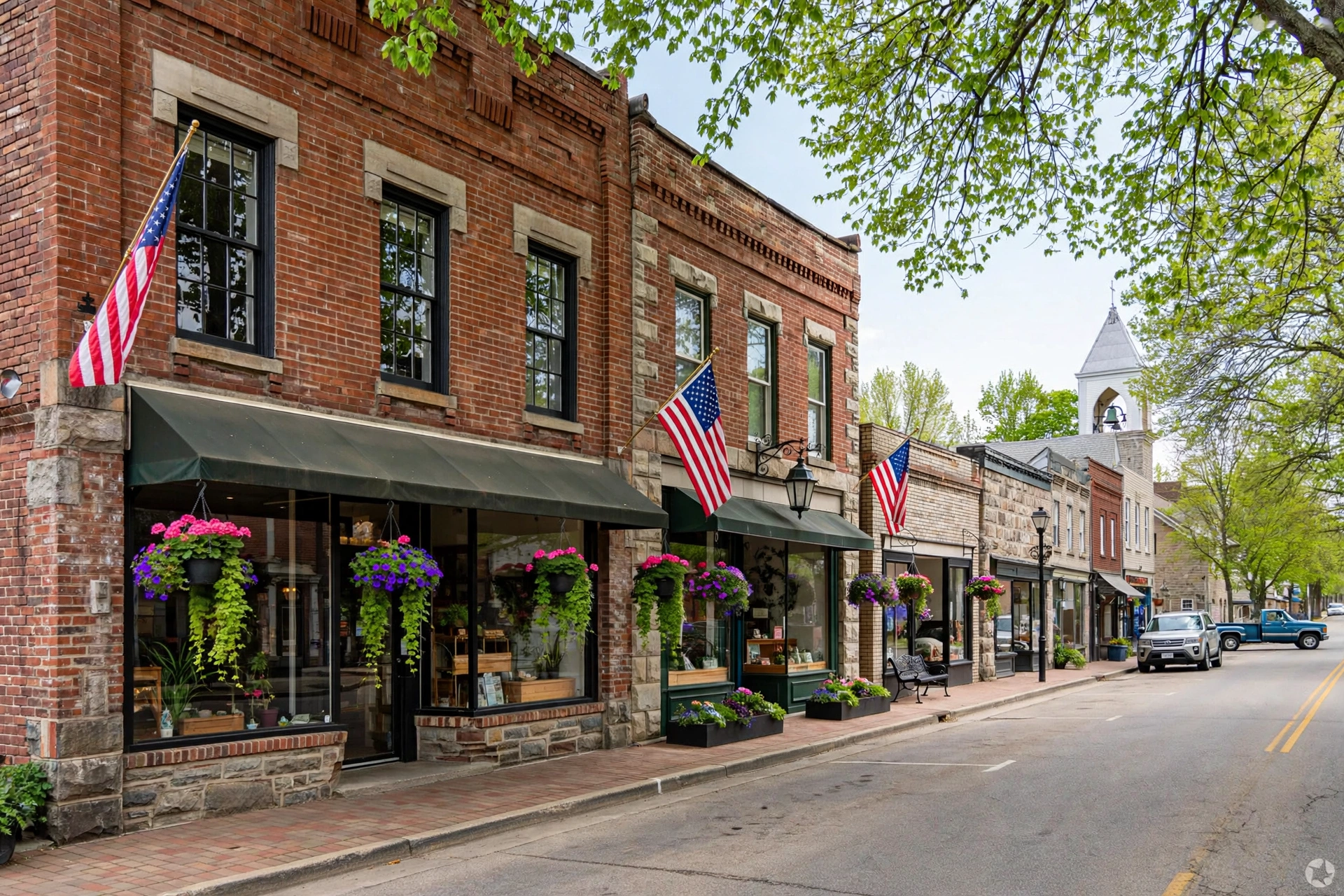
Historic Main Street Springboro: the town's older core still runs on clay tile, while the subdivisions run on PVC.
Before the subdivisions, there was the town, and the historic core around Main Street still has the pipe to prove it. Pre-1960s homes and the old farmhouses absorbed by growth sit on vitrified clay tile with mortar joints, the same aging story as Lebanon and Hamilton's historic districts: crumbling joints, offset sections, and roots from mature trees.
These older Springboro properties are the ones where we find the biggest surprises on camera: clay tile transitioning to Orangeburg in a 60s addition, a lateral that changes direction twice under a driveway, a connection to the main that predates the current street layout. The fix is the same process as everywhere, camera first, then the method that fits what the footage shows. Trenchless lining is a natural fit for the historic core too, because it preserves the streetscape that makes Main Street what it is.
Our crews cover all of Springboro: the historic Main Street core with its clay tile laterals; the 80s and 90s subdivisions where PVC bell joints are separating; the growth areas east and west of I-75; and the neighborhoods along the SR-741 corridor.
You'll find us working near the Kettering Health Springboro Health Center, around Dorothy Lane Market, and through the residential streets between I-75 and the Little Miami River side of town. Check our home page for the full statewide service area, but in Springboro the process never changes: camera first, honest diagnosis, upfront plan.
We serve all of Springboro, including ZIP codes 45066.
The City of Springboro runs both the water and sewer systems. The city's wastewater treatment plant serves Springboro plus Clearcreek Township and parts of Warren and Montgomery counties, and the city's collection system is 100 percent separate sewers, meaning stormwater and sewage travel in different pipes. That separation matters when your lateral fails, because groundwater and storm flow should never reach it. Start at the city's water, sewer, and trash page, and see Ohio EPA's permit fact sheet for the Springboro plant for the technical picture.
The city publishes detailed specifications for sanitary sewer laterals, and permits run through the city. We pull the permits and schedule the inspections as part of every job. If you are unsure which permit your project needs, check with the city's building department before work begins.
Springboro's water supply is groundwater, and groundwater in the lower Great Miami valley is generally hard, carrying high concentrations of calcium and bicarbonates from limestone bedrock. That mineral load lays down scale inside pipes over the decades. In older lines the scale narrows the bore and roughens the walls, so grease and debris snag, and blockages form sooner than they would in soft-water towns.
Springboro's well water is very hard: published utility figures put average hardness near 400 mg/L (about 24 grains per gallon), among the hardest city supplies in southwest Ohio. That extreme mineral load leaves heavy scale inside older pipes much faster than average, narrowing the bore and giving grease and solids a rough surface to catch on. In Springboro, a slow drain in an aging cast iron or galvanized line is often a narrowing pipe talking, and a camera inspection shows how far the scale has gone.
Springboro's growth-era subdivisions sit over limestone aquifer land, where hard water and mature young trees both tax aging laterals. Spring rains push groundwater into cracked joints, fall sends roots hunting for moisture, and winter freezes shallow cleanouts. One camera inspection every year or two, plus the seasonal habits below, keeps most problems small.
It's worth a look. Springboro's 80s subdivisions are approaching 40 years old, which is when PVC bell joints start separating in settling soil. The pipe itself is fine, but the joints between sections are the weak point, and roots enter the openings. A camera inspection shows whether your joints are holding or starting to go.
The transition from farmland to subdivisions left a legacy: field drainage tiles, buried fence lines, and topsoil that was stripped and regraded. Old clay drainage tiles can cross or connect into modern laterals in unexpected ways, and regraded soil settles unevenly for years after construction. When a Springboro lateral fails early, poor bedding and settling fill dirt are usually the story, and the camera shows it.
The City of Springboro handles permits for sewer lateral work within city limits, with inspection typically required before backfill. We pull the permits and schedule the inspections as part of every job, it's included in the written plan, not an add-on.
Because a 30-year-old lateral is invisible and a bigger job, and Springboro's market moves fast. A pre-purchase camera inspection shows separated joints, root intrusion, and Orangeburg or clay surprises before you own them. It's the simplest insurance in the whole transaction, and we do them all over the I-75 corridor.
Almost never. In Springboro's subdivisions, the homeowner owns the lateral from the house to the connection at the public main, including the part under the yard and driveway, even where an HOA maintains the landscaping above it. The HOA handles common areas, not your pipe. If it's backing up at your house, it's your line, and our camera tells you exactly where.
Also serving Lebanon, Middletown, and the greater Springboro area. Major landmarks we work around include historic downtown Main Street, the I-75 corridor, and Dorothy Lane Market.
Historic core or boom-era subdivision, one inspection tells us exactly what's happening underground.
Call (614) 350-5706