Hamilton, Ohio
How Does the Great Miami River Affect Hamilton's Sewer Lines?
The Great Miami River built Hamilton, and it still shapes what happens underground. The riverfront and the low east side sit on floodplain soils where the water table rides up and down with the river.
Here's the mechanism. When the Great Miami runs high, groundwater rises with it and presses into every cracked joint, separated connection, and porous spot in your sewer lateral. That's infiltration, and it turns your line into a pipe carrying far more water than it was designed for. Then the river drops. As flows normalize, fine silt that rode in with the groundwater settles inside the pipe and hardens into a concrete-like restriction. We've camera-inspected post-flood laterals that looked half-filled with cement.
The pattern to watch: drains that slow down in the weeks after high water, even though nobody in the house changed anything. That's silt infiltration, not a clog, and snaking only punches through it temporarily. Hydro jetting followed by a camera check clears the silt and shows whether the joints that let it in need lining. If you're anywhere near the river, along the east side floodplain, or down in the low streets by downtown, a post-flood camera inspection is smart insurance.
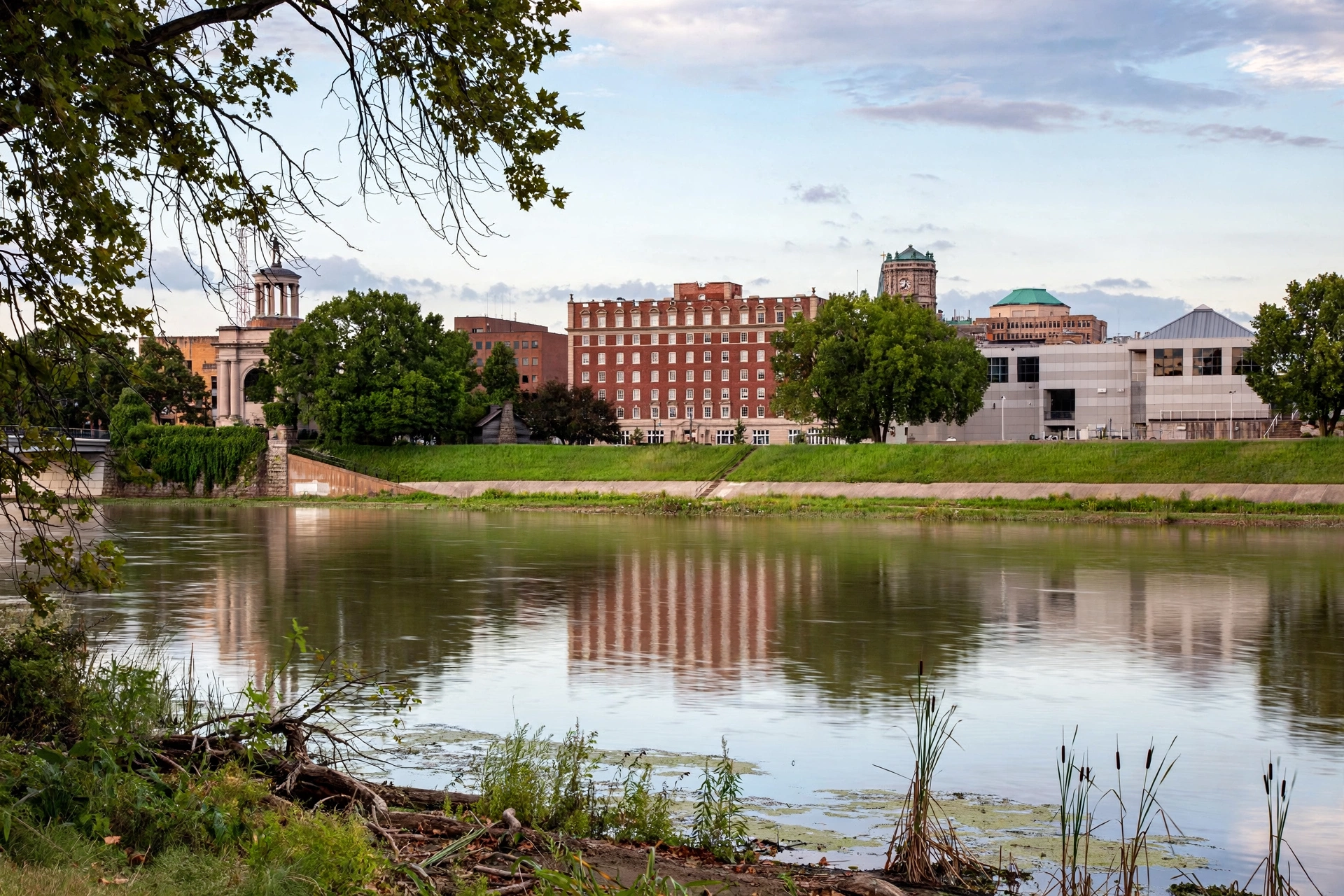
The Great Miami River shaped Hamilton's industrial past, and its rising water table still shapes the city's sewer problems.
What Kind of Pipe Is Under Hamilton's Historic Homes?
Hamilton's first residential streets were laid out around Fort Hamilton in 1791, and the German Village district north of downtown plus Lindenwald still hold housing from the 1800s into the early 1900s. Under those homes, the typical lateral is vitrified clay tile with mortar-sealed joints, running from a stone or brick foundation wall out to the street. After 100-plus years, the mortar joints are crumbling, clay sections have shifted with the glacial till soil, and mature street trees have spent decades working root hairs into every damp joint.
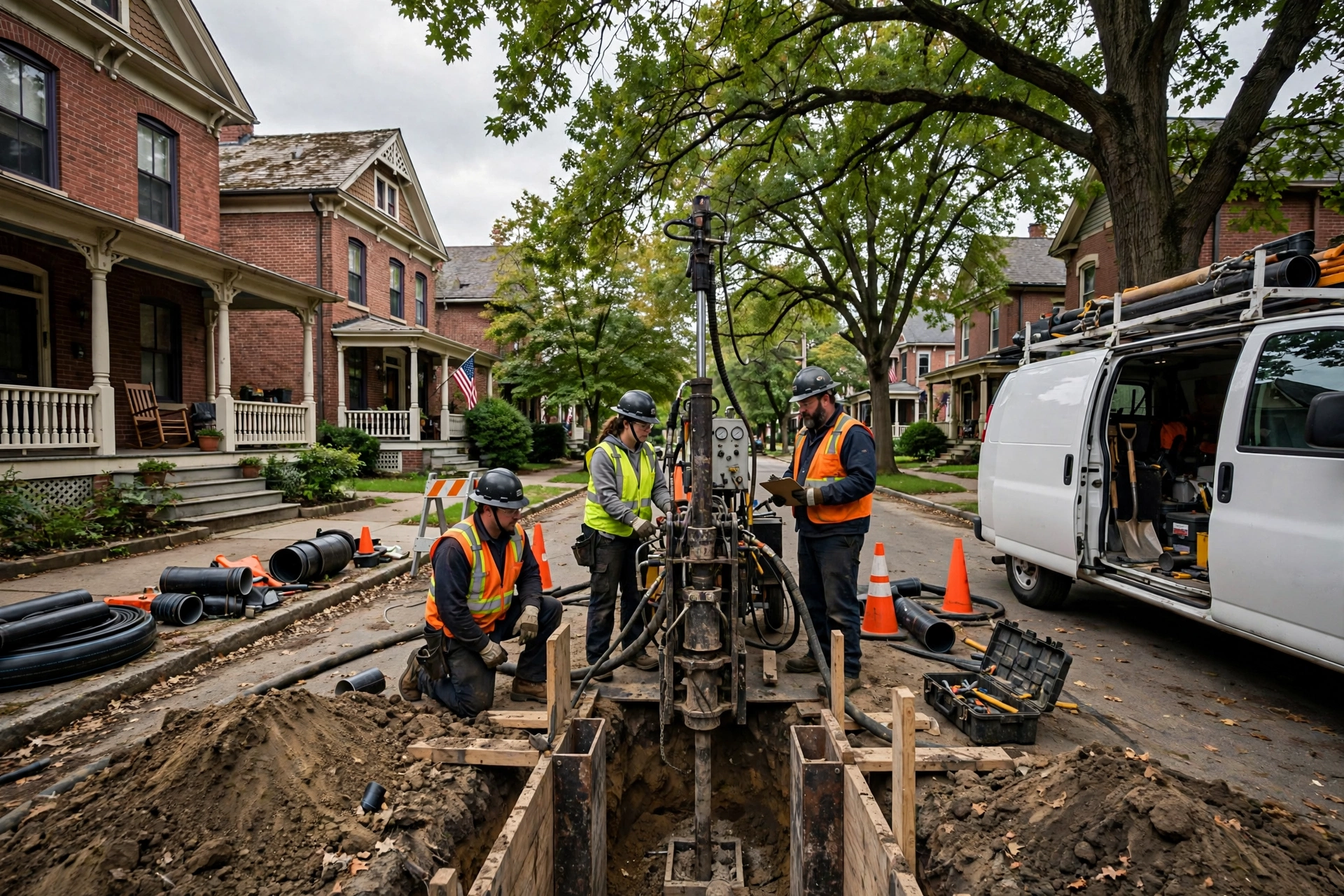
The post-war neighborhoods on the west side and the mid-century subdivisions usually have cast iron inside transitioning to clay outside. Cast iron rusts from the inside out, it looks fine until the bottom of the pipe is paper-thin. The good news for Hamilton homeowners: age and original materials don't rule out trenchless sewer repair. We've lined and burst century-old clay laterals all over the historic districts. The camera shows whether the pipe holds enough shape for lining or needs bursting, and either way the streetscape stays intact.

Hamilton is Ohio's City of Sculpture, and its historic districts deserve sewer fixes that don't tear up the streetscape.
How Did Hamilton's Industrial Past Shape Its Sewers?
Hamilton grew up as a paper-mill and manufacturing town, and the oldest neighborhoods were plumbed in an era when one pipe often did double duty. In the historic core, storm drains and sanitary lines from different eras cross, merge, and sometimes connect in ways no modern plan would allow. During heavy rain, older combined and cross-connected sections can surcharge, pressure builds and flow looks for the nearest exit, which is often a basement floor drain in the lowest home on the block.
Industrial-era groundwater is another Hamilton-specific factor. Decades of heavy industry left pockets of contaminated soil and groundwater in parts of the old industrial corridors, and excavation work there can trigger environmental handling requirements that trenchless methods avoid entirely. That's one more reason we camera-diagnose first and lean trenchless whenever the pipe condition allows: no digging means no soil to manage, no street to restore, and no surprise work.
Which Neighborhoods in Hamilton Do We Serve?
Our crews cover all of Hamilton, from the historic districts to the newer subdivisions. German Village and Lindenwald's 19th-century clay laterals with century-old tree roots; the west side's post-war homes where cast iron is hitting the end of its life; the east side floodplain where river-driven infiltration is the pattern; and the neighborhoods along the SR-129 corridor where mid-century tract homes are due for their first major sewer work.
You'll find us working around downtown's High Street corridor, up by Fort Hamilton Hospital, and out toward the Pyramid Hill Sculpture Park side of town. Back at our home page you can see the full statewide service area, but in Hamilton the process never changes: camera first, honest diagnosis, upfront plan.
We serve all of Hamilton, including ZIP codes 45011, 45012, 45013, and 45015.
Who Provides Your Water and Sewer Service in Hamilton?
The City of Hamilton runs Hamilton's water and sewer systems itself. It is Ohio's largest municipal utility, so the same city operation that treats your drinking water also maintains the sewer mains your lateral connects to. If a sewer main is the problem, not your lateral, the city's utility team is the authority to call. Details are on the City of Hamilton's utility operations page.
The city's engineering and building departments handle permits for sewer lateral work inside city limits, and we pull those permits and schedule inspections as part of every job. If you are unsure which permit your project needs, check with the city's building department before work begins.
Hamilton's drinking water comes from the Great Miami aquifer system, and the city's own water quality report lists average hardness at 146 parts per million, hard. That hardness comes from calcium and magnesium the groundwater picks up moving through limestone bedrock. For your sewer line, it means mineral scale gradually coats the inside of older pipes, narrowing the bore and giving grease and debris a rough surface to catch on, which is how a slow drain becomes a full blockage.
How Should Hamilton Homeowners Maintain Their Sewer Lines Through the Seasons?
Keep Hamilton's sewer line on the river's schedule. Spring high water on the Great Miami raises the water table and pushes groundwater into cracked joints, fall sends tree roots hunting before dormancy, and winter freeze hits shallow laterals and exposed cleanouts. One camera inspection every year or two, plus the seasonal habits below, keeps most problems small.
- Spring: Spring rains raise the water table and drive groundwater into cracked joints. If drains slow down in the weeks after heavy rain, hydro jetting plus a camera check clears the silt before it hardens.
- Summer: Dry months are the best time to schedule non-urgent lining or replacement. Watch for unusually green patches of lawn over the lateral, a sign roots are drinking from your pipe.
- Fall: Tree roots grow most aggressively in fall, pushing into every damp joint. Clear gutters and downspouts so roof water drains away from the lateral, and don't plant trees over or near the line.
- Winter: Shallow laterals and exposed cleanouts can freeze in Ohio cold snaps. Keep cleanout caps on and in place, and never pour fats or grease down the drain; holiday cooking grease hardens fast in cold pipes.