Middletown, Ohio
What Does a Century of Steel Mean for Middletown's Underground?
Middletown and steel grew up together. Armco built the first mills here in 1900, AK Steel carried the torch for decades, and Cleveland-Cliffs runs Middletown Works today. A century of heavy industry left its mark below ground too.
The mill-era neighborhoods around downtown and the plant were built fast to house steelworkers, and their sewer laterals are the oldest in the city: vitrified clay tile with mortar joints, many of them laid when the streets themselves were new. Generations of heavy truck traffic, rail vibration, and industrial soil compaction have settled those soils unevenly, and rigid clay tile doesn't settle gracefully, joints separate, sections offset, and roots from mature street trees move in.
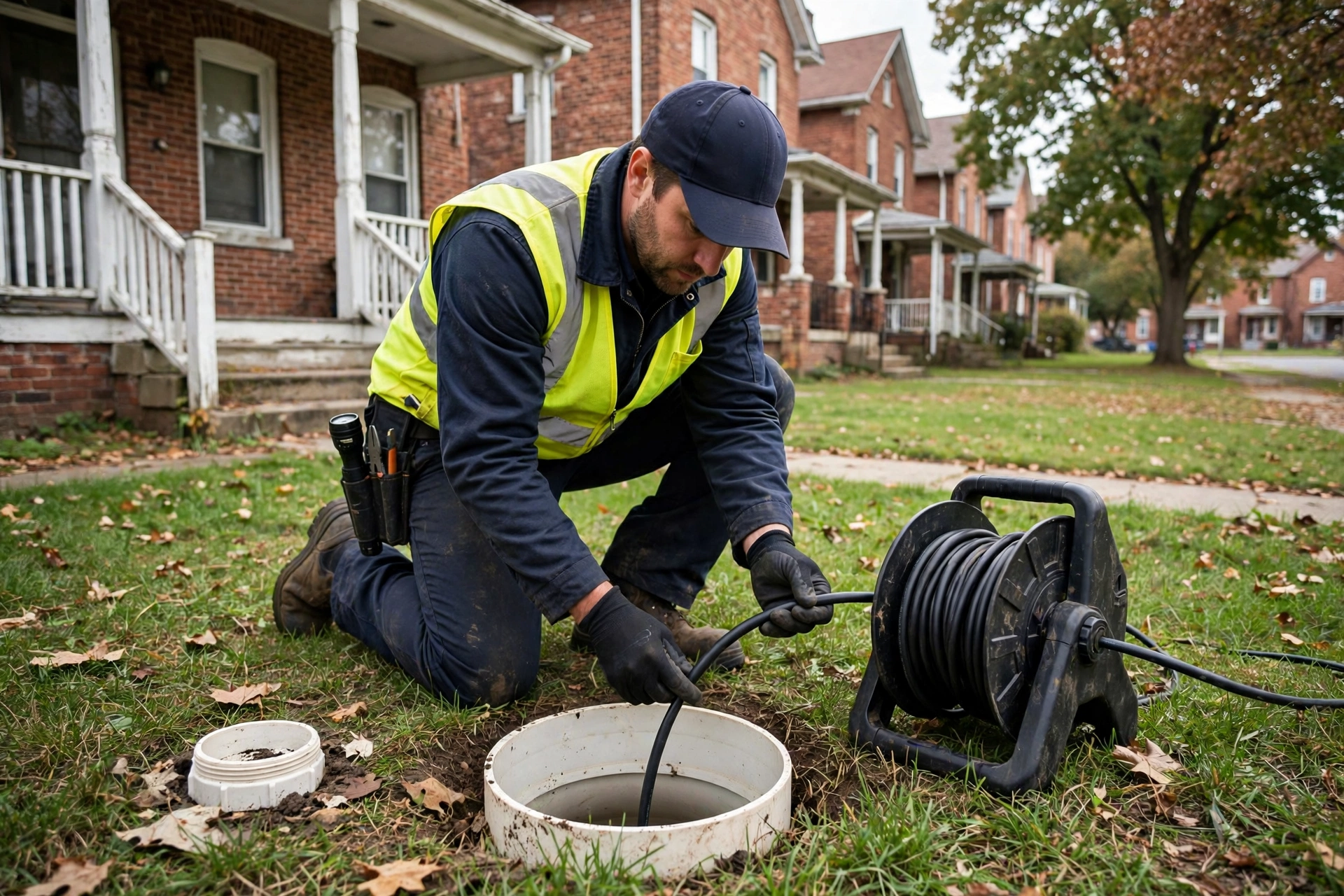
The industrial legacy also changes how we approach repairs. Old industrial corridors can carry groundwater concerns that make open excavation complicated and a bigger job. That's where trenchless sewer repair earns its keep: lining or bursting the line means no digging, no soil to manage, and no trench through ground with a century of history in it. The camera inspection comes first either way, and the footage tells us which method fits your line.
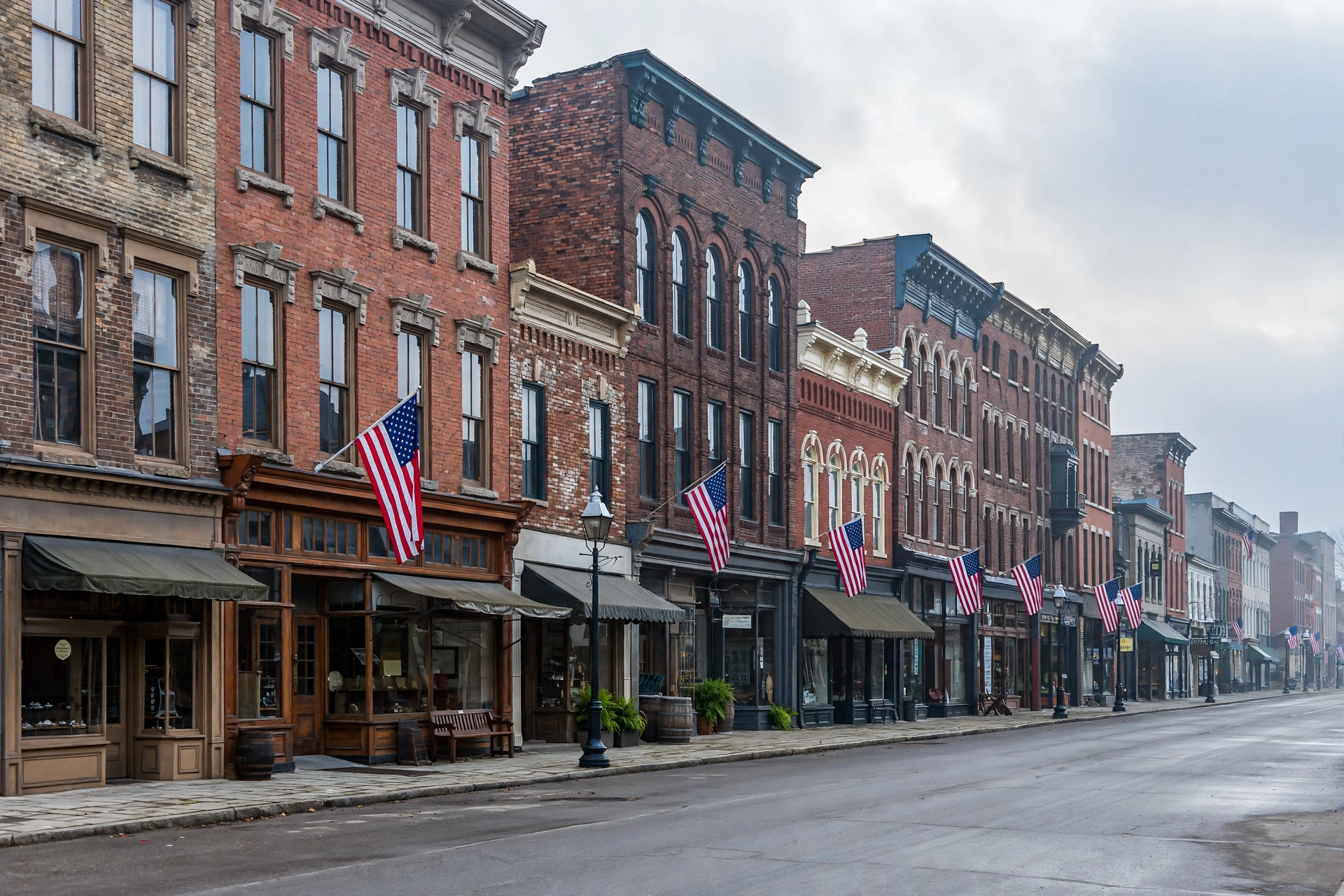
Downtown Middletown's Central Avenue: the mill-era neighborhoods around it hold the city's oldest sewer laterals.
How Does the Great Miami River Valley Shape Sewer Failures Here?
Middletown sits in the Mid-Miami River valley, and much of the city's low ground is floodplain with a high water table. That means the river doesn't have to reach your door to cause sewer trouble. When the Great Miami runs high, groundwater rises with it and presses into every cracked joint in your lateral. This is infiltration, and it can overwhelm a line that handled normal flows just fine.
The second problem arrives when the water recedes. High groundwater carries fine silt, and as flows normalize that silt settles inside the pipe and hardens into a concrete-like restriction. The telltale pattern: drains that slow down in the weeks after high water, even though nothing changed inside the house. Snaking punches through silt temporarily; hydro jetting followed by a camera check clears it properly and shows whether the joints that let it in need lining. If you live on the valley floor, especially on the east side near the river, a post-flood camera inspection is smart insurance.
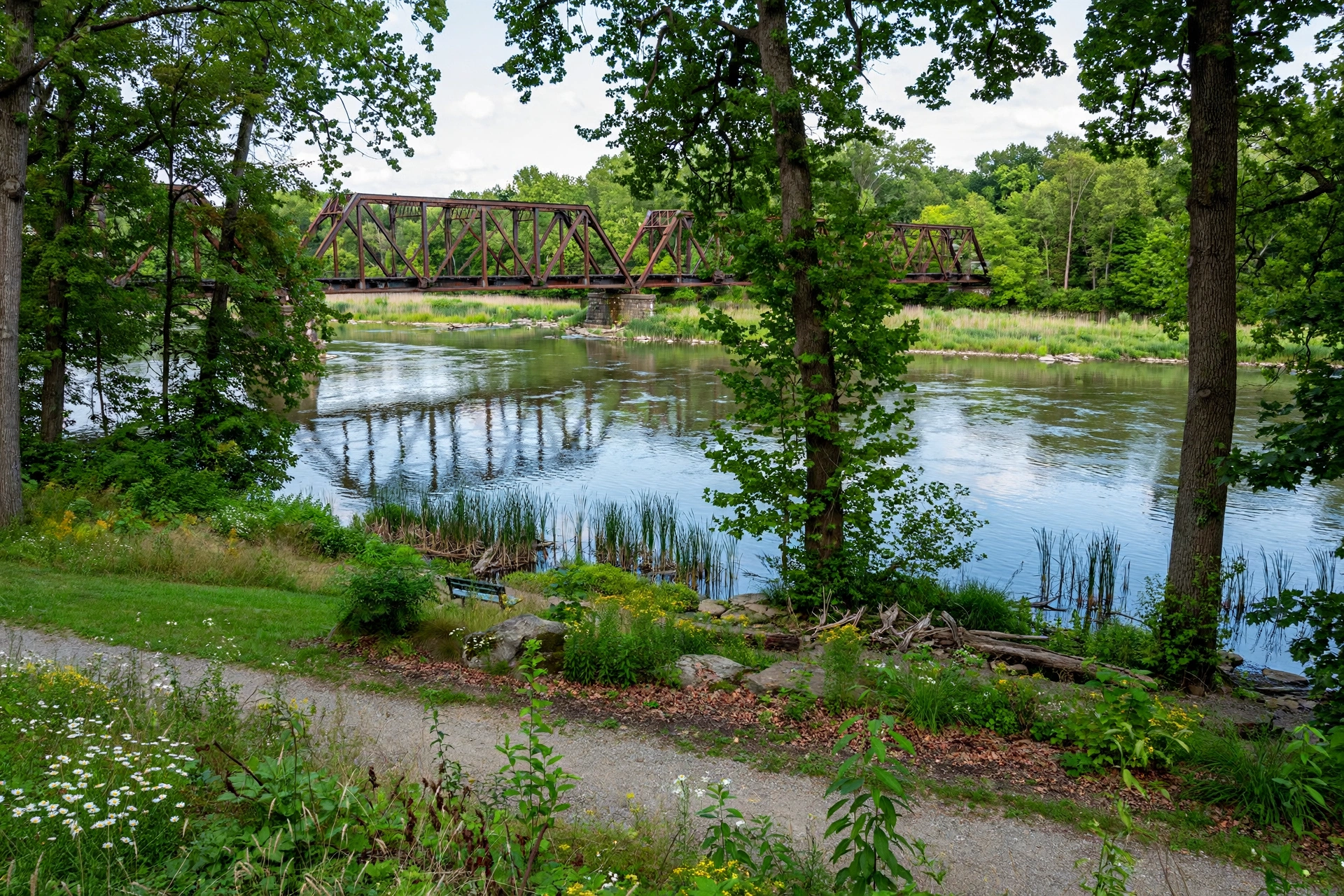
The Great Miami River valley gives Middletown its high water table, and high water finds every weak joint in a sewer line.
What Pipes Sit Under Middletown's Neighborhoods?
Housing era predicts pipe trouble better than anything, and Middletown's eras are distinct. Downtown and the mill neighborhoods: early-1900s clay tile with mortar joints, often tied into some of the city's oldest combined and cross-connected sections, which surcharge during heavy rain. The post-war ranches and split-levels: cast iron inside transitioning to clay outside, with the cast iron now rusting from the inside out.
The 1960s and 70s brought slab-on-grade ranches and, in some developments, Orangeburg pipe, a tar-paper product that flattens into an oval and eventually collapses. Orangeburg is the one material where we tell homeowners to plan a full replacement rather than patch, because it doesn't fail at a joint, it fails everywhere at once. And in the newer subdivisions near the Atrium Medical Center side of town, PVC is the norm, but even PVC fails when bell joints separate in settling soil. Whatever era your home belongs to, the camera tells us in about an hour.
Which Neighborhoods in Middletown Do We Serve?
Our crews cover all of Middletown: the downtown Central Avenue corridor and mill neighborhoods with their century-old clay laterals; the post-war east and west sides where cast iron is reaching the end of its life; the 1960s and 70s slab ranches where Orangeburg hides in some developments; and the newer subdivisions out toward the I-75 and SR-122 interchanges.
You'll find us working around the Atrium Medical Center campus, the downtown historic district, and the neighborhoods along the Great Miami River. See our home page for the full statewide service area, but in Middletown the process never changes: camera first, honest diagnosis, upfront plan.
We serve all of Middletown, including ZIP codes 45042 and 45044.
Who Provides Your Water and Sewer Service in Middletown?
The City of Middletown runs Middletown's water and sewer systems, including the Division of Water Maintenance that maintains the city's water and sewer lines. Your drinking water comes from the Great Miami Buried Valley Aquifer, and your sewer lateral connects to city-owned mains. For questions about the public side of the system, the City of Middletown's official website is the starting point.
The city handles permits for sewer lateral work within city limits, with inspection typically required before backfill, and we pull those permits and schedule the inspections as part of every job. If you are unsure which permit your project needs, check with the city's building department before work begins.
Middletown's water comes from the Great Miami Buried Valley Aquifer, and groundwater in the lower Great Miami valley is generally hard, carrying high concentrations of calcium and bicarbonates from limestone bedrock. Over decades, that mineral load lays down scale inside aging pipes. In older cast-iron and clay lines, scale narrows the passage and roughens the walls, so grease and debris snag and the blockages that bring our camera crew out form faster.
How Does Middletown's Water Quality Affect Your Sewer Line?
Middletown's water comes from Great Miami Buried Valley Aquifer wells, softened with lime at the treatment plant per the city's own report. Published utility figures put finished hardness near 130 mg/L (about 7 grains per gallon), moderately hard. Even softened aquifer water keeps enough dissolved minerals to leave light scale in older pipes over the decades, narrowing the bore and giving grease and solids a rough surface to grip, which is how slow drains become full blockages.
How Should Middletown Homeowners Maintain Their Sewer Lines Through the Seasons?
Keep Middletown's sewer line on the river's schedule. Spring rains push the Great Miami's water table into cracked joints, fall sends tree roots hunting for moisture, and winter freeze hits shallow laterals and exposed cleanouts. One camera inspection every year or two, plus the seasonal habits below, keeps most problems small.
- Spring: Spring rains raise the water table and drive groundwater into cracked joints. If drains slow down in the weeks after heavy rain, hydro jetting plus a camera check clears the silt before it hardens.
- Summer: Dry months are the best time to schedule non-urgent lining or replacement. Watch for unusually green patches of lawn over the lateral, a sign roots are drinking from your pipe.
- Fall: Tree roots grow most aggressively in fall, pushing into every damp joint. Clear gutters and downspouts so roof water drains away from the lateral, and don't plant trees over or near the line.
- Winter: Shallow laterals and exposed cleanouts can freeze in Ohio cold snaps. Keep cleanout caps on and in place, and never pour fats or grease down the drain; holiday cooking grease hardens fast in cold pipes.