Sewer Line Repair in Lebanon, OH
Two centuries of pipe under one small town: Lebanon's historic clay laterals, limestone bedrock, and 90s subdivision growth each need their own fix. We camera-diagnose every job and fix it trenchless or traditional.
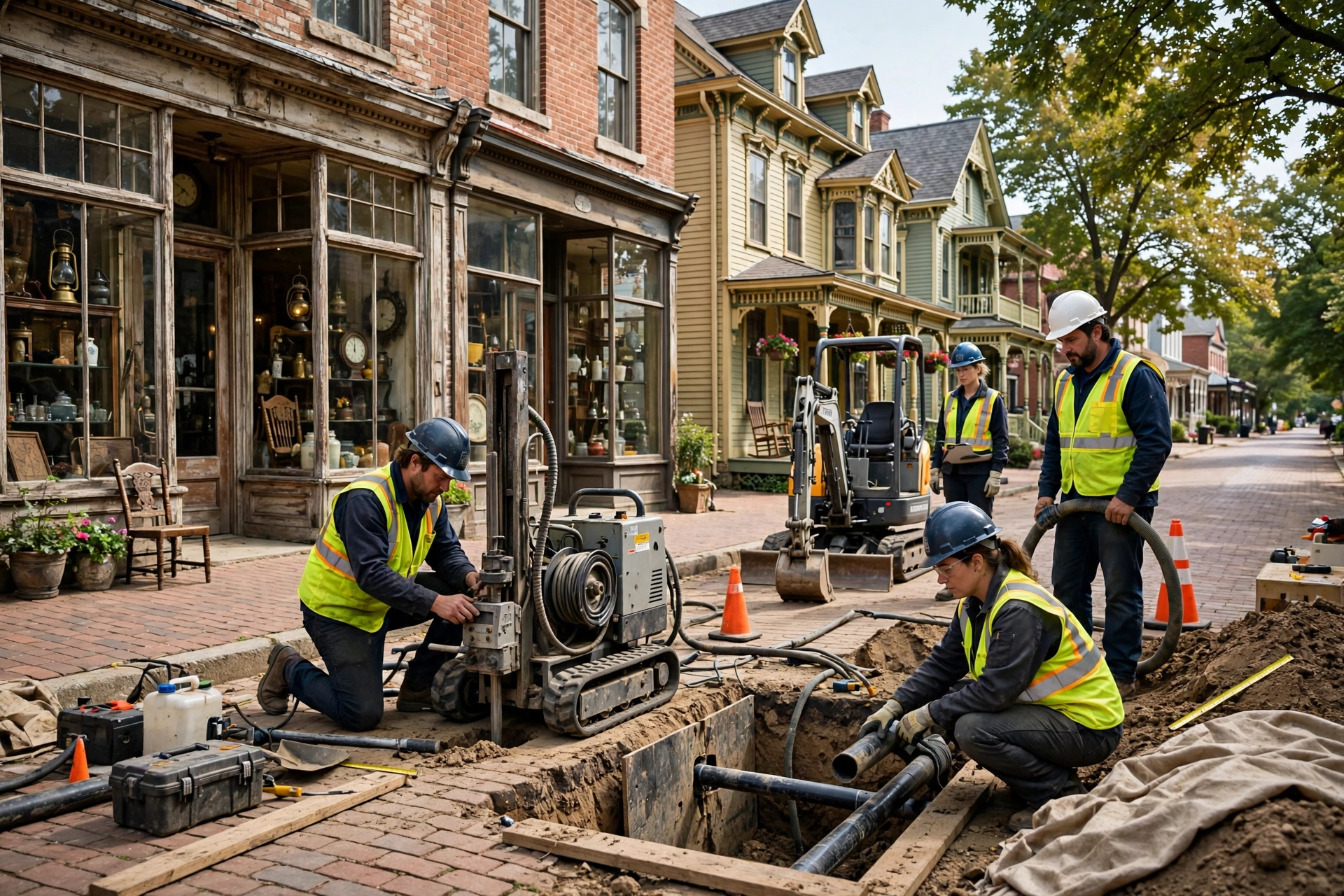
Two centuries of pipe under one small town: Lebanon's historic clay laterals, limestone bedrock, and 90s subdivision growth each need their own fix. We camera-diagnose every job and fix it trenchless or traditional.
Last updated: October 13, 2026
Lebanon was founded in 1802, the Golden Lamb has served travelers since 1803, and the historic downtown still runs on some of Ohio's oldest sewer infrastructure.
The homes and commercial buildings around Broadway and the historic district sit on vitrified clay tile laterals with mortar joints, many of them laid in the late 1800s and early 1900s. After a century or more, the mortar joints are crumbling, sections have offset with the soil, and the massive street trees, some of them planted generations ago, have worked root systems into every damp joint. The limestone foundations common in Lebanon's historic buildings add another wrinkle: laterals exit through stone that shifts differently than the pipe, stressing the connection.
The downtown district also carries some of the county's oldest combined and cross-connected sections, where storm and sanitary flows share older pipe. During heavy rain these sections can surcharge, and the lowest buildings requirementl it first. For a historic property owner, the practical defense is a backwater valve on the lateral, and the practical fix for the line itself is trenchless sewer repair, which preserves the brick sidewalks and streetscape that make downtown Lebanon what it is.
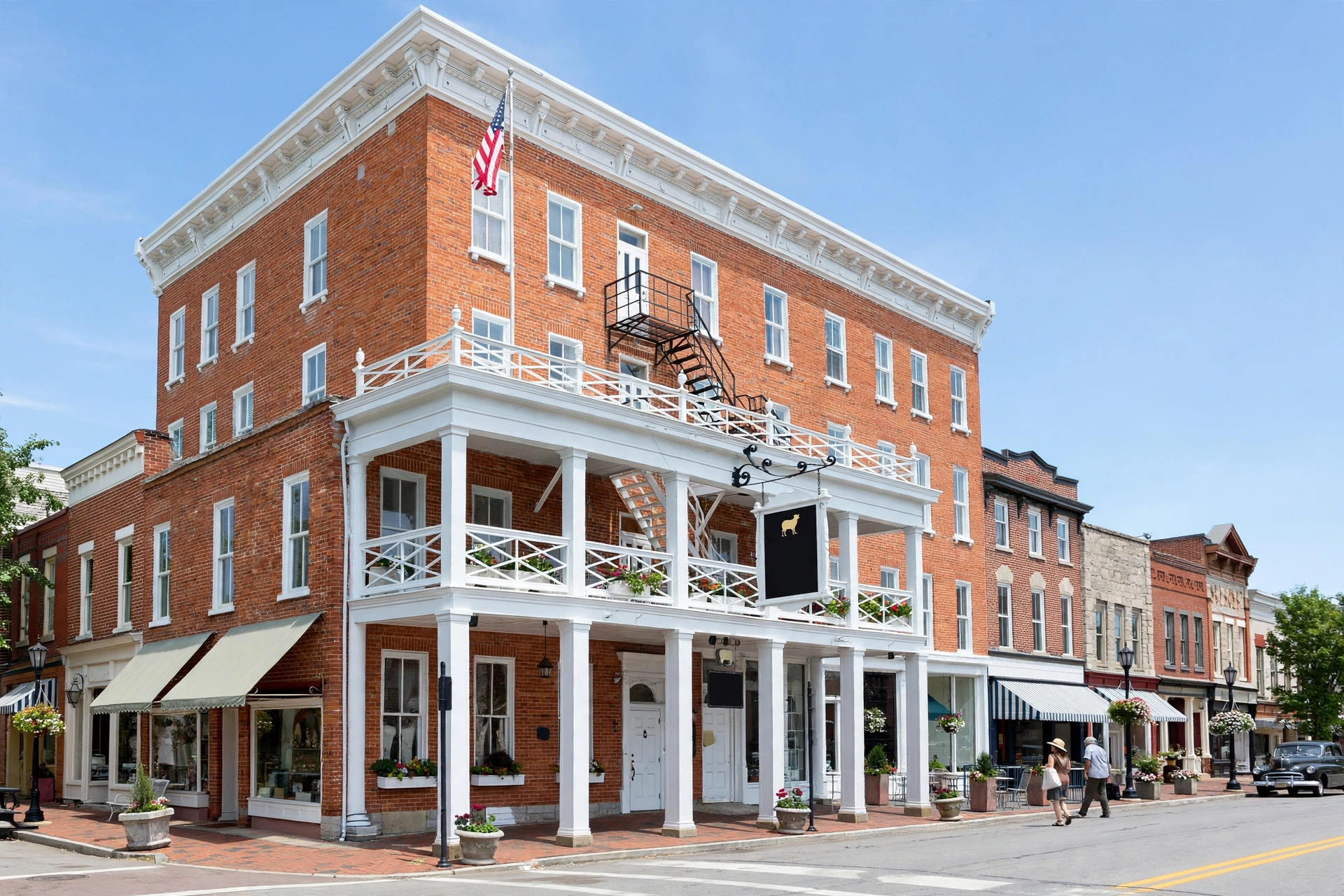
Downtown Lebanon: the Golden Lamb has stood since 1803, and the clay laterals beneath these streets are nearly as old.
Warren County sits on Ordovician limestone bedrock, and around Lebanon the rock can sit shallow enough to matter for any excavation. When a traditional open-trench replacement hits limestone, the job changes character: rock-breaking equipment, more days on site, more restoration afterward. Homeowners expecting a simple dig get an unpleasant surprise.
It rarely damages the pipe itself, limestone is stable, it doesn't shift like clay till, which is one reason Lebanon's historic lines lasted as long as they did. But it does change the repair calculus. Trenchless lining and bursting follow the old line's path through the ground with no trench to dig, so bedrock depth becomes irrelevant. When the camera shows a line that's a good trenchless candidate, and most Lebanon lines are, the rock never enters the conversation.
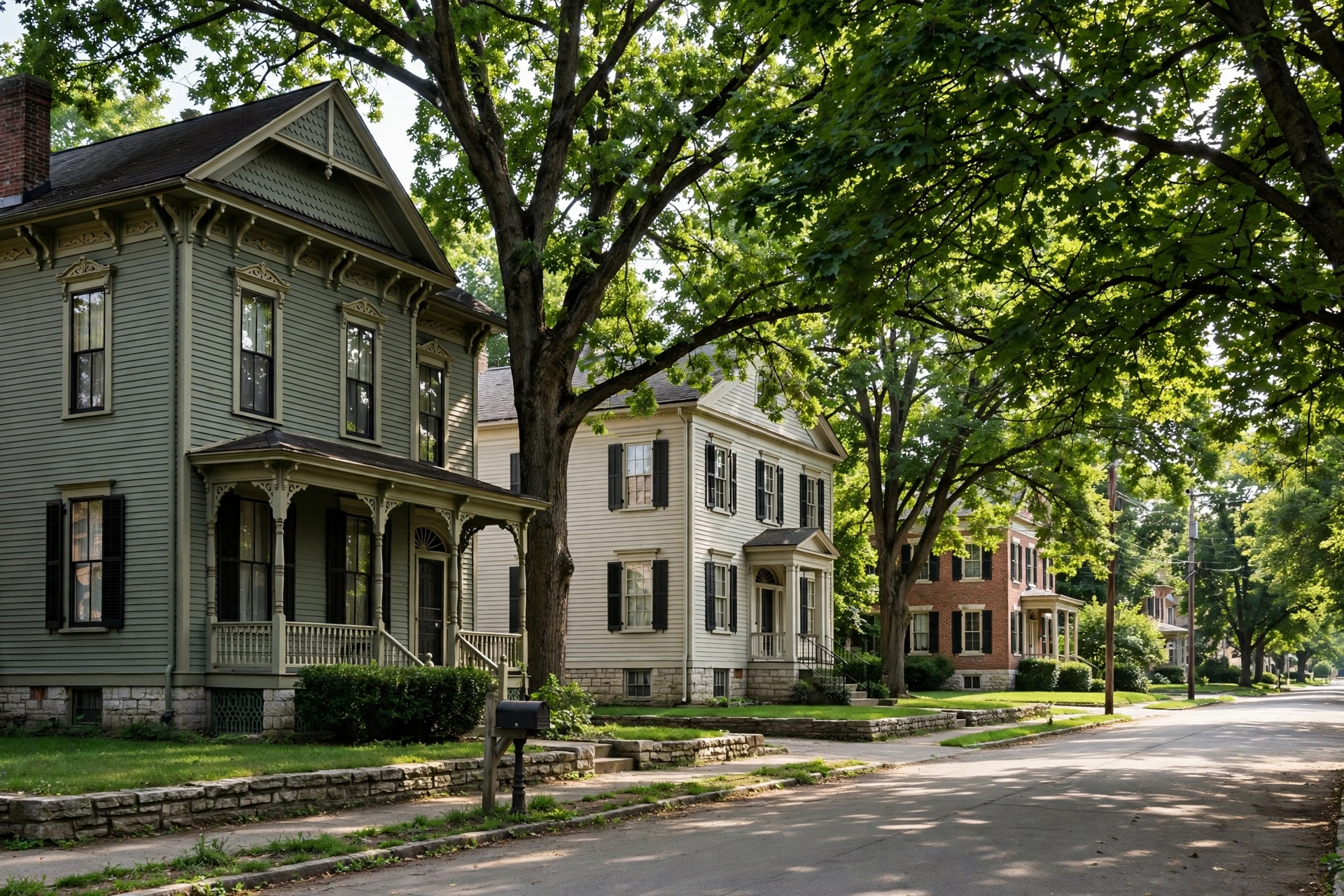
Lebanon's historic neighborhoods: limestone foundations, clay tile laterals, and century-old shade trees.
Lebanon is really two towns stacked on top of each other. Inside the historic core, it's the clay tile story: 100-plus-year-old joints, root intrusion, limestone foundations, and the occasional combined section. Outside the core, it's the subdivision story. Lebanon's 80s and 90s growth added subdivisions whose PVC laterals are now hitting the age where bell joints separate in settling soil and roots move in.
The two eras fail differently and get fixed differently. Historic clay with sound structure is a lining candidate, preserve the pipe, preserve the streetscape. Failed PVC joints in a subdivision are also lining candidates, one continuous liner seals every separated joint. Collapsed Orangeburg or flattened pipe in either era means bursting or replacement. The camera doesn't care which era your home belongs to, it shows the truth in about an hour, and the fix follows the evidence.
Our crews cover all of Lebanon: the historic downtown district around Broadway and the Golden Lamb; the antique-shop corridors and Victorian neighborhoods; the 80s and 90s subdivisions on the edges of town; and the growth areas along the SR-63 and SR-48 corridors toward I-71.
You'll find us working around Glendower Historic Mansion, along the Little Miami Scenic Trail access points, and near the Atrium Medical Center campus on Deerfield Road. Check our home page for the full statewide service area, but in Lebanon the process never changes: camera first, honest diagnosis, upfront plan.
We serve all of Lebanon, including ZIP codes 45036.
The City of Lebanon runs the sewer side: its Public Works Department maintains 208 miles of sanitary and storm sewer lines and treats about 2.856 million gallons of wastewater a day. Your drinking water is purchased from Greater Cincinnati Water Works (GCWW). For service questions, the city's water and wastewater FAQ page is a good starting point.
City code requires a permit for every building connected to the building sewer, and we handle that process as part of every job. If you are unsure which permit your project needs, check with the city's building department before work begins.
Lebanon buys its drinking water from Greater Cincinnati Water Works, and GCWW's water quality reports put average hardness at about 7 to 8 grains per gallon (roughly 120 to 134 milligrams per liter), moderately hard. The dissolved calcium and magnesium in that water deposit as mineral scale inside older pipes. That scale narrows the bore and gives grease and debris a rough surface to grip, turning slow drains into full blockages faster.
Lebanon's historic core has century-old laterals running under mature street trees. Spring rains push groundwater into cracked joints, fall sends roots hunting for moisture, and winter freezes shallow laterals and cleanouts. One camera inspection every year or two, plus the seasonal habits below, keeps most problems small.
Often, yes. Age alone doesn't disqualify a line, condition does. We've lined and burst century-old clay laterals all over Lebanon's historic district. The camera shows whether the pipe holds enough shape for lining or needs bursting. Either way, trenchless methods mean the historic streetscape, the brick sidewalks, and your limestone foundation stay undisturbed.
It changes the excavation, not the pipe. Warren County's Ordovician limestone can sit shallow enough that a traditional dig hits rock, which means rock-breaking equipment, more time, and more restoration. Trenchless methods follow the old line's path with no trench, so bedrock depth stops mattering. When the camera shows a good trenchless candidate, we recommend going that way.
The City of Lebanon handles permits for sewer lateral work within city limits, with inspection typically required before backfill. We pull the permits and schedule the inspections as part of every job, it's included in the written plan, not an add-on.
Lebanon's historic streets were planted with shade trees generations ago, and those root systems are now massive. Fine root hairs enter damp mortar joints in the clay tile laterals, thicken year after year, and wedge the joints apart until the pipe fills. Once roots are inside, snaking only buys time. Lining or bursting removes the entry points for good.
That's exactly what it's designed for. Lining or bursting needs only small access pits, so the brick sidewalks, antique streetscape, and historic foundations around downtown Lebanon stay untouched. Open-trench replacement through a historic district is the last resort, we only recommend it when the pipe condition leaves no other option.
Also serving Mason, Springboro, Middletown, and the greater Lebanon area. Major landmarks we work around include the Golden Lamb Inn, Glendower Historic Mansion, and the Little Miami Scenic Trail.
Historic home or new subdivision, one inspection tells us exactly what's happening underground.
Call (614) 350-5706