Fairfield, Ohio
Why Do Fairfield's Subdivision Lines Fail in Waves?
Fairfield grew in waves, and its sewer lines fail in the same waves. When your street starts seeing sewer trucks, that's not coincidence, it's the calendar.
Think about how your neighborhood was built. A developer bought a tract in 1968, put up 120 ranch homes with the same crew, the same vitrified clay tile laterals, and the same maple and sycamore street trees on every lot. Fast-forward 55 years: the clay tile joints are crumbling on schedule, the tree roots are mature on schedule, and the cast iron inside those homes is rusting through on schedule. So when one house on the street has a sewer failure, the houses around it are all standing on the same ticking clock.
This is the pattern we see across Fairfield's 60s and 70s tracts, and it's starting in the 80s tracts too. The 60s wave brought clay tile and, in some developments, Orangeburg pipe, a tar-paper product that flattens into an oval and collapses. The 70s and 80s brought early PVC with bell joints that separate as glacial till soil shrinks and swells with the seasons. If your Fairfield neighbors are having sewer work done, don't wait for your turn: a camera inspection now catches problems while they're still trenchless sewer repair candidates.
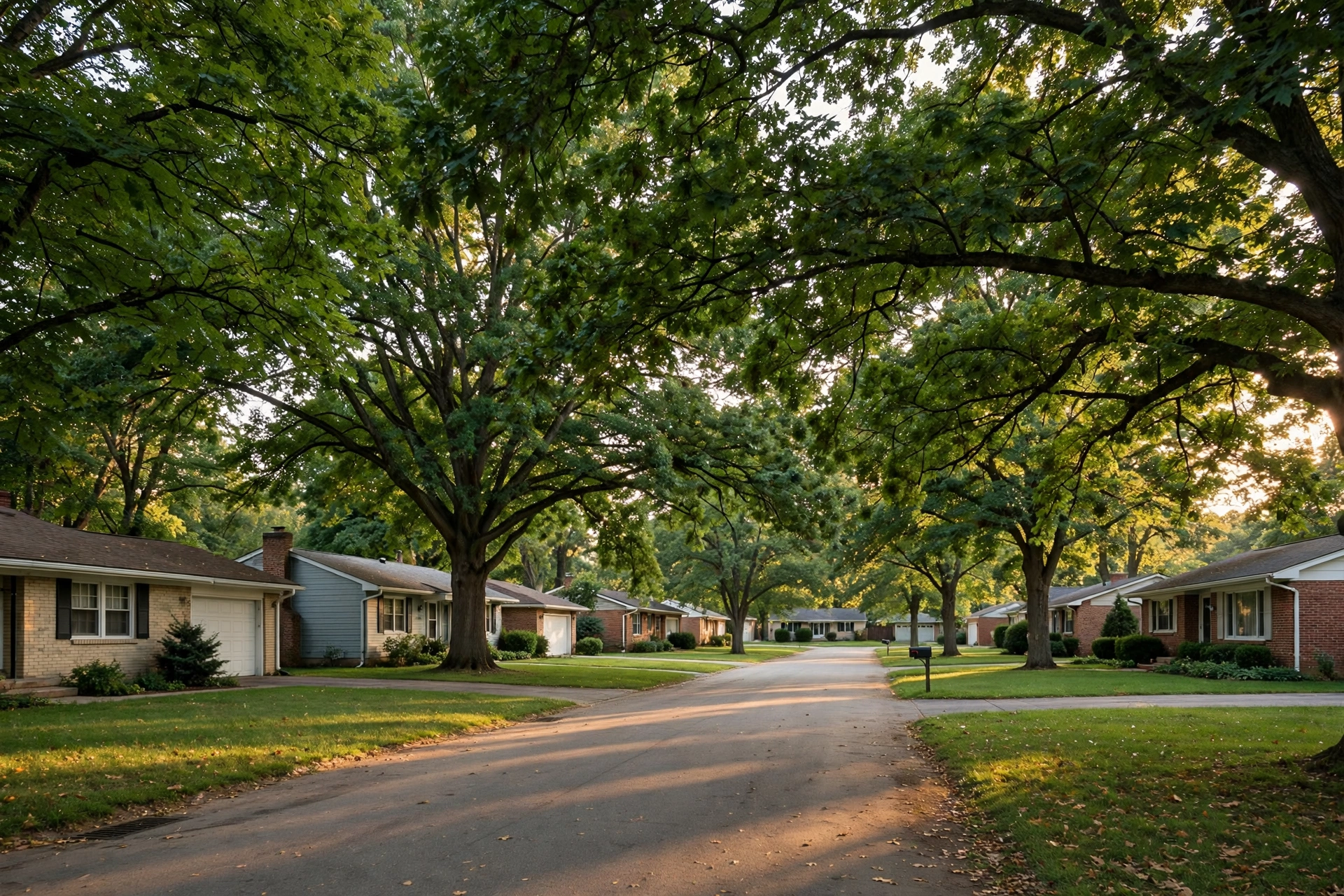
Fairfield's tract neighborhoods: same builder, same pipe, same age, which means the laterals fail in waves.
What Happens Under Fairfield's Commercial Corridor?
The Dixie Highway commercial strip, home to Jungle Jim's International Market and miles of retail, sits on some of the busiest ground in Butler County. Commercial laterals here live a harder life than residential ones: restaurant grease, high-volume flows, and parking lots paved over the lines, which means problems stay hidden until they're big.
For homes near the corridor, the issue is different. The constant heavy traffic and construction along the strip compacts soils and sends vibration through the ground, and the commercial expansion over the years has tied older residential laterals into a patchwork of mains. If you live in the neighborhoods just off Dixie Highway and your drains started acting up after nearby road or building work, soil disturbance shifting an already-aging line is a likely suspect, and the camera will show it.
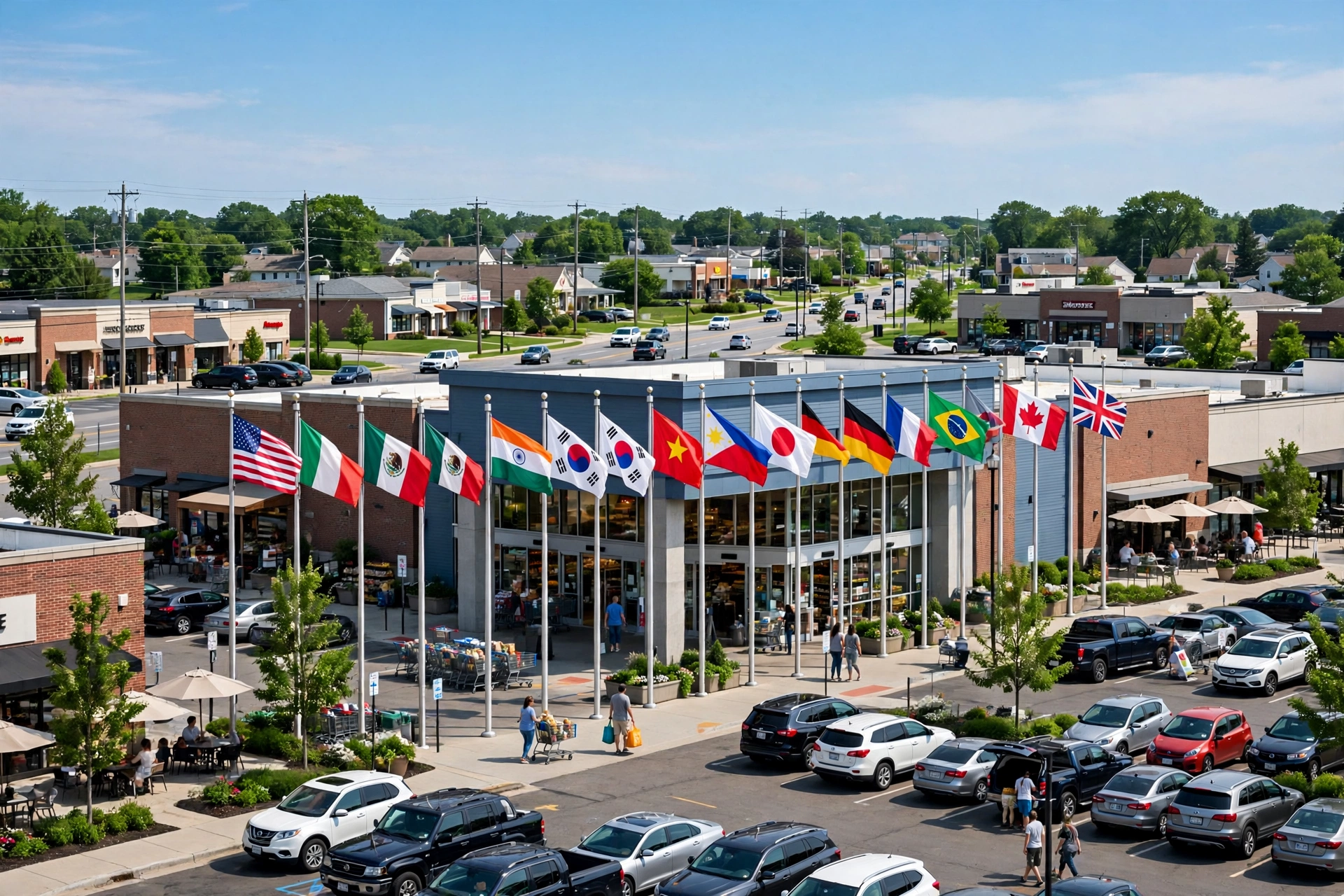
Fairfield's commercial corridor: heavy traffic, compacted soils, and hidden laterals under pavement.
How Does Glacial Clay Till Treat Fairfield Pipes?
Fairfield sits on glacial till, a dense clay-heavy soil left behind by the glaciers. Clay till is stable when it's dry and treacherous when it cycles: it shrinks in dry spells and swells when wet, and that seasonal movement works on pipe joints year after year. Rigid clay tile and cast iron can't flex with it, so joints separate and sections offset, a fraction of an inch at a time.
The till also holds water. After heavy rain, water perches in the soil around your lateral instead of draining through it, and hydrostatic pressure pushes into every weak joint. That's why Fairfield backups so often follow big storms, and why the same homes back up every spring. The fix isn't a bigger sump pump, it's sealing the joints the water is entering through, which is exactly what pipe lining does.
Which Neighborhoods in Fairfield Do We Serve?
Our crews cover all of Fairfield: the 60s and 70s tracts where clay tile and Orangeburg are aging out; the 80s subdivisions where early PVC bell joints are starting to separate; the neighborhoods along the Dixie Highway corridor; and the newer developments out toward the I-275 interchange.
You'll find us working near Jungle Jim's, around Mercy Health Fairfield Hospital on Mack Road, and through the residential streets between SR-4 and the interstate. Check our home page for the full statewide service area, but in Fairfield the process never changes: camera first, honest diagnosis, upfront plan.
We serve all of Fairfield, including ZIP codes 45014 and 45011.
Who Provides Your Water and Sewer Service in Fairfield?
The City of Fairfield Public Utilities Department runs both the water and sewer systems, serving more than 44,000 residents. It treats close to 2 billion gallons of drinking water a year and collects and treats roughly the same amount of wastewater, which it sends on to the Great Miami River. See the department's Public Utilities page for service details.
Fairfield requires contractors performing sewer or water work in the city to hold a city sewer/water service license, and the city publishes its current list of licensed contractors. We pull the permits and schedule inspections as part of every job. If you are unsure which permit your project needs, check with the city's building department before work begins.
Fairfield draws its water from the Great Miami aquifer system, and groundwater in this part of Butler County runs moderately hard, with regional testing showing hardness from about 139 to 158 parts per million. That steady mineral content leaves scale inside pipes over time. In older lines the scale narrows the bore and gives grease and debris a rough surface to grip, turning partial restrictions into the full blockages we clear with hydro jetting.
How Does Fairfield's Water Quality Affect Your Sewer Line?
Fairfield's own water report answers the hardness question directly: about 70 mg/L, or 4.1 grains per gallon, moderately hard. That moderate mineral content still deposits light scale inside aging cast iron and galvanized lines over the years, narrowing the pipe and giving grease and debris a rough surface to catch on, which turns slow drains into full blockages faster.
How Should Fairfield Homeowners Maintain Their Sewer Lines Through the Seasons?
Fairfield's west-side lots sit low near the Great Miami River, so spring high water pushes groundwater into cracked joints first. Fall sends tree roots hunting for moisture, and winter freezes shallow laterals and cleanouts. One camera inspection every year or two, plus the seasonal habits below, keeps most problems small.
- Spring: Spring rains raise the water table and drive groundwater into cracked joints. If drains slow down in the weeks after heavy rain, hydro jetting plus a camera check clears the silt before it hardens.
- Summer: Dry months are the best time to schedule non-urgent lining or replacement. Watch for unusually green patches of lawn over the lateral, a sign roots are drinking from your pipe.
- Fall: Tree roots grow most aggressively in fall, pushing into every damp joint. Clear gutters and downspouts so roof water drains away from the lateral, and don't plant trees over or near the line.
- Winter: Shallow laterals and exposed cleanouts can freeze in Ohio cold snaps. Keep cleanout caps on and in place, and never pour fats or grease down the drain; holiday cooking grease hardens fast in cold pipes.