Sewer Line Repair in Norwood, OH
A city inside a city: Norwood's dense post-war housing, combined sewers, and tight lots create sewer problems that need an urban answer. We camera-diagnose every job and fix it trenchless or traditional.
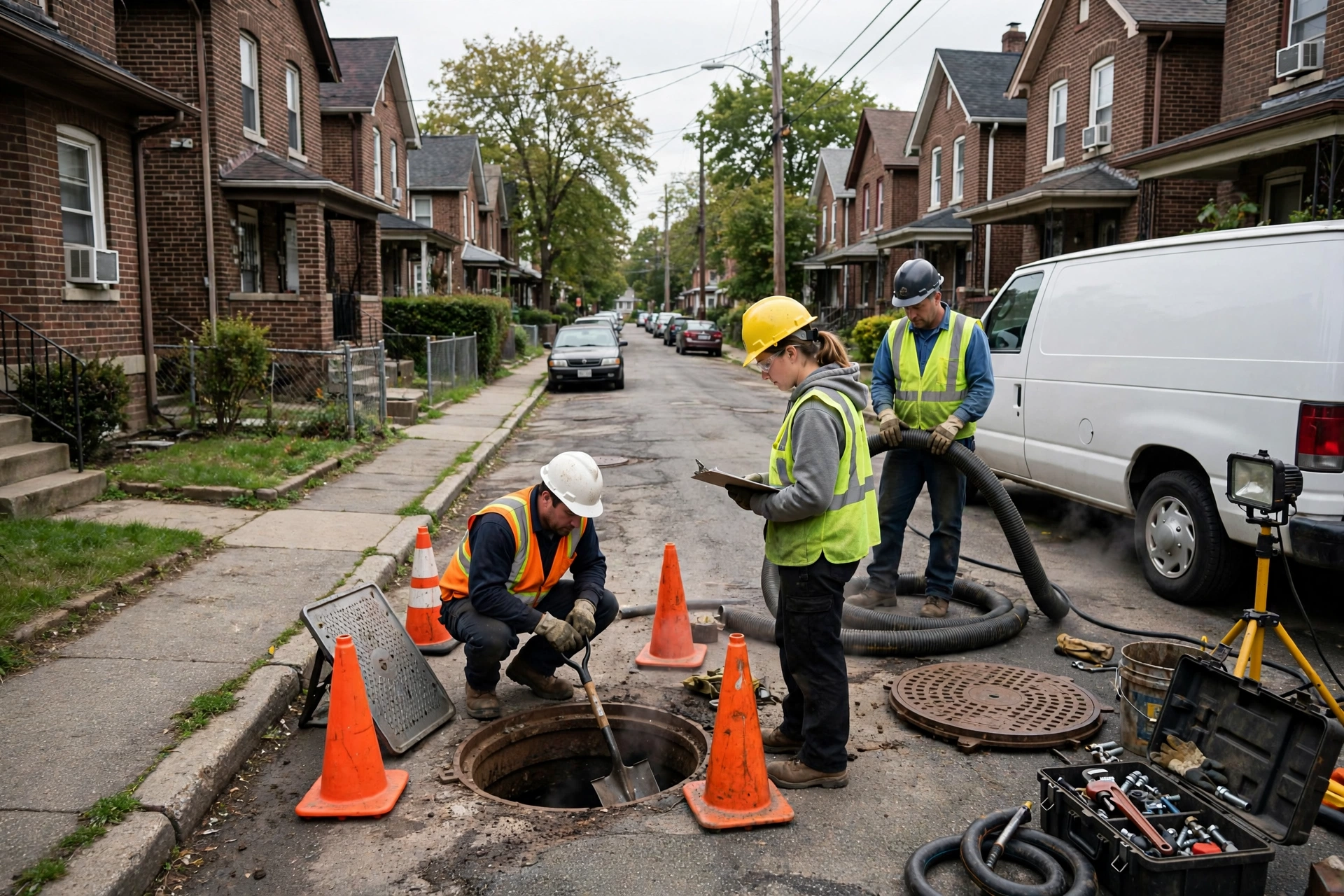
A city inside a city: Norwood's dense post-war housing, combined sewers, and tight lots create sewer problems that need an urban answer. We camera-diagnose every job and fix it trenchless or traditional.
Last updated: October 13, 2026
Norwood is a city of about 20,000 people completely surrounded by Cincinnati, an enclave with its own government, its own streets, and a sewer story shaped by both.
Norwood's sewers tie into the regional system overseen by the Metropolitan Sewer District of Greater Cincinnati (MSD), the same system that serves the city around it. But your lateral, the pipe from your house to the connection at the main, is yours. That split confuses Norwood homeowners more than almost anything: when sewage backs up, is it the city's problem or mine? The answer is simple. If it's just your house, it's your lateral, and it's our territory. If the whole street is backing up at once, that's likely a main-line issue, and MSD is the call.
The enclave geography also means Norwood's infrastructure was built to urban standards in an urban era. The streets are narrow, the lots are tight, and the pipes underneath are the dense-city kind: short runs, deep connections, and very little room to work. That's why trenchless sewer repair is such a natural fit here, lining or bursting needs only small access pits, and in Norwood's tight lots, that's often the difference between a one-day job and a major excavation.
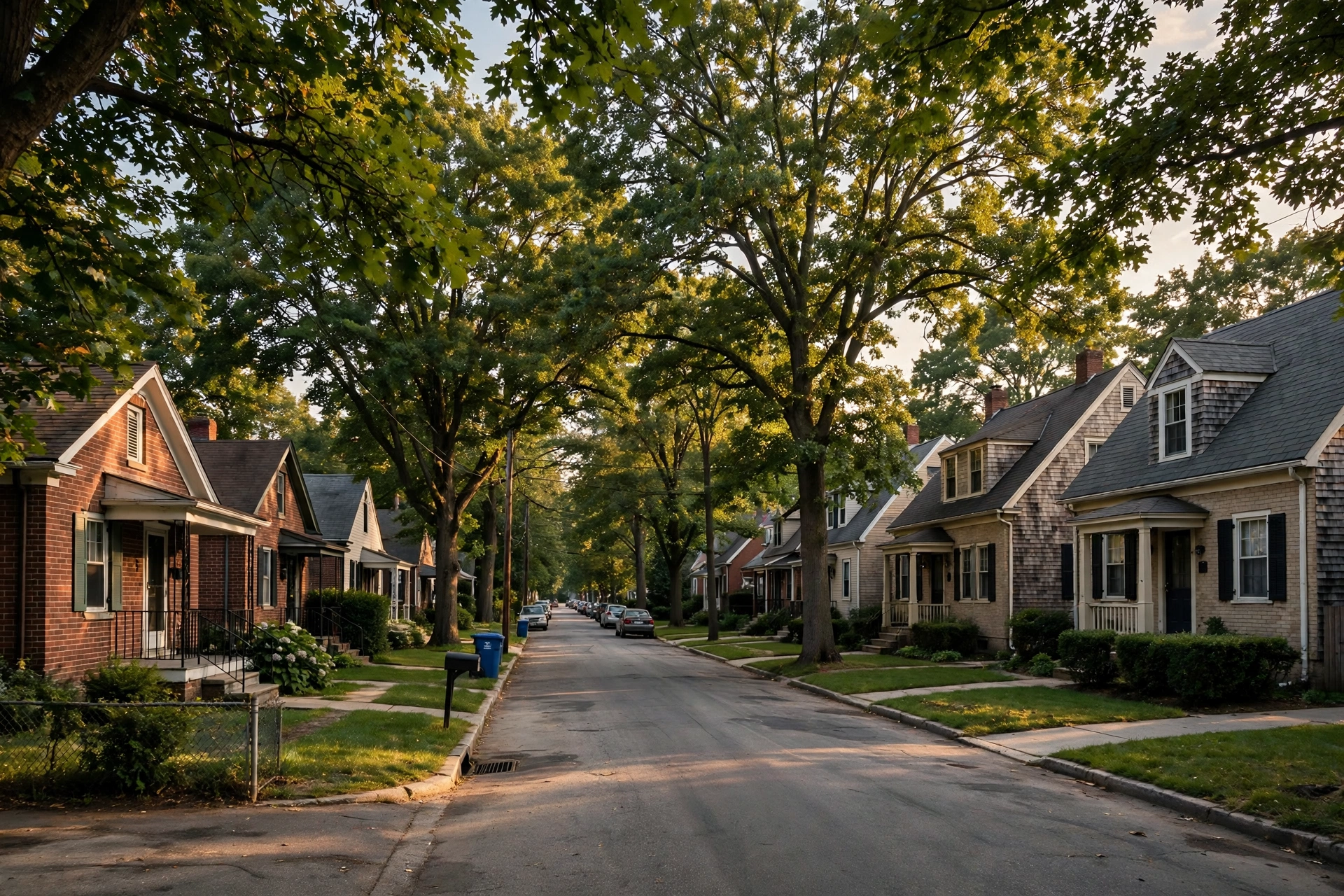
Norwood's dense post-war streets: tight lots, aging pipe, and almost no room to dig, which is why trenchless fits.
Norwood's housing stock is overwhelmingly post-war: brick bungalows, Cape Cods, and two-stories built from the 1920s through the 1950s, packed close together. Under them, the typical lateral is cast iron inside transitioning to vitrified clay tile outside, and both materials are now at or past the end of their service life. Cast iron rusts from the inside out, it looks fine until the bottom of the pipe is paper-thin. Clay tile joints crumble and let roots in.
The density multiplies every problem. Short laterals mean short distances between houses, so when one line fails at the curb, the excavation affects the neighbor's driveway too. Mature street trees line nearly every Norwood block, and their roots work into every damp joint. And the narrow side yards leave almost nowhere to stage equipment, which is why open-trench work in Norwood is disruptive far beyond the property line. The camera inspection, usually through a cleanout or a pulled toilet, avoids all of that and shows the full run to the main.
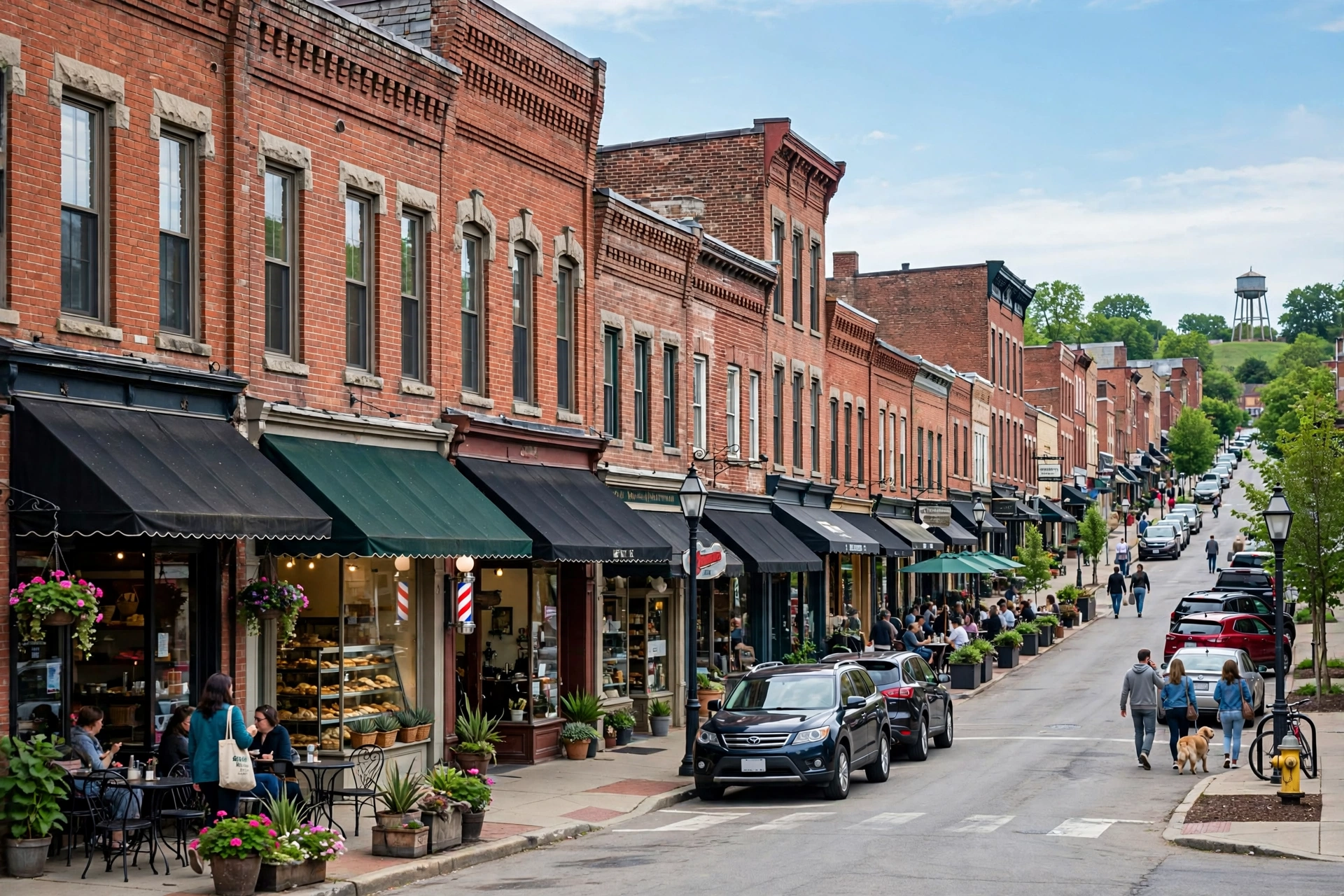
Montgomery Road through Norwood: the commercial corridor sits over some of the area's oldest combined sewers.
Much of Norwood was built before the 1950s, when one pipe carrying both sewage and stormwater was standard engineering. In combined-sewer areas, heavy rain doesn't just stress your lateral, it stresses the whole shared system. When the combined flow exceeds the pipe's capacity, the system surcharges: pressure builds, and sewage looks for the nearest exit, which is often a basement floor drain in the lowest home on the block.
MSD has spent years on a court-ordered program to reduce these overflows across the region, but the pipes under your street are what they are today. For a Norwood homeowner, the practical defense is a backwater valve on the lateral, a one-way gate that lets sewage out but slams shut when flow tries to come back in. We install them, and in combined-sewer neighborhoods it's the highest-value protection you can buy. If your Norwood backups follow big storms like clockwork, ask us about one when we come out with the camera.
Our crews cover all of Norwood: the post-war brick streets off Montgomery Road; the neighborhoods around Xavier University and the University Station development; the residential blocks along Section Avenue; and the homes near the Norwood Lateral (SR-562) corridor.
You'll find us working around Rookwood Commons, near Bethesda North Hospital just north of the city line, and through the dense residential grid between Montgomery Road and the lateral. See our home page for the full statewide service area, but in Norwood the process never changes: camera first, honest diagnosis, upfront plan.
We serve all of Norwood, including ZIP codes 45212.
The City of Norwood Water Department runs the water system, purchasing its water wholesale from Greater Cincinnati Water Works (GCWW). Sanitary sewer service is handled by the Metropolitan Sewer District of Greater Cincinnati (MSDGC), which serves Norwood and most of Hamilton County. For water questions, start at the city's Water Department page, and see MSD's list of communities served for sewer coverage.
Permits for sewer lateral work go through the city's building department, and we pull those permits and schedule inspections as part of every job. If you are unsure which permit your project needs, check with the city's building department before work begins.
Norwood buys its water wholesale from Greater Cincinnati Water Works, and GCWW's water quality reports put average hardness at about 7 to 8 grains per gallon (roughly 120 to 134 milligrams per liter), moderately hard. The dissolved calcium and magnesium deposit as mineral scale inside aging pipes. That scale narrows the bore and gives grease and debris a rough surface to grip, which is how slow drains become full blockages.
Norwood's dense post-war housing runs aging cast iron laterals. Spring rains push groundwater into cracked joints, fall sends tree roots hunting for moisture, and winter freezes shallow lines and cleanouts. One camera inspection every year or two, plus the seasonal habits below, keeps most problems small.
In practice, yes. Norwood is an enclave completely surrounded by Cincinnati, and its sewers tie into the regional system overseen by the Metropolitan Sewer District of Greater Cincinnati (MSD). Your lateral runs from your house to the connection at the main, and that lateral is yours to maintain, even though the system it joins is MSD's.
A combined sewer carries both sewage and stormwater in one pipe, standard in neighborhoods built before the 1950s, which covers much of Norwood. During heavy rain the system can surcharge and push sewage back toward homes. If your street has combined sewers, a backwater valve on your lateral is the single best protection, and we install them.
The City of Norwood handles permits for sewer lateral work within city limits, with inspection typically required before backfill, and work must meet the regional standards of the Metropolitan Sewer District of Greater Cincinnati. We pull the permits and schedule the inspections as part of every job, it's included in the written plan, not an add-on.
Usually one of two things. In combined-sewer areas, the shared pipe surcharges during storms and pushes flow back toward the lowest homes on the block. In separated areas, cracked joints let stormwater infiltrate the lateral and overwhelm it. The pattern looks the same from inside the house, but the camera shows which one it is, and the fix differs completely.
It's the best fit for them. Norwood's dense post-war lots leave almost no room for excavation equipment, and open trenches would tear through driveways, fences, and the narrow side yards. Trenchless lining or bursting needs only small access pits, so the whole job fits in a tight urban lot. That's why most of our Norwood jobs go trenchless.
Also serving Fairfield, Forest Park, Cincinnati, and the greater Norwood area. Major landmarks we work around include Xavier University, Rookwood Commons, and the Norwood Lateral (SR-562).
Enclave, combined sewer, or tight lot, one inspection tells us exactly what's happening underground.
Call (614) 350-5706