Sewer Line Repair in Oxford, OH
A college town with old pipes: Oxford's student rentals, aging clay laterals, and mature tree roots around Miami University make a tough combination. We camera-diagnose every job and fix it trenchless or traditional.
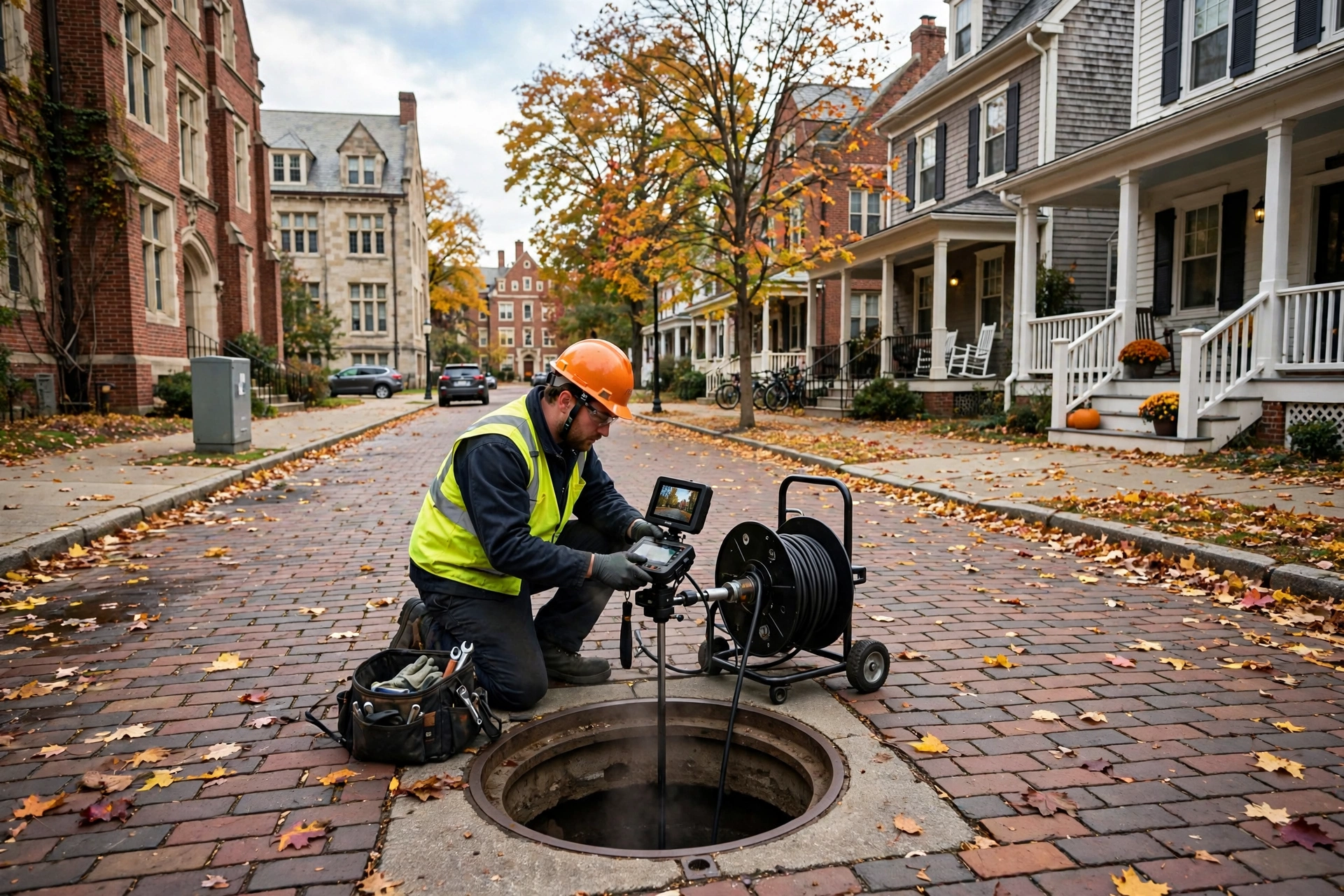
A college town with old pipes: Oxford's student rentals, aging clay laterals, and mature tree roots around Miami University make a tough combination. We camera-diagnose every job and fix it trenchless or traditional.
Last updated: October 13, 2026
Oxford is a town of about 23,000 people and 20,000 students, and the rental housing that serves Miami University runs harder than almost any residential pipe in Ohio.
Think about the math. A four-bedroom house near campus might hold six or seven students, each with their own shower schedule, laundry loads, and kitchen habits, and none of them own the plumbing. That means more flow, more grease, more wipes and feminine products, and more things a homeowner would never flush. Multiply that by a lateral that's already 60 to 100 years old, and you get the Oxford pattern: rental laterals that fail years ahead of the same pipe in an owner-occupied home.
For landlords, the fix is routine, not reactive. A camera inspection between tenants work a fraction of an emergency replacement, and it catches root intrusion, grease buildup, and joint separation while they're still small. We work with Oxford landlords every turnover season, and the ones who camera-check their lines don't get midnight backup calls in October.
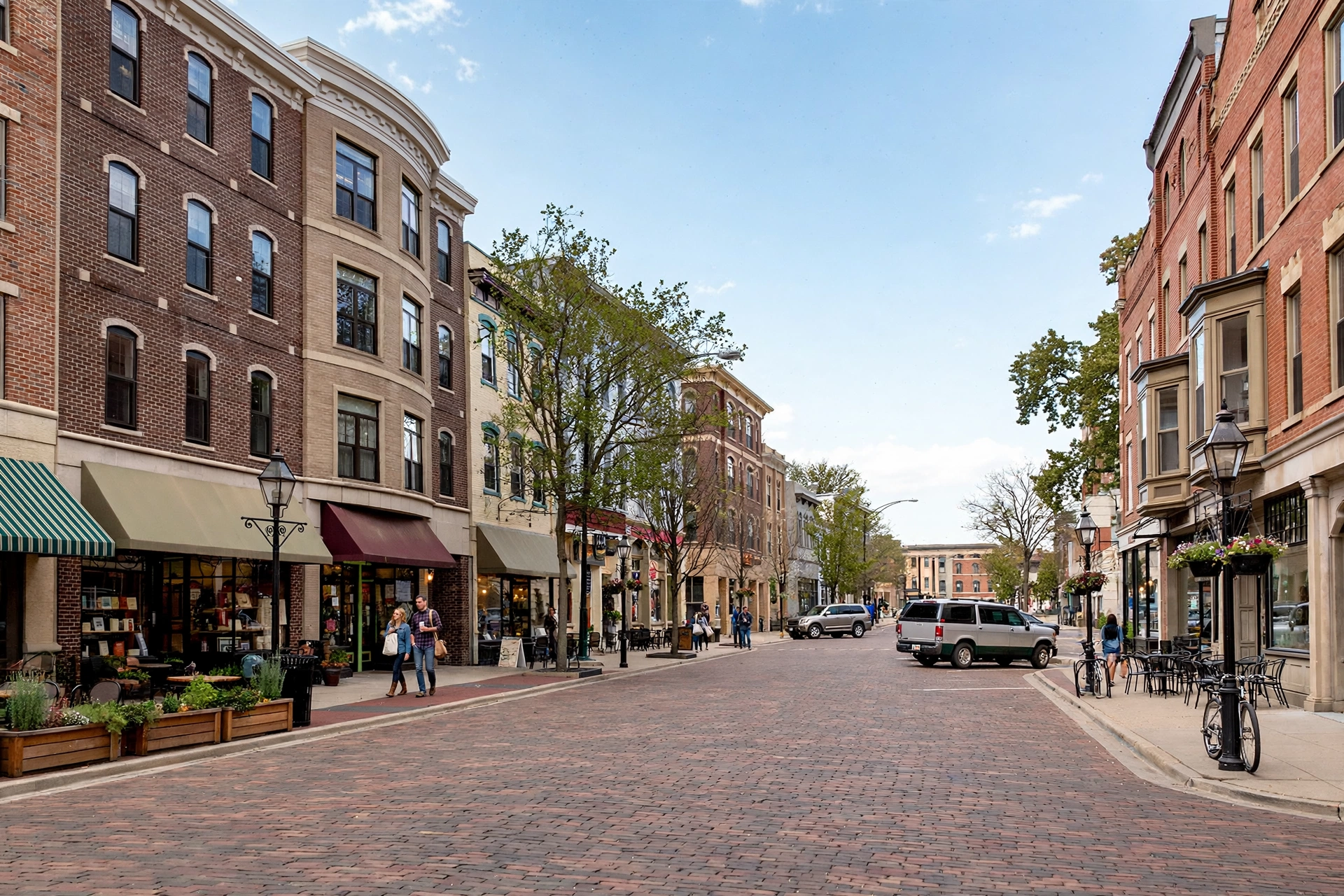
Uptown Oxford: brick streets, mature trees, and some of the oldest sewer laterals in Butler County.
Oxford's housing eras map neatly onto its pipe eras. The pre-war homes around Uptown and the historic districts sit on vitrified clay tile with mortar joints, often original to houses built in the 1800s and early 1900s. The mortar is crumbling, the joints are separating, and the street trees planted when the neighborhoods were young have spent a century working roots into every damp opening.
The mid-century rentals, the duplexes and converted houses from the 50s through the 70s, usually run cast iron inside transitioning to clay outside. Cast iron rusts from the inside out, it looks fine until the bottom of the pipe is paper-thin, and rental-level flow accelerates the wear. Newer construction around the edges of town is PVC, which is better, but even PVC separates at the bell joints when trench bedding settles. Whatever era your Oxford property belongs to, the camera tells us in about an hour, and trenchless sewer repair keeps the brick streets and sidewalks intact.
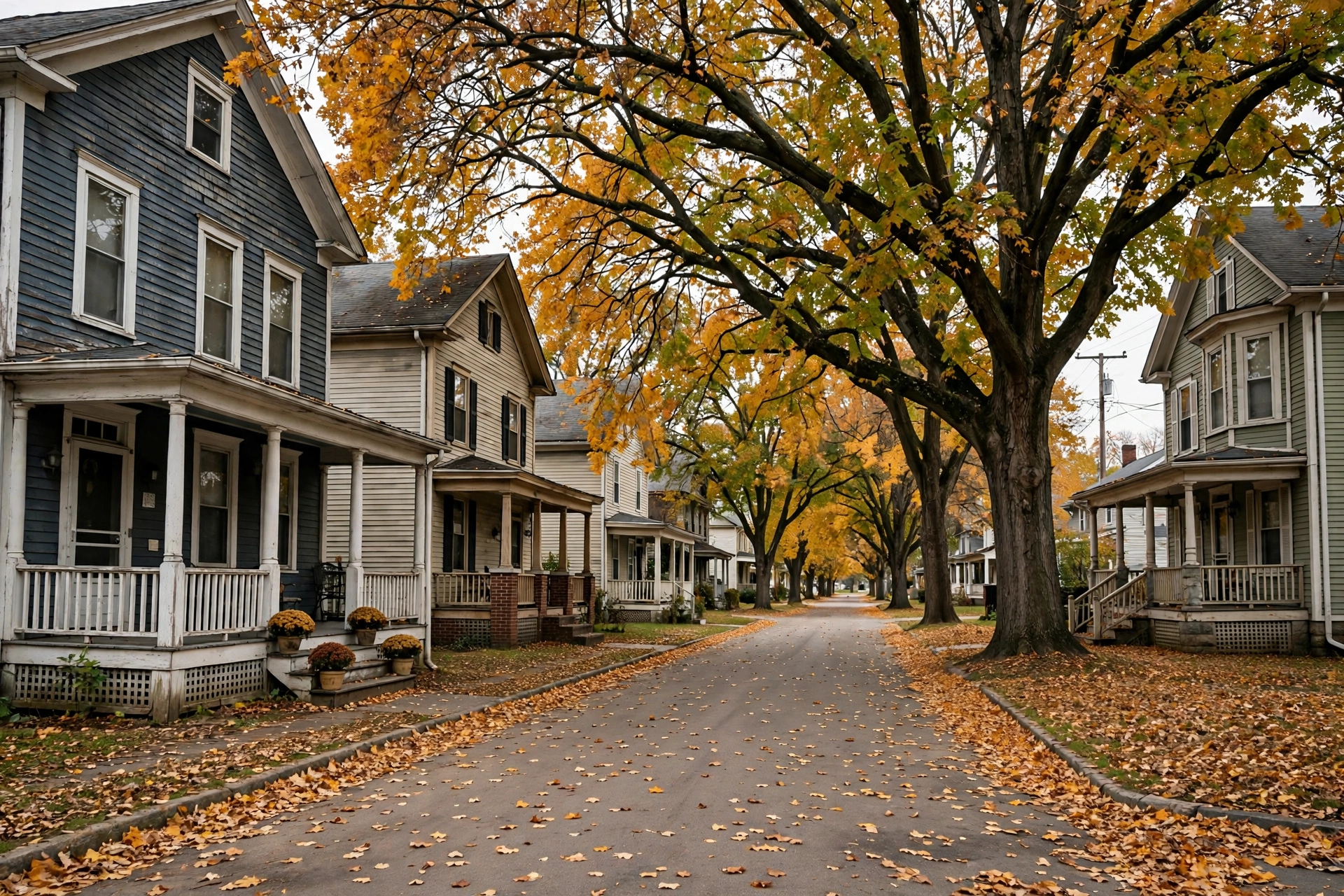
Oxford's older rental streets: mature shade trees and aging clay tile make root intrusion the local norm.
Oxford sits on high ground, and that shapes its sewer story in two ways. First, the town drains outward, which means many laterals run long distances down slopes to reach the mains. Long runs with multiple joints are more joints to fail, and on a slope, any separated joint lets water jet out and erode the bedding, which settles the pipe further. It's a slow requirementdback loop.
Second, the clay-rich glacial till under Oxford holds water after storms, and that perched water presses into every weak joint. Homeowners on the slopes and low pockets of town see the same spring pattern: backups that follow big rains, clear up, and come back next storm. That's infiltration through failed joints, not a clog, and lining the line seals the entries instead of snaking the symptoms.
Our crews cover all of Oxford: the Uptown historic district and its 19th-century clay laterals; the student-rental streets around the Miami University campus; the mid-century duplexes and converted houses along College Corner Pike and the SR-73 corridor; and the newer subdivisions on the edges of town.
You'll find us working near McCullough-Hyde Memorial Hospital, around the Uptown brick streets, and out toward the Hueston Woods side of town. See our home page for the full statewide service area, but in Oxford the process never changes: camera first, honest diagnosis, upfront plan.
We serve all of Oxford, including ZIP codes 45056.
The City of Oxford handles water, sewer, and trash service for residents directly. Your sewer lateral connects to the city's wastewater collection system, and the city's own code requires permits for sewer connections and lateral work. Details are on the city's utilities page.
We pull the permits and schedule the inspections as part of every job, so you don't have to navigate the city process yourself. If you are unsure which permit your project needs, check with the city's building department before work begins.
Oxford's water supply is groundwater, and groundwater across the Great Miami valley runs generally hard, high in calcium and bicarbonates from the region's limestone bedrock. Over the years, that mineral content deposits scale inside pipes. In older clay and cast-iron lines, scale narrows the bore and roughens the walls, so grease and debris snag more easily and blockages form sooner.
Oxford's own water quality report puts hardness between about 91 and 146 mg/L (roughly 5 to 9 grains per gallon), naturally hard water from limestone-rich wells in the Great Miami Buried Valley Aquifer. That geology loads the water with calcium and magnesium, which deposit as scale inside older pipes. The scale narrows the bore and gives grease and solids a rough surface to grip, which is why Oxford homeowners notice more slow drains in aging lines.
Oxford's limestone aquifer and Miami University's mature campus trees set the calendar. Spring rains push groundwater into cracked joints, fall brings the year's most aggressive root growth, and winter freezes shallow laterals and cleanouts. One camera inspection every year or two, plus the seasonal habits below, keeps most problems small.
Get a camera inspection between tenants and make the lateral part of your turnover routine. Student rentals run harder than owner-occupied homes, more people, more flushes, and more of the wrong things going down the drain. A clean camera pass at turnover catches root intrusion and grease buildup early, when they're simple to clear, instead of during a midnight backup call in October.
Two things: roots and rentals. Oxford's uptown streets and older neighborhoods have mature trees whose roots work into aging clay tile joints, and the student-rental housing stock runs at much higher occupancy than a typical single-family home, which means more flow and more stress on old lines. The camera shows which one is driving your problem, or both.
Usually, yes. We run the camera from an inside cleanout, a floor drain, or by pulling a toilet, and push it all the way to the city main at the street. If there's no inside access, we can often enter from an outside cleanout. The footage covers the full run from house to main, so nothing is guessed at.
The City of Oxford handles permits for sewer lateral work within city limits, with inspection typically required before backfill. We pull the permits and schedule the inspections as part of every job, it's included in the written plan, not an add-on.
Fall is root-growing season and move-in season at the same time. Roots put on their last growth push before winter, chasing the moisture in your lateral, while the student population returns and doubles the flow through every rental line in town. If your Oxford drains slow down every September or October, that's the combination at work, and a camera inspection tells you exactly where.
Also serving Hamilton, Fairfield, and the greater Oxford area. Major landmarks we work around include the Miami University campus, Uptown Oxford, and Hueston Woods State Park.
Rental, historic home, or new build, one inspection tells us exactly what's happening underground.
Call (614) 350-5706