Sewer Line Repair in Perrysburg, OH
A historic river town on a Maumee bluff, 200 years of settlement layers, and Fort Meigs country. We camera-diagnose every Perrysburg job and fix it trenchless or traditional.
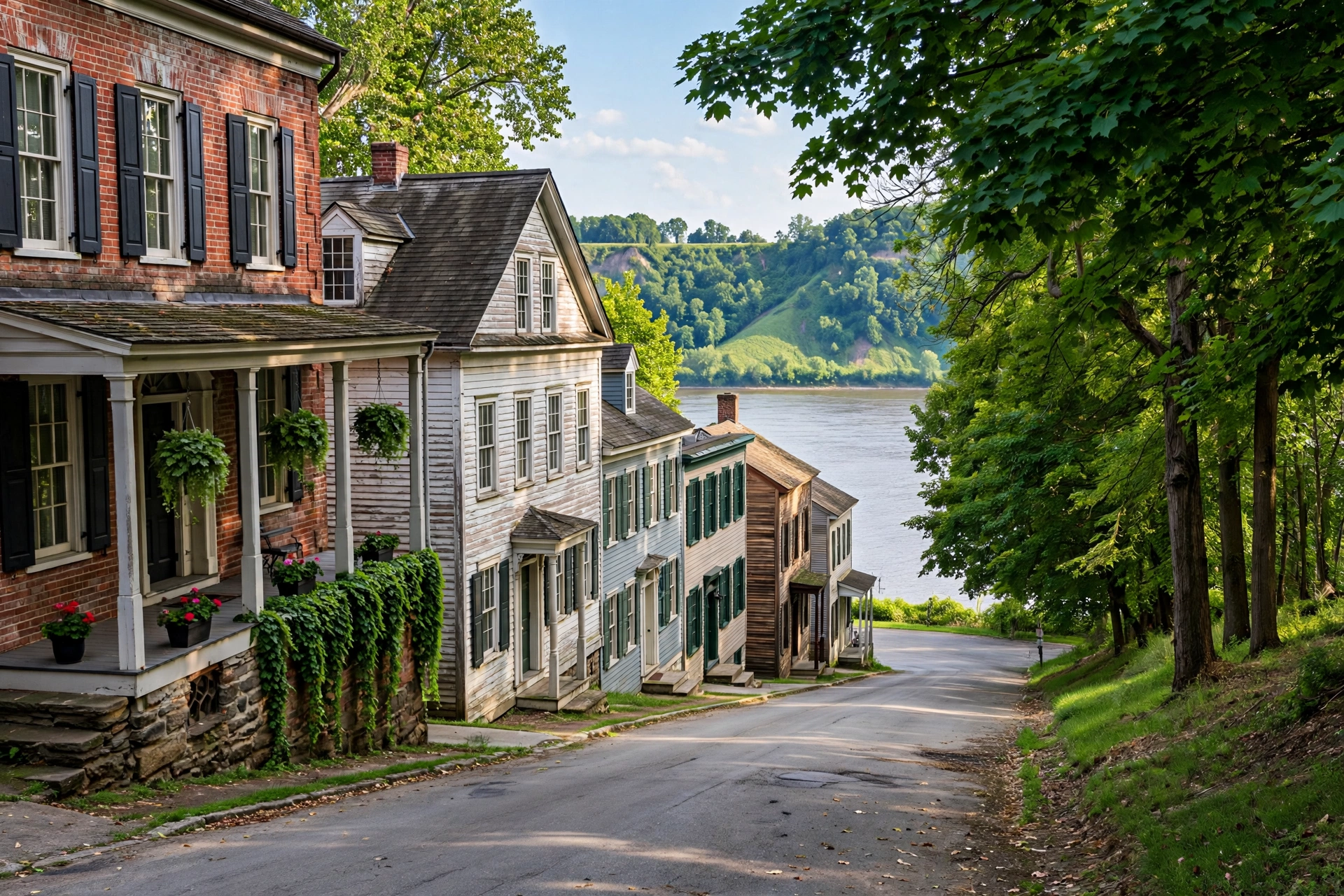
A historic river town on a Maumee bluff, 200 years of settlement layers, and Fort Meigs country. We camera-diagnose every Perrysburg job and fix it trenchless or traditional.
Last updated: October 13, 2026
Most of northwest Ohio is pancake-flat. Perrysburg is the exception, and its bluff is the whole sewer story.
Fort Meigs wasn't built on a bluff above the Maumee River by accident. The riverfront rises sharply from the water, and the historic town climbs with it. That slope gives sewer laterals something most of northwest Ohio lacks: real grade, which helps solids move. But slopes move too. Rainwater saturates the bluff soil, the soil shifts around rigid clay or cast iron pipe, and joints open and sections offset. Homes near the river edge and in the historic district see this the most.
The second bluff problem is groundwater. When the Maumee River runs high, the water table along the river corridor rises with it, pressing into every cracked joint in laterals near the bluff. The line fills from the outside in. If your drains slow down in the weeks after high water on the river, that's infiltration, and a camera inspection shows exactly where the water is getting in.
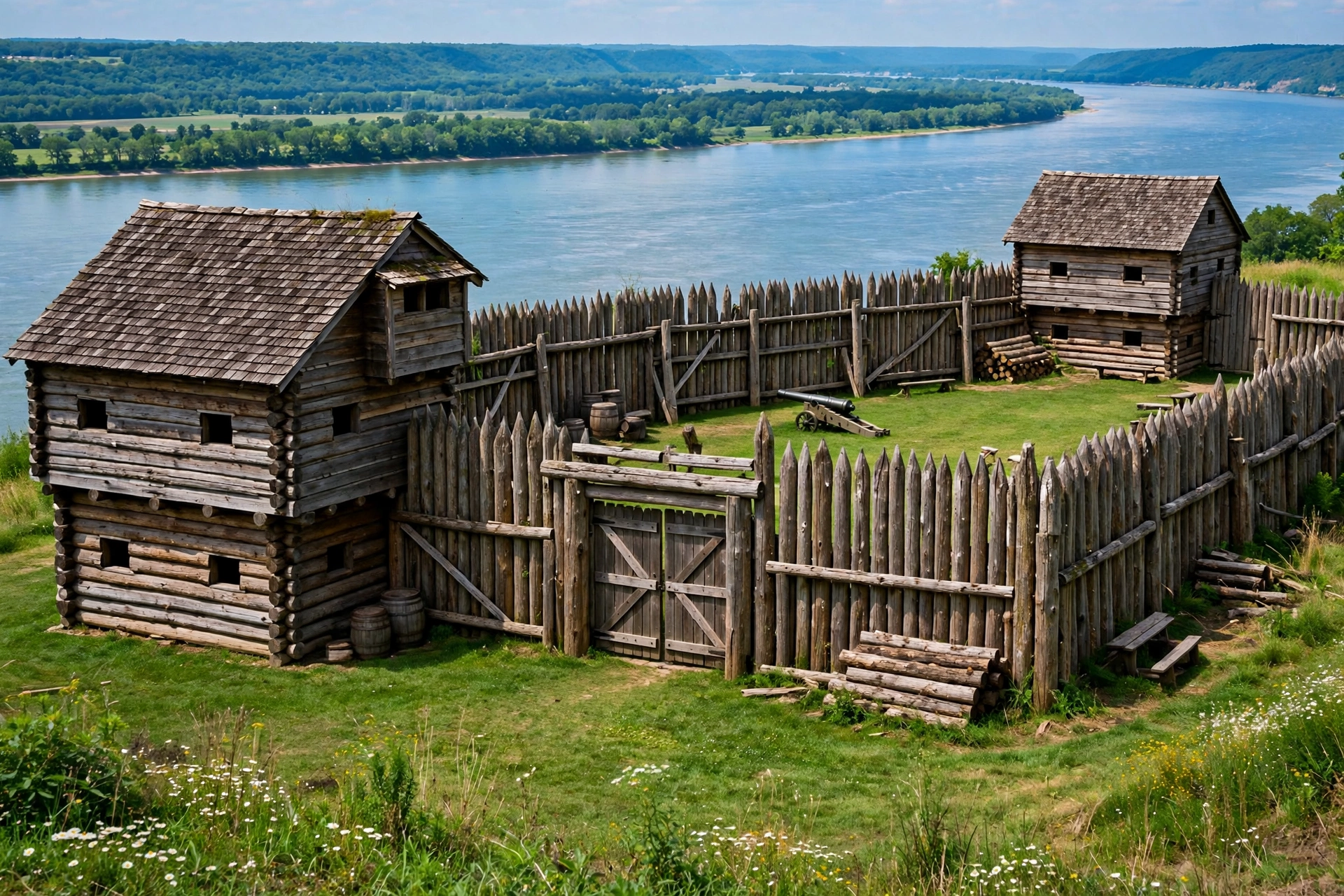
Fort Meigs sits on the same Maumee River bluff that shapes Perrysburg's sewer problems, slopes move, and rigid pipe can't flex with them.
Perrysburg was founded in 1816, and its historic district is one of the oldest settled streetscapes in northwest Ohio. The homes from the early 1900s, brick colonials and clapboard houses along Louisiana Avenue and the side streets, run vitrified clay tile laterals with mortar-sealed joints. A century later, the mortar has crumbled, the joints have shifted, and the district's mature maples, oaks, and elms have spent decades threading roots into every damp opening.
Newer Perrysburg, the subdivisions around Perrysburg Heights and the growth corridors along I-75, runs modern PVC and has fewer problems. But the historic core is where the work is, and it's delicate work: brick sidewalks, mature landscaping, and century-old foundations. That's why our trenchless sewer repair options fit Perrysburg so well, lining or bursting fixes the line from the inside, and the streetscape stays untouched.
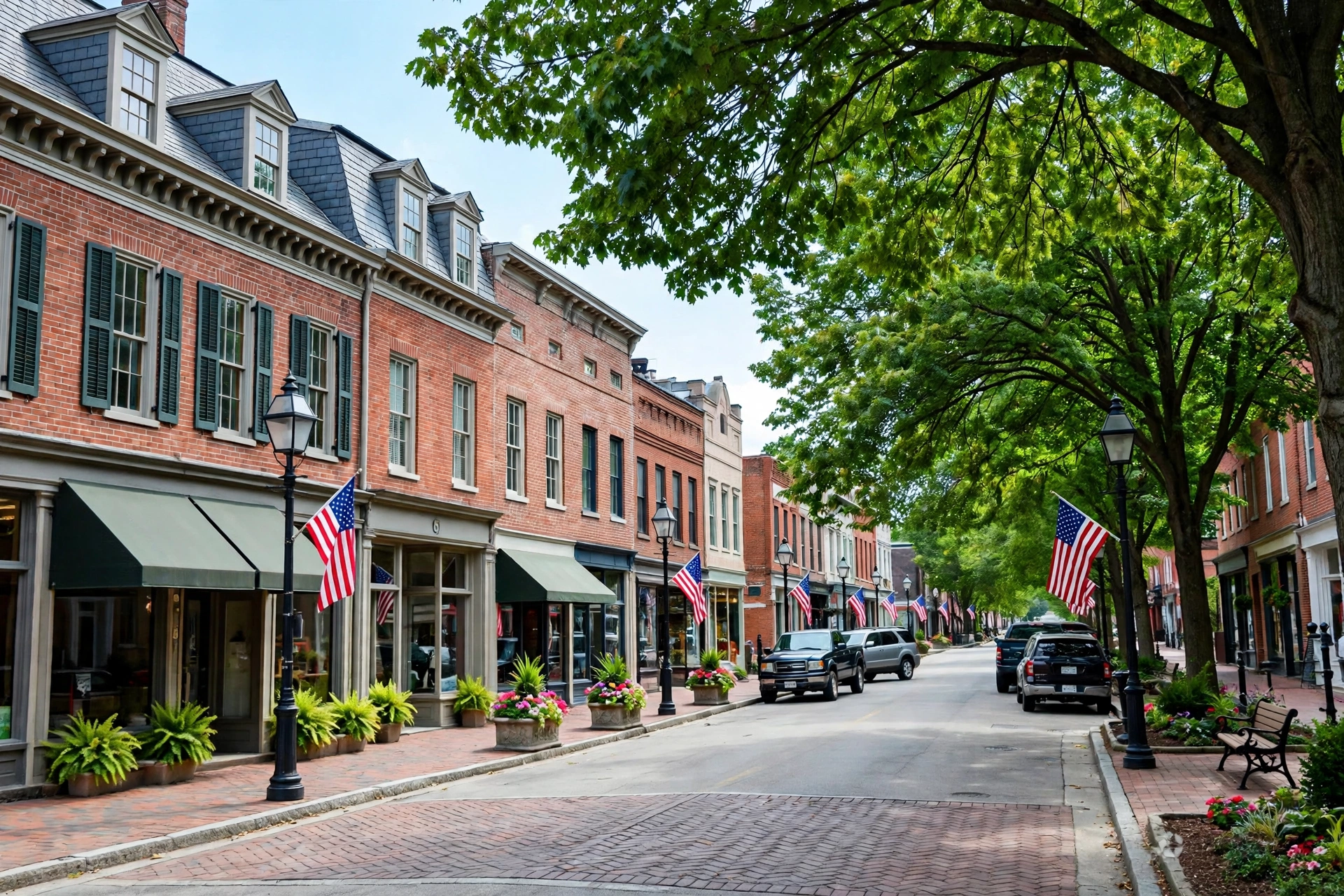
Perrysburg's historic downtown keeps its 19th-century character, and trenchless repair keeps it that way when sewer lines fail.
The public side of the system gets attention too. The Northwestern Water and Sewer District ran a Perrysburg sewer rehabilitation project along West Boundary Street, proof that the region's aging public mains are being renewed. A camera inspection of your private lateral tells you whether your side needs the same treatment.
Perrysburg's water is famously hard, with published water-testing summaries putting it around 25 grains per gallon, among the hardest in northwest Ohio. That mineral load leaves scale on everything it touches, and inside old clay and cast iron laterals it coats the pipe walls, narrowing the bore and giving roots and debris more to grab onto. On the bluff's shifting soils, a scaled, joint-separated lateral is doubly vulnerable.
Rivers and sewers have an uneasy relationship. In an older river town like Perrysburg, laterals were laid when joints were sealed with mortar and nobody thought about groundwater pressure. Every crack and separated joint is an open door for river-level groundwater, and once the water gets in, it carries fine silt that settles in low spots and hardens into blockages.
The pattern is seasonal. Spring rains and river highs bring the infiltration; summer and fall bring the root growth, as thirsty trees push into the now-damp joints. By the time a homeowner notices slow drains, both forces have been working for months. A fall camera inspection, before freeze season wedges the cracks wider, catches the damage while the line is still a lining candidate instead of a collapse job.
Sewer service inside Perrysburg city limits is billed by the City of Perrysburg's Department of Public Utilities. For sewer lateral repair or replacement, permits run through the city, and an inspection is typically required before backfill. We pull the permits and coordinate the inspection as part of every job.
One local wrinkle: some properties outside city limits are served by the Northwestern Water and Sewer District, so check your bill if you are not sure who serves you. For utility details, see the City of Perrysburg official website. The wastewater plants that treat what the region's laterals carry operate under discharge permits issued by Ohio EPA; see the Ohio EPA's wastewater permitting pages for how that oversight works. If you are unsure which permits your project needs, check with the city's building department before work begins.
Perrysburg draws treated Lake Erie surface water, which runs moderately hard with the mineral profile typical of the western basin. Even moderate hardness leaves scale over time, and inside old clay and cast iron laterals it coats the pipe walls, narrowing the bore and giving roots and debris more to grab onto. A camera inspection maps the scale, and hydro jetting or a lining restores full flow.
Follow the seasons, not the calendar. In Perrysburg, the smart routine is a fall camera inspection before freeze season, close attention to drains during spring rains and high river water, and keeping roots and grease out of the line all year. Here is how each season plays out:
Our crews cover Perrysburg's historic district and downtown, the Fort Meigs area, Perrysburg Heights, and the neighborhoods near Mercy Health Perrysburg Hospital. You'll also find us out by the 577 Foundation and W.W. Knight Nature Preserve, where older laterals run through some of the area's biggest tree canopies. Our crews work across Perrysburg in ZIP codes 43551 and 43552, from the historic district to Perrysburg Heights.
Wherever the lateral runs in the Perrysburg area, the process is the same: camera first, honest diagnosis, upfront plan. Start from our Ohio homepage or see our neighbors in Bowling Green, Toledo, and Oregon.
Yes, and it's Perrysburg's defining sewer trait. The bluff above the Maumee River puts laterals on a real grade, which helps flow, but rainwater saturating the slope can move soil around rigid clay or cast iron pipe, opening joints and offsets. Homes near the river edge and in the historic district see this the most. A camera inspection shows the offsets clearly.
The river doesn't have to reach your house to cause trouble. When the Maumee runs high, the water table along the river corridor rises with it, and groundwater presses into every cracked joint in your lateral. The line fills from the outside in, and drains slow down in the weeks after high water. Sealing the cracks, by lining or replacement, stops the infiltration at the source.
Most likely vitrified clay tile with mortar joints, running from your foundation out to the street. After a century, the mortar joints crumble and the mature street trees in the historic district push roots into every damp opening. Many 1920s Perrysburg laterals are excellent candidates for trenchless lining, which seals every joint without digging up the yard.
Both serve the Perrysburg area. Homes inside city limits are billed by the City of Perrysburg's Department of Public Utilities, while some properties outside city limits or in the township get water and sewer service from the Northwestern Water and Sewer District. The city's own rate sheet notes a credit for customers who also incur District assessments. Check your bill to see which provider serves you.
They're the number-one threat to older Perrysburg laterals. The historic district's mature maples, oaks, and elms send fine root hairs into damp mortar joints in clay tile; the roots thicken year after year until they wedge joints apart and fill the pipe. Once roots are inside, snaking only buys time. Lining or bursting the pipe removes the entry points for good.
Also serving Bowling Green, Toledo, Oregon, Rossford, and Wood County. Landmarks we work around include Fort Meigs, the 577 Foundation, W.W. Knight Nature Preserve, and the Perrysburg historic downtown.
Historic district or new subdivision, one inspection tells us exactly what's happening underground.
Call (614) 350-5706