Sewer Line Repair in Bowling Green, OH
College-town rentals, swamp-born clay soil, and farm drainage tiles at the city edge. Bowling Green's sewer problems are its own. We camera-diagnose every job and fix it trenchless or traditional.
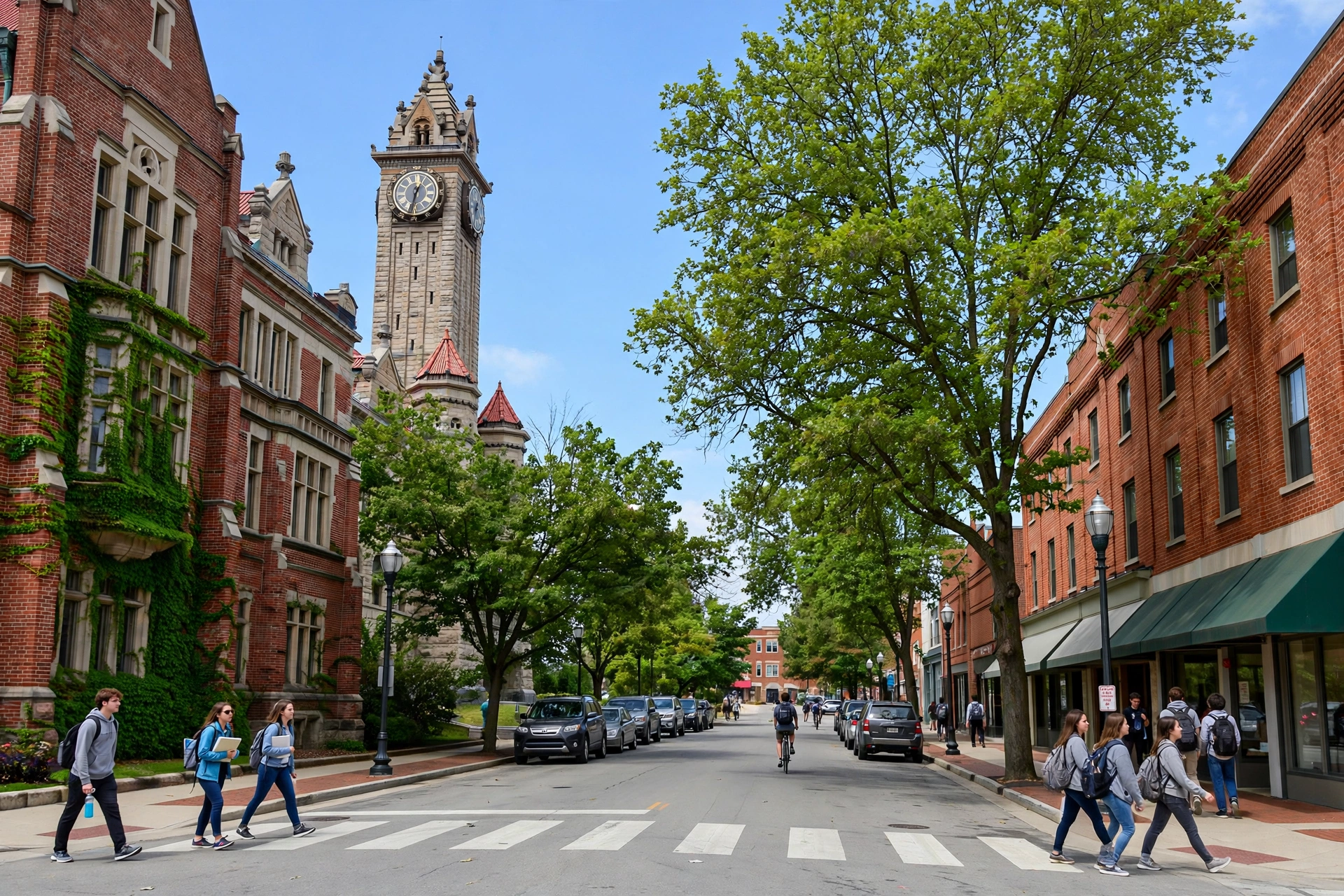
College-town rentals, swamp-born clay soil, and farm drainage tiles at the city edge. Bowling Green's sewer problems are its own. We camera-diagnose every job and fix it trenchless or traditional.
Last updated: October 13, 2026
Bowling Green sits on ground that used to be a swamp. The soil never forgot.
Much of northwest Ohio, including Bowling Green, lies on the bed of the Great Black Swamp, drained by settlers in the 1800s with clay tiles and ditches. The soil they left behind is dense, water-holding clay that keeps sewer laterals saturated nearly year-round. Saturated clay swells and shrinks with the seasons, and that movement works pipe joints loose a fraction of an inch at a time. Then winter arrives, water seeps into every hairline crack, freezes, expands, and wedges the crack wider.
The flatness makes it worse. On Bowling Green's level ground, laterals run shallow with barely enough slope, so solids settle in low spots and grease builds up. Combine swamp clay, shallow pitch, and freeze-thaw, and you have the defining soil problem for Bowling Green sewer lines: joints that separate, sections that offset, and roots that find every opening.
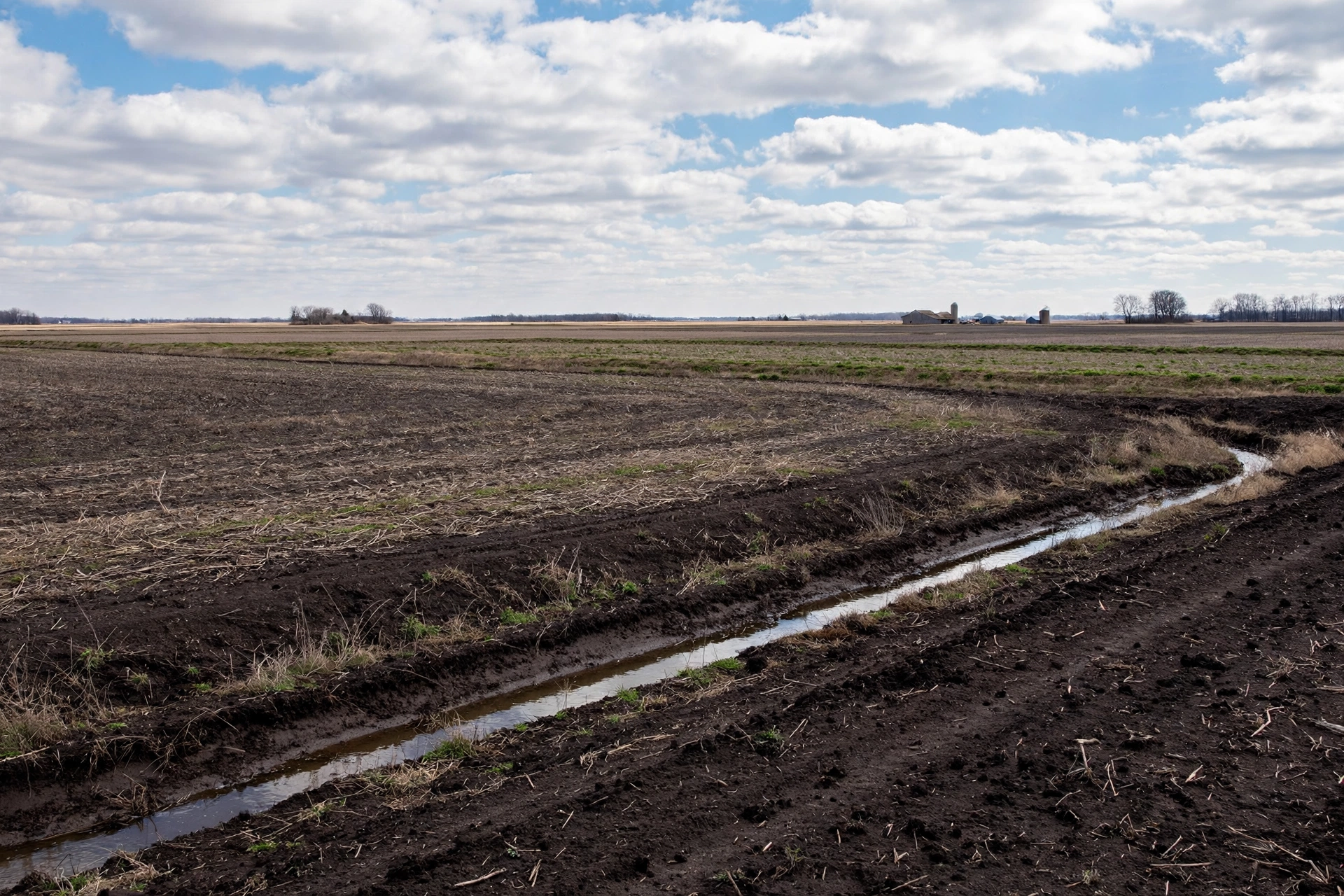
Flat farmland surrounds Bowling Green, and old clay field drainage tiles still run under the fields at the city's edge.
Bowling Green State University shapes this town, and its student rentals shape the town's sewers. A rental house near campus sees heavier drain use than almost any other housing in Wood County: more showers, more laundry loads, flushable wipes, and tenants who never think twice about what goes down the drain. On an older clay lateral with shallow slope, that load overwhelms joints and low spots fast.
Landlords requirementl it in the worst way: the backup that hits at the start of the semester, the emergency call at midnight, the tenant who already moved out. The fix starts with knowing what's down there. A camera inspection shows whether a house needs a regular cleanout schedule, a lining to seal the joints against roots, or a full replacement that ends the cycle. If you own rental property near campus, the camera is the simplest insurance you can buy. We also do pre-purchase inspections, and the footage goes to you, not the seller.
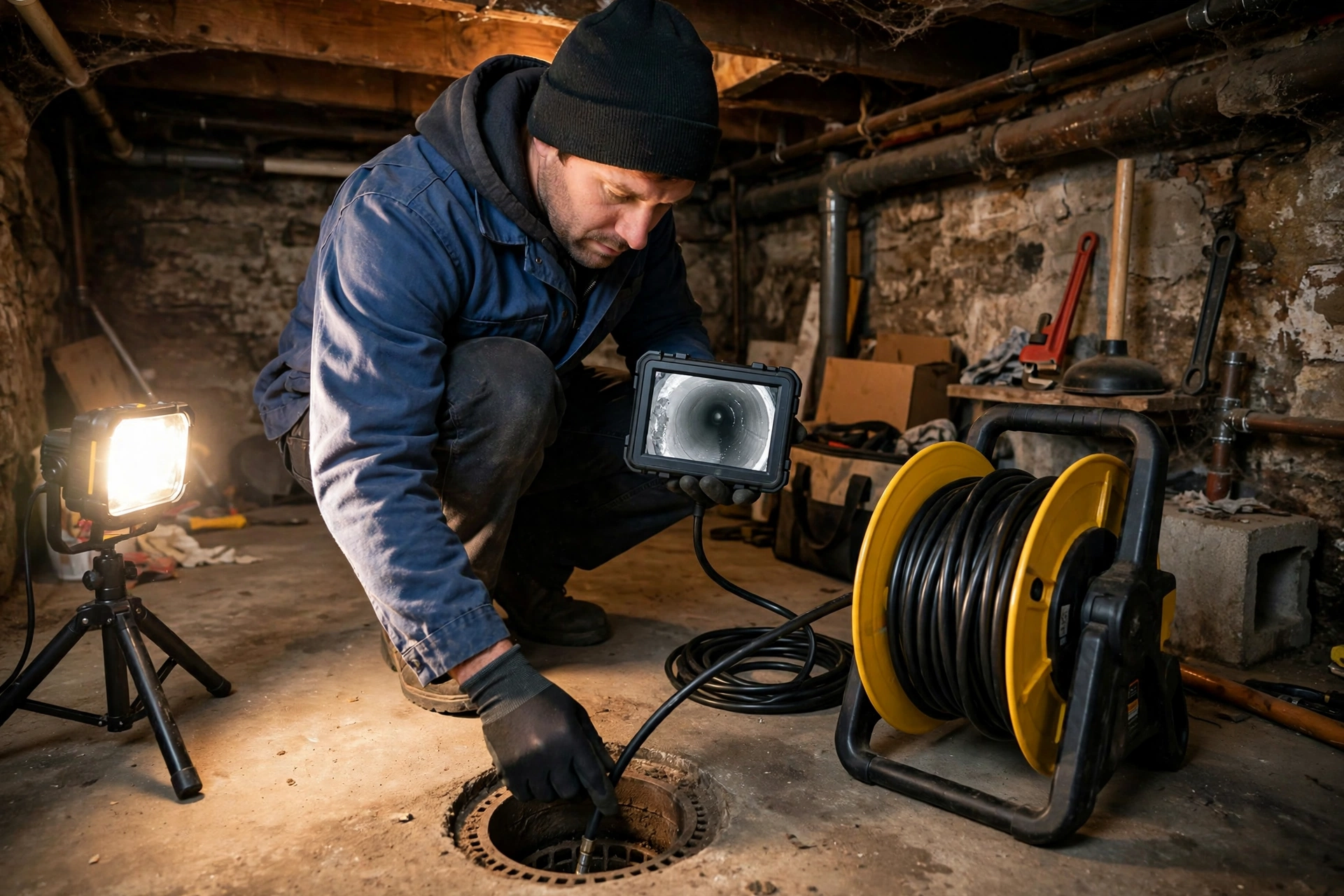
A camera inspection shows roots, offsets, and collapses before you buy the house, not after.
Age and use predict trouble here better than anything. The older homes near downtown and the BGSU campus, many built in the first half of the 1900s, run original clay tile laterals that have spent decades in swamp clay. Decades of hard rental use have worked the joints loose, and the mature street trees have sent roots into every damp opening.
The 1960s and 70s subdivisions on the edges of town bring a different story: cast iron inside transitioning to clay outside, and in some developments Orangeburg pipe that flattens into an oval and eventually collapses. Out past the subdivisions, where homes meet farmland, old clay field drainage tiles can redirect water toward foundations and give roots a second path into your lateral. Our trenchless sewer repair options handle all three eras without tearing up lawns.
There is one more wrinkle in the older downtown neighborhoods: combined sewers that carry both sewage and stormwater in one pipe. The city's own clean-water guidance notes that during heavy rain, excess flow overflows untreated to the East Poe Road Ditch, which is why the Utilities Department offers financial help to homeowners who disconnect downspouts and sump pumps from the sewer system. The U.S. EPA's combined sewer overflow page explains how these older systems work.
Bowling Green's municipal water tests around 128 parts per million total hardness, about 7.5 grains per gallon, firmly in the hard range. That calcium and magnesium leaves scale inside old clay and cast iron laterals, narrowing the bore and roughening the surface so grease and solids catch. On shallow, low-slope lines, even a little scale turns a slow drain into a full blockage.
Water and sewer service in Bowling Green runs through the City of Bowling Green's Utilities Department. For sewer lateral repair or replacement, permits run through the city, and an inspection is typically required before backfill. We pull the permits and coordinate the inspection as part of every job.
For utility accounts, billing, and sewer policies, see the City of Bowling Green's official website. If you are unsure which permits your project needs, check with the city's building department before work begins.
Follow the seasons, not the calendar. In Bowling Green, the smart routine is a fall camera inspection before freeze season, close attention to drains during spring rains, and keeping roots and grease out of the line all year. Here is how each season plays out:
Our crews cover Bowling Green and the Wood County corridor along I-75. You'll find us near the BGSU campus and downtown Main Street, around Wood County Hospital, out by the Wood County Fairgrounds, and at the rural edges where subdivisions meet farmland. Our crews work across Bowling Green in ZIP codes 43402 and 43403, including the BGSU campus area.
Wherever the lateral runs in the Bowling Green area, the process is the same: camera first, honest diagnosis, upfront plan. Start from our Ohio homepage or see our neighbors in Perrysburg, Findlay, and Toledo.
Student rentals see the heaviest use of any housing in Bowling Green: more showers, more laundry, more flushable wipes, and tenants who never think about the drain. On an older clay lateral with shallow slope, that load overwhelms joints and low spots fast. A camera inspection shows whether you need a simple cleanout schedule, a lining to seal the joints, or a full replacement.
Much of northwest Ohio, including Bowling Green, sits on land that was the Great Black Swamp, drained by settlers in the 1800s. The soil left behind is dense, water-holding clay that keeps sewer laterals saturated year-round and swells and shrinks with the seasons, shifting pipe joints. Freeze-thaw then wedges every crack wider. It's the defining soil problem for Bowling Green sewer lines.
They can. Old clay farm drainage tiles crisscross the fields around Bowling Green, and where a home lateral runs near one, roots chase the constant moisture and can invade both the field tile and your sewer joints. Collapsed field tiles can also redirect water toward your foundation. When we camera-inspect homes on the rural edges, we check where the lateral meets the old drainage network.
Parts of it do. The city's own guidance describes combined sewers that carry sewage and stormwater in one pipe, with excess flow overflowing untreated to the East Poe Road Ditch during heavy rain. That is why the Utilities Department offers financial help to homeowners who disconnect downspouts and sump pumps from the sewer system. Fewer clean-water connections means fewer overloads.
Absolutely, and it's the best money you'll spend. Near-campus homes often have decades of hard rental use on original clay tile laterals, and sellers rarely disclose drain history. A one-hour camera inspection shows root intrusion, offsets, and collapses before you own them. We do pre-purchase inspections all over Bowling Green, and the footage goes to you, not the seller.
Also serving Perrysburg, Findlay, Toledo, North Baltimore, and Wood County. Landmarks we work around include the BGSU campus, Doyt Perry Stadium, the Wood County Fairgrounds, and Wood County Hospital.
College rental or family home, one inspection tells us exactly what's happening underground.
Call (614) 350-5706