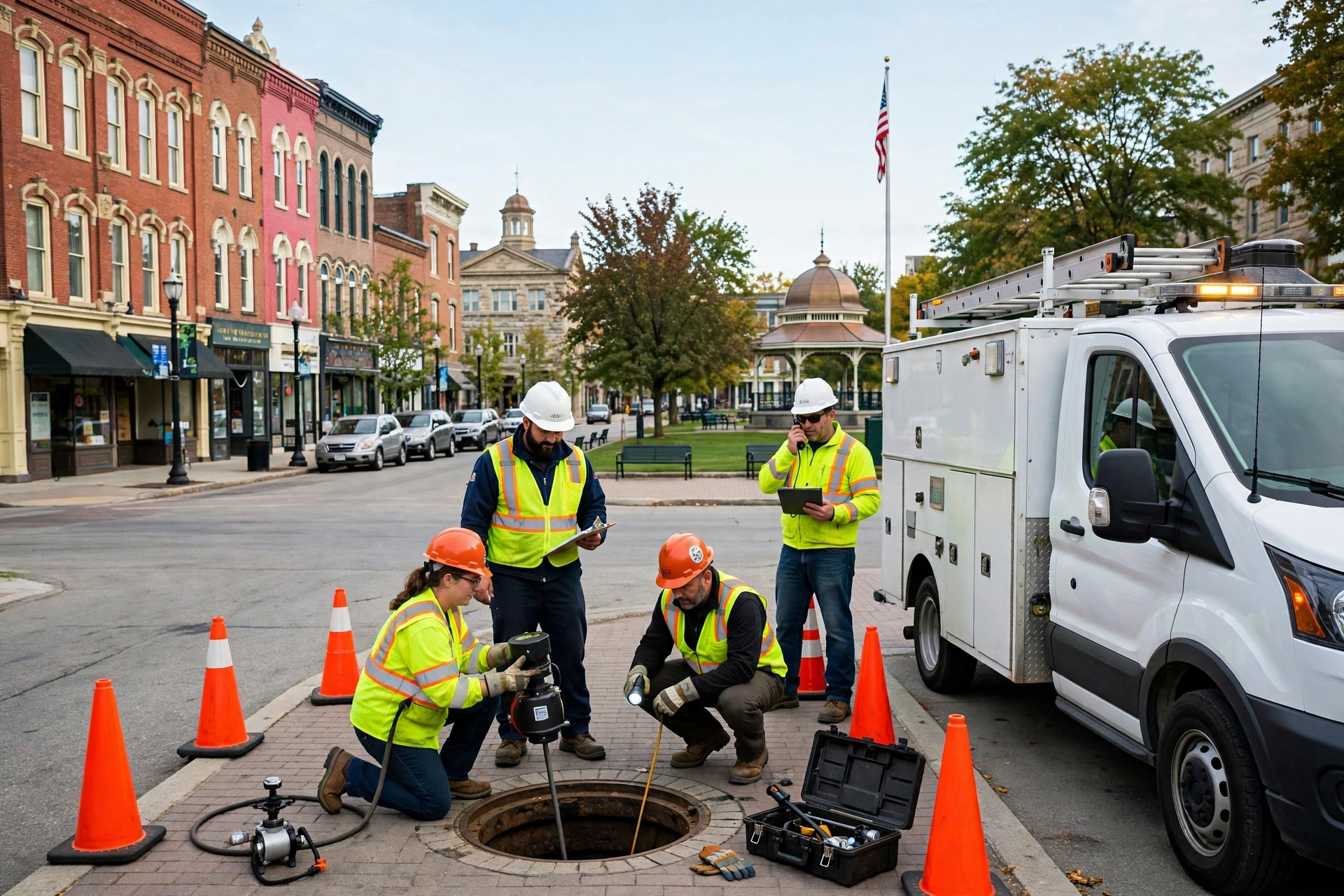
Painesville, Ohio
How Does the Grand River Shape Painesville's Sewer Problems?
The Grand River flows through Painesville on its way to Lake Erie, and the river sets the water table for the whole downtown area. High river, high groundwater, stressed sewer lines.
When the Grand runs high after storms or spring melt, groundwater in the surrounding soil rises with it. That water presses into every cracked joint and separated connection in your lateral, a process called infiltration, and a line that drains fine in summer can surcharge in spring. The effect is strongest in the neighborhoods closest to the river and in the low areas of downtown.
The second problem arrives when the water recedes. High water carries fine silt, and as flows normalize, that silt settles inside the pipe and hardens into a concrete-like restriction. We've camera-inspected lines after high-water season that looked half-full of cement. If your Painesville drains slow down in the weeks after the river runs high, hydro jetting followed by a camera check is the fix.
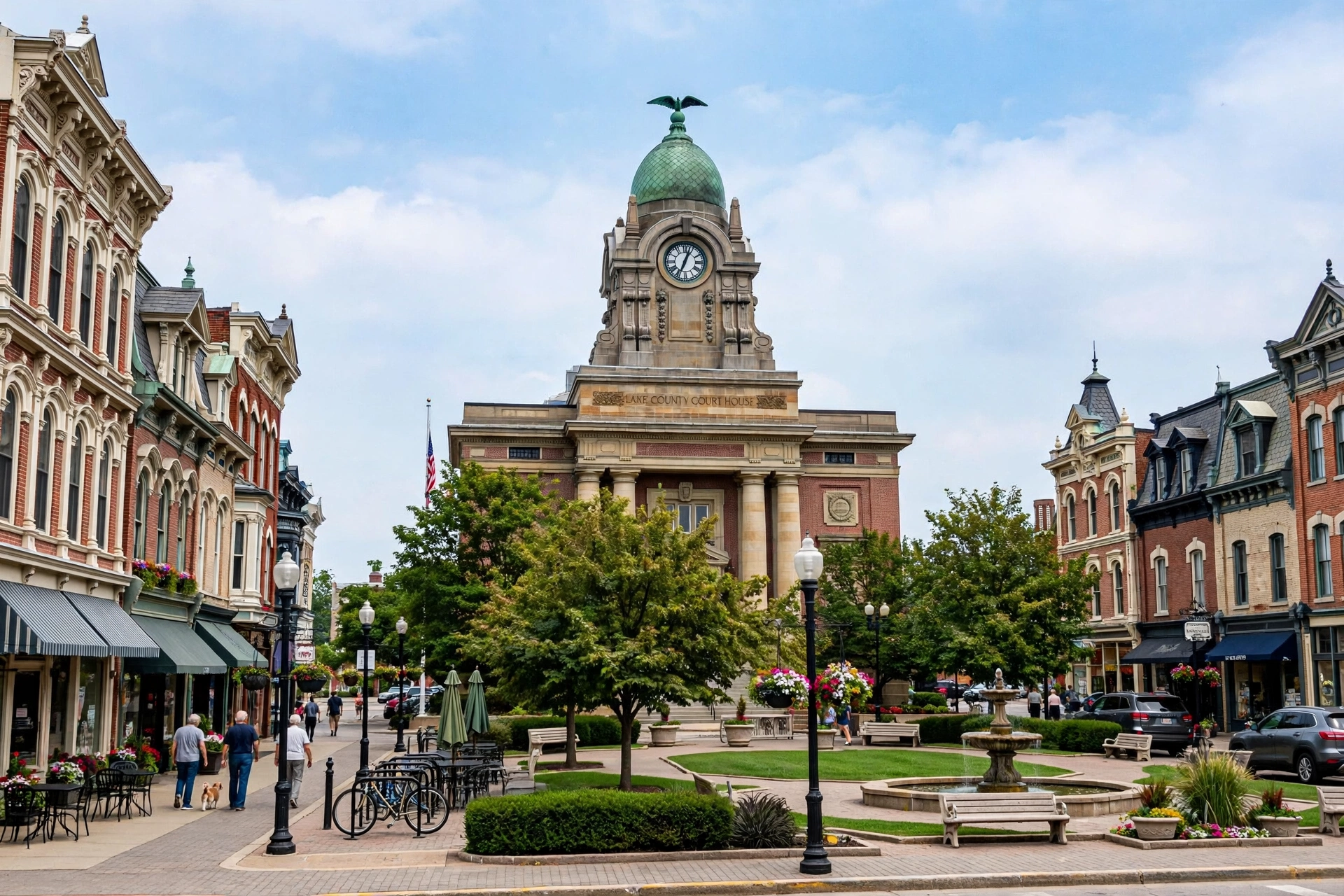
The Lake County Courthouse anchors Painesville Square, where downtown laterals are the city's oldest.
What Are the County Seat's Oldest Pipes Made Of?
Painesville's downtown grew up in the 1800s, and the laterals under the Square and the surrounding historic district are the oldest in Lake County, vitrified clay tile with mortar joints, some of it dating to the late 19th century. After well over a century, the mortar joints have crumbled, sections have offset, and roots from the district's mature trees have spent decades pushing into every opening.
The good news for a historic downtown: trenchless sewer repair preserves the streetscape. Lining creates a new pipe inside the old clay through small access points; bursting pulls new HDPE through the old path. No open trench through the Square, no torn-up brick, no disruption to the county seat's front porch. The camera tells us which method the pipe qualifies for.
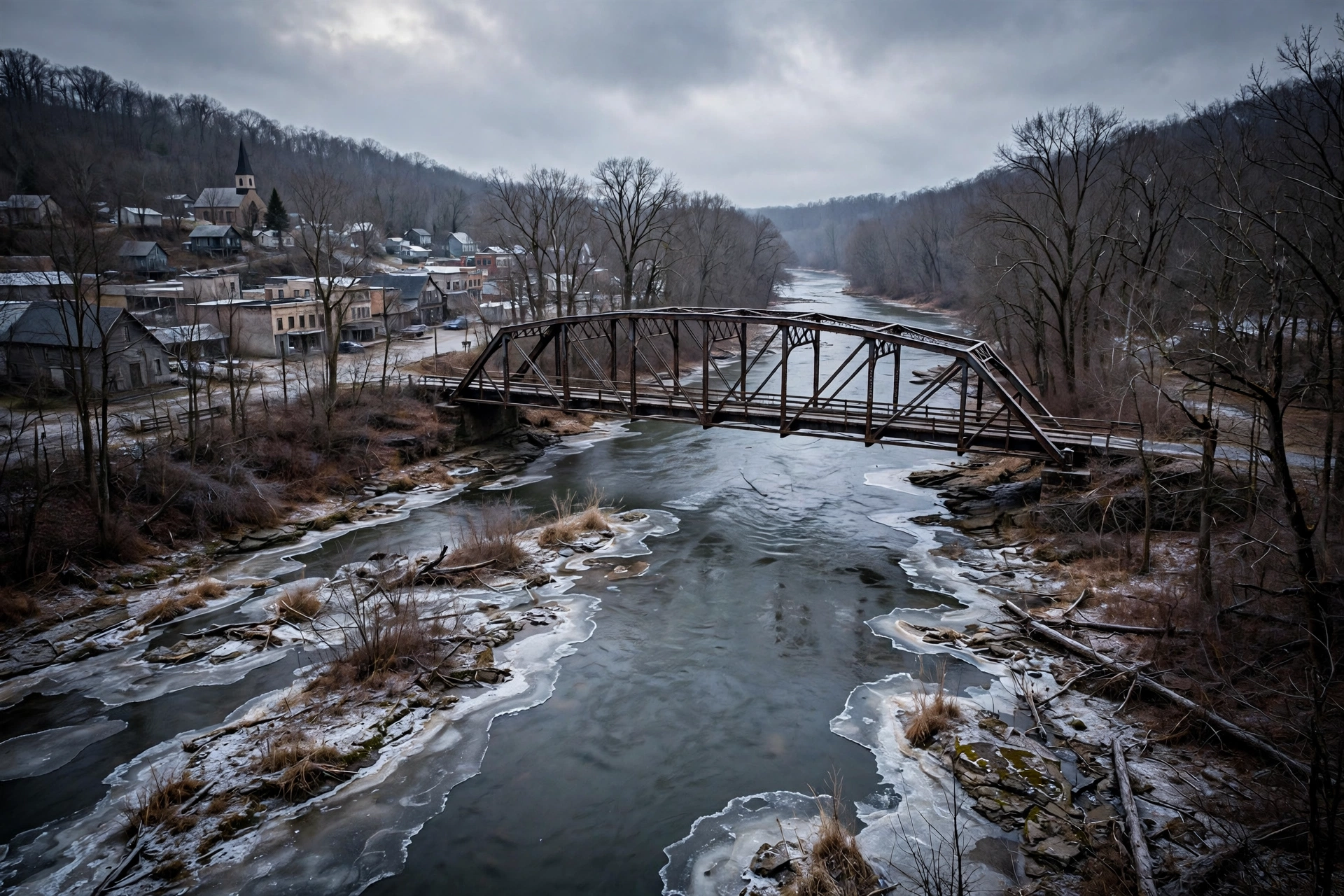
The Grand River in late winter: high water plus deep frost is the hardest season for Painesville laterals.
How Do Lake-Effect Winters Damage Painesville's Sewer Lines?
Painesville sits deep in the lake-effect snow belt, and winter here is longer and harsher than in Cleveland itself. That means more freeze-thaw cycles per season, and every cycle does the same damage: water seeps into hairline cracks and mortar joints, freezes, expands with tremendous force, and wedges the crack wider. Then it thaws, soil washes in, and the next freeze starts from a worse position.
The failures cluster in late winter. February into March is when the ground thaws from the top down while deeper soil stays frozen, water has nowhere to drain, pressure peaks, and weakened lines fail. If your Painesville drains slow down every year around the same time, a fall camera inspection catches the cracks while they're still lining candidates. Ohio Sewer Masters works the whole Painesville area, from the Square to Fairport Harbor's doorstep, with the same process: camera first, honest diagnosis, upfront plan.
Who Handles Sewers in Painesville?
Painesville is unusual in Lake County: the city operates its own water pollution control plant and sanitary sewer system, rather than using the Lake County Department of Utilities. The city maintains the public mains. Your lateral from the house to the main is yours to maintain, and that's the part we repair.
Painesville's 2024 water quality report puts hardness at about 116 milligrams per liter, moderately hard. Those minerals leave scale inside aging pipe, and in Painesville's old cast iron and clay laterals the scale layers onto rust and rough joints, narrowing flow faster than age alone. Hydro jetting clears the scale, but lining or replacement removes the rough surface it clings to.
Sewer lateral work in Painesville requires city permits with inspection before backfill, and the city's sewer permit application comes from the Engineering Department. We handle the applications and schedule the inspections as part of every job. Downtown Victorian or newer subdivision, the process is identical.
How Should Painesville Homeowners Maintain Their Sewer Lines Through the Seasons?
Get a camera inspection in spring, clear and seal root entry points in fall, and protect exposed cleanouts before winter. Spring rains and Grand River high water push groundwater into cracked joints, so watch for slow drains after storms, that's infiltration overloading your lateral. Fall is when tree roots grow most aggressively, which makes autumn the best window to jet roots out and line the joints they came through. In winter, insulate shallow cleanout risers, keep them marked so plows don't shear them off, and never pour grease down the drain, it hardens fast in cold pipe.