Sewer Line Repair in Cuyahoga Falls, OH
A river gorge runs through this city, and the water table runs high under its homes. We camera-diagnose every lateral and fix it trenchless or traditional.
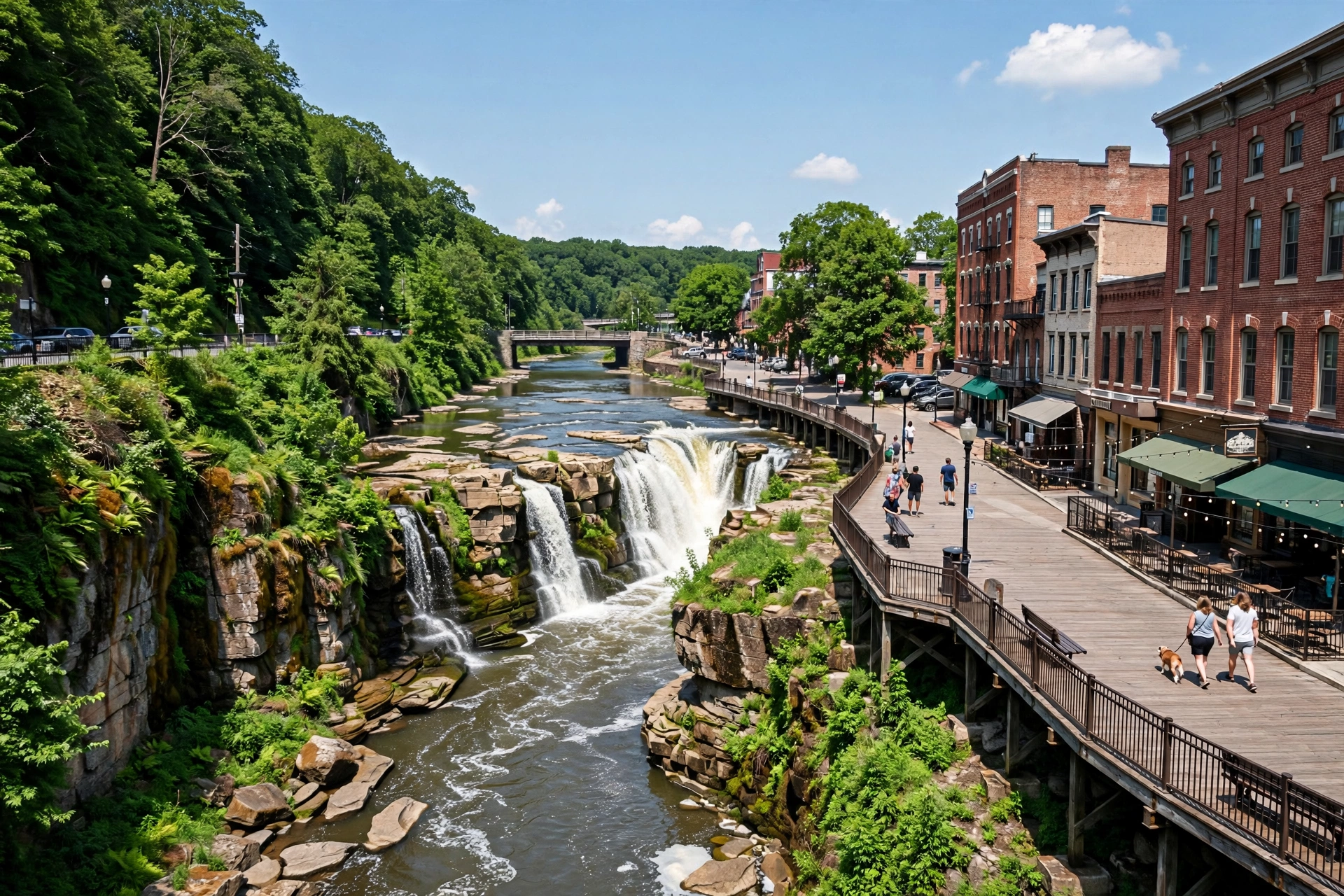
A river gorge runs through this city, and the water table runs high under its homes. We camera-diagnose every lateral and fix it trenchless or traditional.
Last updated: October 13, 2026
Cuyahoga Falls is named for the falls of the Cuyahoga River, and that dramatic terrain shapes everything buried here.
The river carved a deep gorge through the city, and the homes near the valley live with a high water table year-round. Groundwater presses into every cracked joint and separated connection in a lateral, a process called infiltration, and the line ends up carrying far more water than it was designed for. During wet springs the problem peaks: drains slow down, basements get damp, and weakened lines fail. If your home sits anywhere near the gorge, from the streets around Gorge Metro Park to the neighborhoods edging the valley, springtime drain trouble is the signature symptom. Protecting this river is a statewide priority: the EPA maintains the water quality standards that safeguard Ohio rivers like the Cuyahoga under the Clean Water Act.
The valley edges add a second problem: slope movement. Soil on the gorge slopes creeps downhill over the years, and rigid clay or cast iron pipe can't flex with it, so joints separate and sections offset. Add Summit County's glacial clay soil and dozens of freeze-thaw cycles per winter, and the laterals here take punishment from every direction.
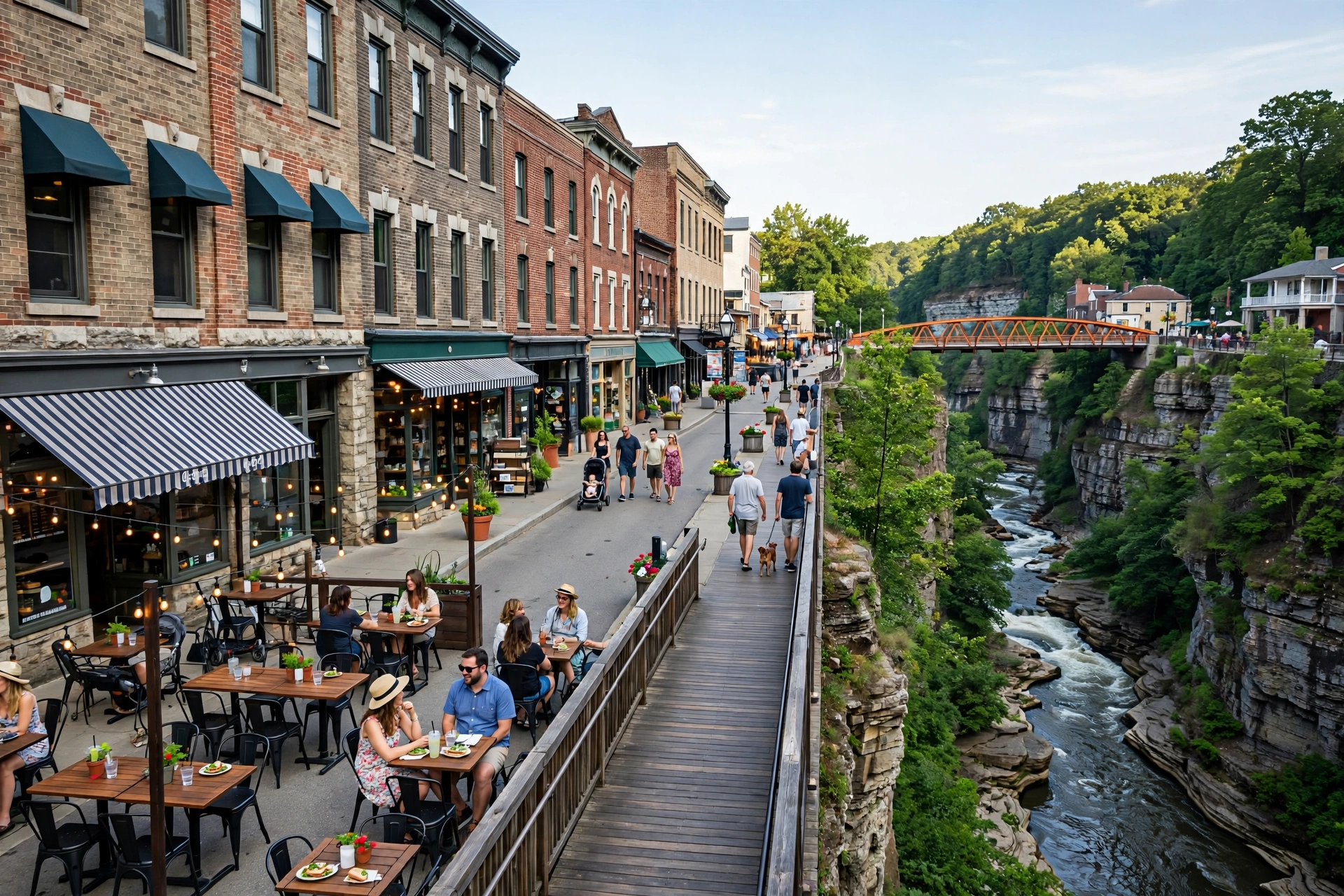
Front Street's riverfront district mixes eras, and the sewer laterals beneath it vary block by block.
Front Street's riverfront district, with its boardwalk, restored theater, and river overlooks, mixes building eras, and the pipe ages vary block by block.
The older commercial and residential buildings downtown, around River Front Park and High Bridge Glens, typically have original clay tile laterals with mortar joints. Some blocks have been redeveloped or rebuilt over the decades, so you can find clay tile, cast iron, and modern PVC within a few streets of each other. That patchwork is exactly why we never guess: the camera shows what's actually down there before anyone talks about a fix.
Downtown work also rewards a light touch. Trenchless methods need only small access pits, so the riverfront streetscape, sidewalks, and storefronts stay intact. For the historic blocks near the river, that's the difference between a one-day fix and a torn-up street. See our trenchless sewer repair options for how lining and bursting work in tight downtown lots.
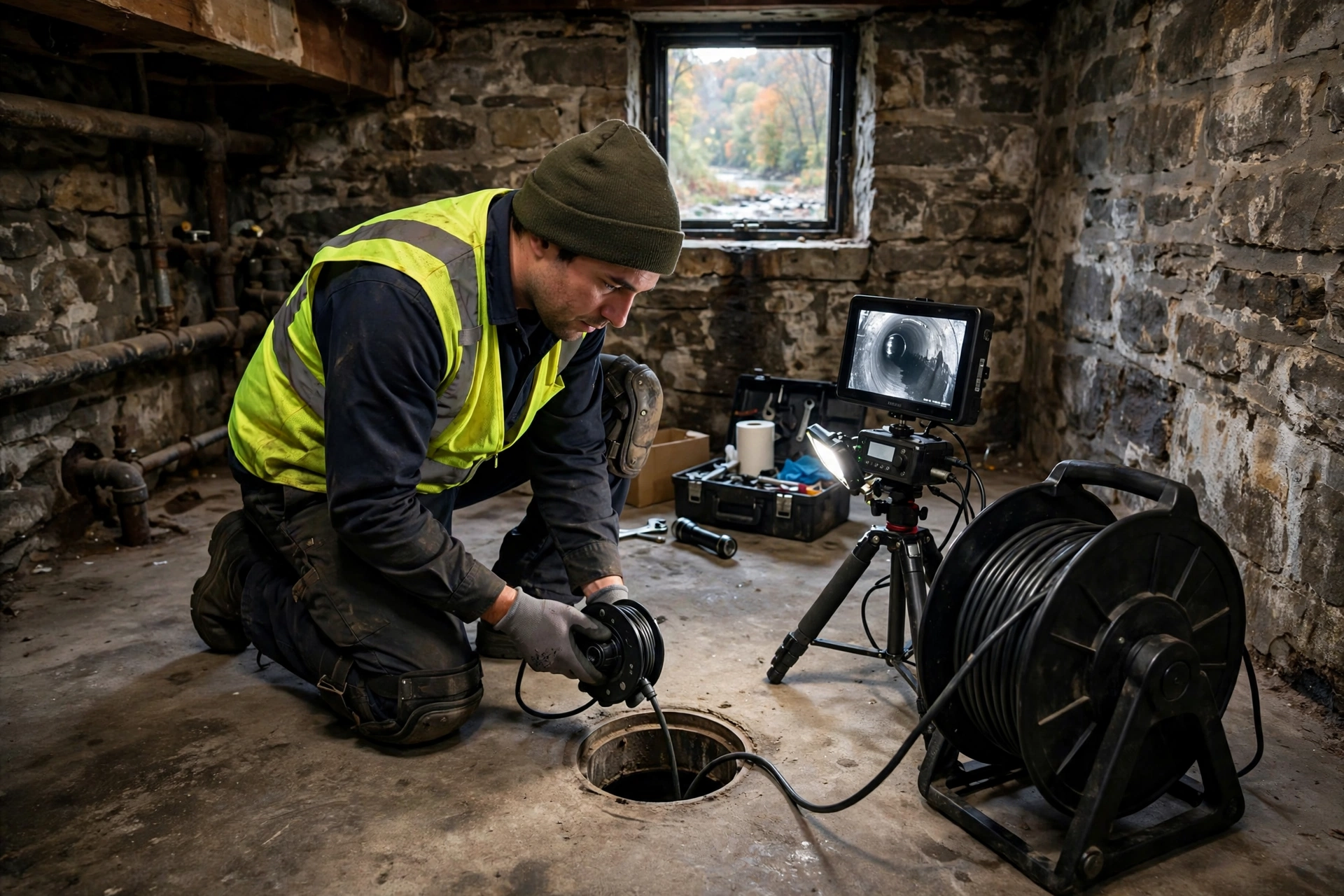
High water table near the gorge pushes groundwater into every cracked joint, the camera finds the infiltration points.
The pattern follows terrain and housing age. Neighborhoods near the gorge deal with the water-table and slope problems described above. The post-war subdivisions, built out through the 1950s to the 1970s, carry aging cast iron laterals, and some 1960s and 70s builds have Orangeburg, a tar-paper pipe that flattens and collapses with age. The areas bordering Stow and Akron, and the blocks around Western Reserve Hospital, mix all of these eras together.
Mature tree canopy is the other big driver. The city's established streets are lined with maples and oaks whose roots seek out the dampness at pipe joints, then thicken year after year until they wedge joints apart. Once roots are inside the pipe, snaking only buys time. Lining or bursting the line removes the entry points for good.
Cuyahoga Falls water is hard, roughly 10 grains per gallon. That calcium and magnesium leaves mineral scale inside older pipes, and in the gorge-valley homes already fighting infiltration, wet conditions plus scale create a sticky trap for grease and soap. If your drains are slowing and your line is old cast iron or clay, scale buildup may be part of the diagnosis, and a camera inspection will show it.
You own the sewer lateral from your house to where it connects with the public main, usually at the street or sidewalk. Everything in between, including the part under your yard and driveway, is your responsibility to maintain and repair. The city owns and operates the public sewer mains. Cuyahoga Falls is a full-service municipal utility city: it provides water, sewer, electric, and sanitation to its residents, with details on the city's Water Department page.
The fastest way to tell whose problem a backup is: ask a neighbor. A backup limited to your home points to your lateral. Sewage backing up in multiple homes on the street suggests a main-line issue, and that's the city's territory. Permits for lateral work run through the city, with inspection typically required before backfill, and we pull the permits and schedule the inspection as part of every job. When in doubt about what applies to your property, check with the city's building department before work begins.
Year-round attention is far simpler than one emergency dig. Spring means watching for infiltration as the gorge water table rises, summer means keeping grease out of drains, fall means roots at their most aggressive and the best time for a camera check, and winter means keeping cleanouts accessible through freeze-thaw. Here is the rhythm we recommend for the Falls.
The water table runs high near the river and the gorge. Groundwater presses into every cracked joint and separated connection in your lateral, a process called infiltration, and your line ends up carrying far more water than it was built for. During wet springs the problem peaks. If your drains slow down every spring near the valley, a camera inspection will show the infiltration points.
Often, yes. Many downtown Cuyahoga Falls laterals are original clay tile, and age alone doesn't disqualify a line. The camera shows whether the pipe holds enough shape for trenchless lining or needs pipe bursting. Either way, trenchless methods keep the historic streetscape and your foundation undisturbed.
They're the most common cause we find. The city's mature maples and oaks send fine root hairs into damp mortar joints, and the roots thicken year after year until they wedge joints apart and fill the pipe. Snaking clears the symptom for a while, but lining or bursting removes the entry points for good.
You are. Homeowners own the lateral from the house to its connection with the public main, including the part under the yard and driveway. The city maintains the public sewer system. A backup limited to your home points to the lateral, call us at (614) 350-5706 and we'll camera-diagnose it.
Yes. The city requires permits for sewer lateral repair and replacement, with inspection typically required before backfill. We pull the permits and schedule inspections as part of every job.
Also serving Stow, Akron, Hudson, Tallmadge, Kent, and the greater Akron metro. Cuyahoga Falls ZIP codes we serve include 44221, 44222, and 44223. Ohio Sewer Masters works around major landmarks including Blossom Music Center, Gorge Metro Park, High Bridge Glens, the Downtown Riverfront, and Western Reserve Hospital.
River-valley water table, old clay tile, or root invasion, one inspection tells the story.
Call (614) 350-5706