Sewer Line Repair in Stow, OH
Stow's post-war subdivisions are hitting the age where cast iron and Orangeburg give out. We camera-diagnose every line and fix it trenchless or traditional.
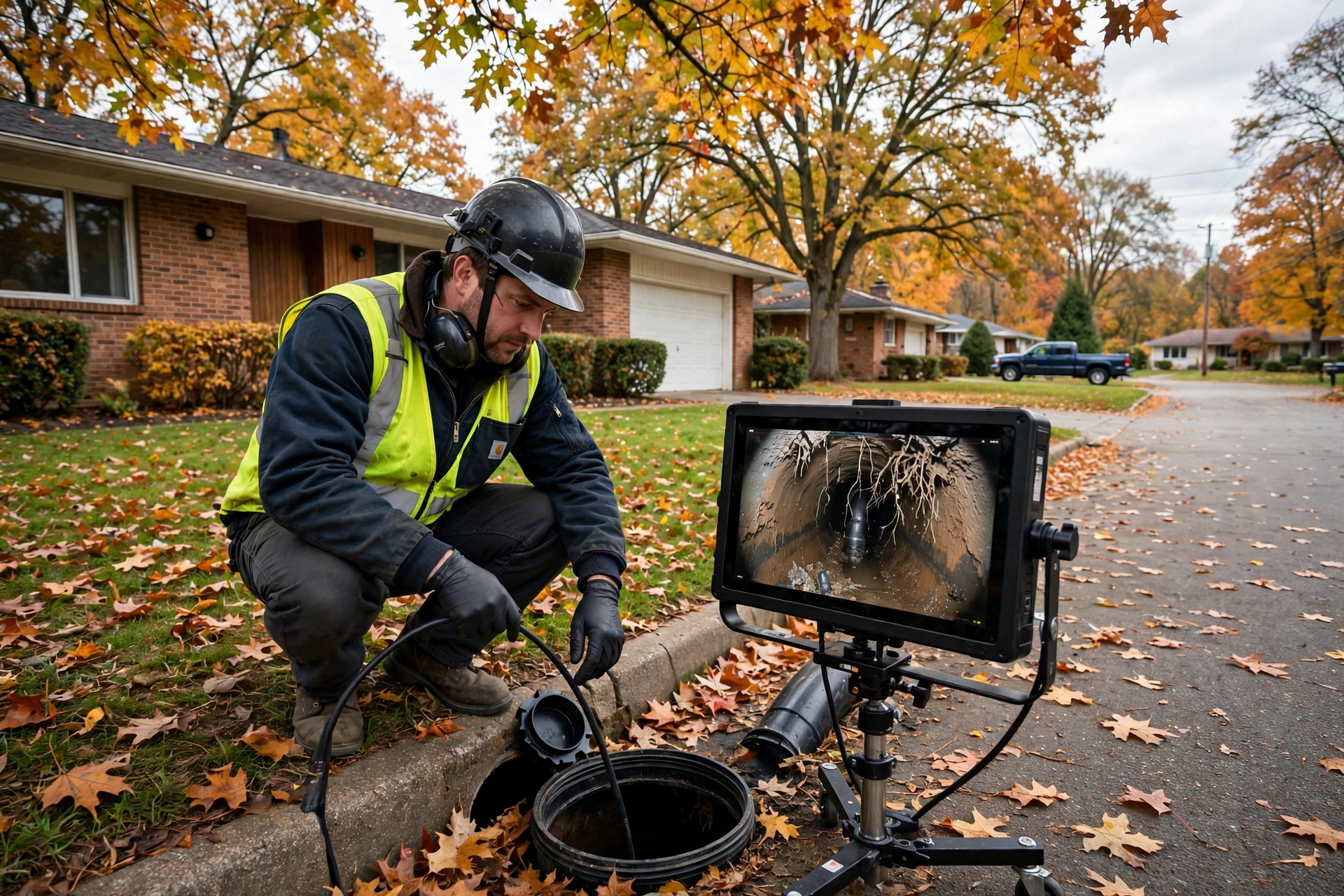
Stow's post-war subdivisions are hitting the age where cast iron and Orangeburg give out. We camera-diagnose every line and fix it trenchless or traditional.
Last updated: October 13, 2026
Stow grew up in the 1950s through the 1980s, and its sewer lines are reaching the end of their design life right on schedule.
The typical Stow lateral from that era is cast iron where it exits the foundation, transitioning to clay tile outside. Cast iron rusts from the inside out, it looks fine until the bottom of the pipe is paper-thin. And some 1960s and 70s builds got Orangeburg, a bituminous fiber pipe, basically tar-soaked paper, that flattens into an oval under soil pressure and eventually collapses. Orangeburg was never meant to last this long, and in Stow's subdivisions its time is up.
Meanwhile the trees planted with those subdivisions are fully mature now. Stow's cul-de-sacs and ranch-lined streets have big oaks and maples whose roots seek out the dampness at pipe joints, then thicken year after year until they wedge joints apart. The combination of aging pipe and peak tree maturity is why Stow's sewer calls cluster in these neighborhoods.
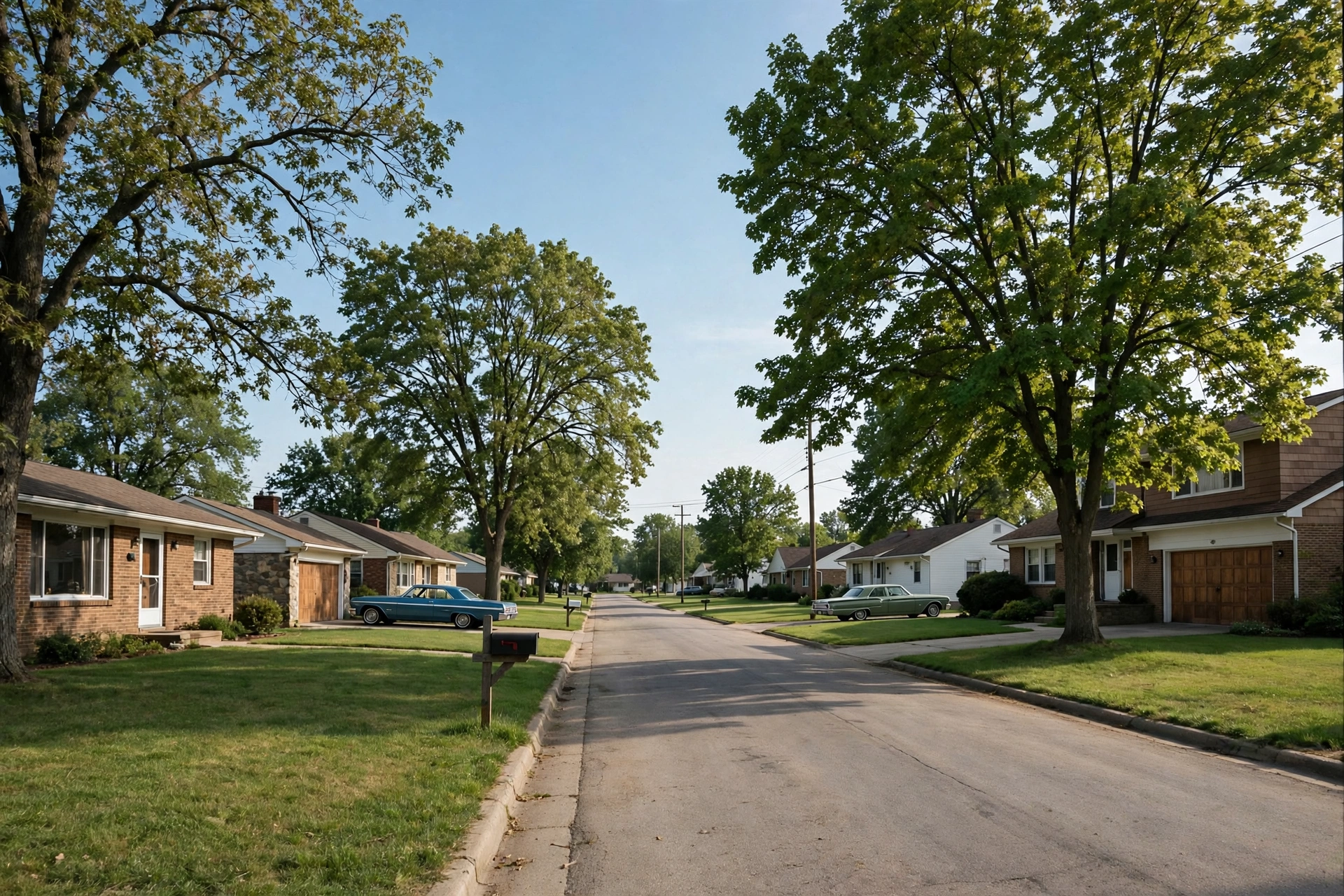
Stow's post-war subdivisions are hitting the age where cast iron and Orangeburg laterals give out.
Summit County's glacial clay expands, shrinks, and heaves, and Stow's laterals take the beating.
Stow's winters deliver dozens of freeze-thaw cycles per season. Water seeps into hairline cracks and mortar joints, freezes, expands with tremendous force, and wedges the crack wider. Then it thaws, loose soil washes into the opening, and the next freeze starts from a worse position. Clay soil makes it worse: it swells when wet and shrinks when dry, so the ground around the pipe is constantly moving, offsetting joints and shearing sections.
The damage clusters in late winter and early spring. As the ground thaws from the top down while deeper soil stays frozen, water has nowhere to drain, hydrostatic pressure peaks, and weakened lines fail. If your drains slow down every year around the same time, you're watching this cycle in real time. A camera inspection in fall, before freeze season, catches cracks while they're still lining candidates instead of collapse jobs. Our trenchless sewer repair options cover both lining and bursting, so whatever the camera finds, the fix fits.
The pattern follows subdivision age. The neighborhoods along the SR-59 corridor and the older sections near the Stow-Munroe Falls border, built out in the 1950s and 60s, carry the oldest cast iron and the occasional Orangeburg run. The 1970s and 80s subdivisions are hitting the age where clay tile joints separate and cast iron thins out. Near the Kent border, older homes and student rentals see heavier use and more deferred maintenance.
Newer subdivisions aren't immune either. Modern PVC holds up well, but it fails at the joints when the ground settles, and roots still find the connection where the lateral meets the main. Wherever you are in Stow, from the streets around Silver Springs Park to the neighborhoods off the SR-8 corridor, the process is the same: camera first, honest diagnosis, then the right fix.
Stow buys its water wholesale from Akron, which reports hardness around 7 grains per gallon, moderately hard. In Stow's aging cast iron laterals, mineral scale coats the corroded interior year after year, shrinking the pipe's working diameter. Hydro jetting strips that scale out, which is why we often jet before we camera, so the diagnosis is based on the pipe, not the buildup.
You own the sewer lateral from your house to where it connects with the public main, usually at the street or sidewalk. Everything in between, including the part under your yard and driveway, is your responsibility to maintain and repair. One thing that surprises Stow homeowners: sewer service here comes from the county, not the city. The Summit County Department of Sanitary Sewer Services operates and maintains the sanitary sewer system in Stow.
Yes, sewer lateral repair and replacement in Stow requires a permit, with inspection typically required before backfill. We handle the permit applications and schedule inspections as part of every job, so it's baked into the process, not an add-on surprise. If a backup is hitting several homes on your street, the public main may be involved: the EPA explains that sanitary sewer overflows can back up into homes and usually signal defects in the public system. If your property has anything unusual going on, check with the city's building department before work begins.
Year-round attention is far simpler than one emergency dig. Spring means watching for infiltration after heavy rains, summer means keeping grease out of drains, fall means roots at their most aggressive and the best time for a camera check, and winter means keeping cleanouts accessible through freeze-thaw. Here is the rhythm we recommend for Stow's post-war subdivisions.
Most likely cast iron where it exits the foundation, transitioning to clay tile or, in some 1960s builds, Orangeburg, a tar-paper pipe that flattens into an oval over time and eventually collapses. The camera shows exactly which material you're dealing with and whether it can be lined or needs bursting.
Orangeburg is a bituminous fiber pipe, basically tar-soaked paper, used in some homes built from the 1950s through the 1970s. It was never meant to last this long. It deforms under soil pressure, blisters, and collapses. If your Stow home is from that era and drains are failing, Orangeburg is a prime suspect, and it can't be lined, it has to be burst or replaced.
Spring thaw plus Summit County's clay soil. Frozen ground melts from the top down, water has nowhere to drain, and hydrostatic pressure peaks, pushing groundwater into every cracked joint in your lateral. If the pattern repeats every spring, the camera will find the infiltration points, and lining seals them.
The homeowner. In Stow you own the lateral from your house to its connection with the public main, including the portion under your yard and driveway. The city maintains the public mains. A backup that hits only your home is almost always a lateral problem.
Yes. Sewer lateral repair and replacement in Stow requires a city permit, with inspection typically required before backfill. We handle the permits and coordinate inspections as part of every job.
Also serving Cuyahoga Falls, Kent, Hudson, Tallmadge, Akron, and Munroe Falls. Stow's ZIP code is 44224. Ohio Sewer Masters works around major landmarks including Silver Springs Park, the Stow-Munroe Falls City Center area, and Kent State University just east of town.
Aging cast iron, Orangeburg, or root invasion, one inspection shows exactly what's underground.
Call (614) 350-5706