Sewer Line Repair in Kent, OH
A college town on the Cuyahoga River, with downtown housing older than the university's fame. We camera-diagnose every lateral and fix it trenchless or traditional.
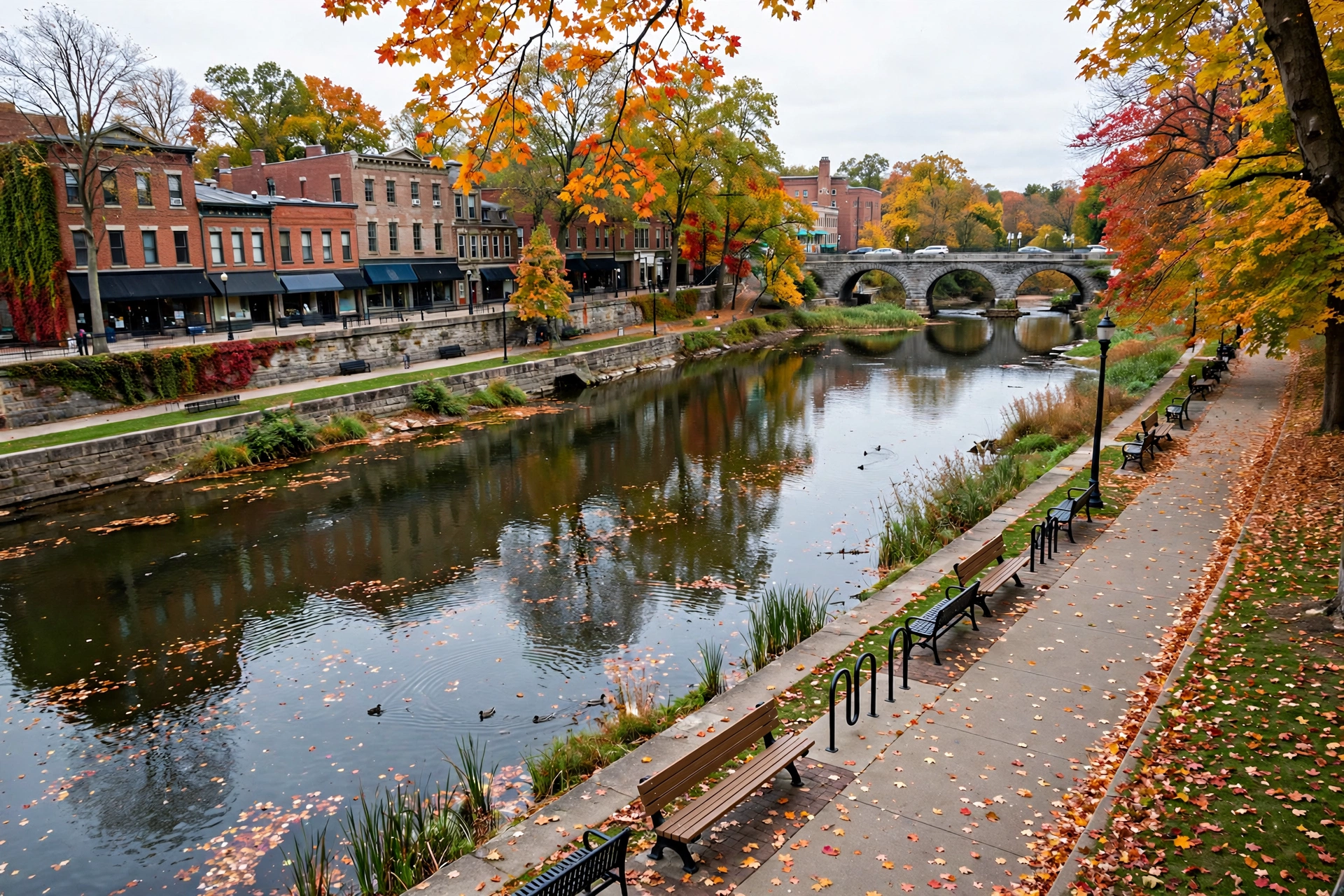
A college town on the Cuyahoga River, with downtown housing older than the university's fame. We camera-diagnose every lateral and fix it trenchless or traditional.
Last updated: October 13, 2026
Kent State University shapes this city's housing, and its sewer lines requirementl it.
The neighborhoods around campus are packed with rentals, and rentals live hard. High turnover, heavy use, and deferred maintenance mean small lateral problems get ignored until they become big ones. A clay tile joint that a homeowner might have lined years ago goes unaddressed through three sets of tenants, and by the time it backs up, it's a collapse. Landlords who camera-inspect between long tenancies catch these problems on their own schedule instead of during the school year with tenants in place.
The housing itself is old. Downtown Kent and the streets around the university hold homes from the late 1800s and early 1900s, with original clay tile laterals and mortar joints that have endured a century of freeze-thaw. Mature street trees add root intrusion to the mix. It's a combination you don't find in a typical suburb: college-town usage patterns on top of century-old pipe.
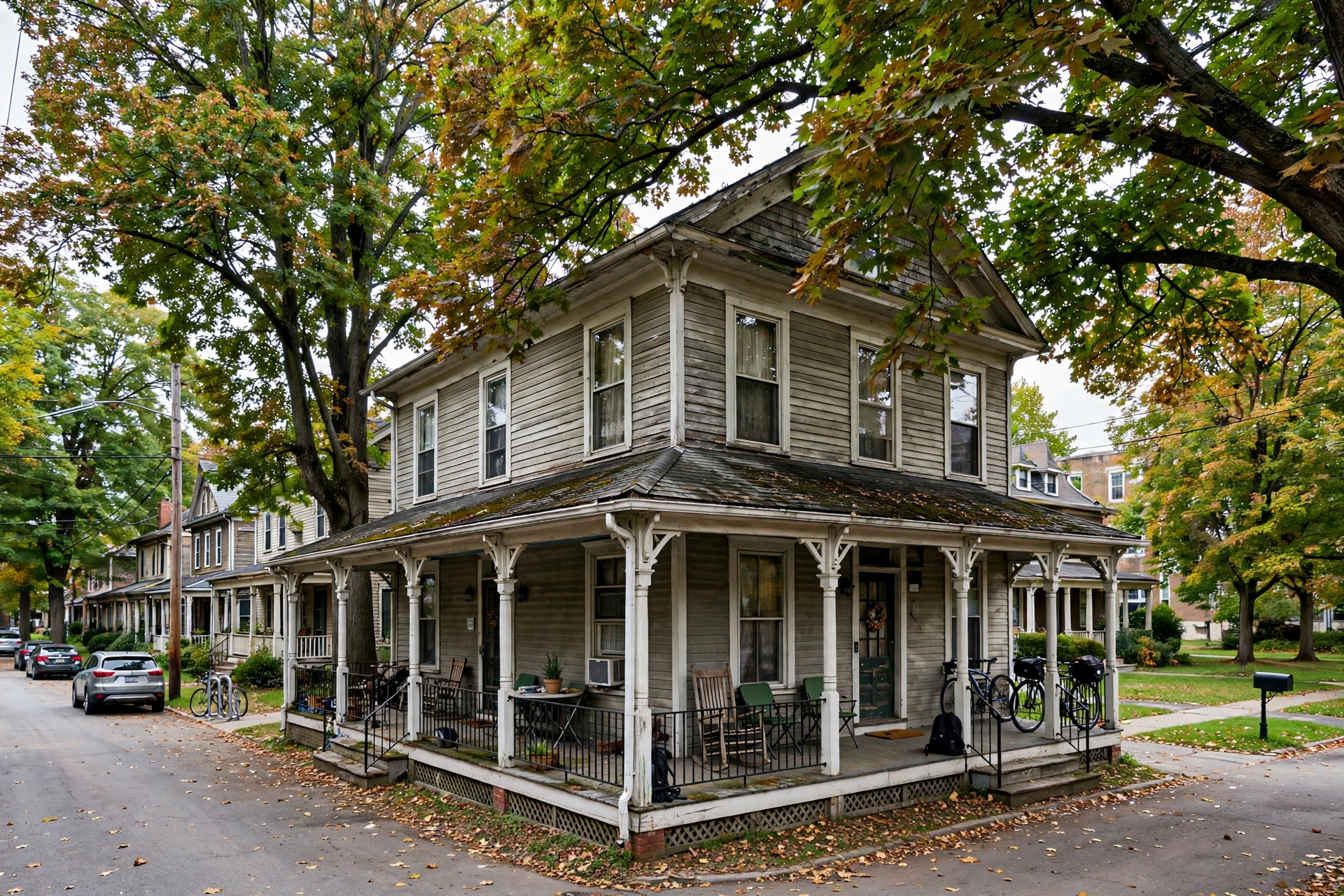
Rental homes near campus see heavy use, a camera inspection shows the lateral's real condition before a backup forces the issue.
The Cuyahoga River runs right through downtown Kent, and the water table runs high under the homes near it.
When the river runs high and the spring thaw saturates the ground, groundwater presses into every cracked joint and separated connection in nearby laterals. This infiltration can overwhelm a weakened line, and the silt that rides in with the water settles inside the pipe and hardens into restrictions. If your drains slow down in the weeks after high water near downtown, silt infiltration is the likely culprit, and hydro jetting followed by a camera check is the fix.
Freeze-thaw does the rest. Kent's winters deliver dozens of freeze-thaw cycles per season, and each one wedges existing cracks a little wider. The damage clusters in late winter, when the ground thaws from the top down while deeper soil stays frozen and hydrostatic pressure peaks. Our trenchless sewer repair options handle both problems: lining seals infiltration points, and bursting replaces lines the freeze-thaw cycles have destroyed. The stakes go beyond one basement: the EPA's water quality standards for Ohio protect rivers like the Cuyahoga under the Clean Water Act, and every sealed leak helps.
Downtown Kent and the campus-adjacent neighborhoods carry the oldest clay tile and the heaviest rental use, the toughest combination in the city. The west side's older streets have similar-era housing with mature trees and the same root-intrusion story. Mid-century neighborhoods bring cast iron laterals that are rusting from the inside out, and some 1960s and 70s builds have Orangeburg, the tar-paper pipe that flattens and collapses with age.
You'll find us working around the downtown riverfront, up by Dix Stadium, along the Portage Hike and Bike Trail corridor, and out toward the SR-59 and SR-43 corridors. Wherever the lateral runs in Kent, the process is the same: camera first, honest diagnosis, then the right fix.
Kent treats its well water down to about 90 milligrams per liter of hardness, moderately hard. That is gentle on pipes compared to much of Ohio, so Kent's laterals fail from age, roots, and freeze-thaw rather than scale. The practical upshot: when a Kent camera inspection shows a restriction, it is usually roots or a broken joint, not mineral buildup.
The property owner owns the sewer lateral from the building to where it connects with the public main, usually at the street or sidewalk. Everything in between, including the part under the yard and sidewalk, is the owner's responsibility to maintain and repair. The city maintains the public mains and treats the wastewater at its own plant. Kent's Water Reclamation Division runs the sanitary sewer collection system and the treatment facility that serves the city.
A backup limited to one property points to the lateral, and that's our territory. Permits for lateral work run through the City of Kent, with inspection typically required before backfill, and we pull the permits and schedule the inspection as part of every job. If you are unsure what your property needs, check with the city's building department before work begins.
Year-round attention is far simpler than one emergency dig. Spring means watching for infiltration as the river rises and the thaw saturates the ground, summer means keeping grease out of drains in heavy-use rentals, fall means roots at their most aggressive and the best time for a camera check, and winter means keeping cleanouts accessible through freeze-thaw. Here is the rhythm we recommend for Kent.
It's smart money. Student rentals see heavy use and deferred maintenance, and a failed lateral during the school year means emergency excavation with tenants in place. A camera inspection shows the line's real condition, clay tile with root intrusion, offset joints, or a sound pipe, so you can plan a trenchless fix on your schedule instead of reacting to a backup.
The Cuyahoga River runs through downtown Kent, and the water table nearby runs high. Spring thaw saturates the ground, groundwater infiltrates cracked joints, and the line carries more water than it was designed for. If your drains slow every spring, the camera will find the infiltration points.
Most likely vitrified clay tile with mortar joints, original to the house. Downtown Kent's housing stock predates modern materials, and a century of freeze-thaw plus mature street trees takes its toll on mortar joints. Many of these lines are good candidates for trenchless lining, which the camera inspection confirms.
The property owner. In Kent you own the lateral from the building to its connection with the public main, including the portion under the yard and sidewalk. The city maintains the public sewer system. Backups limited to one property point to the lateral.
Yes. The City of Kent requires permits for sewer lateral repair and replacement, with inspection typically required before backfill. We pull the permits and schedule inspections as part of every job.
Also serving Stow, Tallmadge, Hudson, Ravenna, Brimfield, and Streetsboro. Kent ZIP codes we serve include 44240 and 44242. Ohio Sewer Masters works around major landmarks including Kent State University, downtown Kent's riverfront, Dix Stadium, and University Hospitals Portage Medical Center in nearby Ravenna.
College-town rentals, river water table, or century-old clay, one inspection tells the story.
Call (614) 350-5706