Nobody wants to live out of a hotel while their sewer line gets fixed. The good news: on most repairs you can stay home and use your water almost normally. Here is what to expect.
Most homeowners stay home during the work. Trenchless jobs typically finish in a day with only brief water-use pauses.
Last updated: October 13, 2026
The Short Answer: Yes, With Brief Pauses
On a typical trenchless sewer repair, you can use your water for most of the day. There are short windows, usually 30 to 60 minutes, when the crew needs the line empty and dry: during the pipe lining installation and cure, for example, or while a pipe bursting head is passing through. Outside those windows, toilets, sinks, and showers work the way they always do. A good crew tells you in advance when each pause starts and lets you know the moment you are clear.
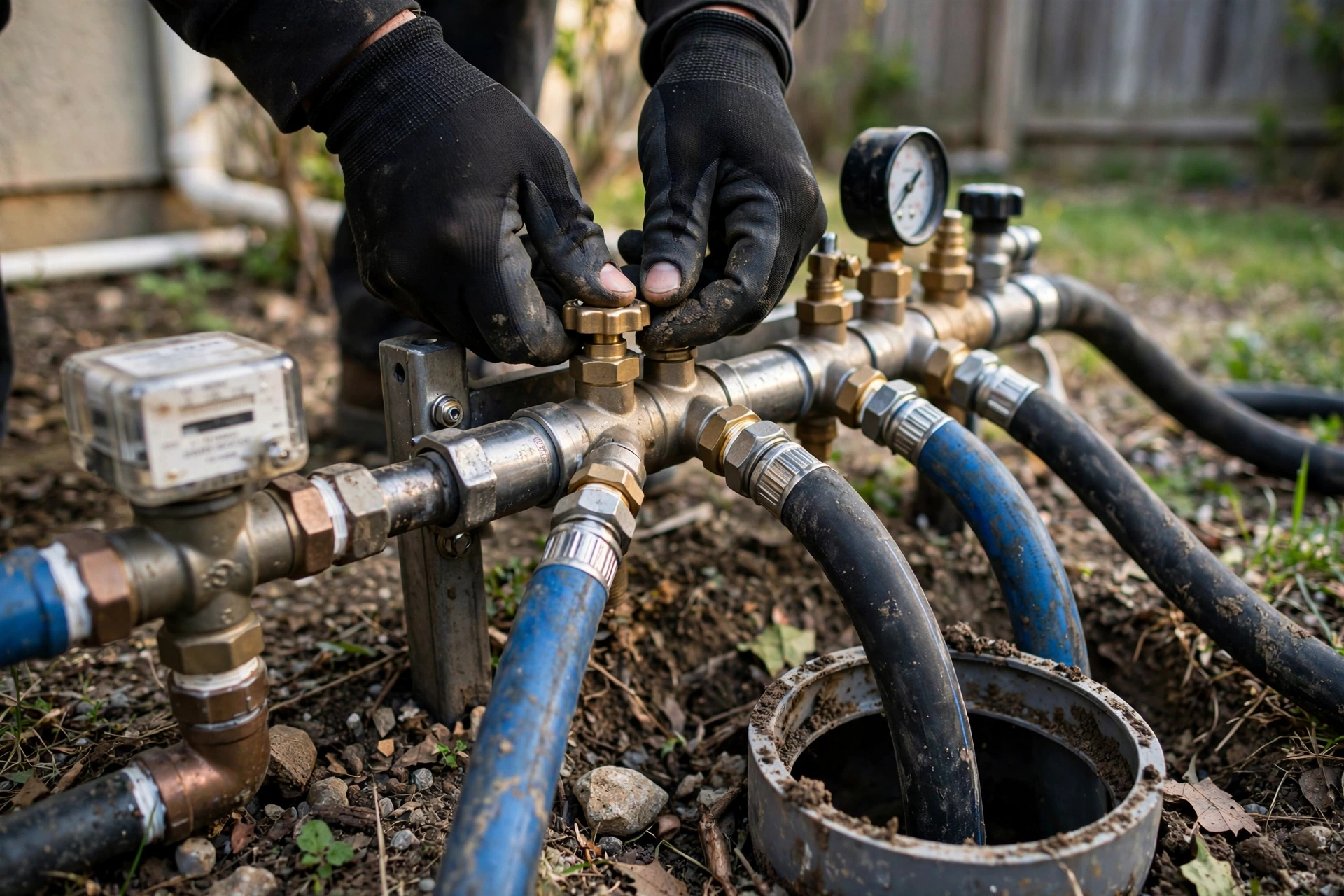
Your water supply is never touched. This confuses a lot of homeowners, but sewer work happens on the drain side of your plumbing, the pipes that carry water away. The supply side, your water meter, the main shutoff, the pipes that bring water in, stays on and undisturbed through the entire job. Nothing about a sewer repair requires shutting off your incoming water.
Fixture or activity
During dry windows
Between windows
Flushing toilets
Pause
Use normally
Running showers
Pause
Use normally
Dishwasher and laundry
Pause
Plan around the day
Making cofrequirement, washing hands
Pause
Use normally
What Does a Trenchless Repair Day Look Like?
Mostly like a normal day, with short interruptions. The crew arrives in the morning and sets up at the access points, usually two small pits in the yard or an existing cleanout. For a lining job, they clean the old pipe first, often with hydro jetting, then install the resin-saturated liner and cure it with hot water, steam, or UV light. The line needs to stay dry during cleaning and curing, so the crew asks everyone in the house to hold off on flushing and running water during those windows, typically 30 to 60 minutes each, once or twice across the day.
Between those windows, life goes on. You can make cofrequirement, wash your hands, take a shower. Crews working in occupied homes plan around this deliberately, sequencing the work so the dry windows land at convenient times when they can. If you work from home, nobody will mind you at your desk. If the crew needs something from you, it is usually just "hold off on the laundry for the next hour."
The drain side gets the work; the supply side stays on. Your water meter and incoming lines are never part of the repair.
How Is Traditional Digging Different?
More disruptive, but still livable. A full open-trench replacement can take two to five days, and there are longer stretches when your lateral is physically disconnected from the municipal main while new pipe goes in. You will still have water supply, but the crew will give you a day-by-day schedule for when drains can and cannot be used.
Most families still stay in the house through a traditional replacement. The practical workarounds are simple: keep a few jugs of water for hand-washing during the longer windows, plan showers around the crew's schedule, and use the guest bathroom setup the crew arranges if the job spans multiple days. Reputable contractors coordinate this with you the day before, not the morning of. For a sense of how the methods compare on work as well as disruption, see our Ohio sewer line repair guide.
How Do I Prepare for Repair Day?
A little preparation makes the day smooth for everyone. Work through this checklist the day before:
Clear access to your cleanouts and the basement stack. Move anything blocking the crew's work areas.
Move cars so the work truck and equipment trailer can park close to the work area.
Move patio furniture, grills, and anything fragile away from yard access pits.
Do laundry the day before, and plan other heavy water use around the day's schedule.
Brief everyone in the house on the pause windows at the morning meeting.
Keep pets and kids away from the work zone, where hoses, cables, and open pits are hazards.
Charge your phone and keep the crew's number handy, since they will text you before each pause.
Between work windows, the house runs normally. Your crew will tell you exactly when each pause starts and ends.
What If You Can't Be Without Water?
Tell your contractor before scheduling, not on the morning the crew arrives. Some households have a member with a medical need that requires constant water access, or a home business that cannot pause. On many jobs, the crew can sequence the work to keep one bathroom functional, or shrink the pause windows by staging equipment differently. For longer traditional replacements, some homeowners arrange to use a neighbor's shower for a day or two, which is a smaller ask than it sounds when the alternative is scheduling around everyone.
Water Use During Sewer Repair FAQs
Usually yes, with short exceptions. During trenchless work there are brief windows, often 30 to 60 minutes, when the crew needs the line empty and dry for lining or bursting. Outside those windows, toilets, sinks, and showers work normally. The crew will tell you exactly when a pause starts and when you're clear.
Almost never. Sewer line repair works on the drain side of your plumbing, not the supply side. Your water meter and supply lines stay on and untouched through the whole job. The rare exception is a full replacement where the crew ties into the house connection, and even then the shutoff is brief.
Yes, and most homeowners do. Trenchless jobs take about a day, the work happens outside or in the basement, and there's no digging inside your living space. You can work from home, run errands, and live normally around the brief water-use pauses.
Somewhat. An open-trench replacement can take two to five days, and there may be longer periods when the line is disconnected. Most families still stay home, but the crew will give you a day-by-day plan for water use. Trenchless methods avoid most of this, which is one reason homeowners choose them.
Clear access to your cleanouts and basement, make sure the crew can get vehicles close to the work area, and plan heavy water use like laundry around the day's schedule. Keep pets and kids away from the work zone. Ask the crew the day before for the exact windows when water use will pause.
Ready to Fix That Line Without Moving Out?
We'll tell you upfront which method your line needs and exactly what repair day looks like for your house.