Trenchless Sewer Repair in Winter: Does Cold Weather Matter?
Ohio winters are no joke, so homeowners ask every year: can you really repair a sewer line in January? The honest answer is yes, and in some ways winter is the better season for it.
Trenchless work runs all winter in Ohio. The repair happens below the frost line, where the ground stays mild year-round.
Last updated: October 13, 2026
Can You Do Trenchless Sewer Repair in Freezing Weather?
Trenchless sewer repair is a way to repair or replace an underground sewer line with little or no digging. Yes, it works all winter across Ohio, from Cleveland lake-effect snows to southern Ohio's freeze-thaw cycles. The reason is simple: the work happens underground, below the frost line, where soil temperatures sit around 50 degrees no matter what the thermometer says at the surface. The crew, the equipment, and your yard deal with the cold. The pipe itself never knows it is winter.
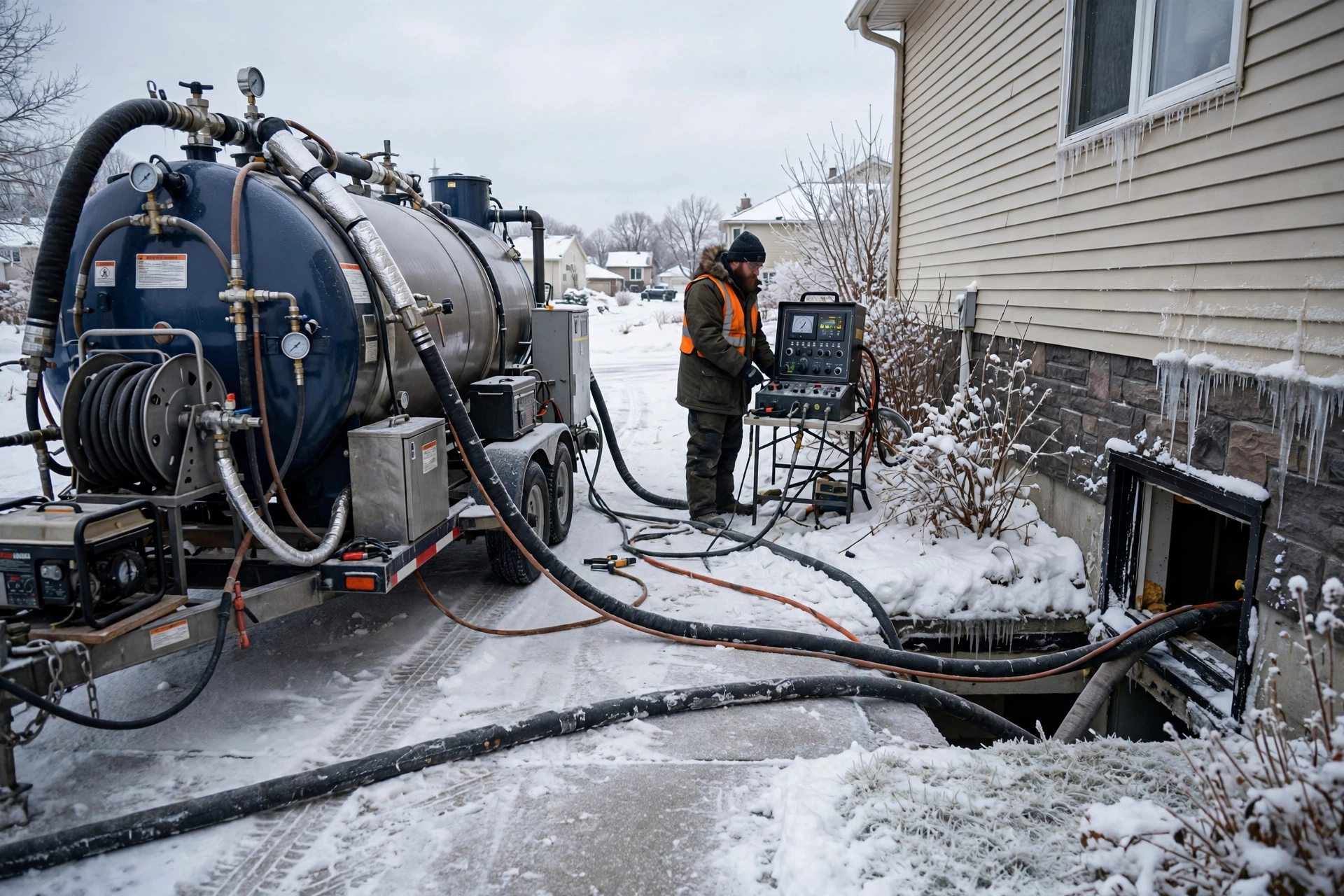
The one legitimate weather concern is the equipment staged above ground. In an extreme cold snap, water hoses can stiffen and pumps need protection, which is why crews use heated hoses and warm up equipment before starting. This is routine winter practice for any experienced trenchless contractor. Normal Ohio winter weather, snow on the ground, highs in the 20s or 30s, does not stop a project.
How Does Frozen Ground Affect the Job?
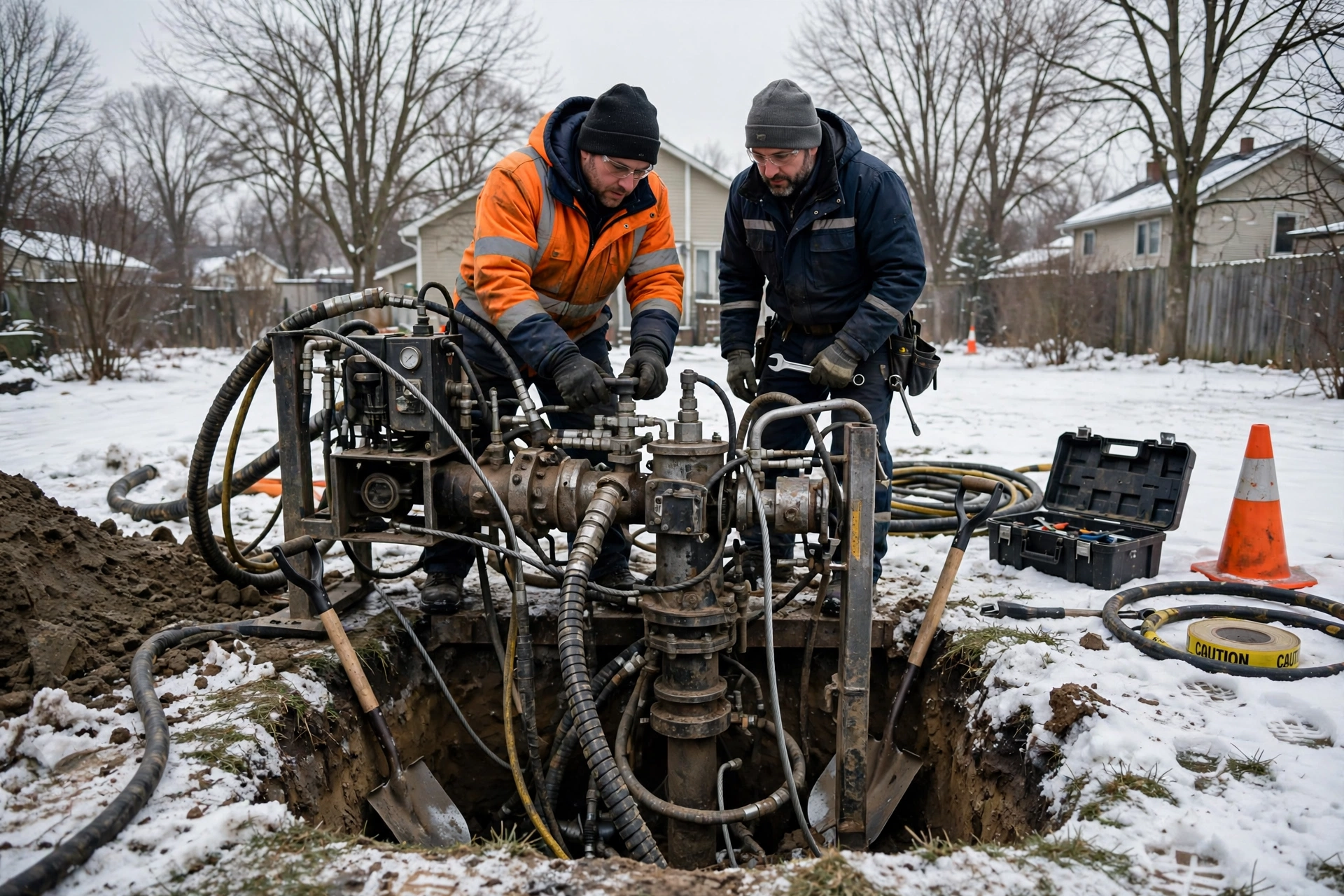
Barely, for trenchless work. Pipe bursting and pipe lining each need only small access pits, typically a few requirementt square, and the crew can punch through frozen topsoil at those spots in minutes. Meanwhile, traditional open-trench excavation has to break frost across the entire length of the trench, which means more machine time, more labor, and a longer, uglier job.
Frozen ground can even be a plus. Soft, saturated ground in spring is harder to work on and easier to rut up with equipment. A firm, frozen lawn holds equipment steady and the access pits are the only disturbance. Come spring, those two small patches are the whole restoration job, versus a trench that may still be settling.
Winter lining rigs run heated hoses and controlled curing, so the resin cures exactly on spec no matter the temperature.
Does Epoxy Resin Cure Right in the Cold?
Cured-in-place pipe lining is a trenchless method that hardens a resin-soaked liner inside your old pipe, creating a new pipe within the old one. The answer is reassuring: cold air does not cure the resin, the installer does. In cured-in-place pipe lining, the resin-saturated liner is installed inside your old pipe, then cured with heat the crew controls, circulated hot water, steam, or UV light. The cure temperature and timing follow the resin manufacturer's specification, which is written for year-round installation. A 19-degree February day in Columbus does not change what happens inside that pipe.
The one thing that matters is the crew's discipline. Resin has a working window, and the liner has to be installed and curing started within it. Experienced winter crews keep resin warm in transit and work efficiently. That is another reason to hire a contractor who does trenchless work year-round rather than one who dusts off the equipment in April.
Is Winter Actually a Good Time to Schedule?
Often it is the best time. Spring is sewer season in Ohio: the ground thaws, heavy rains arrive, root-blocked lines back up, and every contractor's calendar fills. Winter is the off-season, which means three advantages for you. First, scheduling is fast. Instead of waiting weeks for an opening, you can often get a camera inspection and the repair within days. Second, your dormant lawn takes the tiny access pits with no drama, and spring growth erases them. Third, you head into the heavy-rain season with a restored line, which is when you most want your pipe at full capacity.
The exception is a line in crisis. If you are getting backups, do not wait for a convenient season. A failing line gets worse in winter: holiday guests add load to the system, grease solidifies faster in cold pipes, and roots keep growing whenever the ground is unfrozen. For process context before you call, our Ohio guide breaks down what trenchless and traditional repairs typically run.
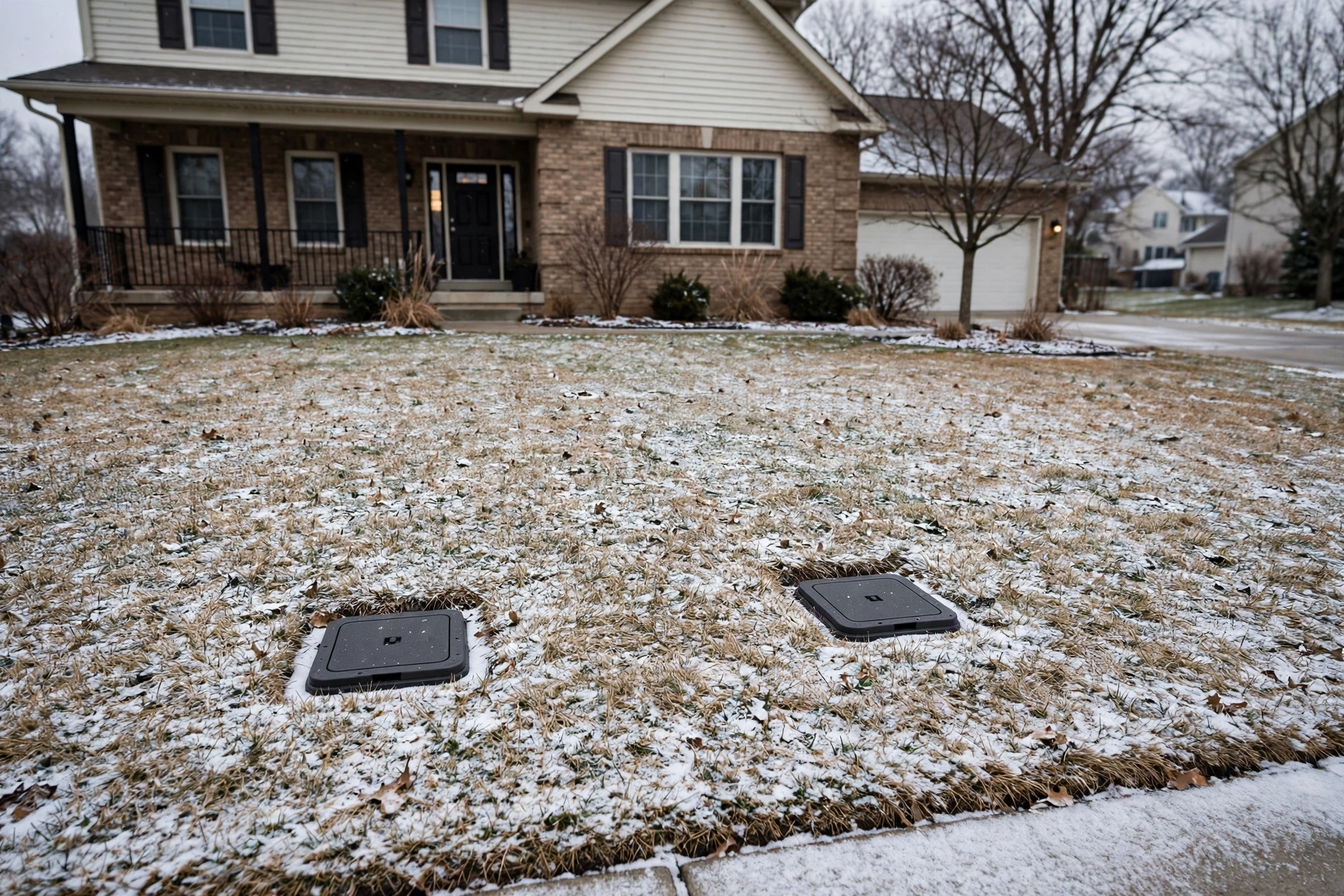
Dormant winter lawns hide the work well. These two small pits are the entire footprint of a trenchless job.
How Do I Prepare for a Winter Trenchless Job?
Three questions separate year-round pros from fair-weather contractors, plus one job for you. Work through them in order:
Ask if the crew runs heated hoses and warms up equipment in cold weather. A vague answer means they do little winter work.
Ask how they protect the resin before and during installation. You want temperature-controlled storage and manufacturer cure specs.
Ask what the yard looks like when they finish. Pits should be backfilled and tamped, not left to settle into craters.
Shovel the walk and driveway to the access points before the crew arrives. It keeps a one-day job a one-day job.
Winter Trenchless FAQs
Yes. Both pipe lining and pipe bursting are done through the winter in Ohio. The work happens below the frost line where the ground stays around 50 degrees year-round, and the resin used in pipe lining cures with heat from hot water, steam, or UV light, not from the air temperature. The only real weather risk is an extreme cold snap affecting above-ground equipment, which crews handle with heated hoses and staging.
Surprisingly, no. Trenchless methods need only small access pits, so frozen soil is a minor issue and can even help by firming up soft ground. It is traditional open-trench digging that suffers in frozen ground, since breaking through frost with heavy equipment takes longer. When the ground is frozen solid, the advantage of a no-dig method is at its biggest.
Yes, because curing is controlled by the installer, not the weather. In pipe lining, the resin-saturated liner is cured with circulated hot water, steam, or UV light inside the pipe. The cure schedule is the same whether it is 90 degrees or 19 degrees outside. Reputable installers follow the resin manufacturer's temperature specs, which are designed for year-round use.
Often, yes. Winter is the off-season for most sewer contractors, so scheduling is faster and easier than in the spring rush. Frozen lawns and dormant landscaping mean less disruption from the small access pits, and the yard recovers by spring. The main reason to wait would be if your line is actively backing up, in which case don't wait at all.
Rarely. A typical trenchless job takes one day, and crews work through normal winter weather. Heavy snow can make equipment access trickier, and the crew may ask you to clear the driveway to the access points, but ordinary Ohio winter conditions do not stop the work. The only real delay risk is a permit office closed for a holiday.
Don't Wait for Spring to Fix That Line
Get a camera inspection now and head into the wet season with a pipe you can trust. Winter scheduling is fast.