Why Tree Roots Keep Coming Back Into Your Sewer Line
You paid to clear the roots last year. Now the drains are slow again. This isn't bad luck: it's biology. Here's why roots target Ohio sewer lines, why clearing them never lasts, and what actually ends the cycle.
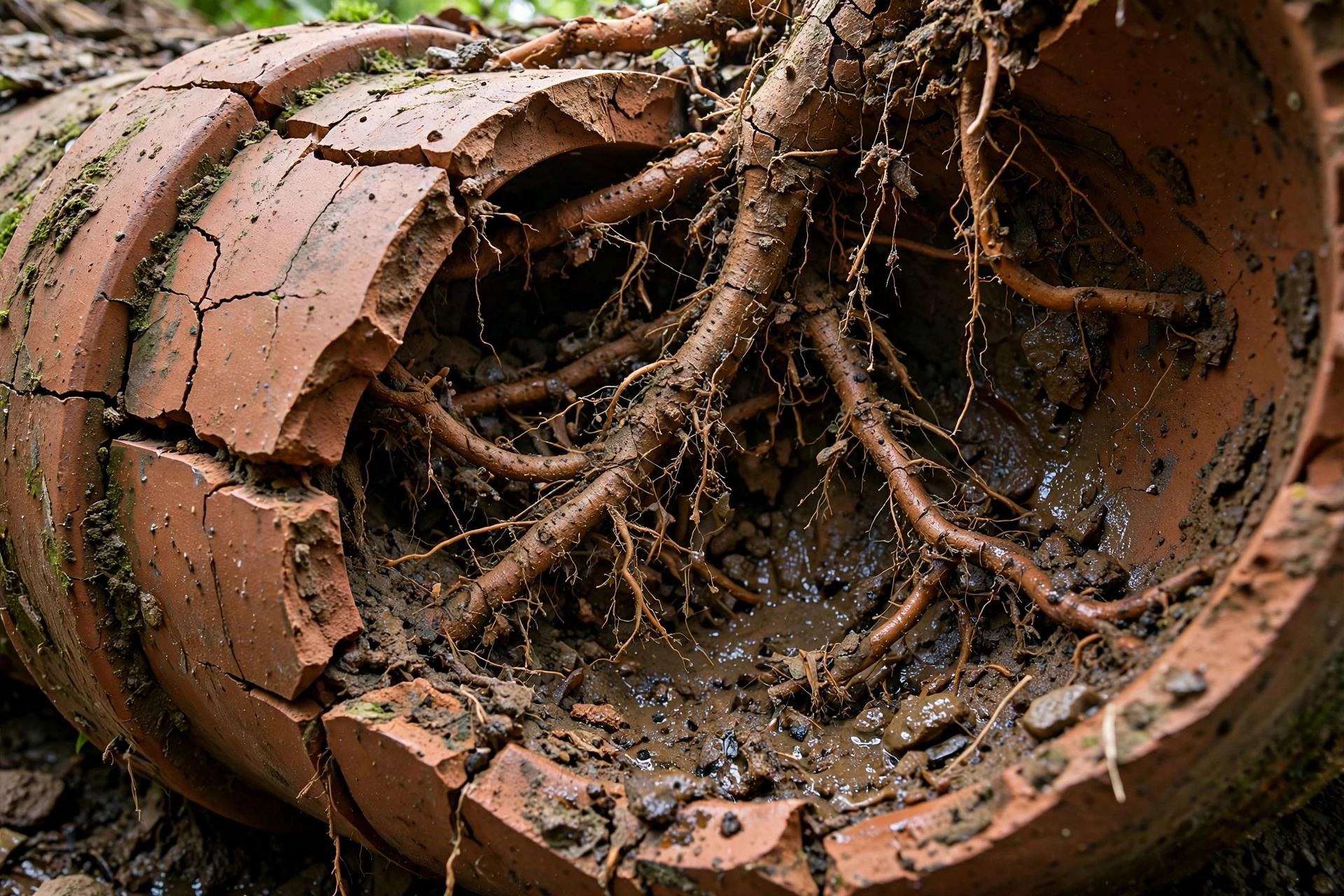
Once a root hair finds a crack or open joint, it grows into a mat that catches everything flowing past.
How Do Tree Roots Get Into a Sewer Line?
Root intrusion is the growth of tree roots into a sewer pipe through joints and cracks. Roots don't break into healthy pipe. They enter through openings that are already there: cracked joints, separated clay tile connections, hairline fractures, or the gaps around pipe connections. Root tips are remarkably sensitive to moisture and nutrients, and they detect the tiny amounts of water vapor escaping from a damaged pipe. They grow toward it, and a single fine root hair, thinner than a thread, slips through the opening.
Inside the pipe, that root hair finds everything a plant could want: constant water, warmth, and nutrients. It thrives and branches, growing into a dense fibrous mat. The mat catches toilet paper, grease, and solids, which is when you notice slow drains. Given time, the growing root mass can exert enough pressure to widen cracks and shift pipe sections, turning a small entry point into a major structural failure.
Why Are Ohio Sewer Lines Such Easy Targets?
Ohio gives roots every advantage.
The pipe inventory. A huge share of Ohio laterals are clay tile with a joint every few requirementt. Each joint is a potential entry point, and after decades of freeze-thaw cycles, many of those joints are open. One 60-foot clay lateral can offer a dozen entry points. Even cast iron develops cracks that roots exploit.
The trees. Ohio's suburbs and older neighborhoods are full of aggressive root seekers. Silver maples top the list: fast-growing, with shallow, far-reaching roots that hunt moisture relentlessly. Red maples, willows, sycamores, elms, and poplars are nearly as bad. A silver maple's roots can extend well beyond its canopy, so the problem tree may not even be in your yard. It could be the neighbor's tree, or the street tree out front.
The soil. Ohio's dense clay holds water near the surface, which keeps roots shallow and spreading, and it also holds the pipe trench as a path of least resistance. Roots follow the loose backfill of the old trench straight to the pipe.
Which Pipe Materials Are Most Vulnerable to Roots?
| Pipe material | Why roots target it |
|---|---|
| Clay tile | A joint every few requirementt means one lateral can offer a dozen entry points, and after decades of freeze-thaw cycles many of those joints are open. |
| Cast iron | Develops cracks over time that roots exploit. |
| PVC (modern) | Solvent-welded joints and flexibility make roots a minor concern; there is little for roots to enter through. |
| HDPE (pipe bursting) | A continuous pipe with no joints at all, so roots have no openings to use. |
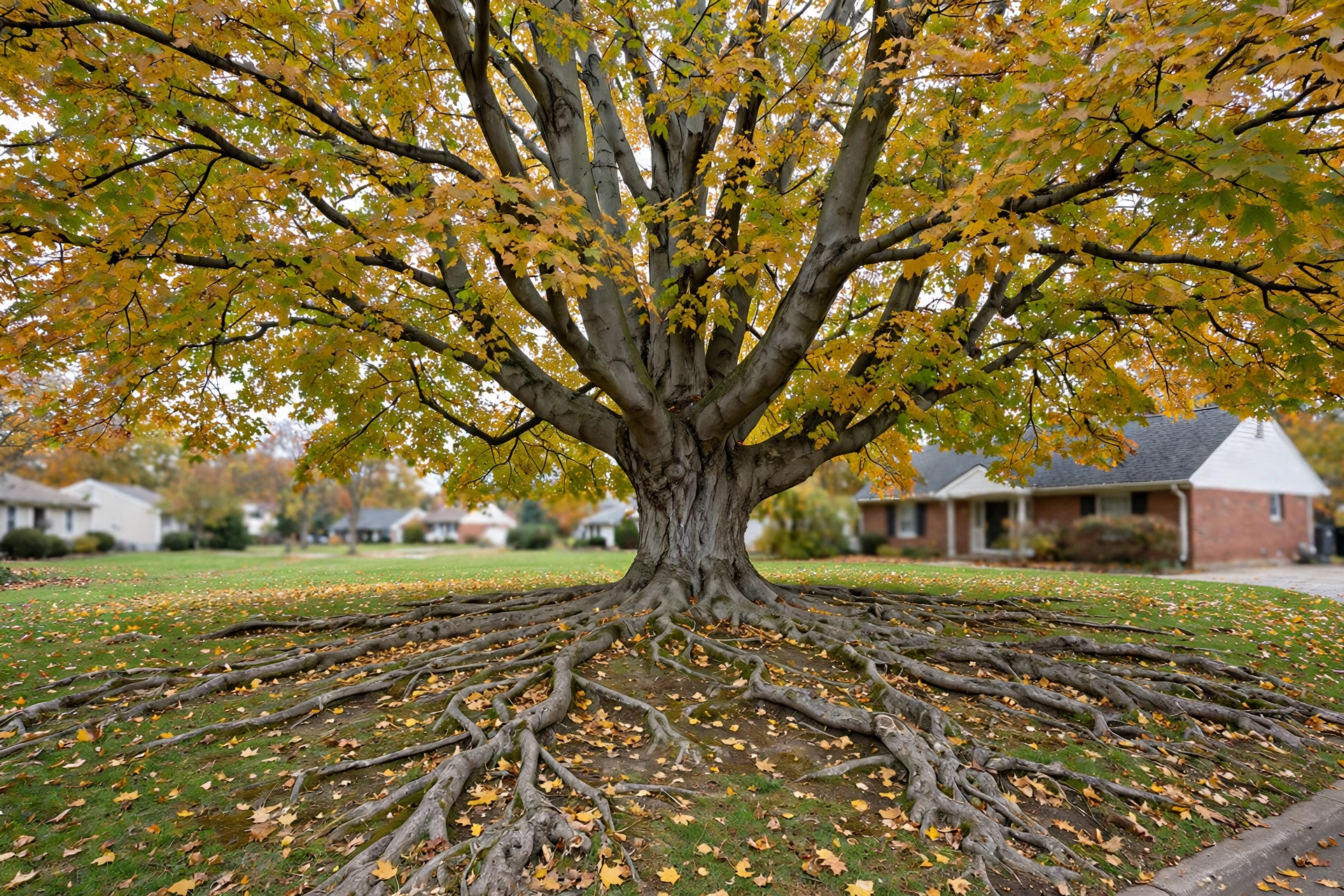
A silver maple's roots can reach well beyond its canopy. The tree causing your root problem may not even be in your yard.
Why Does Clearing Roots Never Last?
This is the question that frustrates every homeowner. You paid for root cutting, the drains ran great, and 18 months later they're slow again. Here's why that outcome was guaranteed from the start.
Root cutting, whether by mechanical snake or hydro jetting, removes the roots inside the pipe. It does not seal the openings they came through. The tree is still standing, its root system is still expanding toward the moisture, and the cracked joint is still cracked. Regrowth typically takes 12 to 24 months, sometimes less with an aggressive silver maple.
Each cycle also makes the underlying damage worse. The growing root mass widens cracks and pries joints further apart, so the pipe you line or replace after three rounds of cutting is in worse shape than the pipe you could have fixed the first time. Clearing buys time. It is not a repair.
That's also why chemical root treatments disappoint. Copper sulfate or foaming root killers can burn back the roots inside the pipe, but they don't close the entry points either, and heavy use raises concerns about harming the tree and the soil. They're a maintenance tool at best.
What Actually Ends the Cycle?
Only one thing ends root intrusion permanently: eliminating every opening in the pipe.
- Pipe lining (CIPP). A resin-saturated liner is installed inside the existing pipe and cured into a seamless new pipe within the old one. Every joint, crack, and gap gets sealed in one continuous surface. Roots can't enter because there's nothing to enter through. Learn more about pipe lining.
- Pipe bursting. The old pipe is broken apart underground while a new continuous pipe, usually HDPE, is pulled into its place. The new line has no joints at all. Read more about pipe bursting.
- Full replacement. Open-trench replacement with PVC achieves the same result with more digging. Sometimes it's the right call when the line is severely misaligned or access points don't exist. Before any digging, call 811 (call811.com) so buried utilities get marked.
The right method depends on your pipe's condition, which a sewer camera inspection will show. If you're weighing the work of repeated cleanings against a one-time fix, our Ohio sewer guide has the honest ranges.
For the full service details, see tree root removal and trenchless sewer repair.
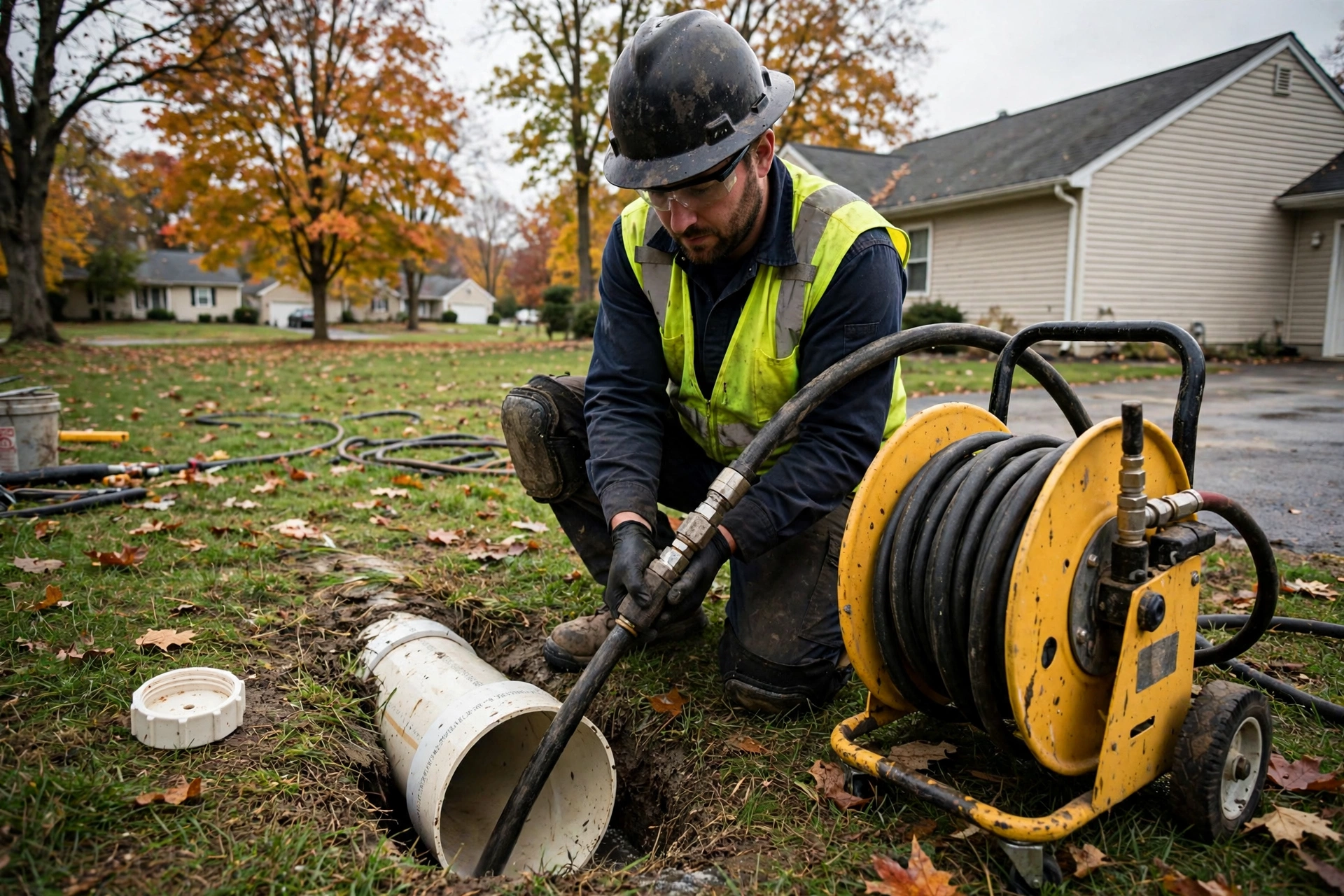
Hydro jetting with a root-cutting nozzle clears heavy root masses and scours the pipe, buying time until the line is sealed or replaced.
Can You Prevent Root Intrusion in the First Place?
If your lateral is modern PVC with solvent-welded joints, roots are a minor concern. The prevention advice matters most for older lines in neighborhoods across Cleveland and Cincinnati where clay tile is still common.
- Know where your lateral runs. A plumber can locate it, or your city's records may show it. Don't plant aggressive trees within 20 to 30 requirementt of the line.
- Choose trees wisely. If you're planting near the lateral's path, pick slower-growing species with less aggressive roots. Avoid silver maples, willows, and poplars near any underground utility.
- Inspect older lines regularly. A camera inspection every couple of years catches root hairs before they become root masses. Early lining of a mostly sound line is far simpler than dealing with a pipe the roots have destroyed.
- Consider root barriers for new plantings. Physical barriers buried between a new tree and the lateral can redirect root growth. They help with future plantings but do nothing for a pipe that's already breached.
Tree Root FAQs
Roots enter through tiny openings: cracked joints, separated clay tile connections, small cracks, or the annular gaps around pipe connections. Root tips detect the moisture and nutrients escaping from the pipe and grow toward it. Once a fine root hair gets inside, it thrives on the constant water supply and grows into a dense mat that catches everything flowing past.
Silver maples are the number one offender in Ohio, fast-growing with aggressive, shallow, far-reaching roots. Red maples, willows, sycamores, elms, and poplars are also notorious root seekers. Oaks and pines are slower and less aggressive but will still enter a damaged line. Basically, any large tree within 20 to 30 requirementt of your lateral is a candidate.
Because clearing removes the roots but leaves the openings they came through. The tree is still there, its roots are still growing toward the moisture, and the cracked joint or open connection is still cracked and open. Root cutting typically buys 12 to 24 months before the mass regrows. Until the pipe itself is sealed or replaced, the cycle repeats.
Seal the entry points or replace the pipe. Pipe lining coats the inside of the existing line with a seamless new pipe, closing every joint and crack. Pipe bursting pulls a new continuous pipe into place. Both eliminate every opening roots use, and new PVC or HDPE has no joints to reopen. Root barriers in the soil can redirect growth, but they don't fix a pipe that's already breached.
Yes, hydro jetting with a root-cutting nozzle clears root masses effectively and scours the pipe clean, better than a mechanical snake for heavy growth. But it's a clearing method, not a repair: it removes the roots inside the pipe without sealing the openings they entered through. Expect regrowth, typically within a year or two, unless the pipe is lined or replaced afterward.
Where Can You Learn More?
- Ohio EPA: the state's environmental agency, with guidance on water quality and home wastewater issues.
- U.S. EPA: federal resources on septic systems and household wastewater.
- Call 811: the free national service that marks buried utilities before you dig.
Tired of Clearing the Same Roots?
We'll camera-inspect your line, show you where the roots are entering, and give you the permanent-fix options with straight process.
Call (614) 350-5706