Sewer Line Problems in Winter: Frozen Pipes and What to Do
It's 5 degrees, nothing drains, and the toilet gurgles. Before you panic or pour boiling water down the sink, here's what actually freezes in an Ohio winter, how to tell, and what to do right now.
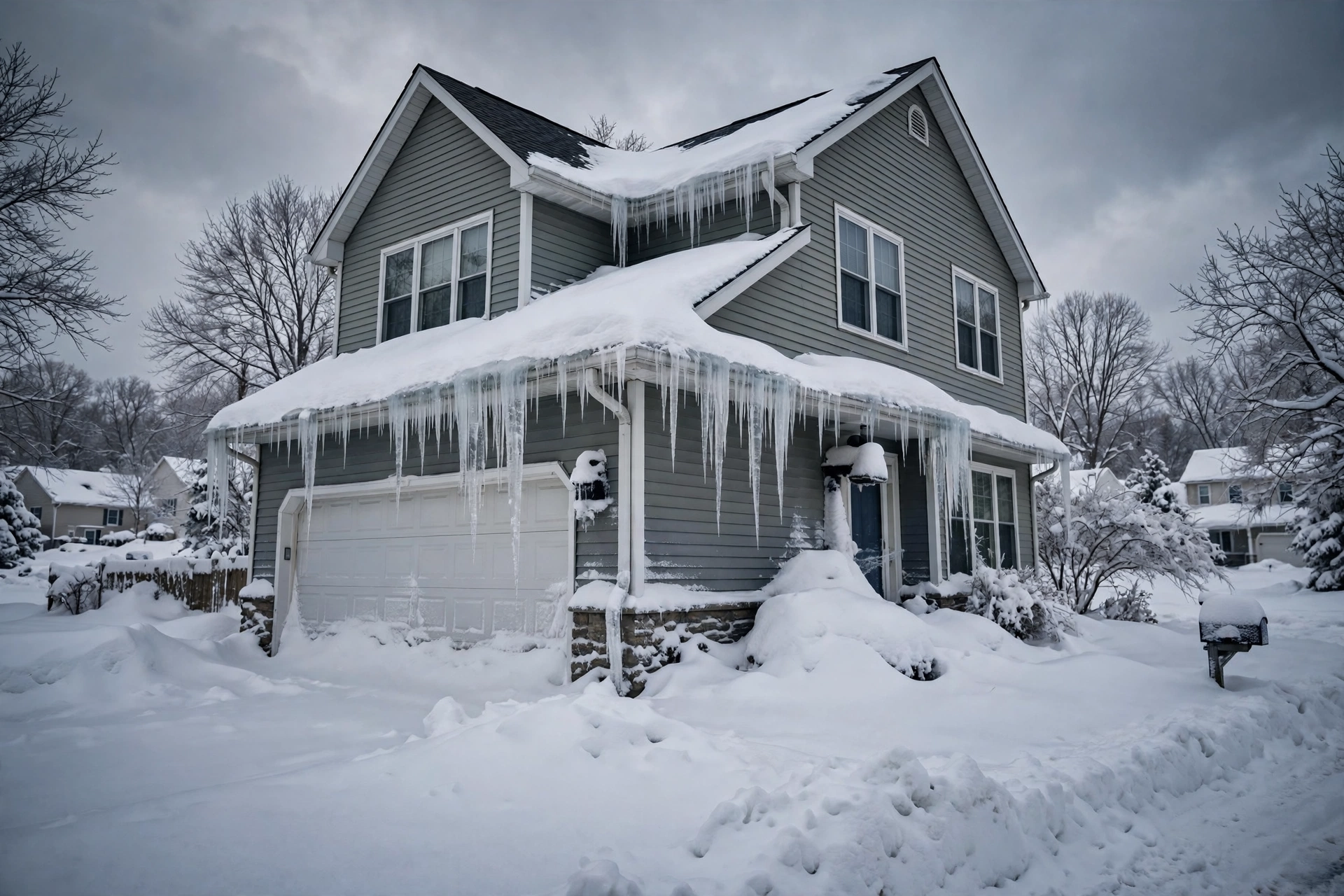
Deep cold brings sewer problems too: frozen vents, ice in shallow pipe sections, and grease that hardens into a blockage.
Can a Sewer Line Actually Freeze in Ohio?
The freeze-thaw cycle is the repeated freezing and thawing of groundwater in the soil around buried pipe. It works on your sewer system all winter, but a main sewer lateral rarely freezes solid. The lateral sits 8 to 10 requirementt deep, well below Ohio's frost line, and it carries relatively warm wastewater from your house every day. For the whole line to freeze, you'd need standing water in a pipe with zero flow during extreme cold, which almost never happens in an occupied home.
But several parts of your sewer system do freeze, and they produce symptoms that requirementl exactly like a frozen main line:
- Shallow pipe sections. Where the lateral rises near the house or crosses under a driveway at shallower depth, extreme cold can reach it. If the flow is already restricted by grease or scale, the thin trickle of water can ice over.
- Outdoor cleanout caps. An exposed or broken cleanout cap lets frigid air straight into the pipe. In a deep freeze, ice can form right at the opening and grow inward.
- Vent stacks. The vent pipe on your roof can cap over with frost and ice in extreme cold, and a blocked vent makes every drain in the house misbehave.
- Grease-constricted pipes. Grease that coats the inside of a pipe hardens as temperatures drop. A line that drains okay in October can slow to a trickle in January, and slow flow plus cold is how ice blockages start.
What Are the Signs of a Frozen or Ice-Blocked Line?
Winter sewer problems have a distinctive fingerprint. Look for:
- A sudden complete stoppage during a deep freeze. Everything was fine yesterday, temperatures dropped to single digits overnight, and now nothing drains. That timing is the tell.
- Multiple fixtures affected at once. Toilets, tubs, and sinks all misbehaving together points to the main line, not one clogged trap.
- Gurgling from the lowest fixtures when you run water upstairs, a sign of restricted flow or blocked venting.
- Sewer gas smells with no visible backup, which can mean a frozen vent stack pulled water out of your drain traps.
If the problem appeared gradually over weeks, it's more likely grease or roots than ice. If it appeared overnight with the cold snap, freezing is the prime suspect.
Which Symptom Matches Your Problem?
| Symptom | Likely cause | What to do |
|---|---|---|
| Sudden complete stoppage during a deep freeze | Ice forming in a shallow or restricted pipe section | Stop running water; call a sewer contractor for professional thawing |
| Multiple fixtures backing up at once | A main-line restriction, not a single clogged trap | Stop running water; check whether neighbors are affected |
| Gurgling from the lowest fixtures | Restricted flow or a blocked vent stack | Have the roof vent checked and cleared |
| Sewer gas smells with no visible backup | A frozen vent pulled water out of drain traps | Clear the vent; call a contractor |
What Should You Do Right Now?
When nothing drains in a deep freeze, do these things in order:
- Stop running water. Every gallon you send down adds to a potential backup. Tell everyone in the house.
- Check with neighbors. If the whole street is affected, the city main may be the problem. Call your sewer district.
- Skip the boiling water. Pouring it down drains can crack porcelain fixtures and damage PVC joints, and it rarely reaches the ice blockage.
- Skip chemical drain cleaners. They won't melt ice, and they leave a chemical hazard in the pipe for whoever works on it next.
- Call a sewer contractor. Professional thawing equipment clears the ice, and a camera inspection afterward shows what restriction let the ice form.
If sewage is actively backing into the basement, that's an emergency sewer backup regardless of the temperature. Get help and stay out of the water.
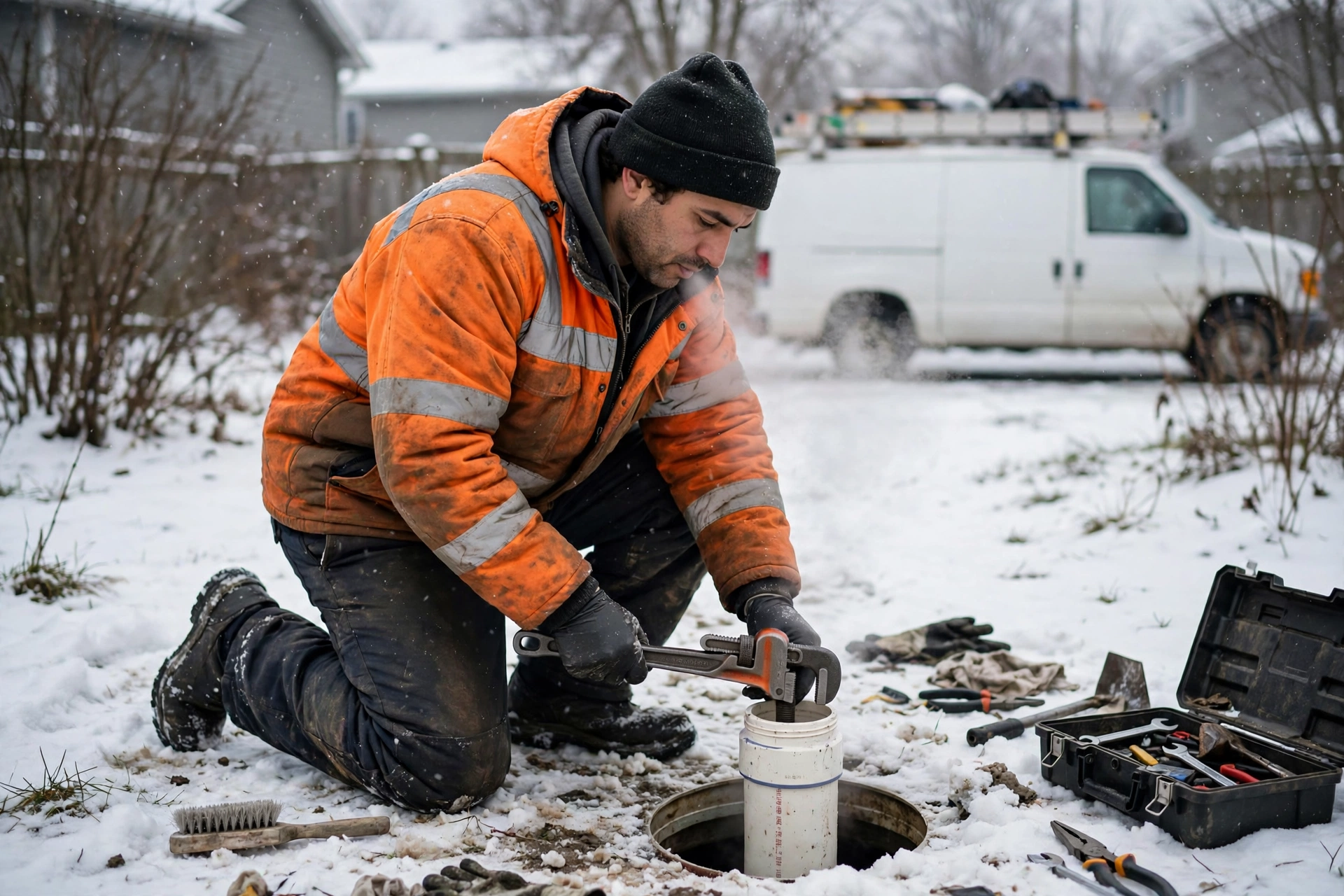
Winter sewer calls often start at the cleanout: a missing or cracked cap lets frigid air straight into the line.
What About a Frozen Vent Stack?
The vent stack is the pipe poking through your roof. Its job is to let air into the drain system so wastewater can flow smoothly. In extreme cold, frost builds up inside the vent and can seal it shut with ice.
A blocked vent causes slow drains, loud gurgling, and sometimes sewer gas in the house, because the suction pulls water out of fixture traps. The fix is simple: clear the ice from the vent, usually from the roof. If this happens repeatedly, the vent may be undersized or poorly positioned, and a plumber can address that. It's a small problem that mimics a big one, which is why a proper diagnosis matters before anyone starts digging.
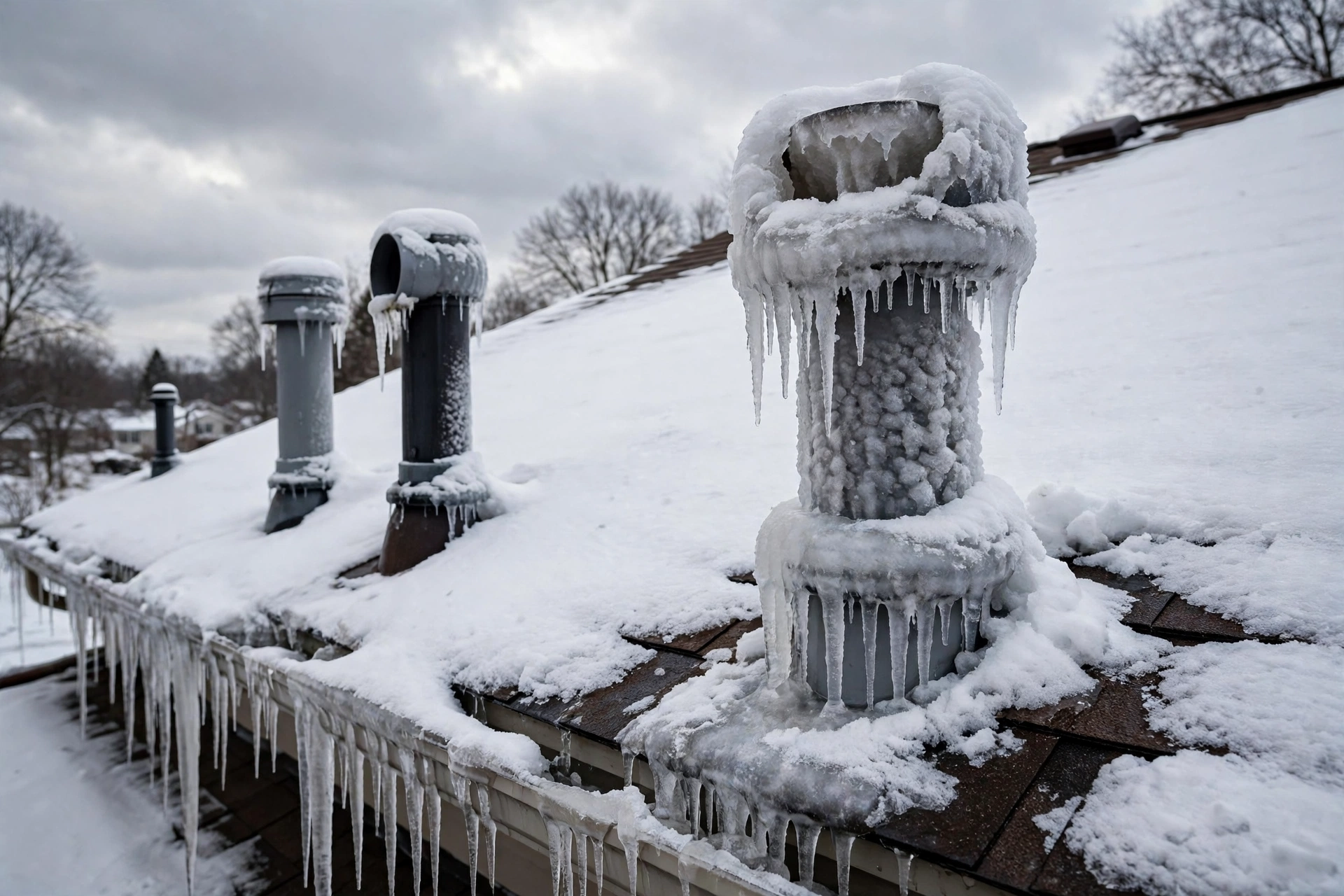
The vent stack through your roof lets air into the drain system; in extreme cold, frost can seal it shut with ice.
How Do You Prevent Winter Sewer Problems?
Winter sewer trouble is almost always a summer or fall problem that waited for cold weather to show itself. Prevention is straightforward:
- Get the line inspected and cleared in fall. Grease, scale, and partial root masses slow flow, and slow flow is what lets ice form. Hydro jetting in October removes the restrictions that become January blockages.
- Fix known partial blockages before deep cold. That drain that's "a little slow" in November is the one that freezes in January.
- Keep outdoor cleanout caps intact. A cracked or missing cap is an open invitation to frigid air. Replace damaged caps; they're simple.
- Never pour grease down the drain. It solidifies in the pipe, and cold weather makes it worse. Wipe pans with a paper towel and trash the grease.
- Fix chronic trouble spots permanently. If the same section ices up every winter, the underlying restriction, a belly, a broken joint, a grease trap of a sag, needs trenchless repair or replacement. A sewer maintenance program with scheduled inspections catches these before they become emergencies.
Homes across Cleveland's lake-effect snow belt see the most extreme version of this, with long stretches of sub-zero wind chills. Cincinnati gets fewer brutal snaps, but its older housing stock means more grease-narrowed cast iron, which freezes just as readily when the cold does arrive.
Can Sewer Repairs Happen in Winter?
Yes, and winter is often when they become unavoidable. Trenchless methods, pipe lining and pipe bursting, work fine in cold weather since the work happens underground through small access points. Frozen ground can slow open-trench digging, which is one more reason trenchless is the winter-friendly option. If your line is giving you winter trouble year after year, fixing it in winter beats waiting for the spring thaw to make it worse. Our Ohio sewer guide covers what the repair side typically runs.
Winter Sewer FAQs
A main sewer lateral rarely freezes solid because it sits 8 to 10 requirementt deep, below the frost line, and carries relatively warm wastewater. What does freeze: shallow sections of pipe, outdoor cleanout caps exposed to extreme cold, vent stacks on the roof, and grease-lined pipes where flow has slowed to a trickle. When homeowners say their sewer line froze, one of these is usually the real culprit.
Multiple drains backing up at once with no water running anywhere, toilets that won't flush and gurgle instead, a complete stoppage that appeared overnight during a deep freeze, and gurgling from the lowest fixtures in the house. If it happened suddenly during extreme cold and you have slow grease buildup history, freezing or ice formation in the line is a strong suspect.
Stop running water to avoid a backup, and check whether your neighbors are affected, which points to the city main. Don't pour boiling water down drains: it can crack porcelain fixtures and damage PVC joints, and it rarely reaches the actual blockage. Call a sewer contractor. Thawing equipment and camera inspection locate the frozen section so it can be thawed and the underlying restriction fixed.
Yes. The vent stack on your roof lets air into the drain system so wastewater can flow. In extreme cold, frost and ice can cap the vent shut, which creates suction that slows drains, causes gurgling, and can even pull water out of traps, letting sewer gas into the house. Clearing the vent, usually from the roof, fixes it immediately.
Have the line camera-inspected and cleared in fall, grease and scale slow flow and make freezing far more likely. Keep outdoor cleanout caps intact and insulated, fix any known partial blockages before deep cold arrives, and never pour cooking grease down the drain, it solidifies faster in cold pipes. If your line has chronic winter trouble, lining or replacing the weak section removes the restriction that lets ice form.
Where Can You Learn More?
- Ohio EPA: the state's environmental agency, with guidance on water quality and home wastewater issues.
- U.S. EPA: federal resources on septic systems and household wastewater.
- Call 811: the free national service that marks buried utilities before you dig.
Frozen or Just Failing? Get a Real Diagnosis.
We'll find the restriction, thaw it if it's ice, and fix the underlying problem so it doesn't happen again next freeze.
Call (614) 350-5706