Grease Traps and Your Restaurant's Sewer Line: A Primer
Fats, oils, and grease are the number one enemy of restaurant sewer lines. Here is how grease traps work, how to maintain them, and the warning signs your system is in trouble.
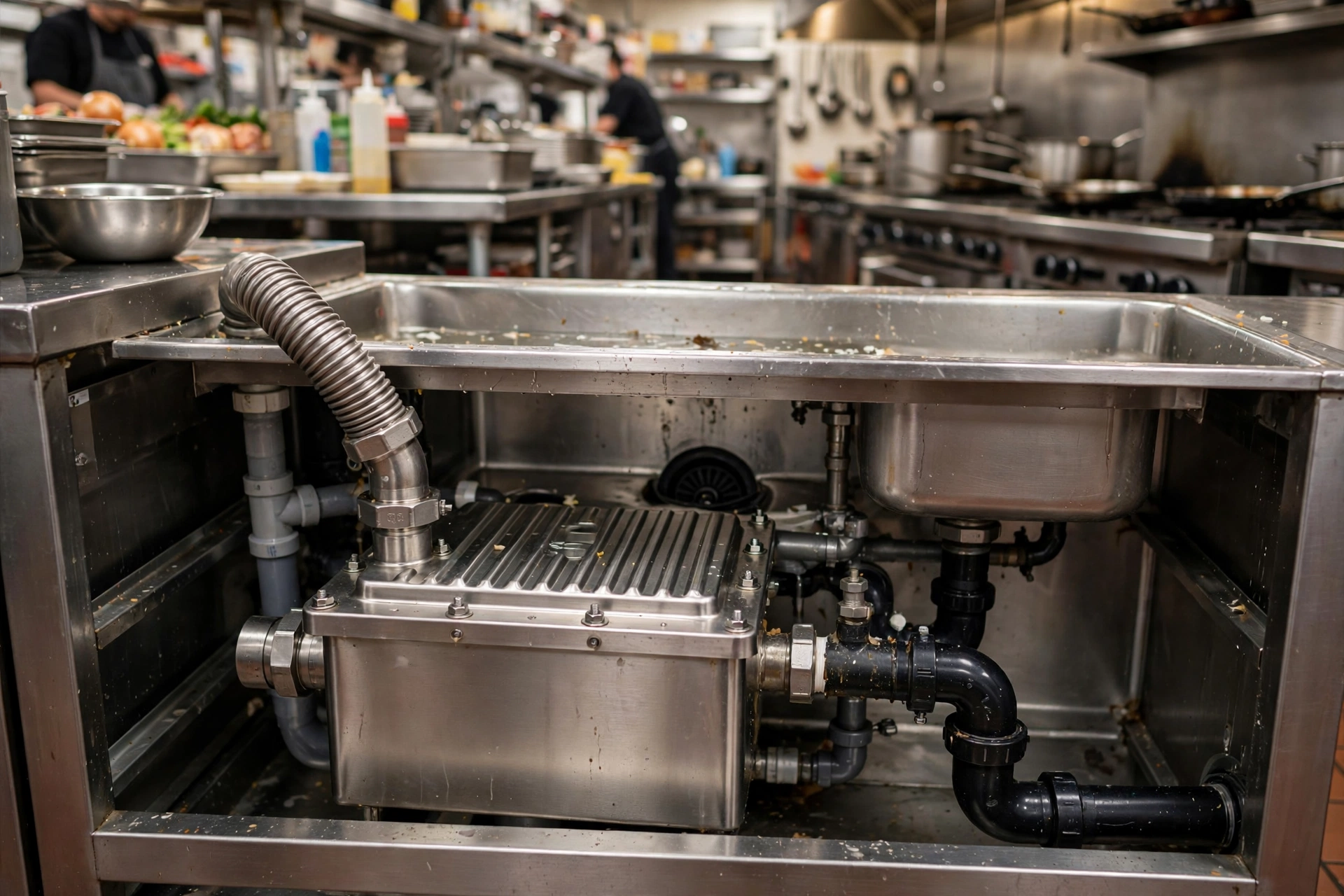
An interior grease trap catches fats and oils before they reach your restaurant's sewer line.
Last updated: October 13, 2026
What Is a Grease Trap and Why Does Your Restaurant Need One?
A grease trap is a plumbing device that catches fats, oils, and grease, collectively called FOG, before they enter the sewer line. Wastewater flows in, slows down, and the grease floats to the top while solids sink to the bottom. Only the cleaner water in the middle layer passes through to the sewer. Without one, every dish washed and every fryer cleaned sends grease straight into the pipes.
Most Ohio municipalities require food service businesses to have a grease trap or interceptor as part of their sewer pretreatment rules. This is not bureaucratic decoration: grease is the leading cause of sewer blockages in commercial districts. A restaurant without a working grease trap is one bad week away from a kitchen backup, and many cities back the requirement with inspections and fines.
How Does Grease Destroy Sewer Lines?
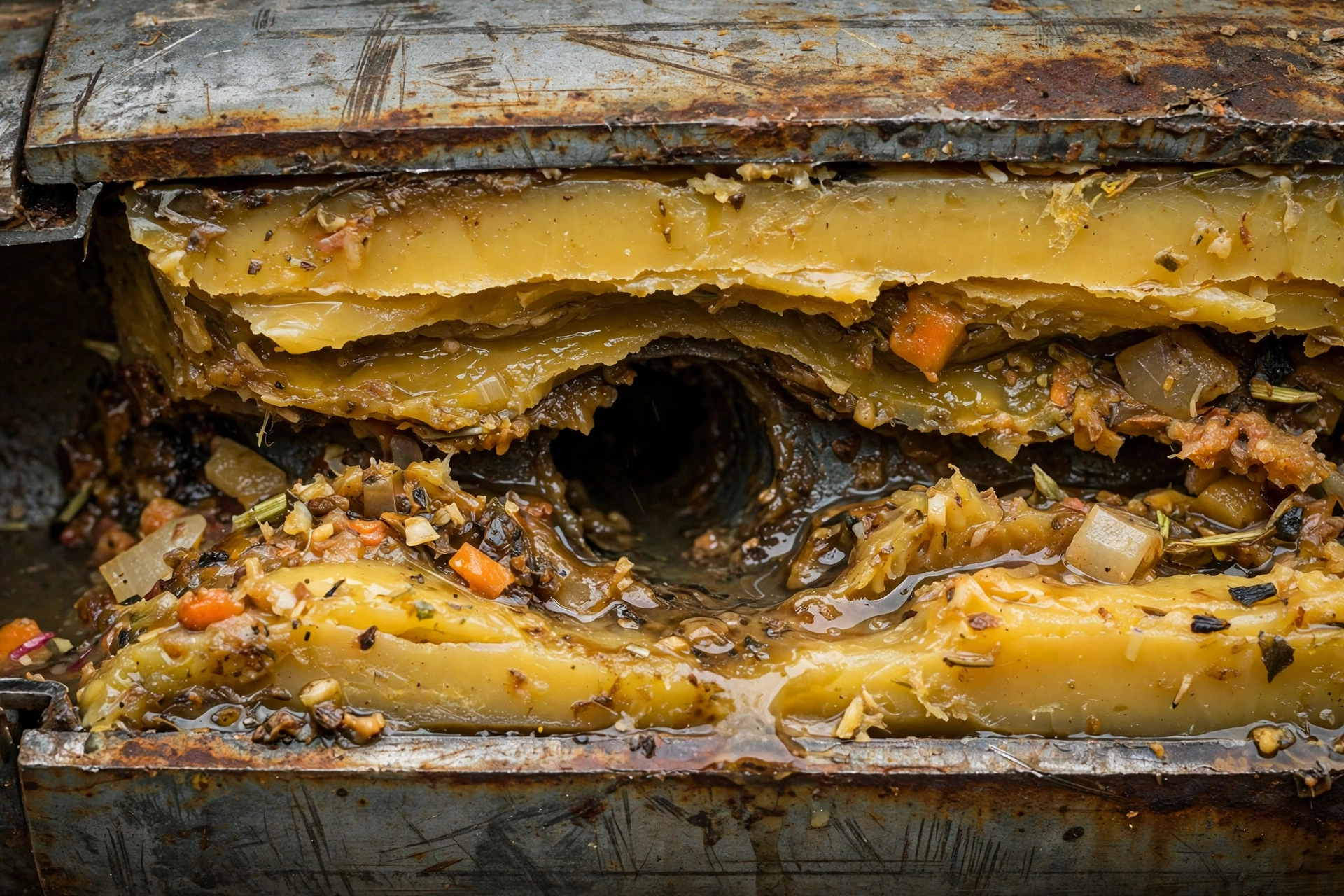
Grease leaves the kitchen as a hot liquid and hardens as it cools in the pipe. The U.S. EPA tracks fats, oils, and grease as a leading cause of sewer blockages. Day after day, grease coats the pipe walls, and each layer narrows the opening a little more. Food particles and debris stick to the tacky surface, building the blockage faster. Eventually the line chokes completely, and the kitchen floor drains back up, usually at the worst possible moment.
The damage goes beyond clogs. Thick grease deposits trap moisture and acids against the pipe wall, accelerating corrosion in older metal lines. In lines that have been jetted repeatedly for grease, the pipe itself can be weakened over time. What starts as a maintenance issue becomes a structural one, and the fix jumps from cleaning to repair or replacement. A properly sized, properly maintained trap breaks this cycle at the source.
This is what unprotected lines look like inside: layer after layer of cooled grease shrinking the pipe.
What Are the Two Types of Grease Traps?
Restaurants use one of two setups, depending on size and local rules:
Interior grease traps. Small units installed under sinks or in the kitchen floor, typically 20 to 50 gallons. Common in cafes, small restaurants, and bakeries. They are easy to access but fill fast and need frequent pumping.
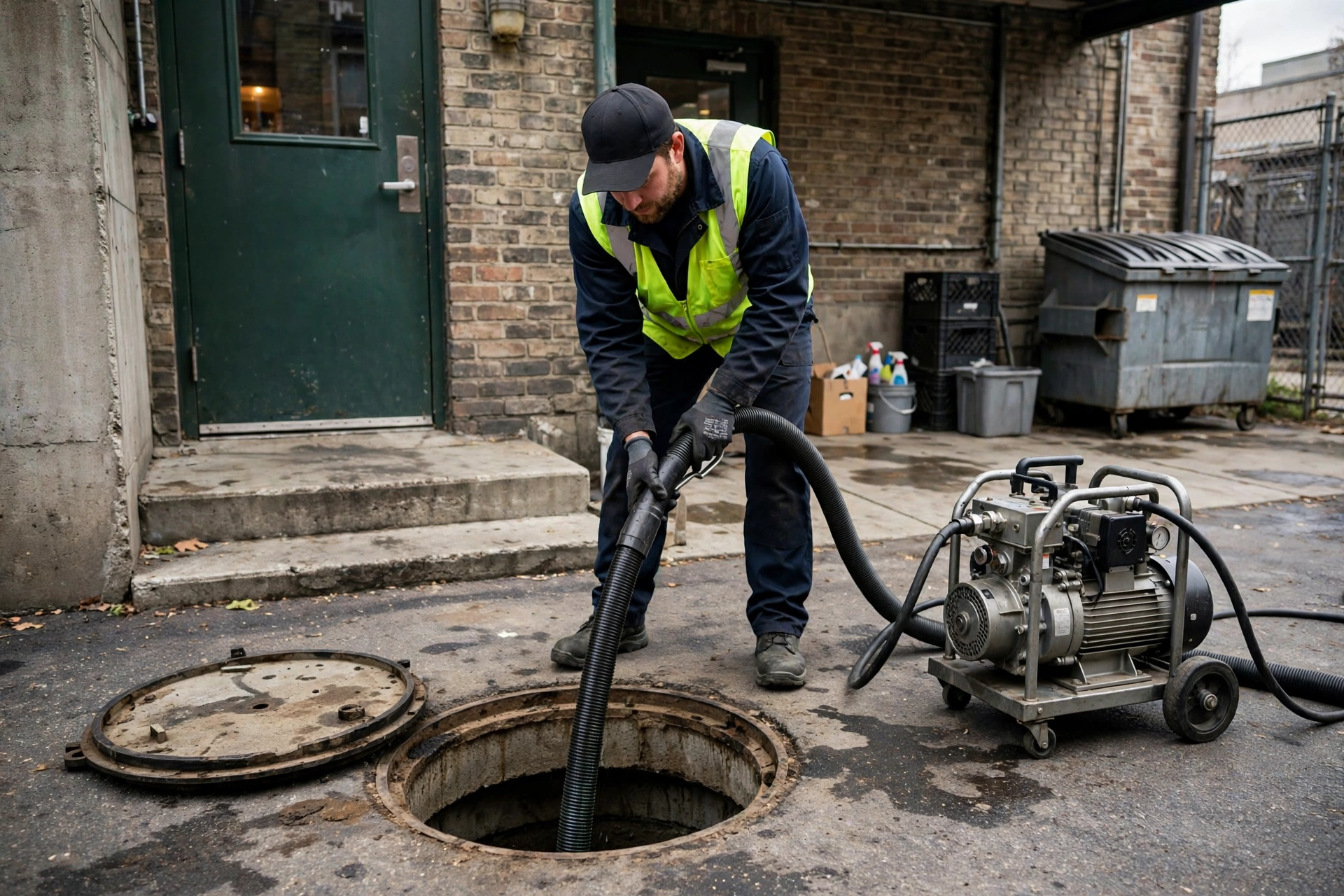
Exterior grease interceptors. Large underground tanks, often 500 to 2,000 gallons or more, buried outside the building. Standard for full-service restaurants and high-volume kitchens. They hold far more grease between pumpings but are a bigger job to service.
Which one you need depends on your kitchen's output and your municipality's requirements. Undersized traps are a chronic problem: they fill between pumpings, and grease flows straight past a full trap into the line. An exterior interceptor is a buried tank, so installation means excavation: call 811 before any digging starts. If your line clogs again within weeks of a cleaning, the trap may be too small for the kitchen it serves.
How Do You Maintain a Grease Trap Properly?
Pump on the 25 percent rule, clean the whole unit, train the staff, jet the downstream line, and inspect the line annually. Maintenance is simple but non-negotiable:
Follow the 25 percent rule: pump when grease and solids reach a quarter of the trap's capacity. Keep the pumping records; inspectors ask for them.
Clean the whole unit, not just the top. Remove the floating grease, the settled solids, and the wastewater, then scrape and rinse.
Train the staff on grease habits. Scrape plates into the trash, wipe pans before washing, and never pour fryer oil down the drain.
Schedule periodic hydro jetting of the downstream line. It clears the grease the trap misses before it hardens into a blockage.
Get an annual sewer camera inspection of the line downstream of the trap. It shows whether grease is getting past the trap.
Here is the maintenance schedule in one place:
Maintenance task
How often
Pump an interior grease trap
Every 1 to 3 months, when grease and solids reach 25% of capacity
Pump an exterior grease interceptor
Every 3 to 6 months, when grease and solids reach 25% of capacity
Hydro jet the downstream line
Periodically, to clear grease the trap misses
Camera-inspect the line downstream of the trap
Once a year
Exterior interceptors hold hundreds of gallons and need scheduled pumping by a professional crew.
What Are the Warning Signs Your Grease System Is Failing?
Watch for these red flags in the kitchen:
Kitchen sinks and floor drains emptying slowly
Gurgling sounds from drains during busy periods
Foul odors near sinks, floor drains, or the trap itself
Grease visible on the outlet side of the trap
Backups that return soon after a drain cleaning
Health inspector comments about the trap or drainage
A backup that comes back within weeks of jetting almost always points to the trap: it is full, undersized, damaged, or being bypassed. Grease trap cleaning and installation service can size, install, or replace a unit that is no longer protecting your line.
What Ohio Restaurant Owners Should Know About the Rules
Speak in general terms, because every city writes its own rules: most Ohio municipalities with sewer pretreatment programs require food service establishments to install grease traps or interceptors, pump them on a minimum schedule, and keep records. Ohio EPA administers the statewide pretreatment framework these local programs follow. Inspectors can check the trap, review your pumping logs, and fine you for violations. Some cities set minimum trap sizes based on kitchen fixtures or seating capacity.
The financial logic is simple. Regular pumping work a fraction of a single emergency backup, and it is far simpler than a fine plus a cleanup. A grease blockage that reaches the city main can also leave your business responsible for the city's repair work. If you are opening a new restaurant, buying an existing one, or remodeling a kitchen in Columbus, Cincinnati, or Cleveland, confirm the local requirements with the water or sewer authority before you sign anything.
For a full maintenance plan that covers the trap, the lines, and everything downstream, see our commercial sewer services. And if grease has already caused a backup, emergency sewer backup service gets the kitchen back in operation fast.
Grease Trap FAQs
Almost certainly. Most Ohio municipalities require food service establishments, restaurants, cafes, bakeries, and commercial kitchens, to install and maintain a grease trap or interceptor as part of their sewer pretreatment rules. The exact size and pumping requirements vary by city. Check with your local water or sewer authority before opening, remodeling, or buying an existing restaurant.
The common industry rule is the 25 percent rule: pump when combined grease and solids reach 25 percent of the trap's capacity. For a busy kitchen, that usually means every 1 to 3 months for interior traps and every 3 to 6 months for large exterior interceptors. Your municipality may set its own minimum schedule, so follow whichever is stricter.
It cools, solidifies, and coats the inside of the pipe, shrinking the opening a little more every day. Eventually the line blocks completely, causing a backup in the kitchen, often during a busy service. Repeated grease blockages can also damage the pipe itself, turning a cleaning problem into a repair or replacement project.
Kitchen drains that empty slowly, gurgling from floor drains, foul odors near sinks or the trap, grease visibly passing through to the outlet side, and backups that return soon after a cleaning. If hydro jetting clears the line but it clogs again within weeks, the trap is likely undersized, full, or bypassed.
Yes. Ohio municipalities with pretreatment programs can fine food service businesses for missing, undersized, or poorly maintained grease traps, and for discharging excessive grease into the public sewer. A blockage in the city main traced back to your kitchen can also leave you responsible for the cleanup work. The fines and the repair bill both exceed the work of regular pumping.
Grease Problems? Fix the Trap and the Line Together.
We'll inspect your trap, camera your lines, and set up a pumping schedule that keeps the kitchen running, anywhere in Ohio.