Freeze-Thaw Cycles: How Ohio Winters Damage Your Sewer Line
Your sewer line sits below the frost line, so winter can't touch it. Right? Not quite. Here's what freeze-thaw actually does to Ohio sewer pipes, and the signs to watch for come spring.
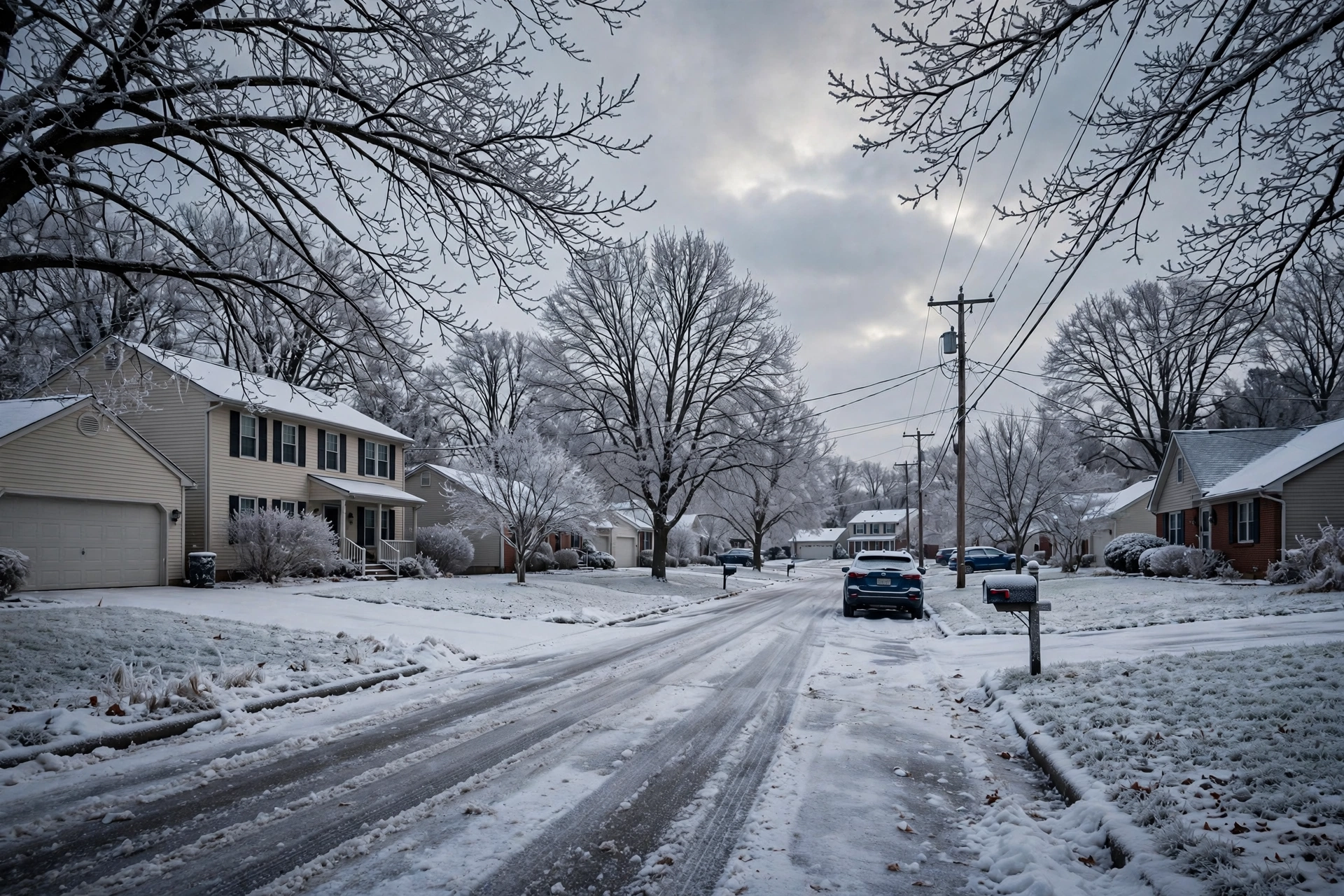
Ohio winters cycle between hard freezes and thaws for months. That cycling, not the cold itself, is what damages sewer lines.
How Does Freeze-Thaw Actually Damage a Buried Sewer Line?
The freeze-thaw cycle is the repeated freezing and thawing of groundwater in the soil around buried pipe. It damages sewer lines through movement, not freezing of the pipe itself. When water in the soil freezes, it expands and lifts the ground, a process called frost heave. That heave pushes and flexes the buried pipe. When the ground thaws and settles back down, the pipe doesn't always settle back to exactly where it started.
One cycle does almost nothing. But Ohio winters don't deliver one cycle. They deliver dozens of them between December and March, as temperatures swing across the freezing point again and again. Each swing moves the pipe a fraction of an inch. Over several winters, those fractions add up to separated joints, cracked pipe walls, and sections that have shifted out of alignment.
Why Is Ohio's Winter Especially Rough on Sewer Pipes?
Three Ohio realities team up to make freeze-thaw damage worse here than in many states.
The clay soil. Much of Ohio, from Cleveland's west side through Columbus and into the south, sits on dense glacial clay. Clay holds water, and water is what expands when it freezes. Sandy soil drains; clay soil heaves. So Ohio's most common soil type is also the type most prone to frost heave.
The cycle count. Ohio doesn't stay frozen all winter the way Minnesota does. A January week might run from 10 degrees up to 38 and back down again. Cleveland's lake-effect snowpack insulates the ground one week, then a February warm spell melts it and saturates the soil, then it refreezes. Every crossing of the freezing point is another heave-settle cycle working on your pipe joints.
The depth and the trench. Ohio's frost line reaches 30 to 40 inches, but most residential laterals run 8 to 10 requirementt deep because they exit through basements. The pipe itself sits safely below frost. The problem is the soil column above and around it, which still heaves and shifts. The backfilled trench around an old pipe is looser than undisturbed soil, so it moves more, and the pipe takes the stress.
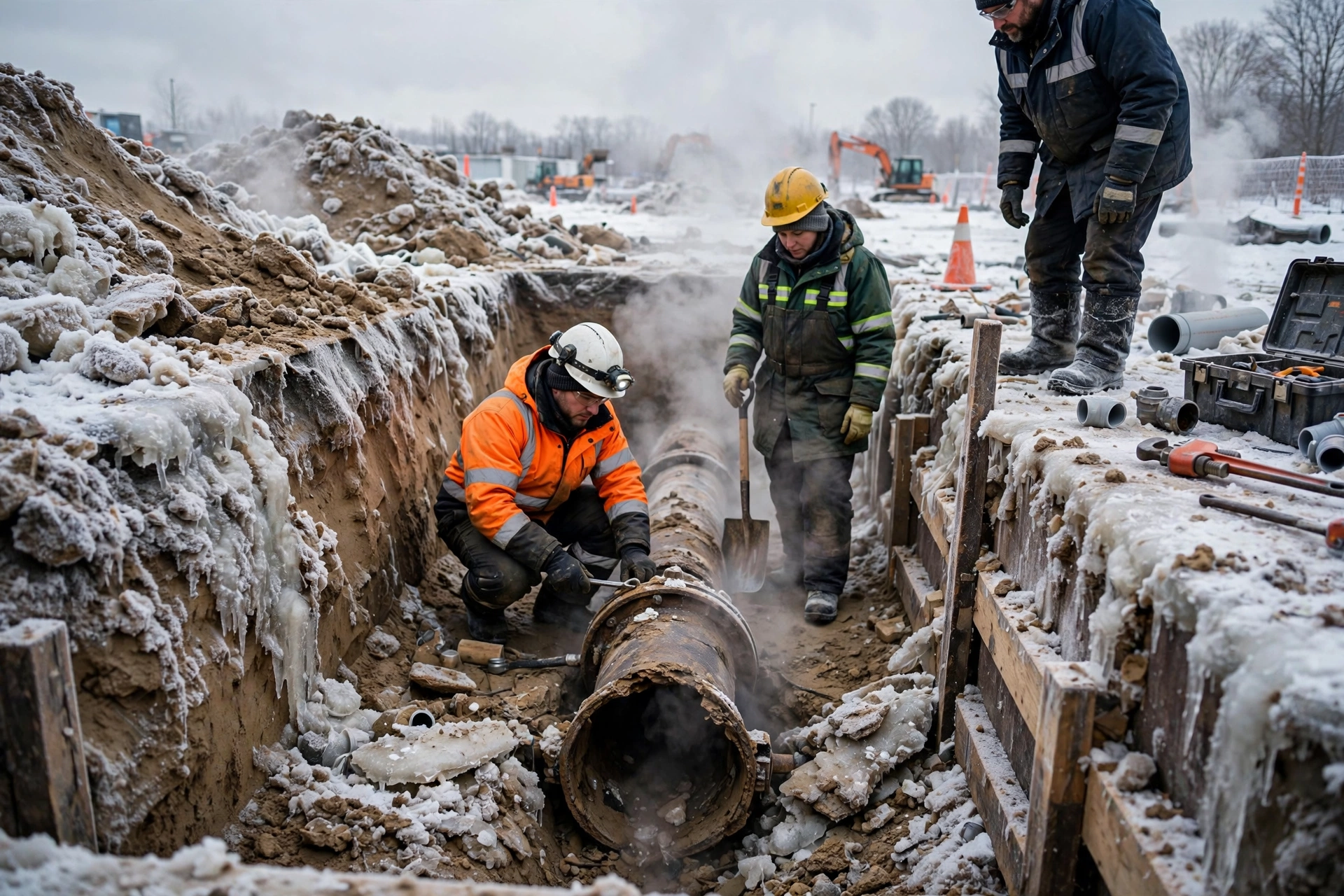
Winter excavation means fighting frozen ground. That's one reason trenchless repairs, which need only small access points, are popular in cold months.
What Are the Warning Signs After a Thaw?
Freeze-thaw damage usually reveals itself in late winter and spring. Watch for:
- Drains that slow down or gurgle in March and April, when shifted joints let soil into the line.
- A new sunken spot in the yard along the path from your house to the street, where the trench settled after heaving.
- An unusually green stripe of grass over the sewer line, fed by leaking wastewater.
- Sewage odors in the basement, which can mean a joint opened up and is venting gases back toward the house.
- Toilets that flush fine but then the tub gurgles, a classic sign of a partial blockage or misaligned pipe downstream.
If several of these show up after a thaw, don't wait for it to get worse. A sewer camera inspection will show exactly what moved and where.
Which Pipes Are Most Vulnerable?
Not all pipe materials handle Ohio winters equally.
- Clay tile (common in pre-1960 homes) fares worst. Each joint is a weak point, and the joints are exactly what frost heave pulls apart. Once a joint separates, soil and tree roots enter, and the problem compounds every spring.
- Orangeburg pipe, the tar-coated fiber pipe used from the 1940s into the early 1970s, is brittle and oval-shaped by now in many Ohio homes. Shifting soil flattens it further or collapses sections outright.
- Cast iron is strong but brittle. It resists flexing, which sounds good until ground movement forces it to flex anyway, and it cracks at stress points instead of bending.
- PVC handles freeze-thaw best. It's continuous with few joints and has enough flex to ride out ground movement. If your line was replaced with PVC in the last couple of decades, winter is far less of a threat.
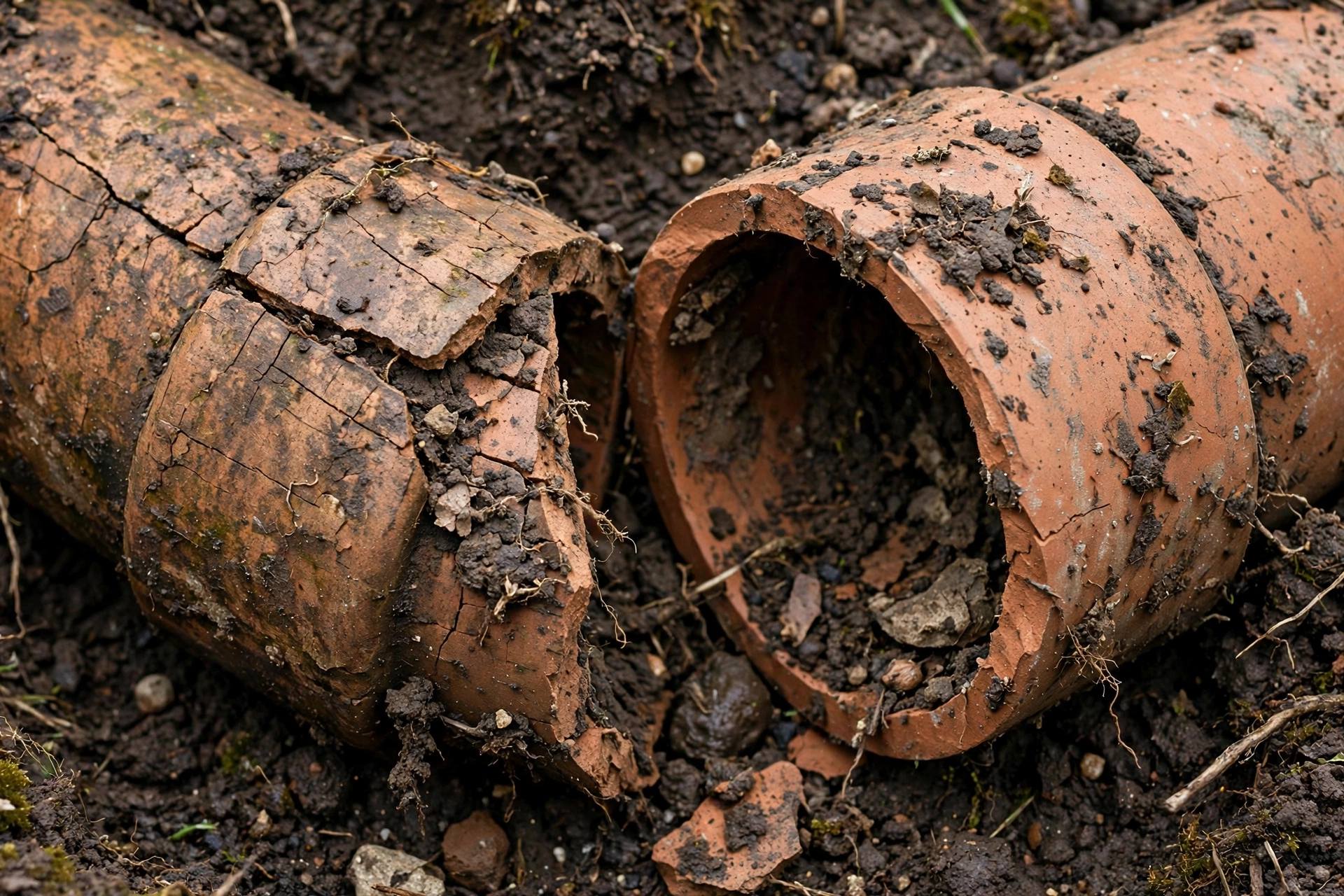
This is what frost heave does to clay tile: the joint pulls apart, and soil starts working its way in.
Can You Prevent Freeze-Thaw Damage?
You can't stop the ground from freezing, but you can reduce what it does to your line.
- Know what you have. If your home was built before 1970 and the sewer line has never been inspected, find out the pipe material and condition before winter, not after a backup. Older lines in Cleveland neighborhoods and Cincinnati's older districts are often clay or Orangeburg.
- Keep roots out. Roots enter through the joints that frost heave opens. Fall is the right time to have roots cut and the line cleared, so winter doesn't arrive with roots already wedged in weak joints.
- Fix small problems in fall. A hairline crack found in October becomes a separated joint by April. Lining or pipe bursting in the fall beats an emergency repair in March.
- Don't ignore a spring thaw check. If your yard settles along the line or drains slow after winter, treat it as a symptom, not a mystery.
What Should You Do If You Suspect Winter Damage?
Start with a camera inspection, not a shovel. The footage shows exactly which joints separated, where the line bellied, and whether roots have entered. That diagnosis determines the fix: trenchless repair handles most freeze-thaw damage, since separated joints and cracked sections are exactly what lining and bursting are designed to fix.
And if you're plansing, our Ohio sewer line repair guide lays out what these repairs typically run so you can plan before the problem picks your timing.
Freeze-Thaw FAQs
Yes, though the mechanism is usually movement, not the pipe itself freezing. Water in Ohio's clay soil expands when it freezes and lifts the ground, a process called frost heave. That heave pushes and flexes the pipe; when the ground thaws and settles back, the pipe doesn't always return to its original position. Repeated cycles crack joints and shift pipe sections.
Ohio's frost line generally reaches 30 to 40 inches in a typical winter, deeper in extreme cold snaps. Most residential sewer laterals run 8 to 10 requirementt deep because they exit through basements, so the pipe itself sits below the frost line. The damage happens because the soil above and around the pipe still heaves and shifts, moving the trench the pipe rests in.
Watch for drains that slow down or gurgle in late winter and spring, a new low or sunken spot in the yard where the trench settled, a patch of grass that grows unusually green over the line, and sewage smells in the basement. Damage often shows up after the spring thaw, when shifted joints let soil and roots into the pipe.
Continuous PVC pipe handles ground movement best because it has few joints and some flexibility. Old clay tile with mortared or open joints fares worst, the joints separate and let soil in. Cast iron is strong but brittle, so it can crack at stress points. Orangeburg pipe, used from the 1940s to early 1970s, deforms and flattens under shifting soil.
Yes. Trenchless methods like pipe lining and pipe bursting are performed in winter all the time; the equipment works fine in cold weather. Frozen ground can make open-trench digging harder and slower, which is another reason many Ohio homeowners choose trenchless repairs during winter.
Where Can You Learn More?
- Ohio EPA: the state's environmental agency, with guidance on water quality and home wastewater issues.
- U.S. EPA: federal resources on septic systems and household wastewater.
- Call 811: the free national service that marks buried utilities before you dig.
Winter's Coming. Know What Your Line Looks Like First.
A camera inspection now beats a spring emergency. We'll show you the footage and give you a straight answer, anywhere in Ohio.
Call (614) 350-5706