Cast Iron Pipes in Pre-1960 Ohio Homes: When to Replace
Cast iron was the good stuff when your house was built. Seventy years later, it's corroding from the inside out. Here's how to tell where your pipes stand, and when replacement stops being optional.
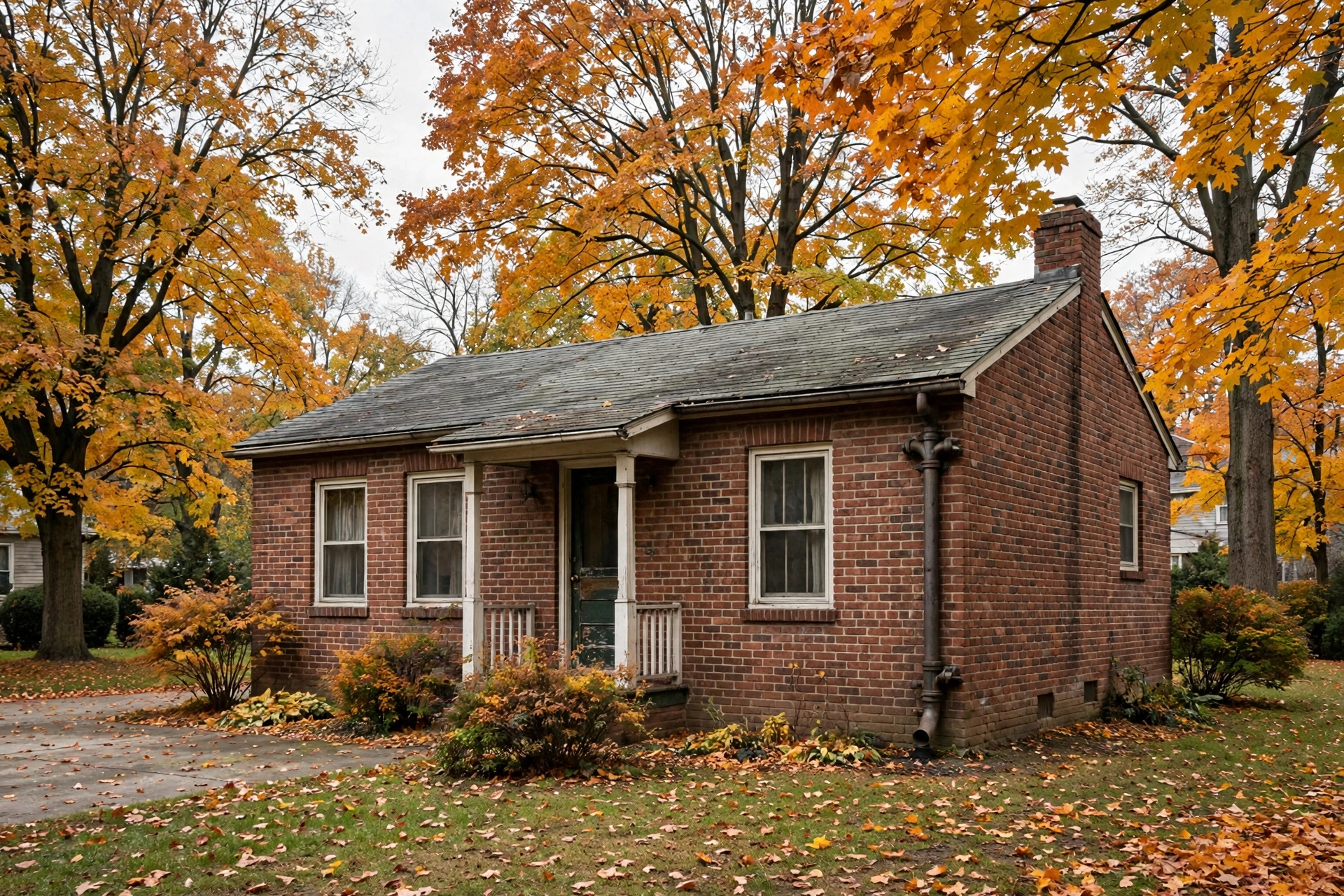
Houses like this one, built from the 1920s through the 1950s, almost always have cast iron drain and sewer piping.
How Long Do Cast Iron Pipes Actually Last?
Cast iron pipe is a heavy metal pipe that was the standard for interior drain stacks and underground sewer laterals from the 1920s through the early 1960s. Cast iron drain and sewer pipes typically last 50 to 75 years. Soil conditions, water chemistry, and usage all move that number, but the range itself is well established. Now do the math: most cast iron in Ohio homes went in between the 1920s and the early 1960s, when it was the standard material for both interior drain stacks and underground sewer laterals.
A house built in 1950 has 76-year-old cast iron in 2026. That doesn't mean it's failing today, but it does mean the pipe has spent its entire design life in service. The U.S. EPA publishes resources on aging water and wastewater infrastructure for homeowners and municipalities. If you own a pre-1960 home in an older Cleveland neighborhood or one of Cincinnati's historic districts and the pipes have never been inspected, you don't actually know what you own. A camera inspection answers that question in about an hour.
How Does Cast Iron Fail?
Cast iron failure is the slow breakdown of the pipe wall itself through corrosion, scale buildup, and channeling. It doesn't fail the way clay tile does: clay fails at the joints, while cast iron fails along the pipe wall through two slow processes that work together.
Scale buildup. Corrosion starts on the inside of the pipe. Iron oxide forms a rough, crusty layer called scale that keeps growing inward. A 4-inch pipe can lose an inch or more of its diameter to scale, which is why old cast iron drains slowly even when nothing is blocking them. The rough surface also catches everything that flows past, so clogs come more often.
Channeling. Channeling is the wearing of a trough along the bottom of a cast iron pipe by decades of wastewater flow. The bottom gets thinner and thinner while the top of the pipe still looks fine. Eventually the channel breaks through, and you get cracks or holes along the pipe's belly. From outside, the pipe looks intact. On camera, the bottom is gone.
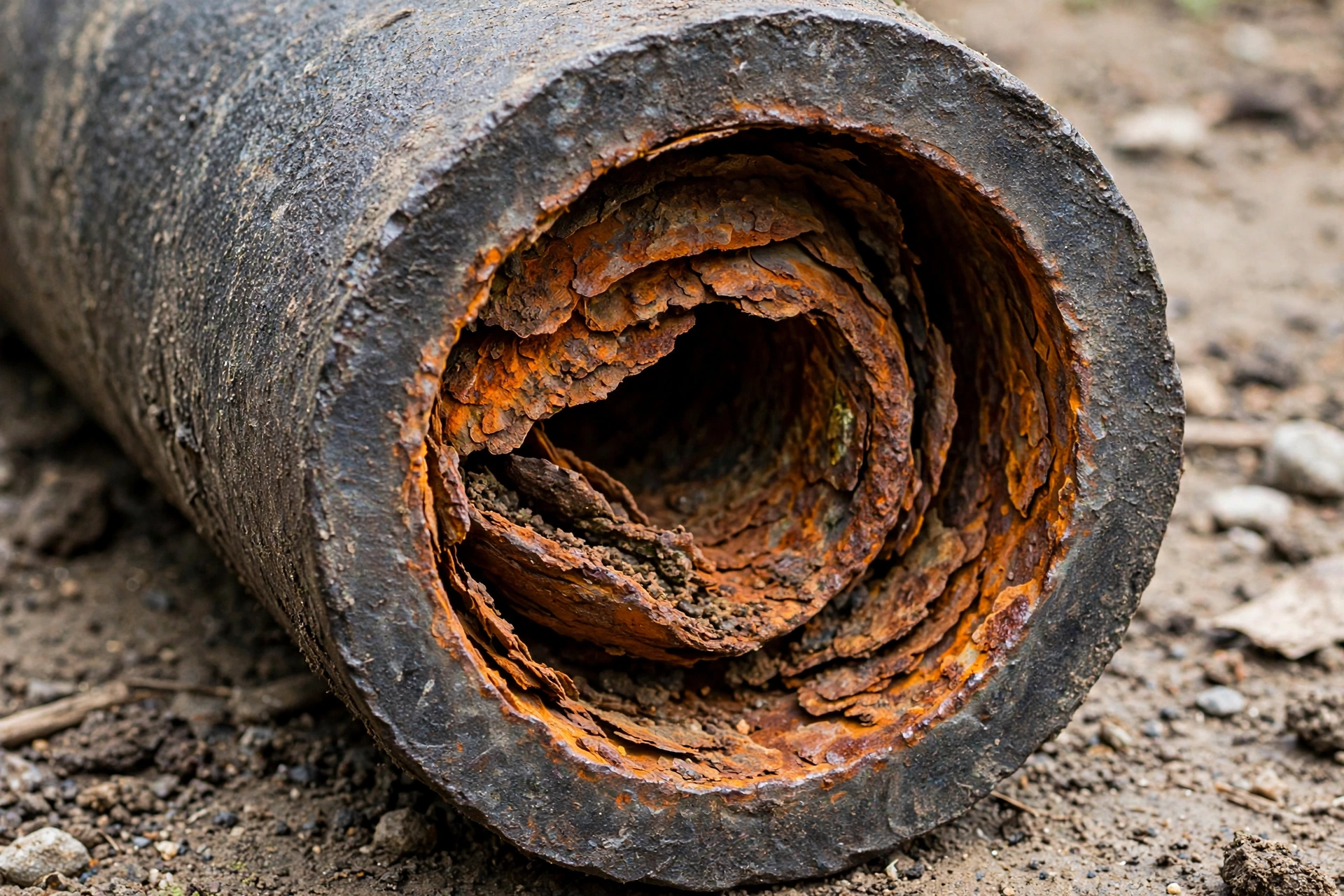
This is what six decades of corrosion looks like: the rough scale catches waste and narrows the pipe until drains run slow.
What Are the Warning Signs in Your Home?
Cast iron gives you symptoms long before it gives you a catastrophe. Watch for:
- Clogs that keep coming back in the same fixtures, even after snaking or chemical treatment.
- Slow drains throughout the house, not just one sink. System-wide slowness points to the main line, not a single trap.
- Sewage or rotten-egg smells in the basement, which can mean cracked pipe is venting gases.
- Rust flakes or discolored water at fixtures, a sign the interior wall is shedding.
- Visible corrosion on exposed basement piping, flaking, pitting, or weeping at the pipe surface.
One clogged tub is a plumbing call. The whole pattern above is a pipe-material problem, and it calls for a sewer camera inspection to see exactly how much pipe life is left.
When Should You Replace Instead of Repairing?
This is the real question, and it has a practical answer. Spot repairs make sense when the damage is localized: one cracked section, one bad joint, one area of heavy scale. The rest of the line still has years of service in it.
Full replacement makes sense when corrosion and channeling run through most of the line. At 60-plus years, that's the common finding. Here's the honest math: handling for a spot repair every year or two, plus emergency calls when the next weak section fails, quickly exceeds the work of replacing the whole run once. And each failure risks a basement backup, which carries cleanup work of its own.
The tipping point most contractors use: if the camera shows heavy scale or channeling along most of the pipe's length, you're looking at replacement. If it shows one bad area in an otherwise sound line, you're looking at a repair. Watch the footage yourself and the answer is usually obvious.
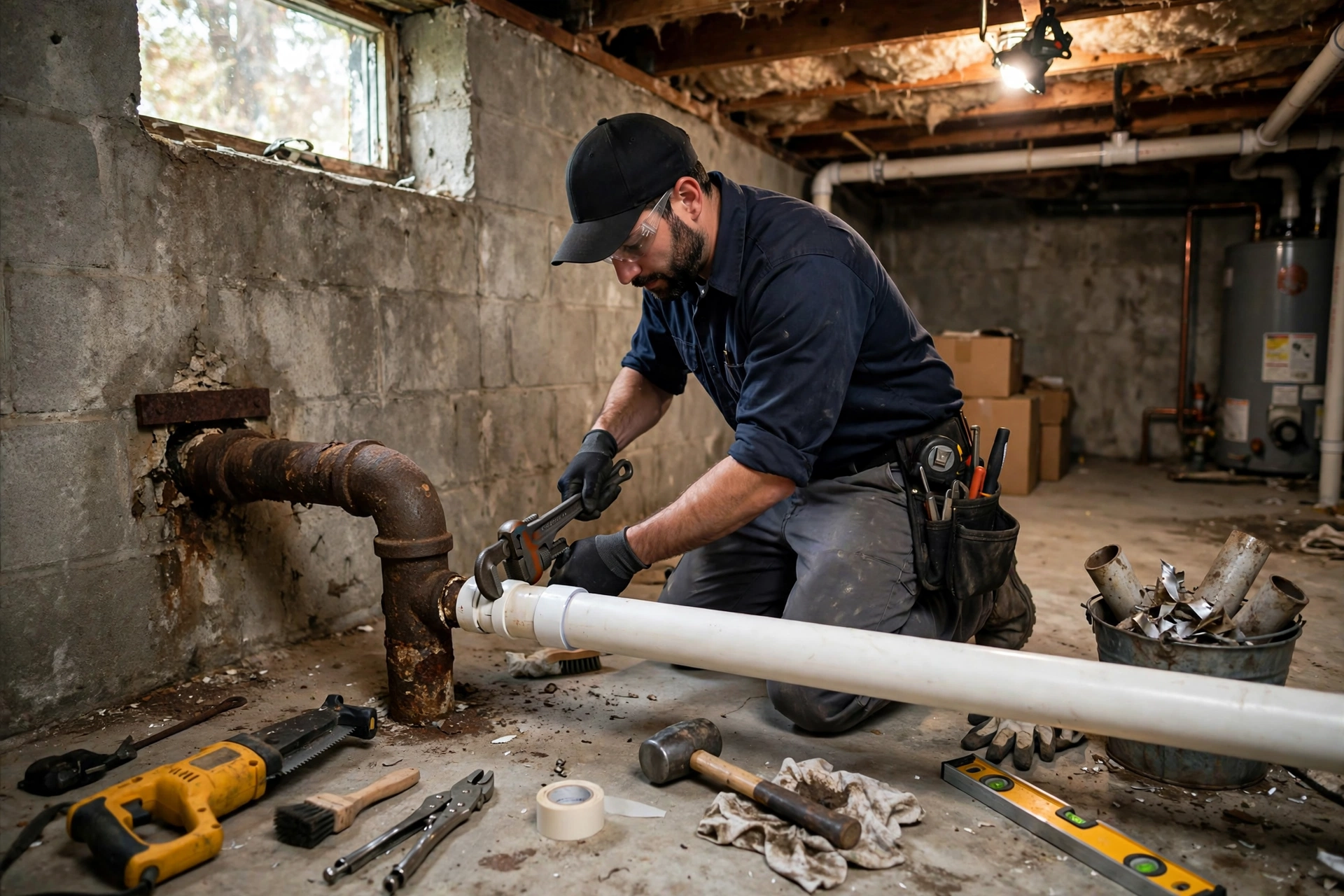
Replacement swaps the corroded line for smooth modern pipe with no joints for roots to enter and nothing to corrode.
What Does Cast Iron Replacement Involve?
For the underground lateral, the most common approach today is pipe bursting. A bursting head breaks apart the old cast iron underground while pulling a new continuous pipe, usually HDPE, into the same path. Two small access pits, no open trench across your yard, and the new line is joint-free from end to end. Any excavation starts with a utility locate: contractors call 811 (call811.com) before digging the access pits.
For interior cast iron, the drain stacks and branch lines inside the walls and basement, replacement means cutting out the old pipe and installing PVC or ABS. It's more disruptive than underground work because the pipes are in the building, but the new pipe will outlast the house.
Many Ohio homeowners do both at once if both are failing, since one mobilization covers the whole job. Get the plan in writing with the scope clearly defined: which lines, what material, what access points. And if you want a sense of the numbers, our Ohio sewer repair guide covers the factors that move the plan.
To see the full range of options, start with cast iron pipe replacement and trenchless sewer repair.
Here is how aging cast iron compares to the modern pipe that replaces it:
| Feature | Aging cast iron | Modern replacement pipe |
|---|---|---|
| What it is | Heavy iron pipe, the standard from the 1920s to the early 1960s | PVC or HDPE plastic pipe |
| Cited lifespan | 50–75 years | 75–100+ years for PVC |
| How it fails | Interior scale narrows the pipe; channeling wears through the bottom; corrosion attacks inside and out | Resists corrosion; smooth interior with no scale; no joints for roots to enter |
| Repair outlook | Spot repair for isolated damage; full replacement when corrosion runs through the line | Pipe bursting for the underground lateral; cut-and-replace for interior stacks |
Cast Iron FAQs
Cast iron drain and sewer pipes typically last 50 to 75 years, depending on soil conditions, water chemistry, and how heavily they're used. Most cast iron in Ohio homes was installed between the 1920s and the 1960s, which means a large share of it is at or past the end of that range right now. A camera inspection shows the actual remaining condition better than any age assessment.
Repeated drain clogs that keep coming back, slow drains throughout the house, a rotten-egg or sewage smell in the basement, rust-colored water or flakes in fixtures, and visible corrosion or cracks on exposed basement piping. On camera, failing cast iron shows rough scale buildup, channeling along the bottom of the pipe, and sometimes cracks or holes through the pipe wall.
Channeling is when wastewater carves a trough along the bottom of a cast iron pipe, wearing through the metal over decades. The bottom of the pipe gets thinner and thinner until it develops cracks or holes, while the top still looks fine from the outside. It's one of the most common ways old cast iron fails, and it only shows up on a camera inspection, not from outside the pipe.
It depends on the extent of the damage. An isolated crack or one bad section can sometimes be spot-repaired. But when corrosion and channeling run through the whole line, which is common at 60-plus years, piecemeal repairs become a losing game, you're handling repeatedly to chase the next weak spot. At that point, replacing the full run, often by pipe bursting which pulls new pipe through the old one, is simpler in the long run.
Yes. Pipe bursting breaks apart the old cast iron as it pulls a new continuous pipe, usually HDPE or PVC, into place along the same path. It's one of the best applications for the method because it replaces the entire line in one pass with minimal digging. The new pipe has no joints for roots to enter and won't corrode.
Own a Pre-1960 Home? Find Out What Your Pipes Look Like.
A camera inspection shows the real condition of your cast iron, and we'll show you the footage so you can decide with facts.
Call (614) 350-5706