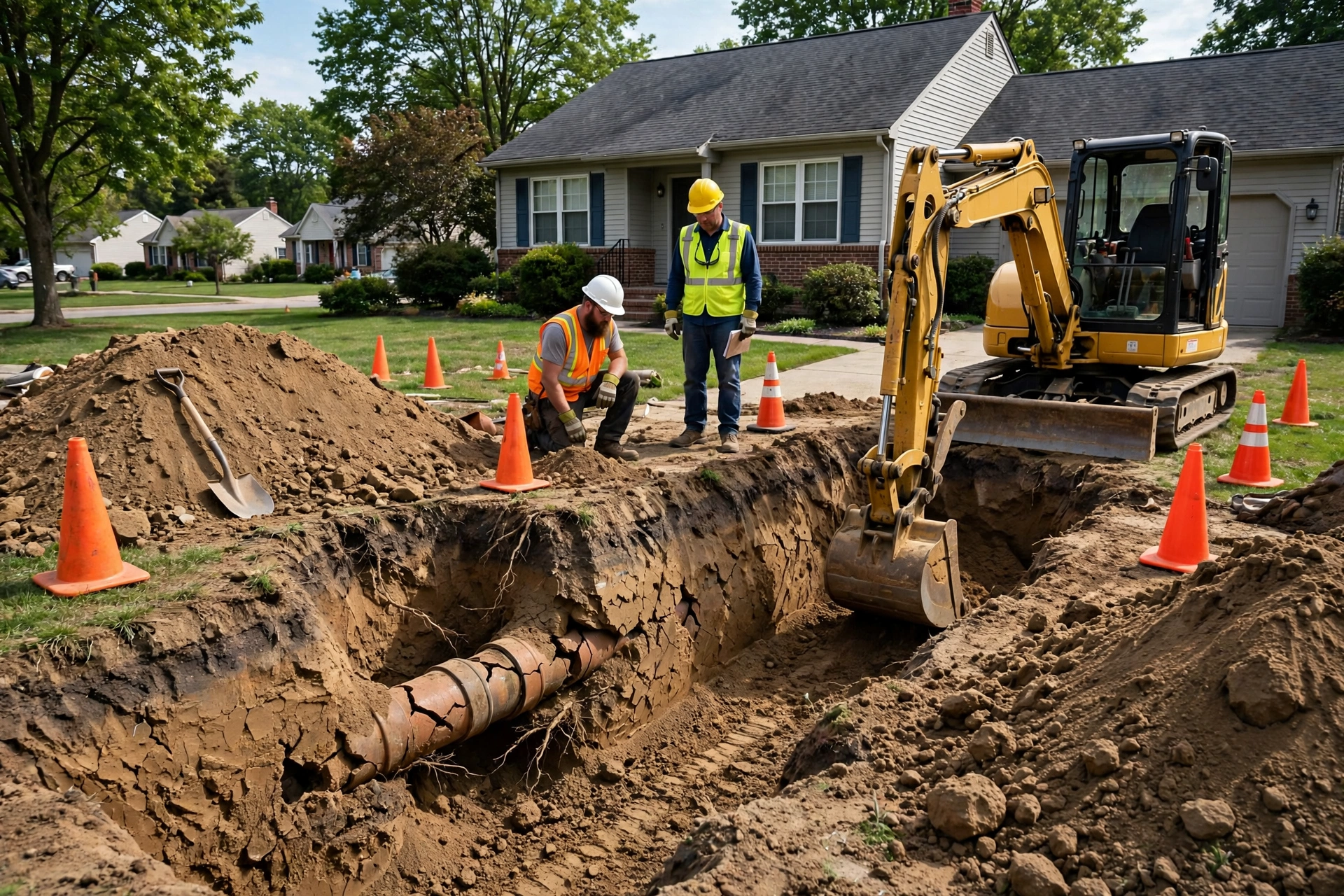
Sometimes the honest answer is a trench. When a line is collapsed, mis-sloped, or needs a new route, open excavation is the fix that actually lasts, and we'll tell you straight when it's simpler than trenchless too.
Traditional sewer line replacement is the open-trench method: we dig down to the old pipe, remove it, and lay new pipe in its place.
When Is Digging the Right Call?
We do trenchless work every week, and we still recommend excavation for about a third of the full replacements we plan. Here's when digging wins on the merits.
The line has collapsed in multiple places.Pipe bursting handles many single collapses, but a line that has caved in several spots, or lost whole sections, is often faster and simpler to expose and replace directly.
The slope is wrong. Bellies (sags that hold wastewater) and backfall (pipe sloping the wrong way) can't be fixed from inside. Lining copies the old grade exactly; excavation lets us re-bed the new pipe at the correct slope.
The route needs to change. Maybe the original line runs under a new addition, a pool, or a retaining wall that wasn't there in 1962. Digging a new route around the obstacle is the only option.
The line is shallow. Not every Ohio lateral is deep. Ranch homes on slabs and lines running to an alley tap can sit just a few requirementt down, and a shallow dig is often the simplest fix available, trenchless included.
You want everything visible and verified. Some homeowners simply prefer seeing the new pipe in the ground with their own eyes. Excavation is the most inspectable method there is: you, the city inspector, and our crew all look at the same open trench.
The honest framing we give every customer: we make our living doing trenchless work too, so when we recommend a trench, it's because the camera footage says the line needs it. We'll show you the footage and walk through the math on both options before you decide.
What Does the Job Look Like, Day by Day?
Knowing the sequence takes the mystery out of it. Here's a typical residential excavation replacement in Ohio, from first shovel to final grade.
Locate and expose
Utilities are marked through the Ohio utility locate, the trench path is laid out, and topsoil is stripped and stockpiled separately. The excavator opens the trench down to the old line.
Remove and bed
The failed pipe comes out. The trench bottom gets graded to the correct slope and lined with compacted gravel bedding so the new pipe sits on a stable, even base.
Lay and connect
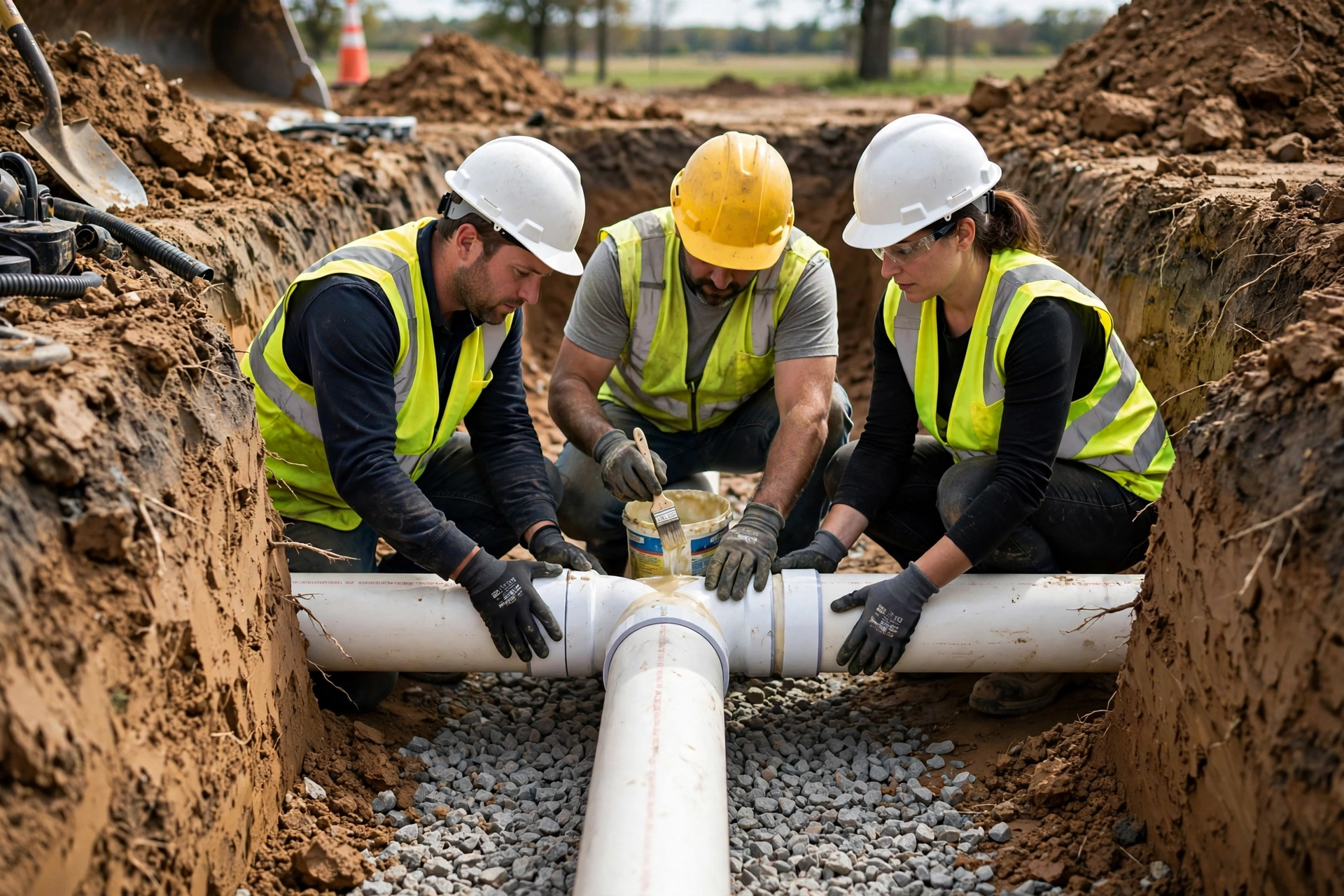
New PVC pipe goes in section by section with gasketed joints, tied into the house drain and the city tap or septic line, with a proper cleanout installed for future access.
Inspect
The municipal inspector examines the open trench: pipe material, slope, bedding, and connections. Nothing gets buried until it passes.
Backfill and restore
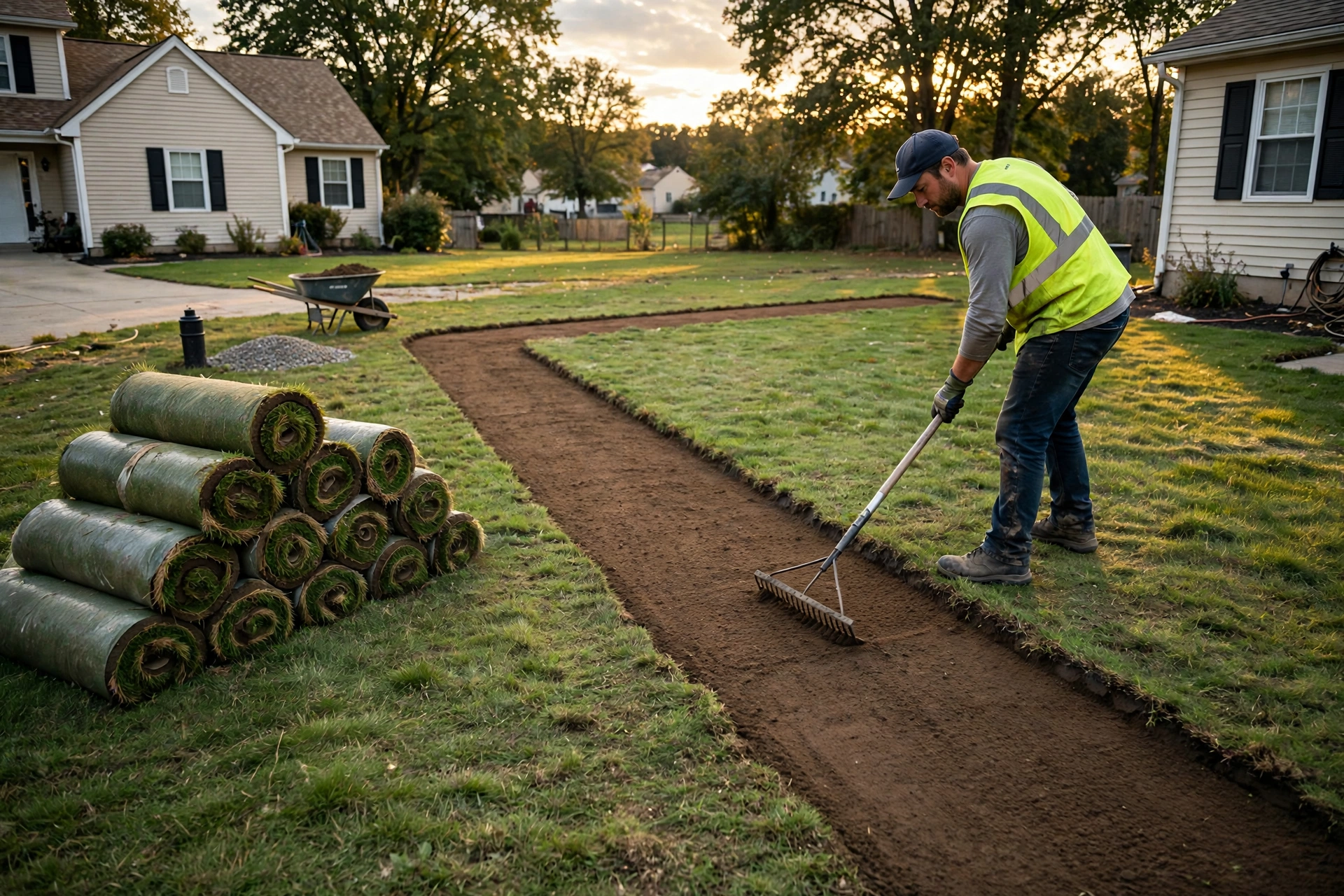
The trench is backfilled in compacted lifts to prevent settling, topsoil goes back on top, and the surface is restored: seed or sod on lawns, patched concrete on drives and walks.
Most residential jobs run two to five working days. Weather can shift the schedule, Ohio spring rains turn trenches into swimming pools, and we build contingency days into the written plan rather than promising a date we can't keep.
What Pipe Goes in the Ground?
We install PVC sewer pipe: SDR-35 for standard buried runs and thicker Schedule 40 under driveways and slabs. Here is what each material brings, and how the options compare.
PVC SDR-35. The standard for gravity sewer laterals. SDR-35 is the green or white PVC pipe with bell-and-gasket joints that cities across Ohio spec for sewer work. It's smooth inside, immune to the corrosion that killed your cast iron, and roots can't penetrate its fused-style gasket joints the way they slipped into clay tile.
Schedule 40 PVC where it counts. Under driveways and other load-bearing surfaces, we step up to the thicker-walled Schedule 40 for extra crush resistance.
Gravel bedding and proper slope. The pipe is only as good as what it sits on. Compacted stone bedding keeps the line from settling into bellies, and we set the grade so wastewater flows by gravity at a self-cleaning velocity, steep enough to carry solids, gentle enough not to outrun them.
New cleanouts. Every replacement gets an accessible cleanout at the house and usually one near the property line. Future maintenance, camera work, or jetting happens through the cleanout instead of through your basement.
New SDR-35 PVC on compacted gravel bedding, set to grade. The gasketed joints are what keep roots out for decades.
PVC is what we install, but homeowners often ask about the other materials they see pland or dug up. Here is how the common sewer pipe materials compare, using widely published industry lifespan ranges.
Sewer pipe materials: typical lifespan and weaknesses
Material
Typical lifespan
Weakness
PVC
50 to 100 years
Brittle if struck during future digging; needs proper bedding to prevent bellies
ABS
50 to 80 years
Not the standard for buried sewers in most Ohio municipalities; can deform under heavy soil loads
Cast iron
50 to 75 years
Corrodes and scales from the inside over time, narrowing the pipe
Clay (vitrified clay)
50 to 60 years
Brittle; joints separate and admit tree roots
HDPE
50 to 100 years
Higher material work; needs specialized heat-fusion equipment
What Permits and Inspections Does Ohio Require?
Yes: Ohio cities and counties require a permit for sewer lateral replacement, and nearly all of them require an inspection of the open trench before backfill, and we handle all of it. The Ohio EPA administers the statewide wastewater rules that local sewer permits build on. The inspector checks pipe material, joint type, slope, bedding depth, and the connection at the city main or tap.
We also call in the Ohio utility locate before the excavator arrives. Gas, electric, water, telecom, and fiber get marked along the trench path, and we hand-dig or vacuum-excavate near any marked line rather than risking a strike. If your property has a septic-to-sewer conversion or a combined sewer connection, which older Cleveland and Cincinnati neighborhoods still have, the permit office may require additional sign-offs, and we build that into the schedule. Combined sewers fall under federal discharge rules: the EPA's NPDES program covers sewer discharge permits. If your property is on the septic side of a conversion, the U.S. EPA publishes homeowner guidance on septic and sewer systems.
One thing to know: unpermitted sewer work can bite you at resale. Ohio buyers' inspectors flag undocumented lateral replacements, and some cities can require you to dig it back up for inspection. The permit work a little and protects you a lot.
What Happens to My Yard and Driveway?
This is the question behind every excavation plan, so here's the full, honest answer. The trench follows your line's path, typically a strip a few requirementt wide from the house to the street, alley, or tap. Everything outside that strip stays as it was.
Lawns. Topsoil is stripped and stockpiled separately before digging, then spread back over the compacted backfill. We finish with seed or sod depending on what your contract specifies, and we tell you which one you're getting in writing.
Driveways and walkways. Concrete gets saw-cut in clean lines, removed, and re-poured after backfill. The patch is new concrete, so it won't match weathered slabs perfectly, and we say that upfront rather than letting you discover it.
Landscaping. We work around plantings where the trench path allows. Anything directly over the line has to move, and we flag those conflicts during the assessment walk, not on dig day.
Settling. Backfill is compacted in lifts to minimize settling, but some minor settlement over the first season is normal in Ohio clay. If a low spot forms along the trench line within the first year, we come back and top it off.
Backfilled, compacted, and re-graded. The trench line grows in within a season; the new pipe lasts for generations.
What Does Open-Trench Replacement Involve in Ohio?
Excavation process is the most variable of any method because so much depends on what's between the surface and the pipe. These are the factors that set your plan:
Depth. The single biggest driver. A 4-foot-deep line is a quick dig; a 10-foot-deep basement lateral needs trench shoring, more excavation time, and more backfill. Ohio basement laterals run deep, and depth is planned accordingly.
Length. More trench, more pipe, more backfill, more restoration. Straightforward.
Surface. Grass is simple to restore. Concrete driveways, patios, and sidewalks add saw-cutting, removal, and re-pouring.
Soil. Ohio clay digs cleanly but is heavy. Unexpected rock, rubble fill, or high groundwater slow the work and add work.
Interior work. If the trench continues under your basement slab, concrete cutting and re-pouring are handled as a separate item.
Permits and inspections. Included in our written plan, not added later.
Realistic statewide ranges for every method, including when digging beats trenchless on plan, are in our Ohio sewer repair guide. Your exact number comes from a site visit and a camera inspection, and it arrives as a fixed written plan. Call (614) 350-5706.
Traditional Replacement FAQs
Most residential excavation jobs in Ohio take two to five days of actual work, depending on the length and depth of the line and what surface has to be restored. A short, shallow line in a lawn can be dug, replaced, and backfilled in two days. A long, deep line under a driveway with concrete restoration takes longer. Your written schedule spells out the day-by-day plan before we start.
No. The trench follows the line's path, usually a strip a few requirementt wide from the house to the street or alley. We strip and stockpile the topsoil separately so it goes back on top, and we restore the surface when the pipe work is done. The trench line will look like a construction zone for a few days and a new-grass strip for a few weeks, not a ruined yard.
Three reasons: the line can't be saved trenchlessly, the grade needs correcting, or digging is simply simpler. Collapsed lines with missing sections, bellies that hold wastewater, and lines that need a completely new route all call for excavation. Shallow lines are also simple to dig, sometimes simpler than any trenchless method. We do both, so we recommend whichever genuinely work you less over the life of the repair.
If the damaged section runs under the basement slab, we cut a neat trench through the concrete, remove the old pipe, lay the new one, and re-pour the slab. The patch is concrete, not a perfect match to your old floor, and we tell you that upfront. Interior work adds days to the schedule and is handled separately in your written plan.
Yes. Ohio municipalities require permits for sewer lateral replacement and an inspection before the trench is backfilled. We pull the permits, schedule the inspections, and call in the Ohio utility locate so gas, electric, water, and telecom lines are marked before the excavator arrives. You never touch the paperwork.
Related Services
Before anyone digs, the line gets a sewer camera inspection so the trench goes exactly where it needs to and nowhere else. If the footage shows the line can be saved without excavation, we'll recommend trenchless repair instead, either pipe lining or pipe bursting. Compare all three approaches in our trenchless overview before you decide.
Not Sure Whether Your Line Needs a Trench?
The camera footage makes the call. Get an inspection and a fixed written plan for both options.