Sewer Line Repair in Rocky River, OH
Rocky River sits above a deep river gorge, and the slopes that make the valley beautiful keep its 1920s to 50s sewer lines on the move. We camera-diagnose every job and fix it trenchless or traditional.
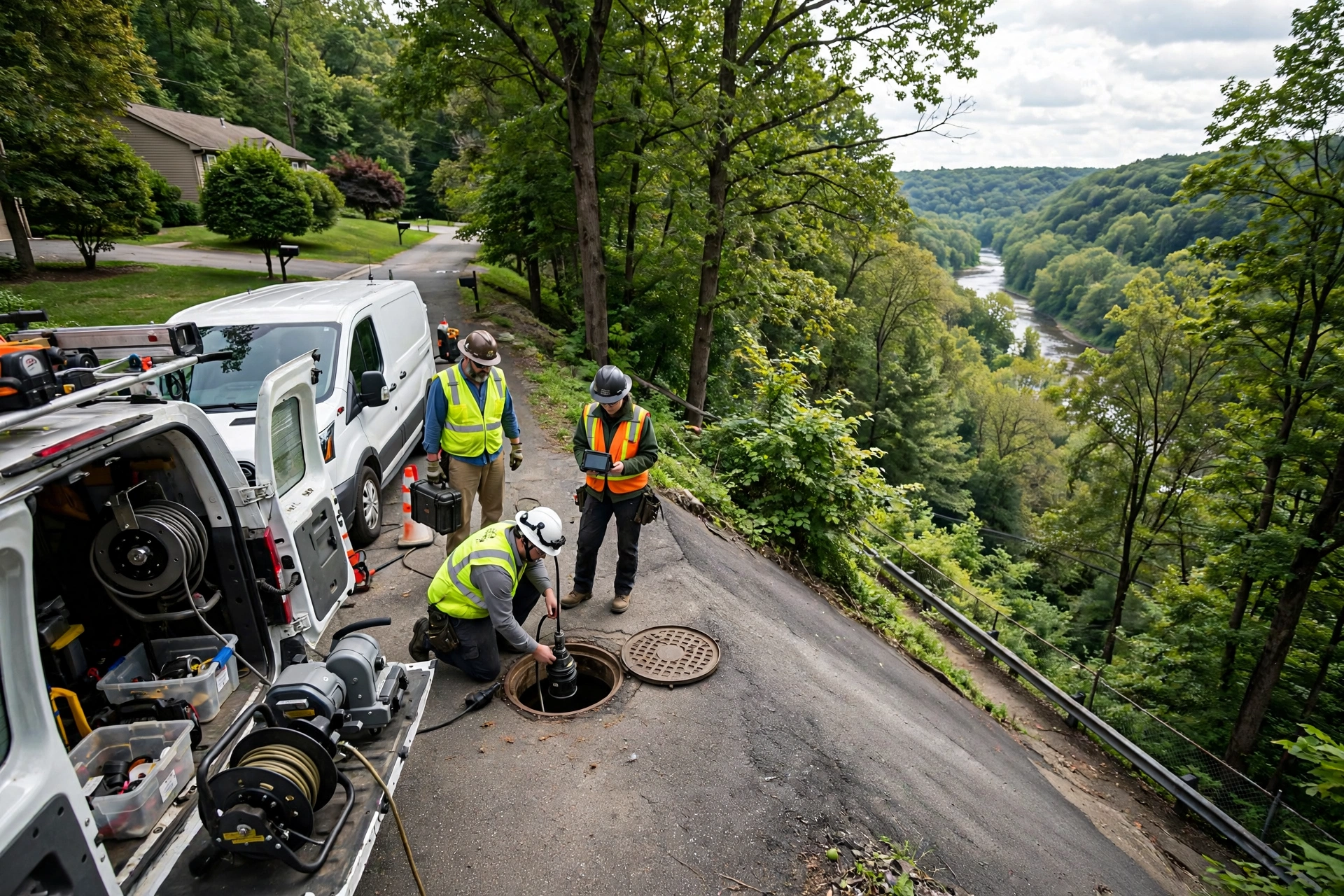
Rocky River sits above a deep river gorge, and the slopes that make the valley beautiful keep its 1920s to 50s sewer lines on the move. We camera-diagnose every job and fix it trenchless or traditional.
Last updated: October 13, 2026
The Rocky River Reservation is a gorge, and gorges move. Every lateral on the valley slopes lives in slowly shifting ground.
Homes above the valley sit on grades where soil creeps downhill over the years, saturated by rain and river-level groundwater. A sewer lateral is a rigid line of clay tile or cast iron segments, and it cannot flex with the creep. Joints separate, sections offset, and eventually the line shears. The classic symptom is a backup that recurs in the same spot after every heavy rain.
Valley-side laterals also run deep, dropping with the grade toward the river. Deep pipe makes traditional open-trench replacement disruptive and a bigger job. That is why so much Rocky River work goes trenchless: trenchless sewer repair replaces the line from small access pits no matter how deep it runs, and the slope stays exactly as it was.
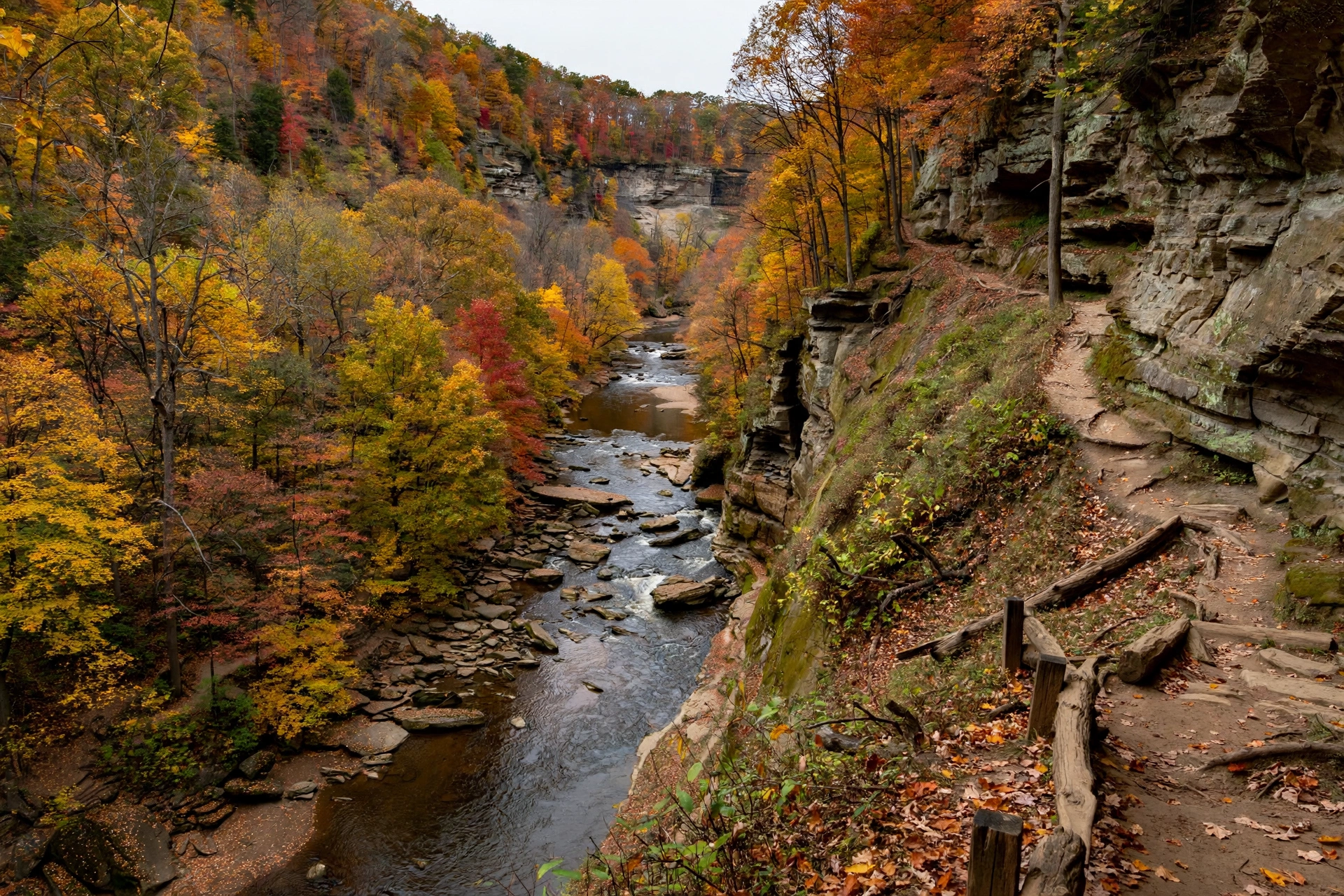
The Rocky River Reservation's gorge is beautiful above ground and a slow-motion problem for lines on its slopes.
The Detroit Road corridor and the pre-war neighborhoods hold 1920s to 40s homes with original vitrified clay tile laterals and mortar joints, running from stone or brick foundations. After the better part of a century, the mortar has crumbled, mature street trees have pushed roots into every damp joint, and sections have shifted with the soil.
Mid-century streets add cast iron to the mix, which rusts from the inside out and looks fine until the bottom of the pipe is paper thin. Whatever the decade, the camera reads the material and the condition in about an hour, and the fix follows what it finds: lining for sound pipe with bad joints, bursting for collapsed or sheared sections.
Groundwater runs high near the river valley, and it presses into every failed joint, a process called infiltration. Valley-side basements show it first: damp floors, weeping walls, and drains that gurgle after storms. A compromised lateral near the valley can take on far more groundwater than sewage.
Winter adds the freeze-thaw loop on top, wedging cracks wider each season, and spring rains pour through the widened joints. If your valley-side drains slow every spring like clockwork, infiltration is the story, and a fall camera inspection catches it while lining is still an option.
Cleveland Water reports its hardness at about 7 grains per gallon (120 mg/L), which counts as moderately hard. That leaves gradual mineral scale in water heaters and supply lines over the years, but for your sewer lateral the water-chemistry story that matters is corrosion: treated, chlorinated water works on cast iron from the inside out, which is why Cleveland Water doses its supply with orthophosphate to slow pipe corrosion. If your home still has original cast iron, that chemistry has been at work for decades, and a camera inspection shows how far it has gone.
Maintain them on the weather’s schedule, not the calendar’s. In Rocky River, spring rains swell groundwater near the valley, late summer and fall bring the year's most aggressive root growth, and winter freeze-thaw wedges small cracks wider. A camera inspection every few years, plus the seasonal habits below, catches most problems while they are still minor.
You own the lateral from your house to the public main. The City of Rocky River maintains the local sewer mains, and the Northeast Ohio Regional Sewer District runs the regional interceptor sewers and treatment plants serving Cleveland and 61 surrounding communities. If several homes on your street back up at once, call the city, it is likely a main. If it is just your house, the lateral is the suspect, and that is our work.
Rocky River requires permits for lateral repair and replacement, so check with the City of Rocky River Building Department before work begins for the current requirements. Ohio EPA publishes guidance on how lateral sewers must be built and inspected. We pull the permits and schedule inspections as part of the job. Start with a camera inspection from Ohio Sewer Masters. We also serve nearby Lakewood, Westlake, and North Olmsted.
It can. Homes above the Rocky River valley sit on slopes where soil slowly creeps downhill, and rigid clay or cast iron pipe can't flex with that movement, joints separate and sections offset over time. Valley-side laterals also run deep, which makes traditional digging disruptive. If your backups recur after heavy rain, the camera often shows offset joints where the grade drops.
Most likely vitrified clay tile with mortar joints, running from a stone or brick foundation to the street. After 90 years, the mortar has crumbled, roots from mature street trees have pushed in, and sections have shifted. A camera inspection shows the condition, and many of these lines are strong candidates for trenchless lining.
Groundwater runs high near the river valley, and it presses into every failed joint, a process called infiltration. The basement, being the lowest point, shows it first: damp floors, weeping walls, gurgling drains. Sealing the joints with lining, or replacing shifted sections by bursting, keeps the groundwater outside the pipe.
Yes. The City of Rocky River requires permits for sewer lateral repair and replacement, with inspection typically before backfill. We handle the permit application and schedule inspections as part of every job, it's included in the written plan.
Call the City of Rocky River. The city maintains the local sewer mains, and the Northeast Ohio Regional Sewer District (NEORSD) runs the regional system. A street-wide backup is a main-line issue. If it's just your house, your lateral is the prime suspect, and that's our work. Call us at (614) 350-5706 for a camera diagnosis.
Also serving Lakewood, Westlake, Fairview Park, and Bay Village. Landmarks we work around include the Rocky River Reservation, Cleveland Clinic Fairview Hospital on Lorain Avenue, and the Detroit Road corridor. We serve all of Rocky River's 44116 ZIP code.
One inspection, one honest diagnosis, one upfront plan, anywhere in the Cleveland metro.
Call (614) 350-5706