Sewer Line Repair in Lakewood, OH
One of Ohio's densest suburbs, with 1920s clay tile under nearly every street and tree roots working every joint. We camera-diagnose every job and fix it trenchless or traditional.
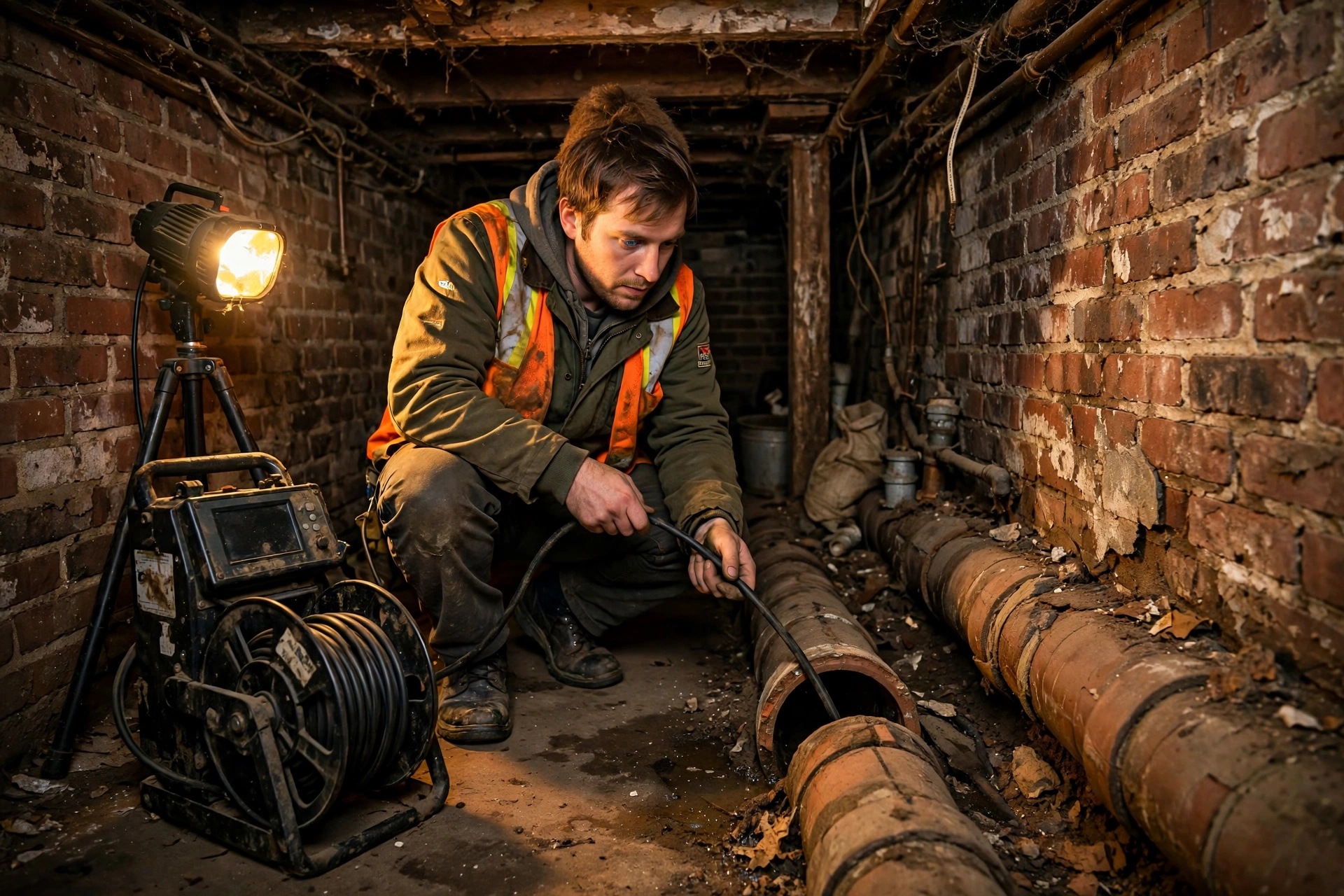
One of Ohio's densest suburbs, with 1920s clay tile under nearly every street and tree roots working every joint. We camera-diagnose every job and fix it trenchless or traditional.
Last updated: October 13, 2026
Lakewood is a streetcar suburb, built dense and early. Nearly every lateral in the city is 1920s clay tile, and nearly every one has had a century to fail.
The typical Lakewood lateral is vitrified clay tile with mortar joints, running a short distance from a brick or stone foundation to the street. Short runs should be simple, but density complicates everything: shared driveways, narrow side yards, mature landscaping, and sidewalks the pipe passes under. When a line fails here, traditional open-trench digging means tearing through a lot of major surface.
That is why Lakewood is trenchless country. Trenchless sewer repair replaces the lateral from two small access pits, lining the old pipe or bursting it apart and pulling new HDPE through. The duplex stays rented, the driveway stays whole, and the street trees stay standing.
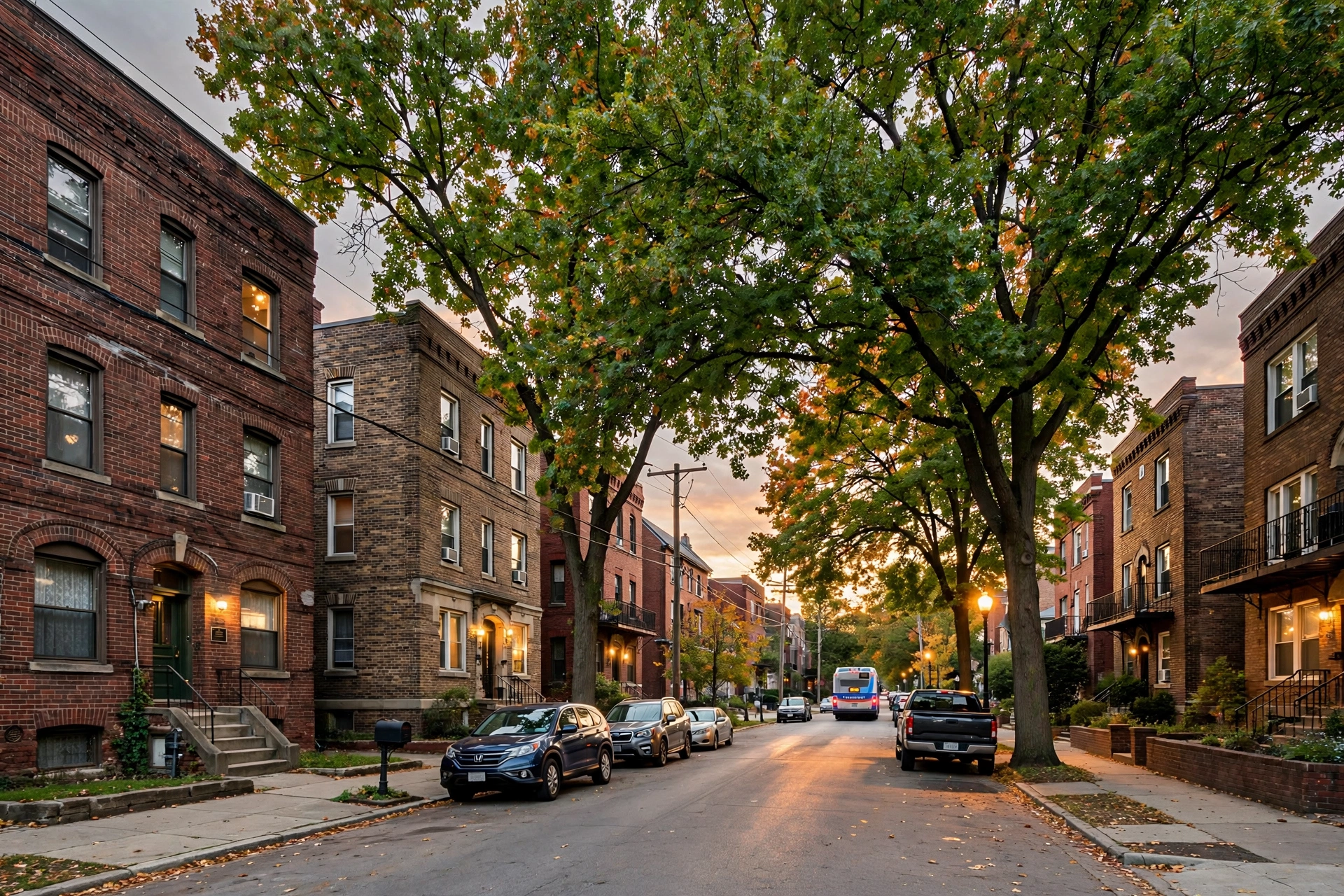
Lakewood's dense streetcar-suburb streets hide a century of clay tile laterals, and a century of tree roots.
This is Lakewood's defining sewer story. The city has one of the densest tree canopies in the Cleveland metro, and those mature maples, oaks, and elms spend every growing season hunting for moisture. Clay tile joints, with mortar crumbled after a century, leak just enough to attract fine root hairs.
The roots thicken year after year, wedging joints apart and filling the pipe with a fibrous mass. Homeowners know the rhythm: a plumber snakes the line every spring, it flows fine for months, then slows again by fall. Snaking cuts roots but leaves every entry point open. The only fix that ends the cycle is removing the entry points, which is exactly what lining and bursting do.
Birdtown, the historic district of small worker cottages near Madison Avenue, is the textbook case: original clay laterals, big old trees, and root intrusion as a rite of passage. The Clifton Boulevard corridor's apartment buildings add their own twist, with long shared laterals serving multiple units.
Lakewood runs right to Lake Erie, and the water table near the shore sits high. Groundwater presses into every cracked joint, a process called infiltration, and basements along the lakefront and the northern streets show it first: damp floors, weeping walls, and drains that gurgle after storms.
The lake also delivers the freeze-thaw loop. Wet winters with temperatures seesawing across freezing wedge cracks wider each season, and lake-effect snow keeps the ground saturated. Lines that were marginal in October become emergencies by March. A fall camera inspection is the simplest insurance a Lakewood homeowner can buy.
The drinking water here comes from Cleveland Water, which reports hardness of about 7 grains per gallon, moderately hard. Moderate hardness means slow mineral scale in water heaters and fixtures, but underground the chemistry to watch is corrosion. Decades of treated water flowing through cast iron thins the pipe from the inside out, which is exactly why so many Lakewood laterals fail with paper-thin bottoms, and why the camera matters more than the calendar.
Maintain them on the weather’s schedule, not the calendar’s. In Lakewood, spring rains meet a high water table near the lake, late summer and fall bring the year's most aggressive root growth under the dense tree canopy, and winter freeze-thaw wedges century-old mortar joints wider. A camera inspection every few years, plus the seasonal habits below, catches most problems while they are still minor.
You own the lateral from your house to the public main. The City of Lakewood maintains the local sewer mains, and the Northeast Ohio Regional Sewer District runs the regional interceptor sewers and treatment plants serving Cleveland and 61 surrounding communities. If sewage backs up across several homes on your street, call the city. If it is just your house or your duplex, the lateral is the suspect, and that is our work.
Lakewood requires permits for lateral repair and replacement, so check with the City of Lakewood Building Department before work begins for the current requirements. These jobs must meet the lateral sewer construction and inspection standards Ohio EPA sets out. We pull the permits and schedule inspections as part of the job. Start with a camera inspection from Ohio Sewer Masters. We also serve nearby Rocky River, Parma, and Westlake.
Lakewood's 1920s clay tile laterals have mortar joints that crumbled decades ago, and the city's mature street trees send fine root hairs into every damp joint. Snaking cuts the roots back but leaves the entry points open, so they grow back thicker each year. Lining or bursting the pipe seals the joints permanently, which is the only fix that ends the annual clog cycle.
Almost certainly vitrified clay tile with mortar joints, running from a brick or stone foundation to the street. After a century under Lakewood's dense streets, the joints are crumbling and offset, and roots have had decades to work in. A camera inspection shows the condition, and many of these lines are strong candidates for trenchless lining.
Usually, yes, and in Lakewood that's a big deal. Tight lots, shared driveways, and mature landscaping make open trenching painful here. Pipe lining and pipe bursting replace the lateral from small access pits, so the yard, driveway, and sidewalk stay intact. The camera tells us which trenchless method fits your pipe.
Yes. The City of Lakewood requires permits for sewer lateral repair and replacement, with inspection typically before backfill. We handle the permit application and schedule inspections as part of every job, it's included in the written plan.
Both, in different roles. The City of Lakewood maintains the local sewer mains, and the Northeast Ohio Regional Sewer District (NEORSD) runs the regional system and treatment. You own the lateral from your house to the main. A street-wide backup is a city or NEORSD issue; a solo backup at your house is your lateral, and that's our work. Call us at (614) 350-5706 for a camera diagnosis.
Also serving Rocky River, Fairview Park, and Cleveland's west side, plus the greater Lakewood area. Landmarks we work around include Birdtown, the Clifton Boulevard corridor, Lakewood Park, Detroit Avenue, and the Cleveland Clinic Lakewood Family Health Center. We serve all of Lakewood's 44107 ZIP code, from Clifton Boulevard to the Rocky River border.
One inspection, one honest diagnosis, one upfront plan, anywhere in the Cleveland metro.
Call (614) 350-5706