Sewer Line Repair in North Olmsted, OH
North Olmsted's 1950s to 70s ranches and split-levels are hitting cast iron end-of-life, and the flat clay terrain floods basements first. We camera-diagnose every job and fix it trenchless or traditional.
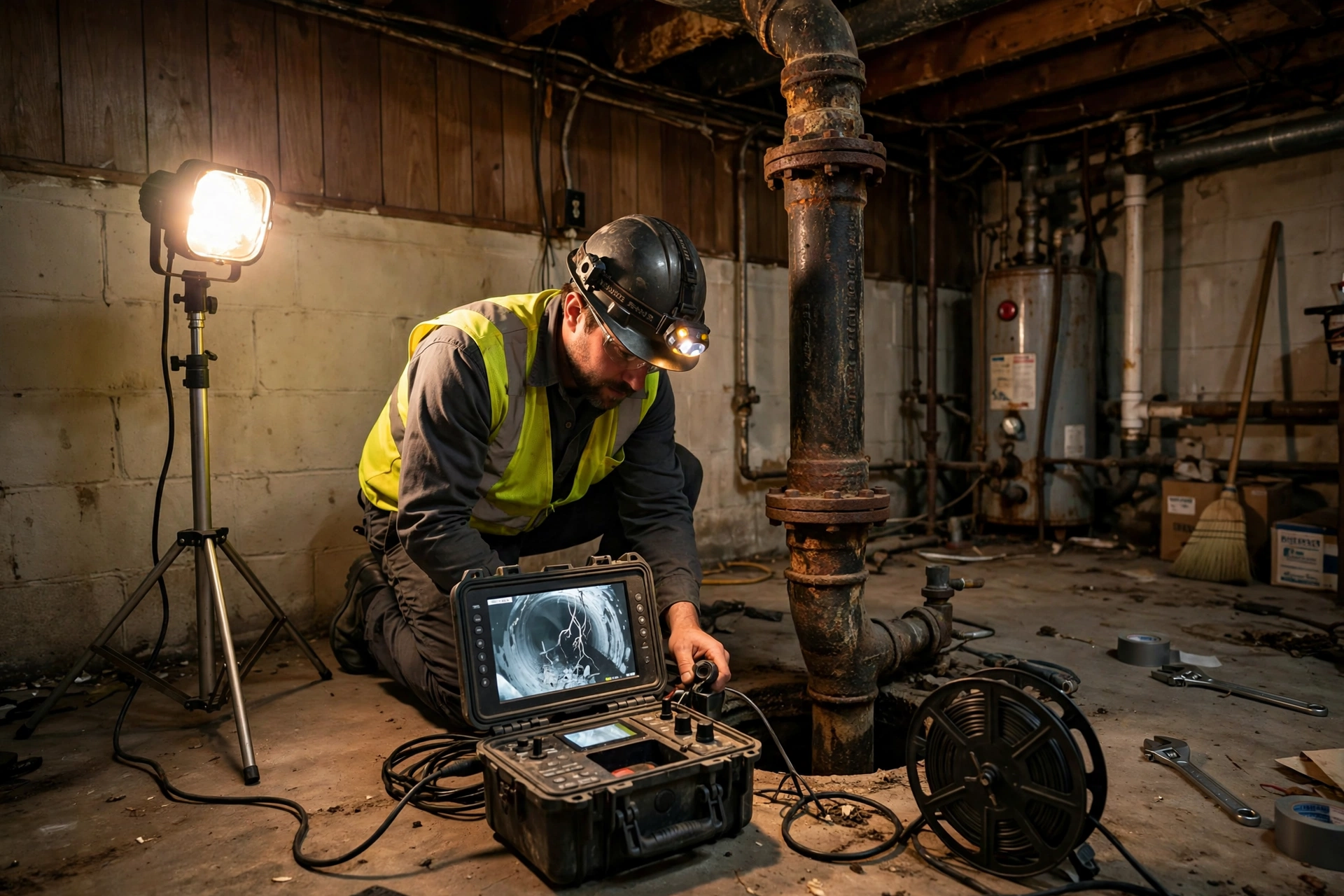
North Olmsted's 1950s to 70s ranches and split-levels are hitting cast iron end-of-life, and the flat clay terrain floods basements first. We camera-diagnose every job and fix it trenchless or traditional.
Last updated: October 13, 2026
North Olmsted filled in during the 50s, 60s, and 70s, and that whole generation of pipe is aging out at once.
The standard North Olmsted lateral from that era is cast iron inside the house transitioning to clay tile outside, with mortar joints. Cast iron corrodes from the inside out, looking fine until the bottom is paper thin. Clay tile joints crumble as the mortar ages, and each failed joint invites roots and soil. The failures cluster street by street because the houses went up together.
Ranches and split-levels dominate the housing stock, and their laterals run under driveways and sidewalks on tight lots. When a line fails here, traditional digging grows fast, which is why so many North Olmsted jobs go trenchless.
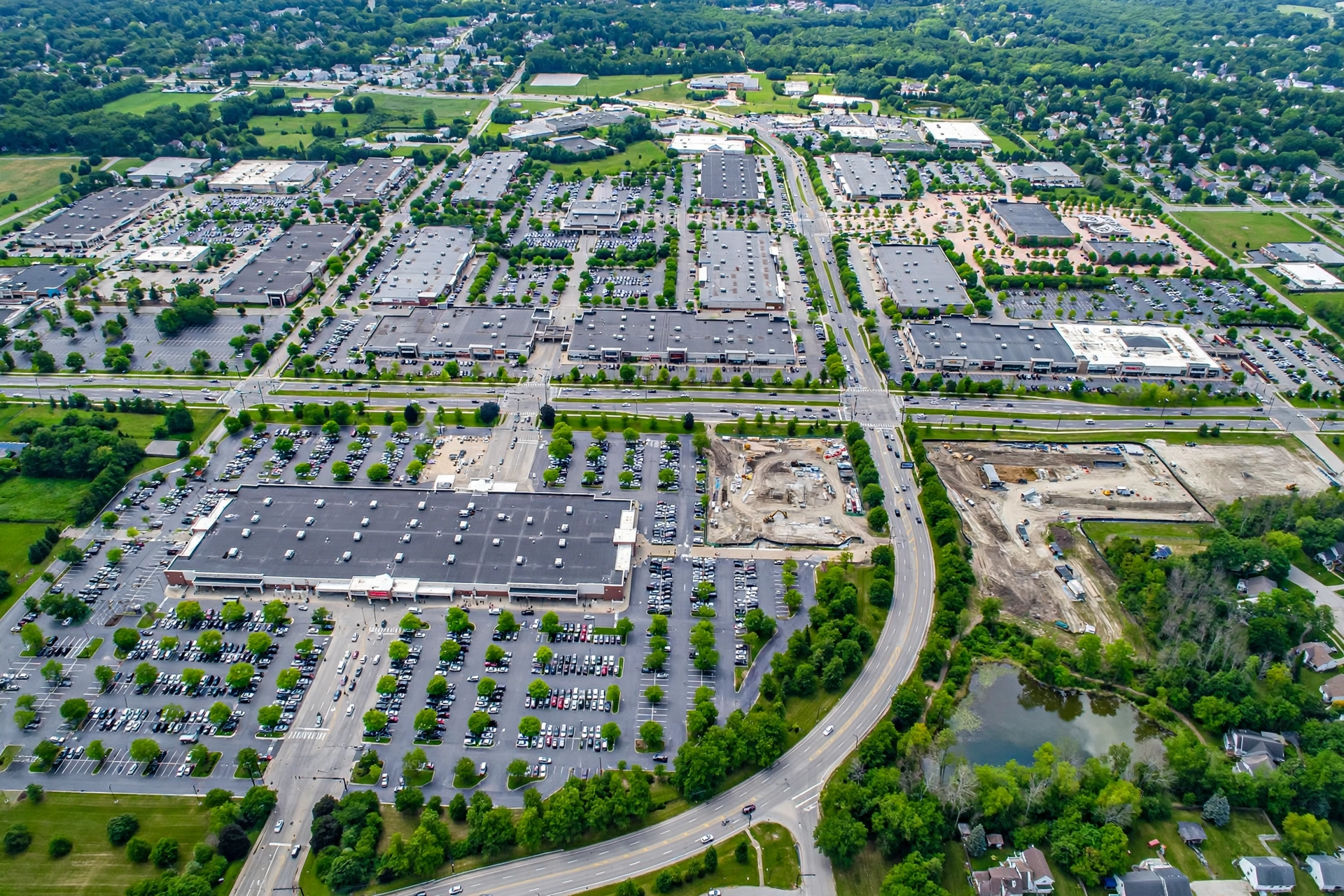
The Great Northern Mall corridor grew up around North Olmsted's oldest residential pockets, and their laterals show it.
The Lorain Road corridor's commercial boom surrounded some of North Olmsted's oldest residential pockets. The homes tucked behind the retail, many from the 50s and 60s, have the oldest laterals in the city: original cast iron and clay that never got replaced while the corridor modernized around them.
Commercial development also changed the ground. Decades of construction, grading, and heavy traffic compacted soils and altered drainage patterns around these older homes. Their laterals absorbed all of it. When we camera-inspect near the corridor, we often find offset joints and root intrusion in lines that predate the mall by decades.
North Olmsted is flat, and its clay soil drains poorly. Water hangs in the ground around your lateral instead of moving through it, which keeps joints saturated and lets groundwater infiltrate every failed connection. After a hard rain, the line takes on far more water than it was designed for, and the basement, being the lowest point, shows it first.
The pattern is unmistakable: everything works fine until a storm, then the lowest drain gurgles or the basement floor gets wet. Snaking clears the immediate blockage but does nothing about the joints letting water in. Trenchless sewer repair seals those entry points, lining the pipe or bursting it, so the next storm has nothing to exploit.
The drinking water here comes from Cleveland Water, which reports hardness of about 7 grains per gallon, moderately hard. Moderate hardness means slow mineral scale in water heaters and fixtures, but underground the chemistry to watch is corrosion. Decades of treated water flowing through cast iron thins the pipe from the inside out, which is exactly why so many North Olmsted laterals fail with paper-thin bottoms, and why the camera matters more than the calendar.
Maintain them on the weather’s schedule, not the calendar’s. In North Olmsted, spring rains pond on flat clay soil, late summer and fall bring the year's most aggressive root growth, and winter freeze-thaw wedges small cracks wider. A camera inspection every few years, plus the seasonal habits below, catches most problems while they are still minor.
You own the lateral from your house to the public main. The City of North Olmsted maintains the local sewer mains, and the Northeast Ohio Regional Sewer District runs the regional interceptor sewers and treatment plants serving Cleveland and 61 surrounding communities. If several homes on your street back up at once, call the city, it is likely a main. If it is just your house, the lateral is the suspect, and that is our work.
North Olmsted requires permits for lateral repair and replacement, so check with the City of North Olmsted Building Department before work begins for the current requirements. Ohio EPA's guidance on lateral sewer construction lays out the standards these jobs must meet. We pull the permits and schedule inspections as part of the job. Start with a camera inspection from Ohio Sewer Masters. We also serve nearby Westlake, North Ridgeville, and Brook Park.
Most likely cast iron inside the house transitioning to clay tile outside, with mortar joints. After 60-plus years, the cast iron is corroding from the inside out and the clay joints are crumbling, which is why North Olmsted ranches from that era are failing in clusters right now. A camera inspection shows exactly where yours stands.
North Olmsted is flat with dense clay soil that drains poorly, so groundwater hangs around your lateral instead of moving away. If a joint has failed, storm water pours in through it, a process called infiltration, and the line overwhelms the lowest drain first. The camera finds the failed joints so we fix the entry points, not just the symptom.
Yes. Pipe lining and pipe bursting replace the lateral from two small access pits, so there's no open trench across the yard, driveway, or sidewalk. That's a real advantage in North Olmsted's tighter lots near the Lorain Road corridor. The camera tells us which trenchless method fits your pipe.
Yes. The City of North Olmsted requires permits for sewer lateral repair and replacement, with inspection typically before backfill. We handle the permit application and schedule inspections as part of every job, it's included in the written plan.
Call the City of North Olmsted. The city maintains the local sewer mains, and the Northeast Ohio Regional Sewer District (NEORSD) runs the regional system. A street-wide backup is a main-line issue. If it's just your house, your lateral is the prime suspect, and that's our work. Call us at (614) 350-5706 for a camera diagnosis.
Also serving Westlake, North Ridgeville, Brook Park, and Olmsted Falls. Landmarks we work around include Great Northern Mall, the Lorain Road corridor, and Southwest General Health Center in nearby Middleburg Heights. We serve all of North Olmsted's 44070 ZIP code.
One inspection, one honest diagnosis, one upfront plan, anywhere in the Cleveland metro.
Call (614) 350-5706