Sewer Line Repair in Berea, OH
Berea's college-town streets hide aging clay and cast iron laterals, and the famous Berea sandstone underneath makes every dig harder. We camera-diagnose every job and fix it trenchless or traditional.
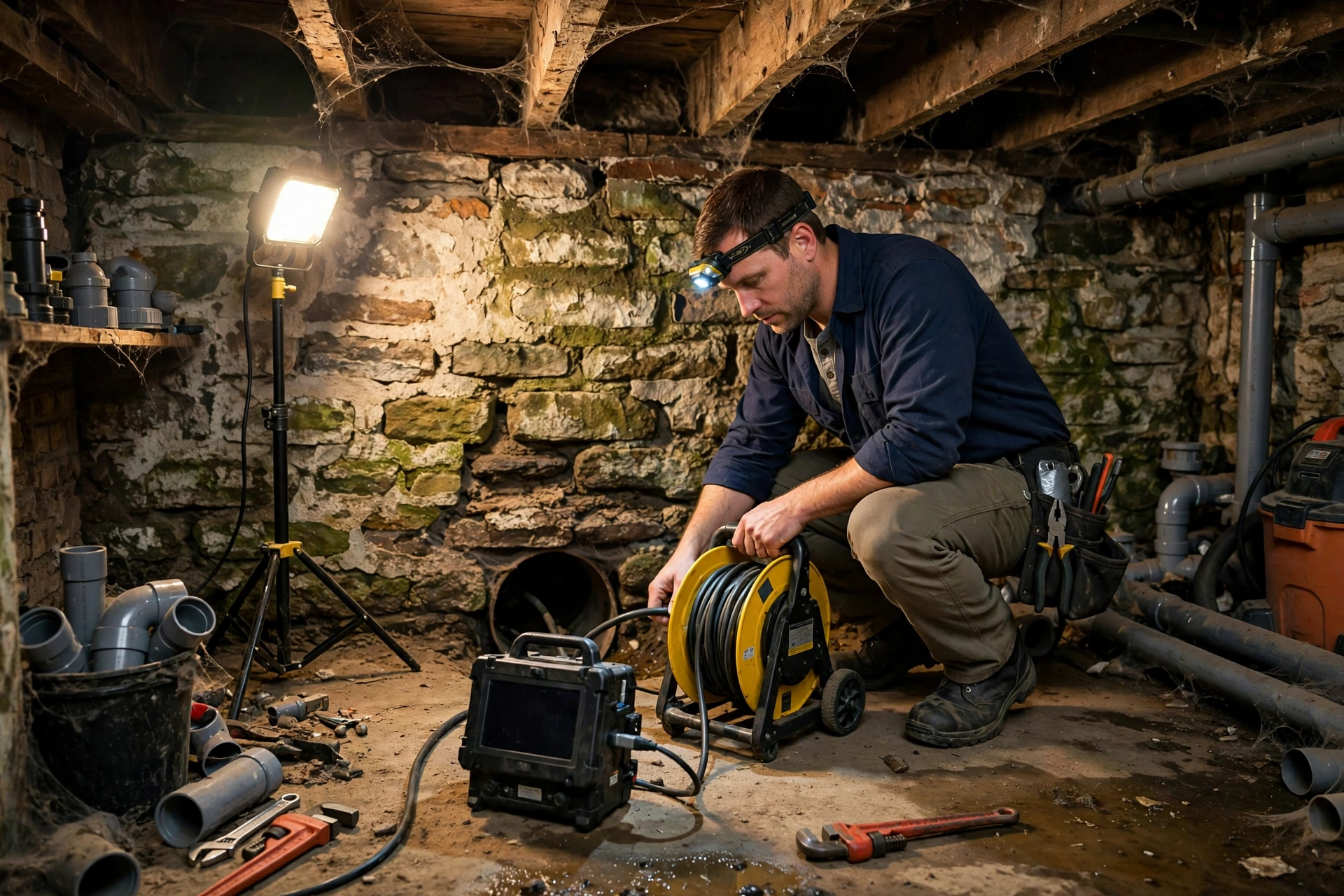
Berea's college-town streets hide aging clay and cast iron laterals, and the famous Berea sandstone underneath makes every dig harder. We camera-diagnose every job and fix it trenchless or traditional.
Last updated: October 13, 2026
Berea grew around Baldwin Wallace University, and its housing stock spans every era, from 1800s farmhouses to post-war plats.
The Triangle district and the historic streets near campus hold some of the oldest laterals in the suburbs: original clay tile with mortar joints, running from stone foundations laid when Berea was a quarry town. Mid-century neighborhoods added cast iron inside to clay outside. And the student rentals near campus put unusual stress on old pipe: more showers, more laundry, more flushes than a single-family home, which exposes every weak joint faster.
That heavy use is why rental-area lines fail younger than their age suggests. A lateral that would limp along for a family of four gives up under rental turnover. The camera shows the joints and root intrusion honestly, regardless of who lives upstairs.
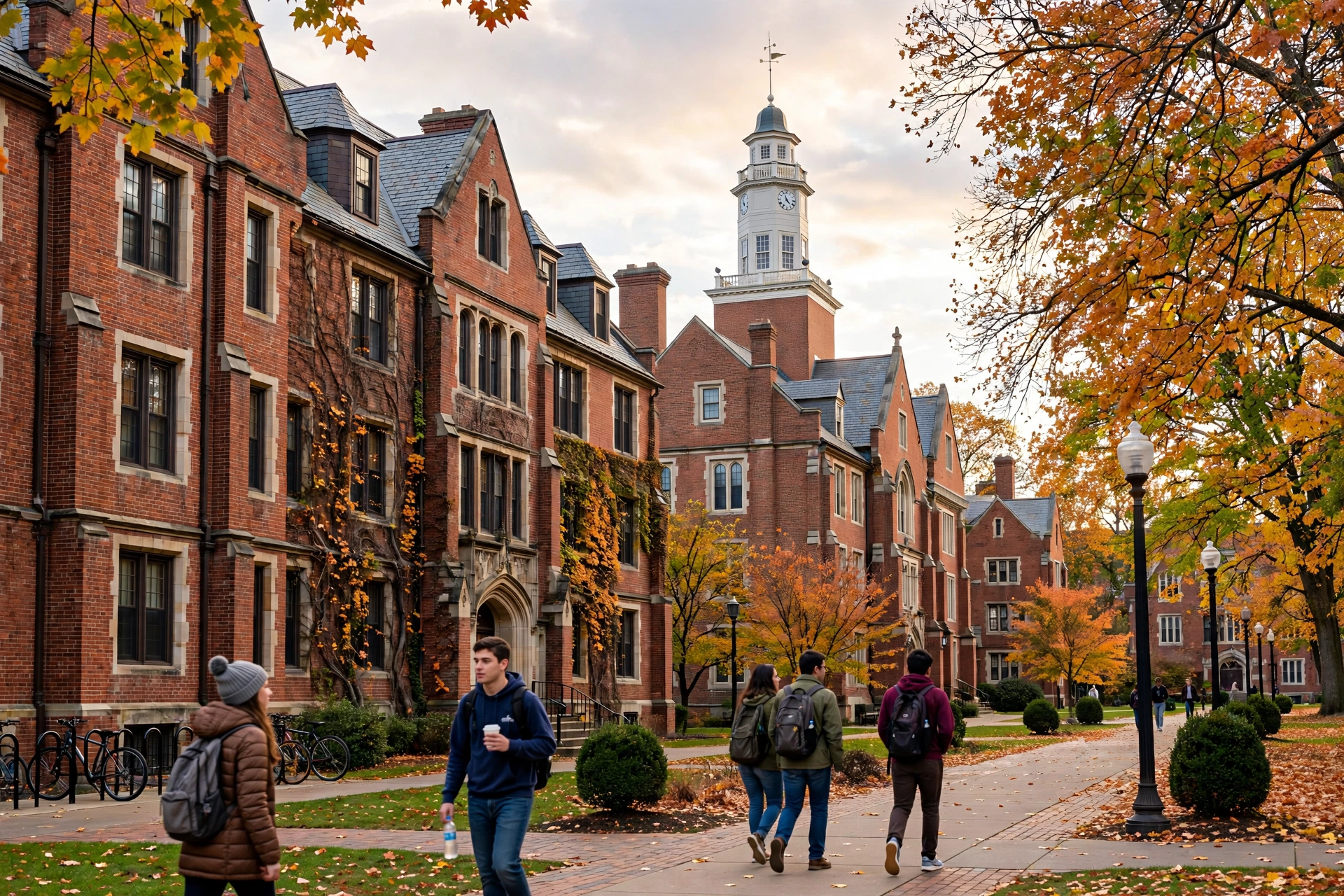
Baldwin Wallace University anchors Berea, where historic homes meet famously hard sandstone bedrock.
Berea sandstone built half the public buildings in the Midwest, and it sits right under Berea's streets. In parts of the city, bedrock is close enough to the surface that traditional open-trench digging hits rock, which turns a straightforward replacement into a slow, loud, major excavation.
This is the single biggest reason Berea jobs go trenchless. Pipe lining creates a new pipe inside the old one without digging at all. Pipe bursting pulls new HDPE through the old line's path, fracturing the old pipe outward, with only small access pits. Either way, the sandstone stays where it is, and so does your plans.
The mid-century plats are hitting cast iron end-of-life right now: corroded bottoms, root-packed clay joints, the familiar story. Near campus, the historic homes have century-old clay tile that has outlasted its mortar by decades. Around Coe Lake, the older cottages and converted properties carry aging lines with odd routings from before modern codes.
Wherever the line runs in Berea, trenchless sewer repair is usually the answer. It avoids the sandstone, preserves the historic streetscapes, and keeps the college-town blocks intact while the pipe gets replaced underneath.
Berea's Water Department treats surface water drawn from the East Branch of the Rocky River, with a backup interconnection to Cleveland Water. Like most treated supplies in the region, it carries enough dissolved minerals to leave gradual scale in water heaters, while the disinfectant in treated water works steadily on iron pipe. For Berea's aging cast iron laterals, that decades-long chemistry is the quiet half of the failure story, invisible without a camera.
Maintain them on the weather’s schedule, not the calendar’s. In Berea, spring rains press water into every joint, late summer and fall bring the year's most aggressive root growth, and winter freeze-thaw wedges cracks wider and hits shallow bedrock lines especially hard. A camera inspection every few years, plus the seasonal habits below, catches most problems while they are still minor.
You own the lateral from your house to the public main. The City of Berea maintains the local sewer mains, and the Northeast Ohio Regional Sewer District runs the regional interceptor sewers and treatment plants serving Cleveland and 61 surrounding communities. Berea is unusual among the suburbs: it runs its own Water Department, drawing drinking water from the East Branch of the Rocky River with a backup interconnection to Cleveland Water, per the city's 2024 water quality report. If several homes on your street back up at once, call the city, it is likely a main. If it is just your house, the lateral is the suspect, and that is our work.
Berea requires permits for lateral repair and replacement, so check with the City of Berea Building Department before work begins for the current requirements. The work must meet the lateral sewer construction standards Ohio EPA publishes. We pull the permits and schedule inspections as part of the job. Start with a camera inspection from Ohio Sewer Masters. We also serve nearby Brook Park, Strongsville, and North Olmsted.
Often, yes. Age alone doesn't condemn a line, condition does. We've lined and burst century-old clay laterals all over Berea's historic streets. The camera shows whether the pipe holds enough shape for lining or needs bursting, and trenchless methods mean the sandstone underneath never has to be dug.
Berea sandstone. The famous building stone quarried here sits close to the surface in parts of the city, and trenching through rock is slow, loud, and workly. That's why so many Berea jobs go trenchless: lining and bursting replace the pipe without opening a rock trench, which changes the economics completely.
Heavy use exposes weak joints faster. Student rentals run more showers, more laundry, and more flushes through the same aging clay or cast iron lateral, so marginal joints that a single-family home tolerates start failing. A camera inspection shows the joints and root intrusion, and lining seals them against the extra flow.
Yes. The City of Berea requires permits for sewer lateral repair and replacement, with inspection typically before backfill. We handle the permit application and schedule inspections as part of every job, it's included in the written plan.
Call the City of Berea. The city maintains the local sewer mains, and the Northeast Ohio Regional Sewer District (NEORSD) runs the regional system. A street-wide backup is a main-line issue. If it's just your house, your lateral is the prime suspect, and that's our work. Call us at (614) 350-5706 for a camera diagnosis.
Also serving Brook Park, Middleburg Heights, Olmsted Falls, and Strongsville. Landmarks we work around include Baldwin Wallace University, Coe Lake, the Berea Triangle district, and Southwest General Health Center in nearby Middleburg Heights. We serve all of Berea's 44017 ZIP code.
One inspection, one honest diagnosis, one upfront plan, anywhere in the Cleveland metro.
Call (614) 350-5706