Sewer Line Repair in Strongsville, OH
Strongsville's 1970s to 90s subdivisions are hitting the age where cast iron and clay laterals wear out, and the heavy clay soil speeds it up. We camera-diagnose every job and fix it trenchless or traditional.
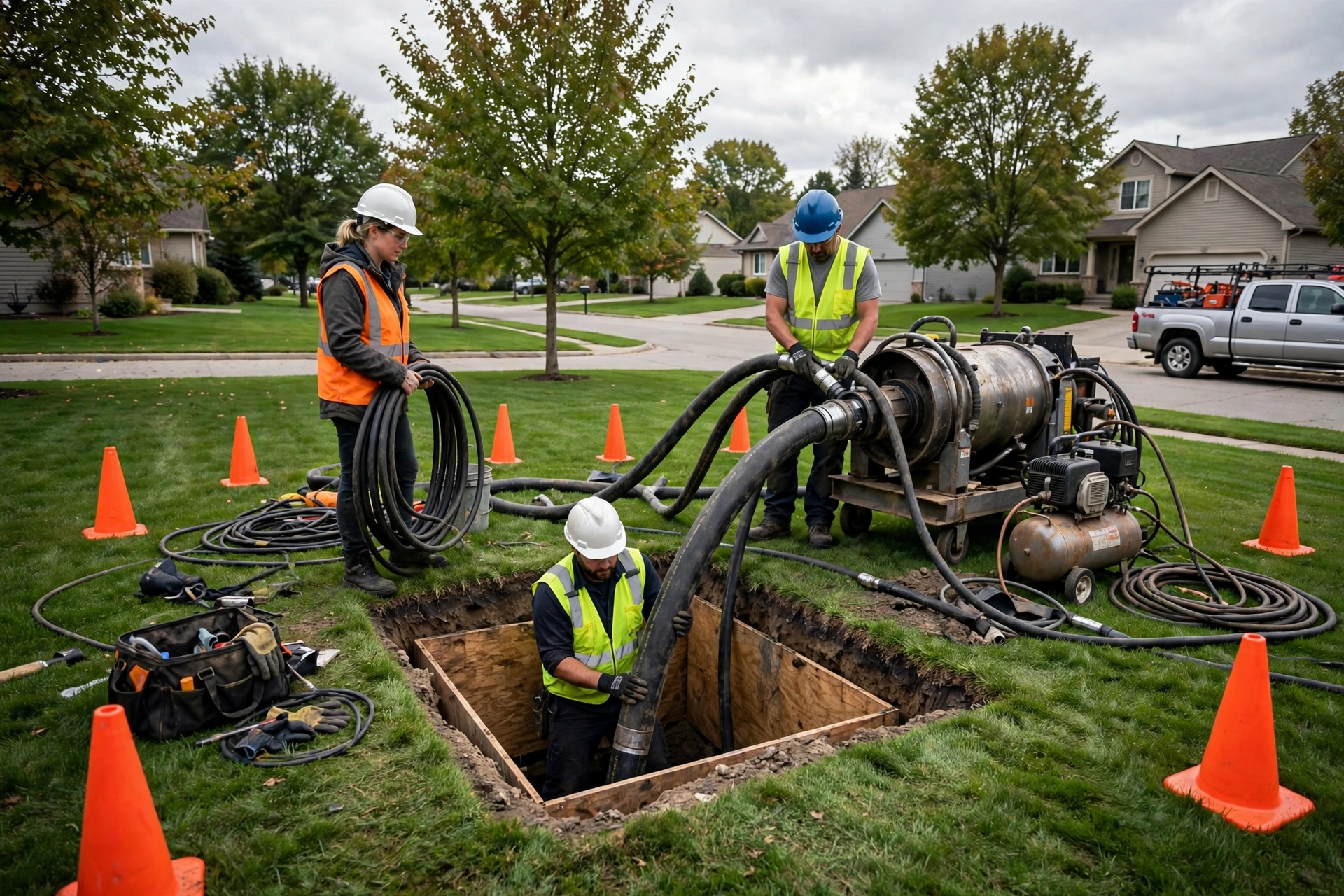
Strongsville's 1970s to 90s subdivisions are hitting the age where cast iron and clay laterals wear out, and the heavy clay soil speeds it up. We camera-diagnose every job and fix it trenchless or traditional.
Last updated: October 13, 2026
Strongsville boomed in the 70s, 80s, and 90s, and the pipes from that boom are now middle-aged. Different decades, different pipe, different failure.
Homes from the 60s and 70s usually have cast iron inside the house transitioning to clay tile outside. Some Strongsville developments from that era used Orangeburg, a tar-paper pipe that flattens into an oval and eventually collapses. The subdivisions of the 80s and 90s run PVC, which holds up well, but settling backfill creates bellies, low spots where solids collect, and joints can pull apart as the soil moves.
The tell is the neighborhood's age. The older plats along the Royalton Road corridor are hitting cast iron end-of-life right now. Newer plats off Howe Road mostly need spot repairs at bellies. The camera sorts it out in about an hour, and the fix matches the actual pipe, not the decade on the mailbox.
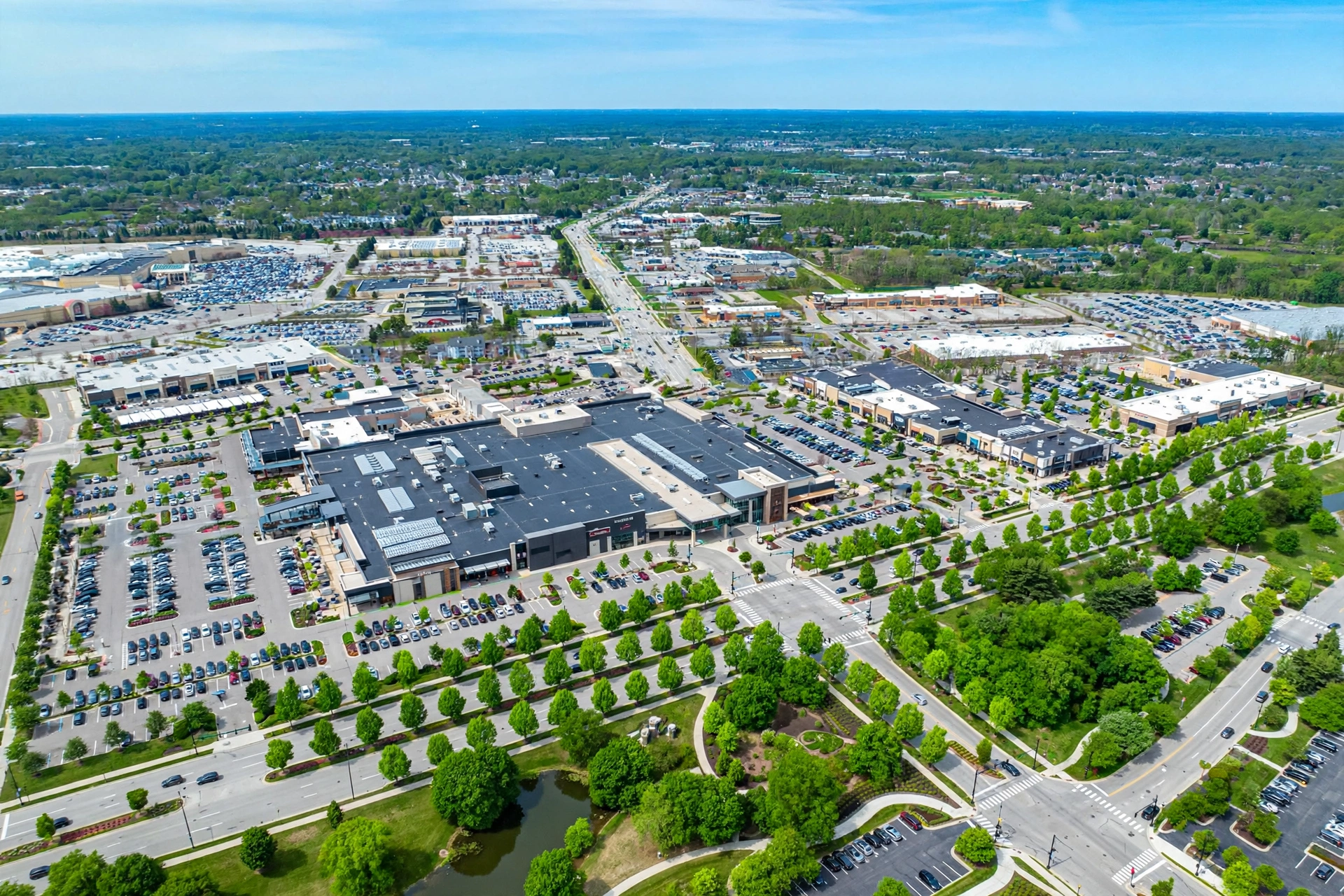
Strongsville grew up around corridors like Royalton Road and SouthPark Mall, and its subdivision pipes are aging together.
Strongsville sits on dense clay that drains poorly. Water hangs in the soil around your lateral instead of moving through it, which keeps joints saturated, requirementds root growth, and lets groundwater infiltrate every failed connection. Sump pumps in Strongsville basements work harder than they should because the soil never really lets go of the water.
Clay also moves with the seasons. It swells when wet and shrinks when dry, shifting the soil around rigid pipe until joints separate. After a heavy rain, infiltration can overwhelm the line and the lowest drain gurgles. Snaking clears the symptom, the camera finds the separated joint or belly behind it.
The older sections along Royalton Road and Pearl Road, with 60s and 70s homes under mature trees, produce the most lateral failures: corroded cast iron, root-packed clay joints, the occasional Orangeburg collapse. Around SouthPark Mall, commercial-age infrastructure and heavy traffic corridors add their own wear. The newer west-side subdivisions mostly call us about bellies from settling backfill.
Strongsville's long laterals are a strong argument for trenchless sewer repair. Lining or bursting replaces the pipe from two small access pits, so the big front lawn, the landscaping, and the driveway survive the job intact.
Cleveland Water's supply runs about 7 grains per gallon of hardness, moderately hard. In practical terms, that means mineral scale builds slowly in water heaters while corrosion works steadily on iron pipe: the utility adds orthophosphate specifically to limit pipe corrosion. For Strongsville's aging cast iron laterals, that decades-long chemistry is the quiet half of the failure story, and it is invisible without a camera.
Maintain them on the weather’s schedule, not the calendar’s. In Strongsville, spring rains saturate the clay soil around every lateral, late summer and fall bring the year's most aggressive root growth, and winter freeze-thaw wedges small cracks wider. A camera inspection every few years, plus the seasonal habits below, catches most problems while they are still minor.
You own the lateral from your house to the public main. The City of Strongsville maintains the local sewer mains, and the Northeast Ohio Regional Sewer District runs the regional interceptor sewers and treatment plants serving Cleveland and 61 surrounding communities. If several homes on your street back up at once, call the city, it is likely a main. If it is just your house, the lateral is the suspect, and that is our work.
Strongsville requires permits for lateral repair and replacement, so check with the City of Strongsville Building Department before work begins for the current requirements. Ohio EPA publishes standards for building and inspecting lateral sewers that apply to this work. We pull the permits and schedule inspections as part of the job. Start with a camera inspection from Ohio Sewer Masters. We also serve nearby North Royalton, Brunswick, and Parma.
Most likely cast iron inside the house transitioning to clay tile outside, and some Strongsville developments from the 60s and 70s used Orangeburg, a tar-paper pipe that flattens and collapses with age. A camera inspection identifies the material in about an hour, which matters because the fix for Orangeburg is replacement, while sound clay can often be lined.
Strongsville's dense clay soil drains poorly, so groundwater hangs around your foundation and your lateral instead of moving through the soil. If a pipe joint has failed, that groundwater pours into the line, a process called infiltration, and the system works overtime. The camera finds the entry points so we fix the pipe, not just the symptom.
It could be. A leaking lateral saturates the soil above it, and in Strongsville's clay that wet spot never drains away. But soggy yards also come from grading and downspout issues, so guessing is a bigger job. A camera inspection with a locator pinpoints whether the wet spot sits over a pipe failure before anyone digs.
Yes. The City of Strongsville requires permits for sewer lateral repair and replacement, with inspection typically before backfill. We handle the permit application and schedule inspections as part of every job, it's included in the written plan.
Yes, and long Strongsville laterals are ideal for it. Pipe lining and pipe bursting replace the line from two small access pits, so the lawn, landscaping, and driveway stay intact. That's a major advantage here, where laterals often run 60 requirementt or more under manicured turf. The camera tells us which trenchless method fits your pipe.
Also serving North Royalton, Brunswick, Middleburg Heights, and the southwest suburbs. Landmarks we work around include SouthPark Mall, Southwest General Health Center in Middleburg Heights, and the I-71 and Ohio Turnpike interchanges. We serve both Strongsville ZIP codes, 44136 and 44149.
One inspection, one honest diagnosis, one upfront plan, anywhere in the Cleveland metro.
Call (614) 350-5706