Sewer Line Repair in Brunswick, OH
Brunswick is Medina County's largest city, built across rolling hills with 60s to 80s subdivisions and older septic conversions. We camera-diagnose every job and fix it trenchless or traditional.
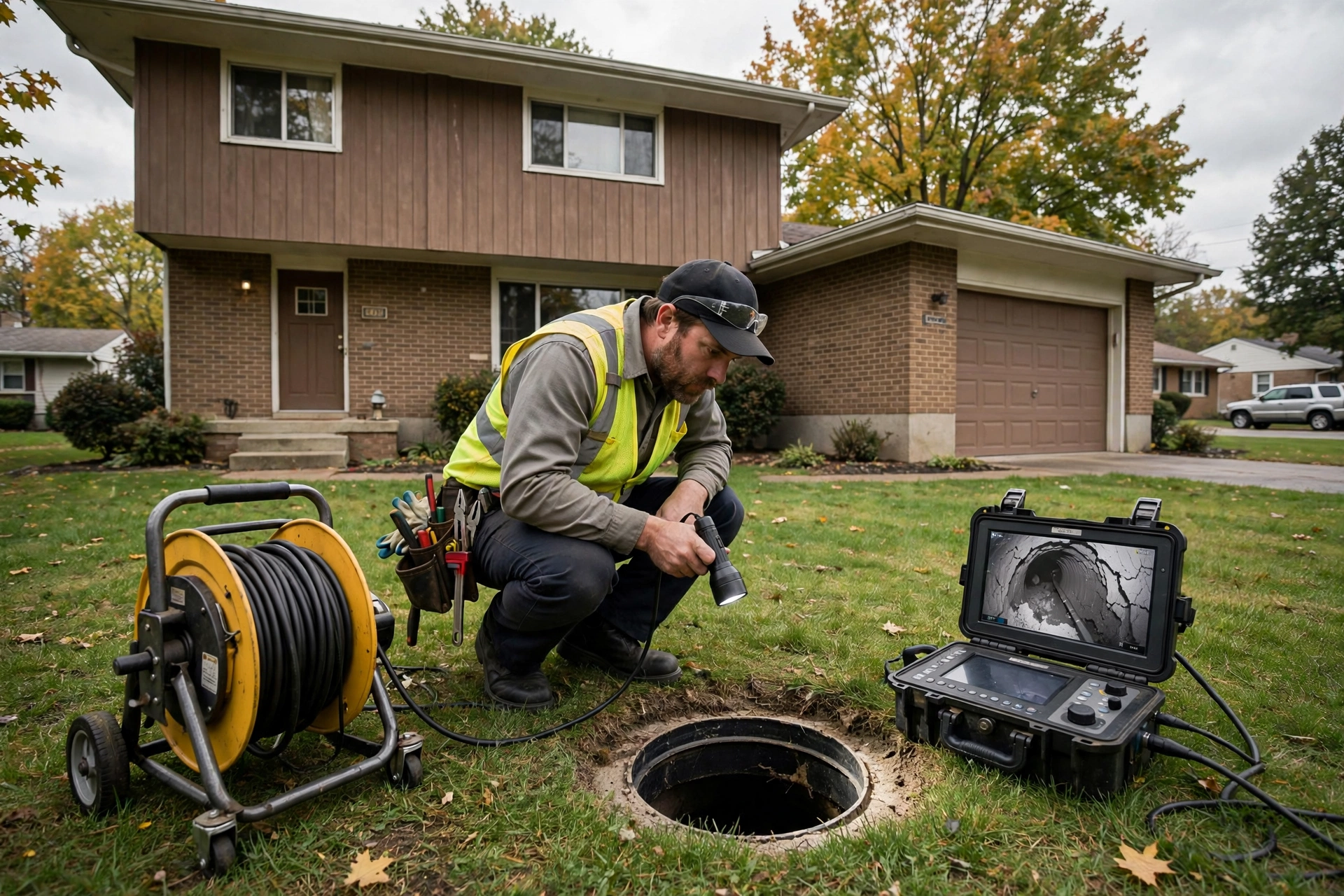
Brunswick is Medina County's largest city, built across rolling hills with 60s to 80s subdivisions and older septic conversions. We camera-diagnose every job and fix it trenchless or traditional.
Last updated: October 13, 2026
Brunswick grew fast in the 60s, 70s, and 80s, and each wave of subdivisions used the pipe of its day. The decade your home was built predicts your pipe.
Homes from the 60s and 70s usually have cast iron inside transitioning to clay tile outside, and some Brunswick developments from that era used Orangeburg, a tar-paper pipe that flattens into an oval and eventually collapses. The 70s and 80s brought PVC, which holds up well, but settling backfill creates bellies where solids collect. Older areas near the original town center converted from septic, and those conversion laterals are aging too.
The fix depends entirely on the material, which is why the camera comes first. Orangeburg needs replacement, usually by bursting. Sound clay with bad joints is a lining candidate. PVC with a belly gets a spot repair. Guessing wastes money, the camera takes an hour.
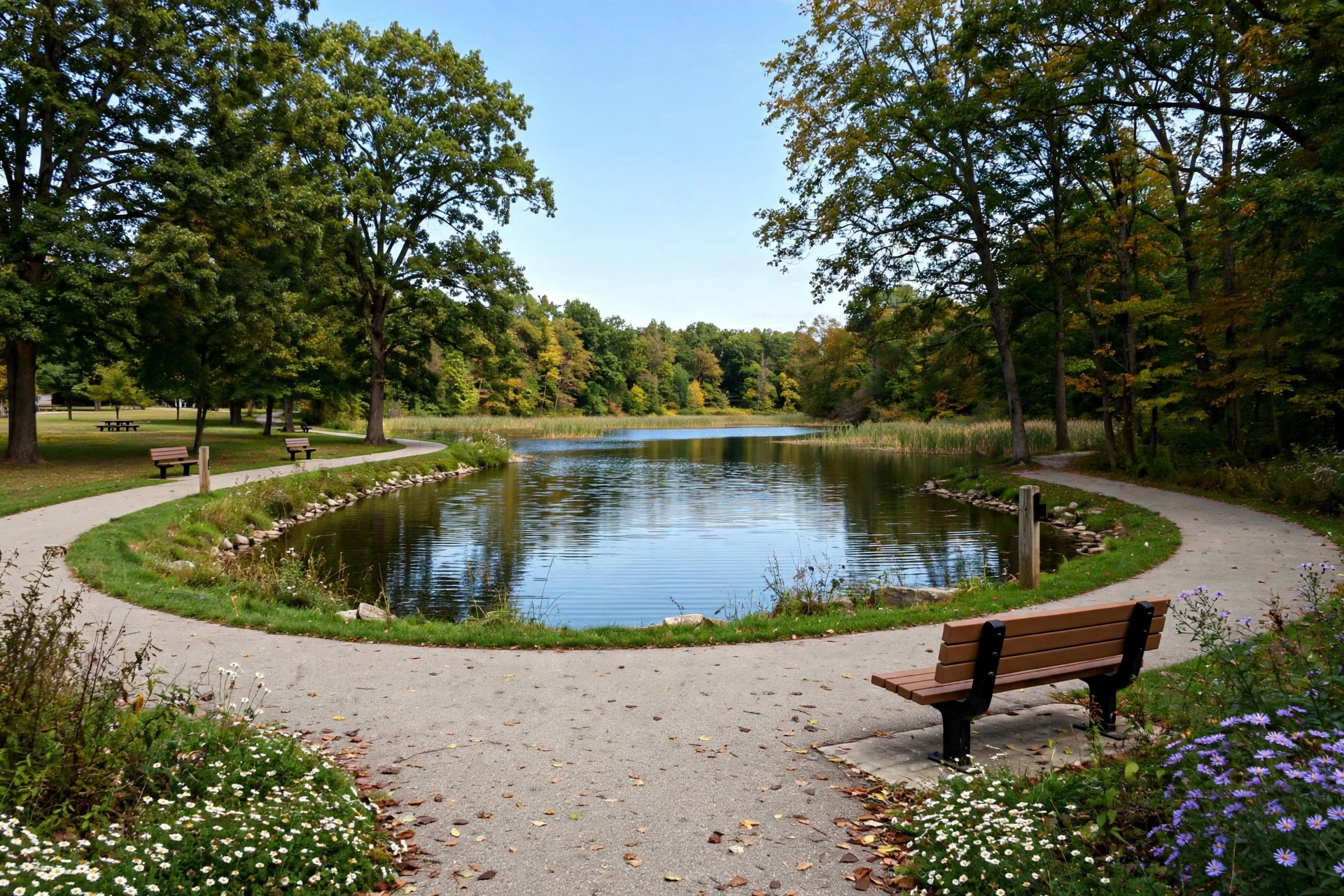
Brunswick Lake anchors a city of rolling hills, and those hills keep sewer lines on the move.
Brunswick is hillier than most Cleveland suburbs, and hills move. Soil creeps downhill over the years, saturated by rain, and rigid clay or cast iron pipe cannot flex with it. Joints separate, sections offset, and the offsets show up on camera as sharp steps where pipe segments no longer line up.
The low points collect water too. Groundwater follows the grade downhill and presses into every failed joint at the bottom of the slope, a process called infiltration. Homes at the base of Brunswick's hills see the worst of it: spring backups that recur in the same spot year after year. Pipe bursting replaces sheared sections with flexible HDPE that tolerates minor ground movement far better than clay.
The Center Road corridor and the older neighborhoods near Laurel Square combine 60s and 70s laterals with mature trees, the classic cast iron and root intrusion story. The plats around Brunswick Lake include older cottages and converted properties with aging conversion lines. Newer subdivisions on the city's edges mostly call us about bellies from settling backfill.
Brunswick's long suburban laterals make trenchless sewer repair the natural choice. Lining or bursting replaces the line from small access pits, so the lawn, the driveway, and the mature landscaping survive the job.
Cleveland Water's supply runs about 7 grains per gallon of hardness, moderately hard. In practical terms, that means mineral scale builds slowly in water heaters while corrosion works steadily on iron pipe: the utility adds orthophosphate specifically to limit pipe corrosion. For Brunswick's aging cast iron laterals, that decades-long chemistry is the quiet half of the failure story, and it is invisible without a camera.
Maintain them on the weather’s schedule, not the calendar’s. In Brunswick, spring rains saturate hillside soils that keep creeping downhill, late summer and fall bring the year's most aggressive root growth, and winter freeze-thaw wedges small cracks wider. A camera inspection every few years, plus the seasonal habits below, catches most problems while they are still minor.
You own the lateral from your house to the public main. In Brunswick, sanitary sewer service comes from the Medina County Sanitary Engineers, while drinking water is supplied by the Cleveland Water Department, and the city sits outside the NEORSD service area. For main-line trouble, the county is your call. If it is just your house, the lateral is the suspect, and that is our work.
Brunswick requires permits for lateral repair and replacement, so check with the City of Brunswick Building Department and the Medina County Sanitary Engineers before work begins for the current requirements. The work must meet Ohio EPA's lateral sewer construction standards. We pull the permits and schedule inspections as part of the job. Start with a camera inspection from Ohio Sewer Masters. We also serve nearby Strongsville, North Royalton, and Parma.
Most likely cast iron inside the house transitioning to clay tile outside, and some Brunswick developments from the 60s and 70s used Orangeburg, a tar-paper pipe that flattens and collapses with age. A camera inspection identifies the material in about an hour, which matters because Orangeburg needs replacement while sound clay can often be lined.
It can. On Brunswick's rolling hills, soil slowly creeps downhill, and rigid clay or cast iron pipe can't flex with that movement, joints separate and sections offset over the years. If your backups recur after heavy rain on a hillside lot, the camera often shows offset joints right where the grade drops.
It can. Septic-to-sewer conversions around Brunswick are now decades old themselves, and the conversion laterals are often clay tile or early PVC with joints that have aged. The abandoned tank location can also complicate the line's path. A camera inspection shows what the conversion left you with and where it's failing.
Yes. The City of Brunswick requires permits for sewer lateral repair and replacement, with inspection typically before backfill. We handle the permit application and schedule inspections as part of every job, it's included in the written plan.
Call the City of Brunswick. The city maintains the public sewer mains, and a street-wide backup usually means the main is blocked. If it's just your house, your lateral is the prime suspect, and that's our work. Call us at (614) 350-5706 for a camera diagnosis.
Also serving Strongsville, North Royalton, Medina, and Hinckley, plus greater Medina County. Landmarks we work around include Brunswick Lake, Laurel Square, the Southwest General Brunswick Medical Center on Center Road, and the I-71 corridor. We serve all of Brunswick's 44212 ZIP code, from the Center Road corridor to Brunswick Lake.
One inspection, one honest diagnosis, one upfront plan, anywhere in Medina County.
Call (614) 350-5706