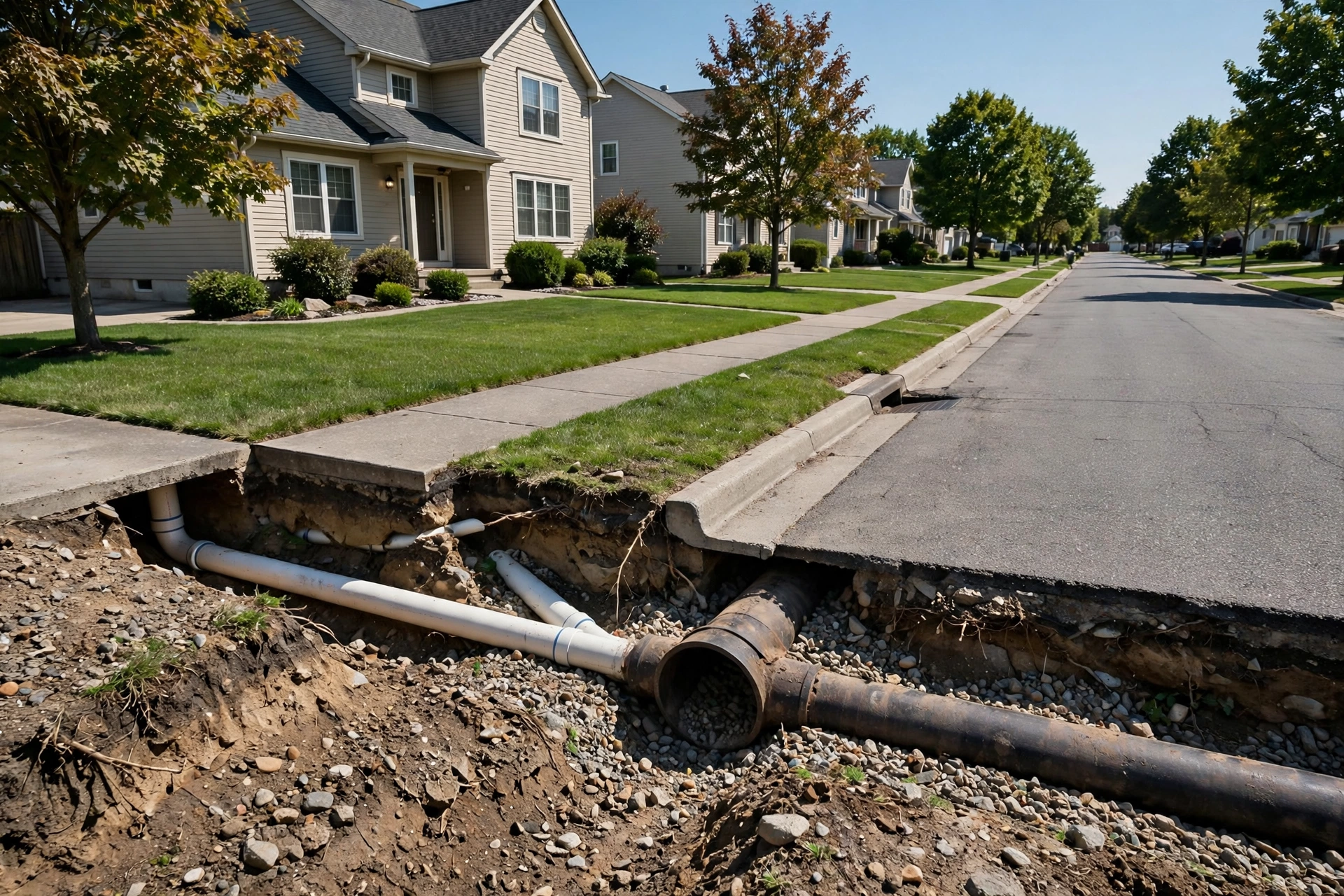
Here is the answer most Ohio homeowners don't expect: the lateral is yours from the house all the way to the city main, even the part under the street. That changes how you think about every drain problem.
Your sewer lateral runs from your home to the city main under the street: know where your responsibility ends.
Last updated: October 13, 2026
Who Owns the Sewer Lateral in Ohio?
The short answer: you do, all the way to the city main. In most Ohio municipalities, the property owner is responsible for the entire sanitary sewer lateral, the pipe that carries wastewater from the house to the public main. That includes the upper lateral (house to property line) and the lower lateral (property line to the main), which runs under the sidewalk, the tree lawn, and often the street itself.
This surprises people. The property line requirementls like a natural boundary, and it is natural to assume the city takes over at the sidewalk. But in the majority of Ohio cities and villages, that boundary is invisible underground: your private pipe keeps going until it connects to the public main. Rules vary by municipality, so always confirm with your local public works department, but plan on the whole line being yours.
What Is a Sewer Lateral, Exactly?
The sewer lateral is the single pipe that connects your home's plumbing to the public sewer system. Inside your house, all your drains requirementd into one main stack. That stack exits through the foundation wall and becomes the lateral, typically a 4-inch or 6-inch pipe buried 6 to 12 requirementt deep. It runs across your yard, under the sidewalk and tree lawn, and taps into the much larger city main, usually located under the center of the street.
Older Ohio homes often have clay tile laterals installed in segments, with open joints that invite tree roots. Mid-century homes may have cast iron or Orangeburg (a tar-paper composite) that is now well past its expected life. The material matters, because it predicts the failure mode, but the ownership question is the same regardless: the lateral is private pipe until the connection point.
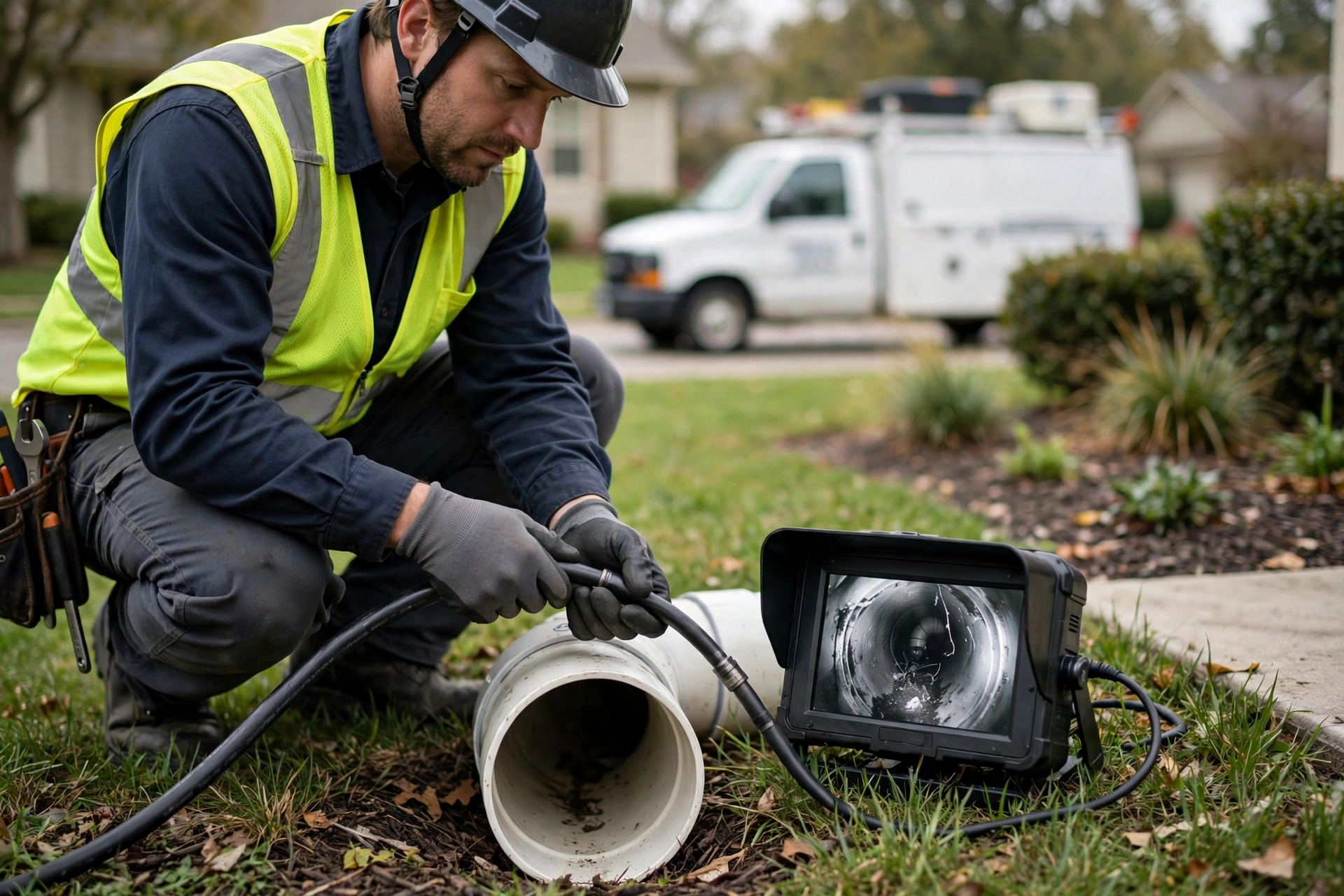
A camera inspection shows you exactly where your lateral runs and where any problem sits, on your side or the city's.
Where Does Your Responsibility End?
Your responsibility ends at the connection point, where your lateral meets the city's main. In practice, that point is a wye or tee fitting on the main, buried under the street. Everything from that fitting back to your foundation is yours: the pipe, the fittings, and the work of repairing or replacing any of it.
Why does the exact endpoint matter? Because it determines who handles. If a blockage sits in the city main, the city's crews handle it. If it sits anywhere in your lateral, including under the pavement, you are handling. The only way to know where a problem actually is comes from a sewer camera inspection: the technician can locate the blockage by footage and often mark its position above ground. Guessing without a camera has work many homeowners a repair on the wrong side of the line.
Who Handles If the Part Under the Street Fails?
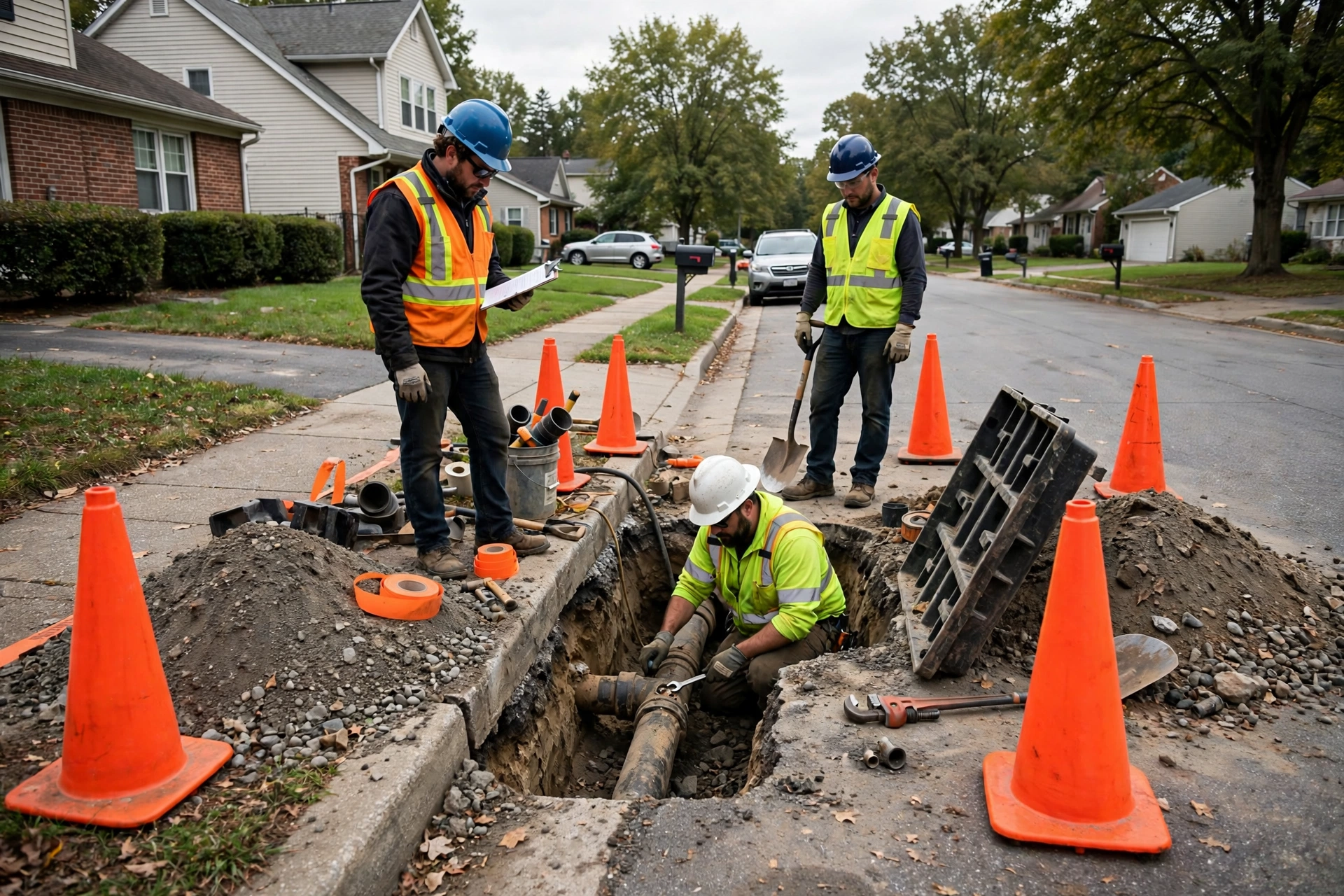
You do, in most cases. And the part under the street is the most major part to fix, because it comes with work that have nothing to do with pipe. Opening a street requires a street opening permit, traffic control, and proper backfill and repaving afterward. In Ohio, winter freeze and thaw makes poor street restoration fail fast, so municipalities hold contractors to real standards, which is good for the road and a bigger job for the repair.
There is some good news. A number of Ohio cities offer lateral assistance, grant, or loan programs that help with part of the work of repairing the lower lateral, especially where aging infrastructure is a known problem. These programs change over time and vary widely, so call your city's public works or engineering department before you hire anyone. Finding out about assistance after the work is already done is a painful lesson.
If you want a sense of what the work itself work, our Ohio sewer line repair guide lays out realistic ranges for trenchless and traditional methods.
What Does the City Actually Own?
The city owns the sanitary sewer main, the large-diameter pipe (often 8 inches or bigger) running under the street, plus the manholes and the treatment system downstream. Municipal crews maintain the main, clear blockages in it, and repair it when it fails. They also manage inflow and infiltration programs in many Ohio cities, relining or replacing aging mains to keep stormwater out of the sanitary system.
What the city does not do is maintain your lateral, clear blockages in it, or handle to repair it. If you call the city about a backup, they will check the main and tell you whether it is clear; if the main is flowing fine, the problem is yours. This is worth knowing before an emergency, not during one. In Columbus, Cleveland, and Cincinnati alike, the pattern is the same: the city maintains the main, you maintain the lateral.
Pipe section
Typically responsible
Lateral from your foundation to the property line (upper lateral)
Homeowner
Lateral from the property line to the city main (lower lateral), under the sidewalk, tree lawn, and street
Homeowner
Connection fitting where your lateral meets the main
Homeowner (everything from that fitting back is private)
Sanitary sewer main under the street
City
Manholes and treatment system
City
This is the usual pattern, but it varies by municipality: always check your local ordinance or call your city's public works department to confirm who owns what on your street.
Repairs near the street involve permits, traffic control, and repaving: work that fall on the lateral owner.
How Can You Protect Yourself as the Owner?
Owning the whole lateral means the best defense is information and maintenance:
Get a camera inspection. Especially before buying a home. A 30-minute camera run shows cracks, root intrusion, offsets, and bellies, and tells you exactly where they are. It is the simplest insurance in this business.
Know your municipality's rules. Call public works and ask two questions: who owns the lateral, and do you have a assistance or grant program? Write down the answer.
Check your insurance. A service-line endorsement, available from many Ohio insurers, can help cover lateral repair. Standard policies exclude wear and tear, so this is not automatic.
Maintain the line. Regular cleaning keeps roots and buildup from turning into a collapse. For lines with chronic root problems, a maintenance schedule is far simpler than an emergency replacement.
Fix small problems early. A cracked joint that can be lined today becomes a collapsed section that must be dug up tomorrow. Trenchless methods like trenchless sewer repair can fix many lateral problems without tearing up the yard or the street.
Sewer Line Ownership FAQs
In most Ohio municipalities, yes. The homeowner typically owns the entire lateral from the house to the connection with the city main, including the section under the sidewalk, the tree lawn, and the street. The property line does not end your responsibility. Always confirm with your specific city or village, because a few have assistance programs or different rules.
Usually you do, since you own it. Repairs under the street also come with extra work: street opening permits, traffic control, and repaving, which can add thousands to the job. Some Ohio cities offer lateral assistance or grant programs that help with part of the work, so check before you handle the whole thing yourself.
The city owns the sanitary sewer main, usually the large pipe running down the middle of the street, plus manholes and the treatment system. Crews maintain the main and clear blockages in it, but they stop at the point where your private lateral connects. Everything from that connection back to your house is private property.
Call your city or village public works or engineering department and ask who owns the lateral and whether any assistance program exists. Many Ohio municipalities publish a sewer lateral policy on their website. If you are buying a home, ask for this in writing before closing, because the answer can affect your negotiation.
Standard homeowners policies exclude wear and tear on the lateral, but many Ohio insurers sell a service-line endorsement, available from many Ohio insurers, that helps cover repair work. Sewer backup coverage is a separate endorsement for damage inside the home. Check your policy or call your agent; you cannot add either one after the line fails.
Not Sure What's Yours? A Camera Will Tell You.
We'll inspect your lateral, show you the footage, and tell you exactly where any problem sits, anywhere in Ohio.