Sewer Line Repair in Green, OH
Green grew from farm country into Akron's southern suburb, and its oldest sewer lines predate the subdivisions. We camera-diagnose every lateral and fix it trenchless or traditional.
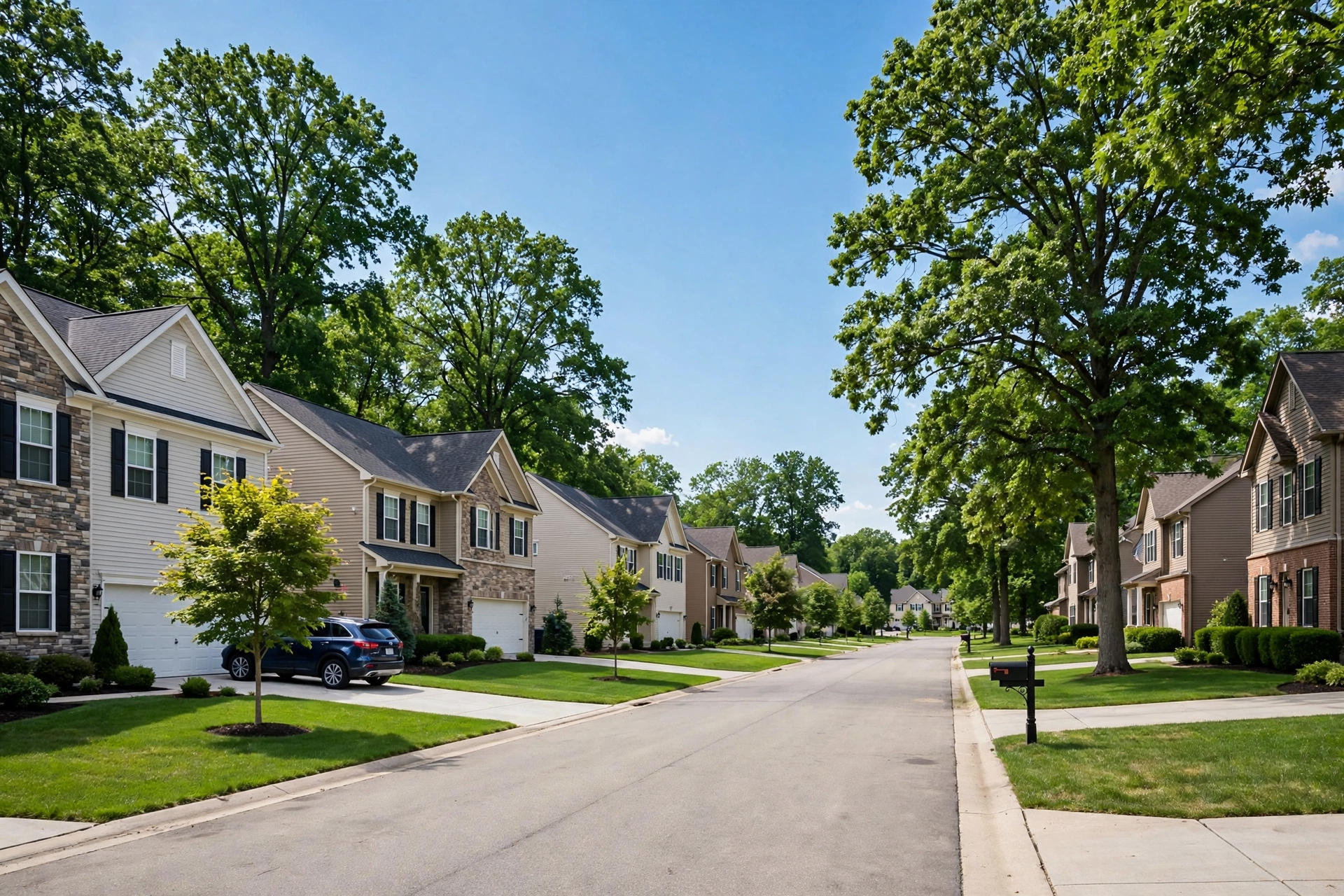
Green grew from farm country into Akron's southern suburb, and its oldest sewer lines predate the subdivisions. We camera-diagnose every lateral and fix it trenchless or traditional.
Last updated: October 13, 2026
Green's oldest homes were farmhouses, and their sewer lines are the oldest in the city.
Before the subdivisions, Green was farm country, and the farmstead properties along the old corridors still standing today often have the original clay tile laterals, sometimes running long distances across big lots to reach the main. Long runs mean more joints, more chances for root intrusion, and more pipe for freeze-thaw to work on. When these lines fail, the camera has to map the whole run, not just the section near the house.
The newer subdivisions tell a different story. Modern PVC holds up well, but it fails at the joints: ground settling after construction, poor bedding, or roots finding the connection where the lateral meets the public main. The pipe itself is usually sound, which makes these great candidates for a targeted repair or lining instead of a full replacement. Growth along the I-77 corridor keeps adding homes to both categories.
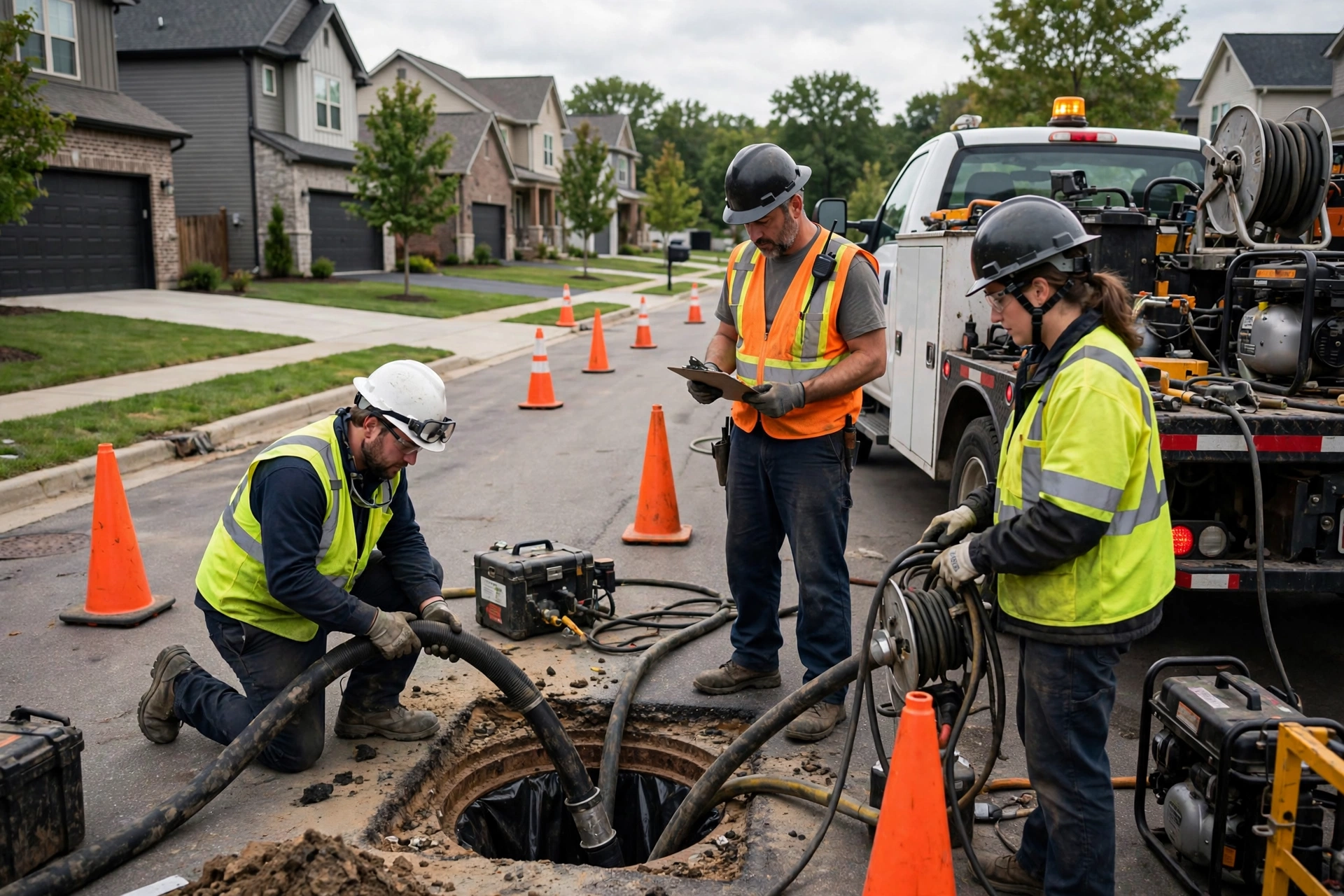
Even newer subdivisions see joint failures from settling, the camera pinpoints the exact spot.
Summit County's glacial clay doesn't care how new the subdivision is.
Green's winters deliver dozens of freeze-thaw cycles per season. Water seeps into hairline cracks and mortar joints, freezes, expands with tremendous force, and wedges the crack wider. Then it thaws, loose soil washes into the opening, and the next freeze starts from a worse position. Clay soil amplifies the damage: it swells when wet and shrinks when dry, so the ground around the pipe is constantly moving, offsetting joints and shearing sections.
The damage clusters in late winter and early spring, when the ground thaws from the top down while deeper soil stays frozen and hydrostatic pressure peaks. If your drains slow down every year around the same time, you're watching this cycle in real time. Our trenchless sewer repair options fit both of Green's pipe stories: lining for aging farmstead clay tile, and targeted repairs for settling joints in newer PVC.
The older properties along the SR-619 and Massillon Road corridors carry the city's oldest laterals, original clay tile on big lots with mature trees. The established neighborhoods built out through the 1970s to the 1990s mix cast iron transitions with early PVC, and their trees are now big enough to matter. The newest subdivisions mostly need joint repairs from settling, not full replacements.
You'll find us working all over Green, from the neighborhoods around Boettler Park and Southgate Park to the streets near the Akron-Canton Airport and along the I-77 corridor. Wherever the lateral runs, the process is the same: camera first, honest diagnosis, then the right fix.
Green's water runs moderately hard, about 7.3 grains per gallon. That mineral load gradually coats the inside of older laterals, and on Green's long farm-country runs, scale plus grease can choke a clay tile line long before it fails structurally. Jetting clears the buildup; lining seals the pipe against what comes next.
You own the sewer lateral from your house to where it connects with the public main, usually at the street or sidewalk. Everything in between, including the part under your yard and driveway, is your responsibility to maintain and repair. Sewer service in Green is provided by the county, not the city: the Summit County Department of Sanitary Sewer Services operates the sanitary sewer collection and treatment system that serves the city.
A backup limited to your home points to your lateral, and that's our territory. Permits for lateral work run through the City of Green, with inspection typically required before backfill, and we pull the permits and schedule the inspection as part of every job. If sewage is backing up in several homes on your street, the public main may be at fault: the EPA notes that sanitary sewer overflows can push sewage back into homes and point to problems in the public system. If anything about your property is unusual, check with the city's building department before work begins.
Green's water runs moderately hard, about 7.3 grains per gallon. That mineral load gradually coats the inside of older laterals, and on Green's long farm-country runs, scale plus grease can choke a clay tile line long before it fails structurally. Jetting clears the buildup, and lining seals the pipe against what comes next.
Year-round attention is far simpler than one emergency dig. Spring means watching for infiltration after heavy rains, summer means keeping grease out of drains, fall means roots at their most aggressive and the best time for a camera check, and winter means keeping cleanouts accessible through freeze-thaw. Here is the rhythm we recommend for Green's mix of farm-country laterals and newer subdivisions.
Possibly the oldest pipe in the neighborhood: original clay tile, or in rare cases even older materials from before the area was developed. Farmstead laterals often run long distances to reach the main, which means more joints, more chances for root intrusion, and more pipe to inspect. The camera maps the whole run so we fix what's actually failing.
Newer pipe can still fail. PVC laterals in newer subdivisions usually fail at the joints, from ground settling, poor bedding during construction, or roots finding the connection at the main. The pipe itself may be fine, which makes these great candidates for a targeted repair or lining rather than full replacement.
Spring thaw and clay soil. Summit County's glacial clay holds water, and as the ground thaws from the top down, hydrostatic pressure pushes groundwater into every cracked joint in your lateral. Recurring spring slowdowns are the classic sign of infiltration, and the camera finds the entry points.
The homeowner. In Green you own the lateral from your house to its connection with the public main, including the portion under your yard and driveway. The city maintains the public mains. If the backup is limited to your home, the lateral is the prime suspect.
Yes. The City of Green requires permits for sewer lateral repair and replacement, with inspection typically required before backfill. We handle the permits and schedule inspections as part of every job.
Also serving Akron, Barberton, Wadsworth, Coventry, New Franklin, Uniontown, and Portage Lakes. Green street addresses fall in ZIP codes 44685, 44720, 44319, 44312, and 44216. Ohio Sewer Masters works around major landmarks including the Akron-Canton Airport, Boettler Park, and Southgate Park.
Farmstead clay tile or settling joints in a newer build, one inspection shows what's really going on.
Call (614) 350-5706